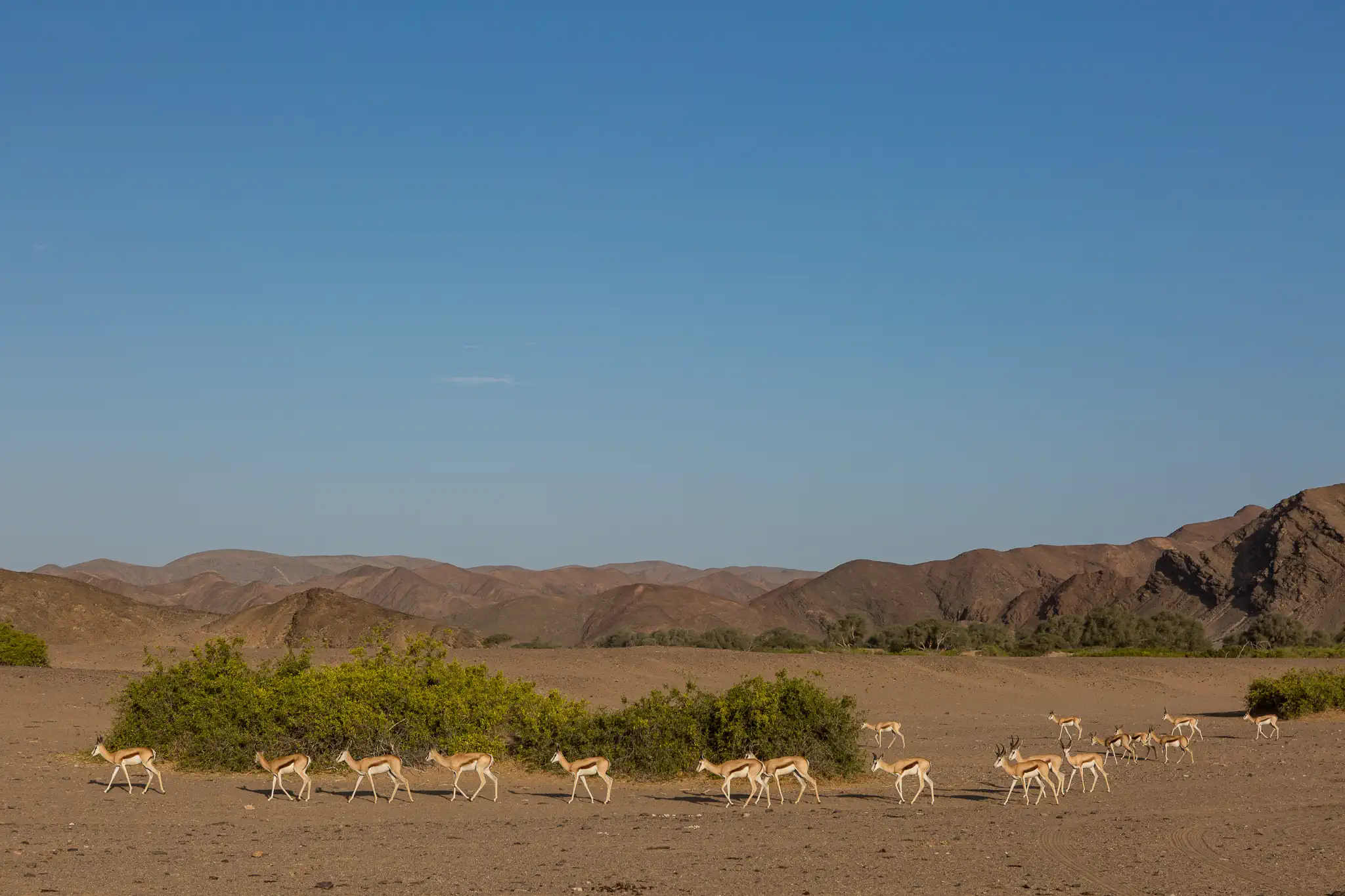
Kaokoland & the Remote Northwest
Discover
a land of mountains,
dry rivers and distant horizons —
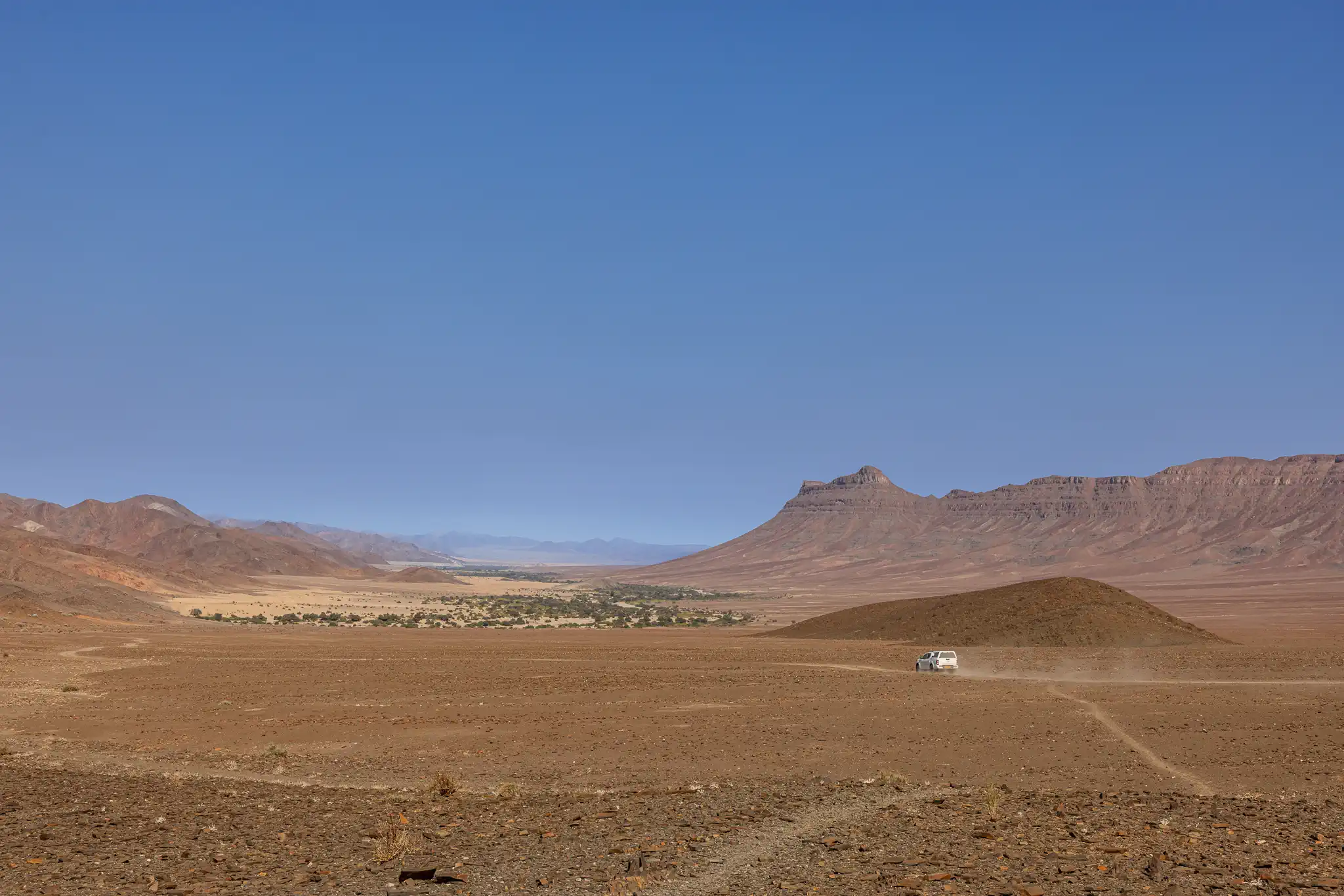
where roads become tracks
and the journey itself becomes
part of the exploration.
A Different Kind of Wilderness
Kaokoland is one of the places that keeps drawing me back to Namibia.
Beyond Sesfontein and the Hoanib River, the landscape becomes increasingly remote. Mountains rise above vast plains, dry riverbeds wind through seemingly empty country, and small settlements are separated by enormous distances.
This is not a place to rush through. Wildlife moves across vast areas, and each day can unfold differently. Some days may be shaped by following fresh elephant tracks through a dry riverbed. Others by crossing a remote mountain pass, stopping at an unexpected waterhole, or simply finding a quiet place to camp before sunset.
Kaokoland rewards curiosity, patience and a willingness to see where the journey leads.
Following Kaokoland’s Dry Rivers
In search of desert-adapted wildlife
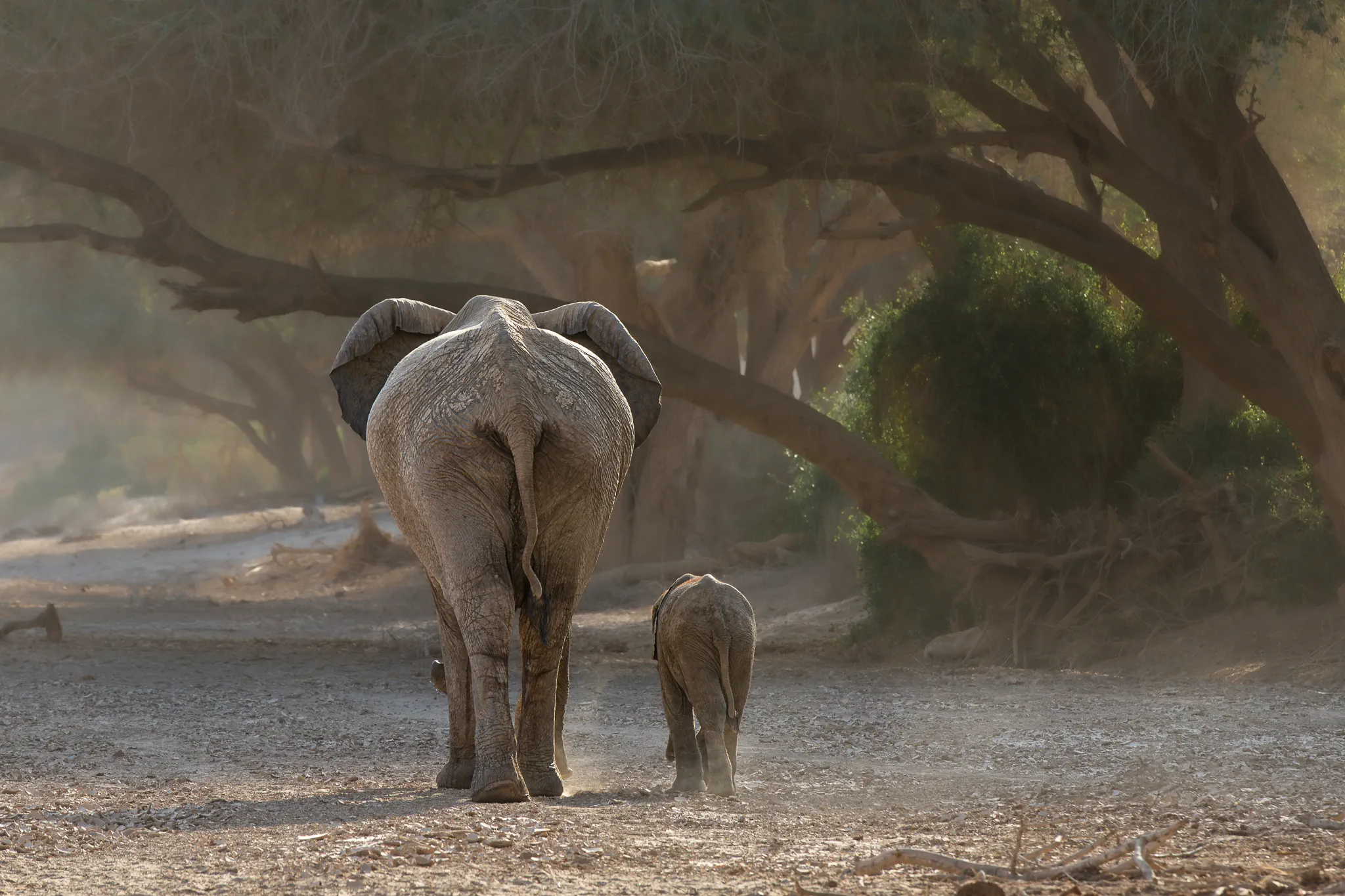
The Hoanib and Hoarusib are among the most remarkable river systems in northwestern Namibia. For much of the year, their sandy beds appear completely dry, yet they support a surprising amount of life.
Desert-adapted elephants move through these river systems in search of food and water, sometimes travelling great distances between feeding areas. Giraffes, oryx, springbok and other wildlife have also adapted to life in this harsh environment.
Finding wildlife here is very different from driving through a national park. There are no waterhole circuits to follow and no guarantee of what we will find. We look for tracks, talk with people who know where animals have recently been active, and spend time exploring the river systems.
Sometimes the search takes hours. Sometimes elephants appear around the next bend.
That uncertainty is part of what makes every encounter here so rewarding.
Deeper into Kaokoland
Where roads become tracks
Beyond the better-known routes, Kaokoland opens into an enormous country of mountains, gravel plains, dry rivers and isolated settlements.
A journey might follow the Hoarusib towards Puros, continue north through the remote country around Orupembe and the Marienfluss, or eventually reach Epupa on the Kunene River. These are not stops on a fixed itinerary. The route depends on the season, road conditions, available time and the kind of journey we are creating.
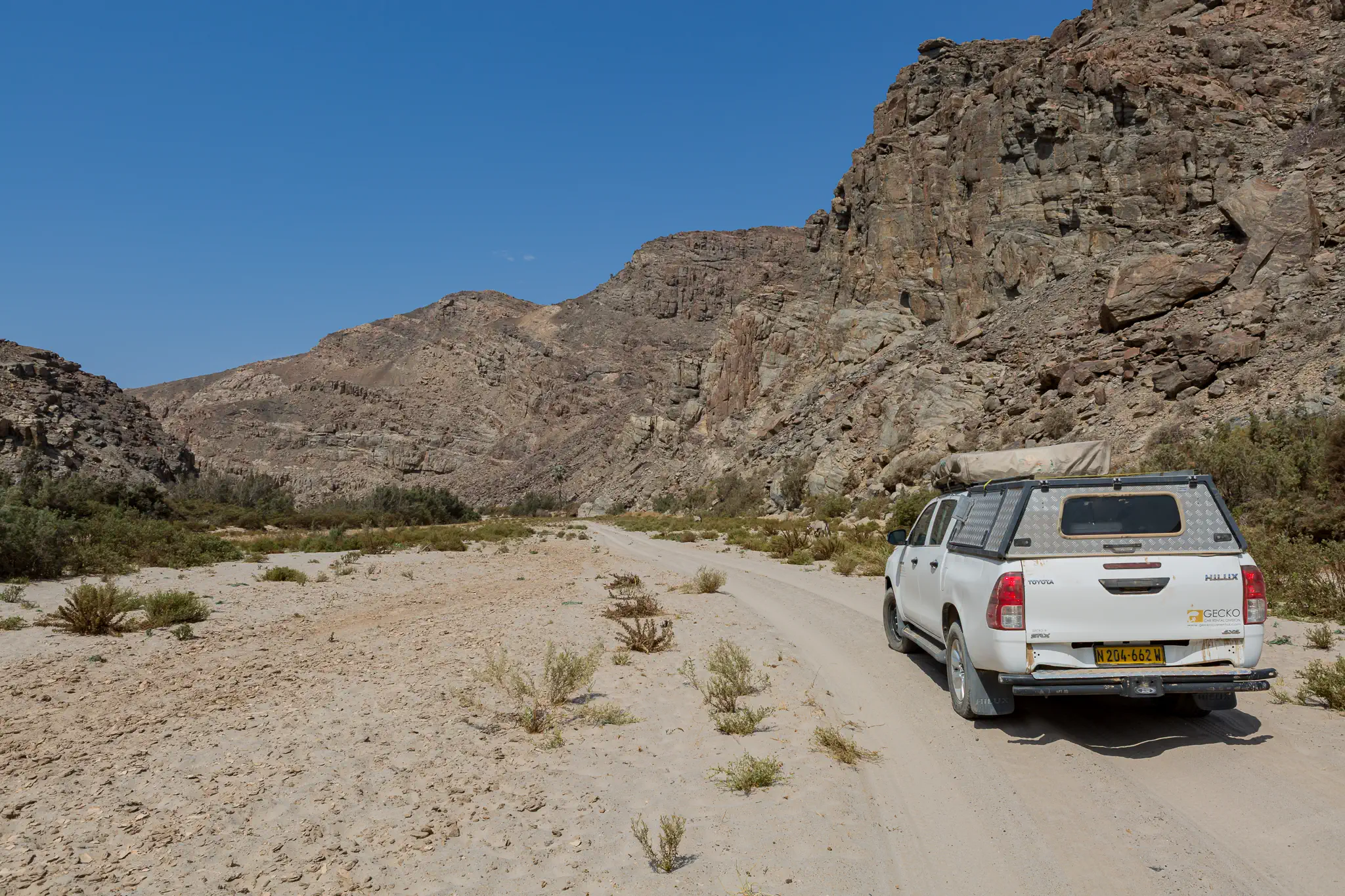
Travelling here requires preparation and flexibility, but difficult driving is never the purpose of the journey. We take these routes because of where they lead: through extraordinary landscapes, to quiet campsites and into parts of Namibia where the sense of space and isolation is difficult to describe until you are there.
There is always a plan. There is also room to change it.
Nights in Wild Places
From remote campsites to remarkable lodges
Some of my favourite moments in Kaokoland happen after the driving has finished.
A quiet campsite beside a dry riverbed. Coffee as the first light reaches the mountains. Or waking in a remote lodge, stepping outside and seeing the landscape stretch away in every direction.
Where we stay depends on the route and the way you like to travel. Kaokoland offers everything from remote campsites beneath enormous skies to carefully chosen lodges in extraordinary locations. We can travel entirely lodge-based, focus on camping, or combine both.
Each offers a different way to experience the landscape. What matters most is choosing places that fit naturally into the route and give us enough time to enjoy where we are.
Time with the Himba
Life, livestock & the land
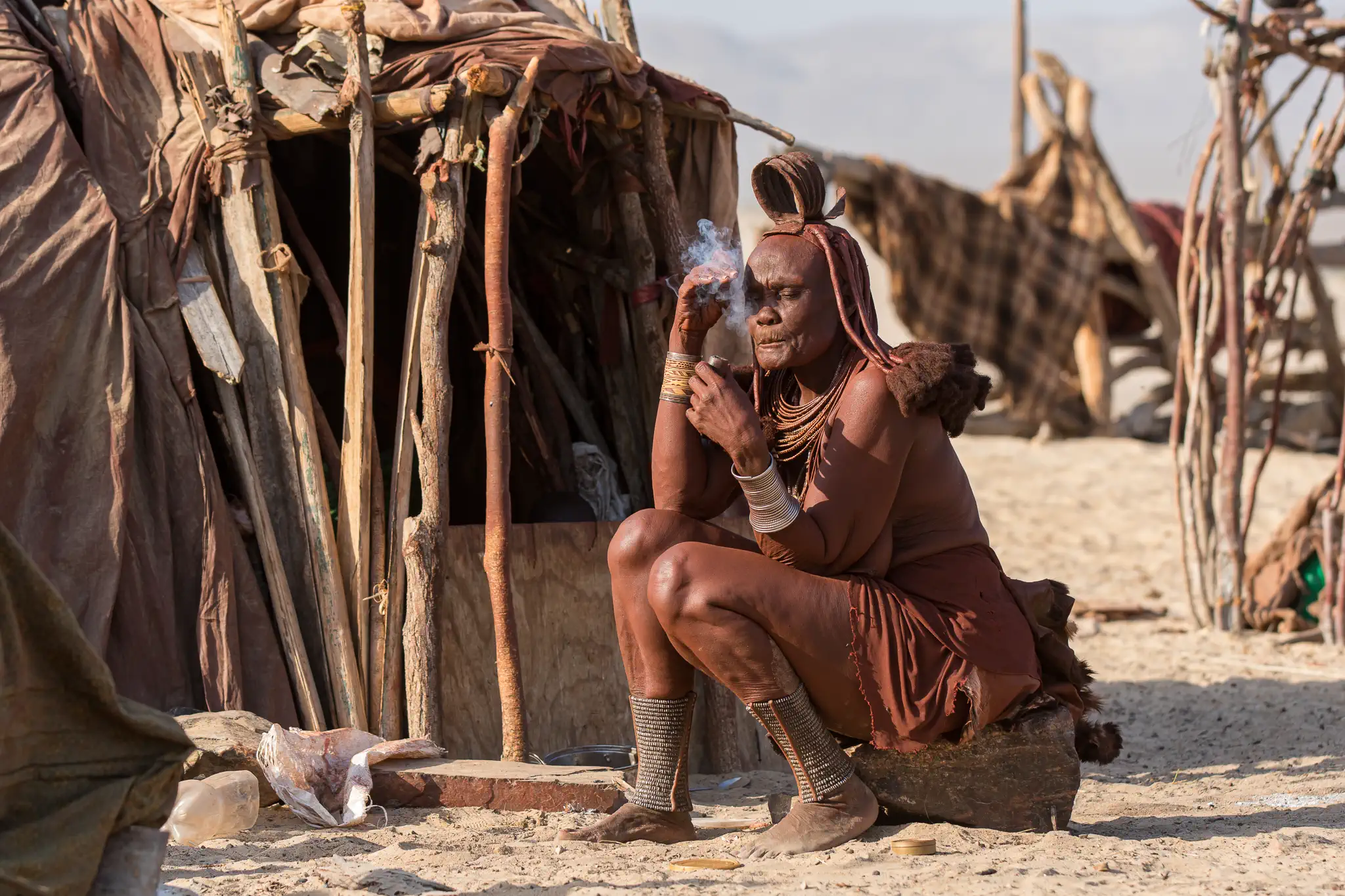
Kaokoland is not an empty wilderness. It is home to Himba communities whose lives remain closely connected to family, livestock and the land.
Together with a Himba friend and local guide, we can spend time in remote settlements around Opuwo where families rarely receive other visitors. We normally arrive during the day, stay overnight and leave the following morning. Staying longer gives us time to settle in, rather than arriving for a brief visit and moving on again.
There is no staged programme. Daily life continues around us, giving us time to sit together, listen, ask questions and learn from one another.
Taking Time
Distances in Kaokoland are considerable, but distance alone does not tell you how long a journey will take.
A short distance on the map may take much of the day. Wildlife may give us a reason to stay longer than expected, or we may simply discover somewhere that deserves more time.
For that reason, I prefer not to reduce Kaokoland to a list of stops and driving times. A good journey needs a clear plan, but also enough freedom to respond to what we find along the way.
This is a region where slowing down is not a philosophy added to the journey. It is simply the best way to travel.
Continue Exploring
I’ve photographed this region over many journeys through Namibia. If you’d like to continue exploring, you’ll find a personal travel story and an extensive photo gallery on Duniart.
Personal observations and experiences from the field.
A curated collection of landscapes, wildlife and moments around Puros.
A curated collection of landscapes, wildlife and moments from the Hoanib riverbed.
Is Kaokoland for You?
Kaokoland will appeal to travellers drawn to vast landscapes, desert-adapted wildlife and journeys that do not always unfold exactly as expected.
You do not need to be an experienced overland traveller. We can combine comfortable lodges with exploration into remote areas, or create a more adventurous journey involving rough tracks and remote camps. Kaokoland can be explored in its own right, or form part of a longer expedition beyond Namibia’s familiar routes.
If the freedom of travelling far into Namibia’s remote northwest is part of what draws you to the country, Kaokoland may well become one of the places you remember most.