Sossusvlei & Deadvlei
Discover
a landscape of towering dunes,
ancient riverbeds and open clay pans —
where light and shadow
constantly reshape the desert.
A Landscape Shaped by Sand, Water & Time
Sossusvlei is one of Namibia’s most recognisable landscapes, and also one of the places where photographs give only a limited sense of scale.
The journey follows the Tsauchab River valley deep into the Namib, between dunes that rise increasingly high above the desert floor. At the end of the valley lie Sossusvlei and Deadvlei, where ancient trees, pale clay pans and enormous walls of sand create some of the country’s most remarkable landscapes.
These are famous places, and they can be busy. But there is much more here than arriving at Deadvlei, taking a photograph and moving on.
Into the Dunes of Sossusvlei
Following an ancient river into the Namib
The journey towards Sossusvlei follows the course of the Tsauchab, an ephemeral river that disappears among the dunes before reaching the Atlantic.
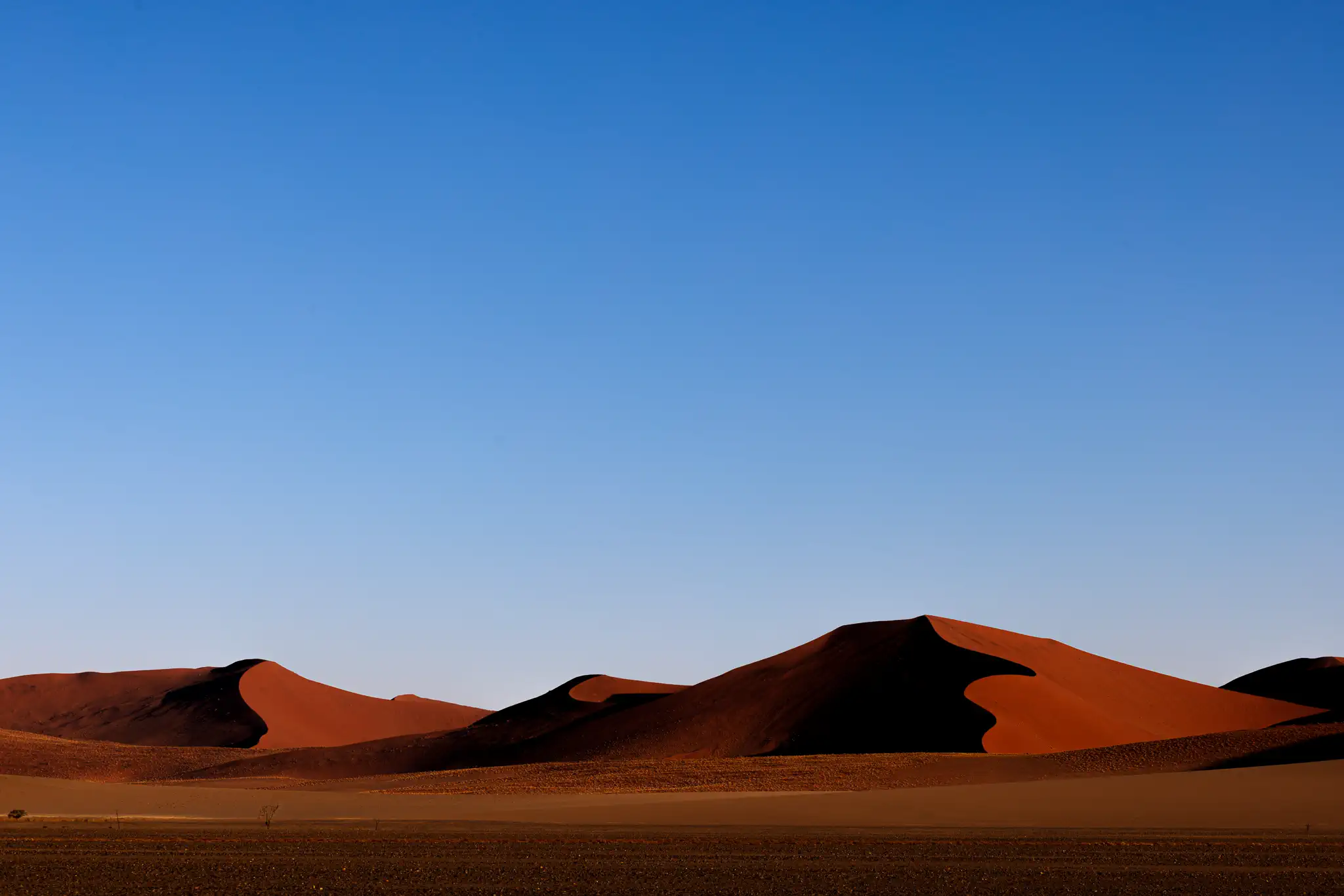
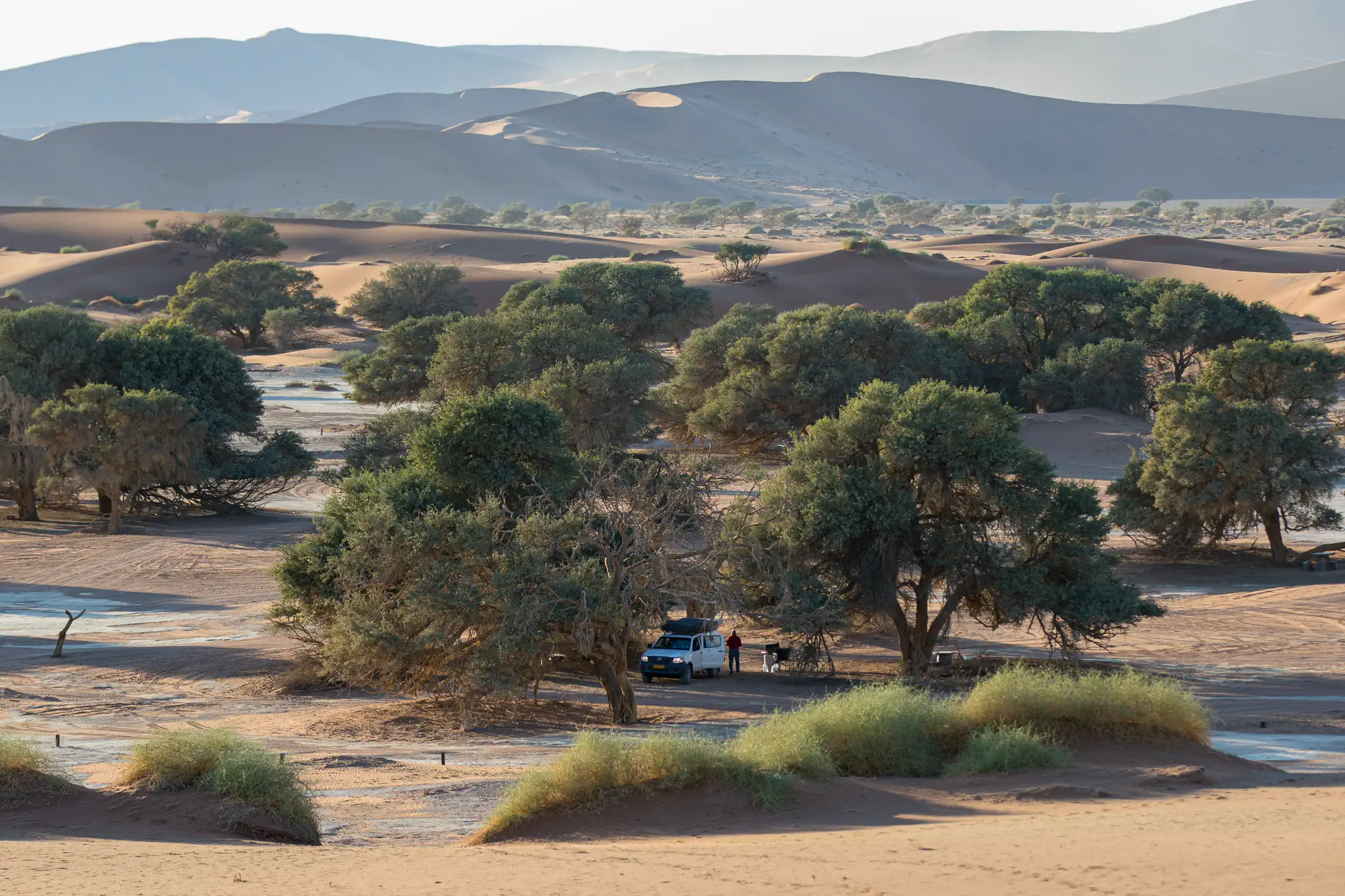
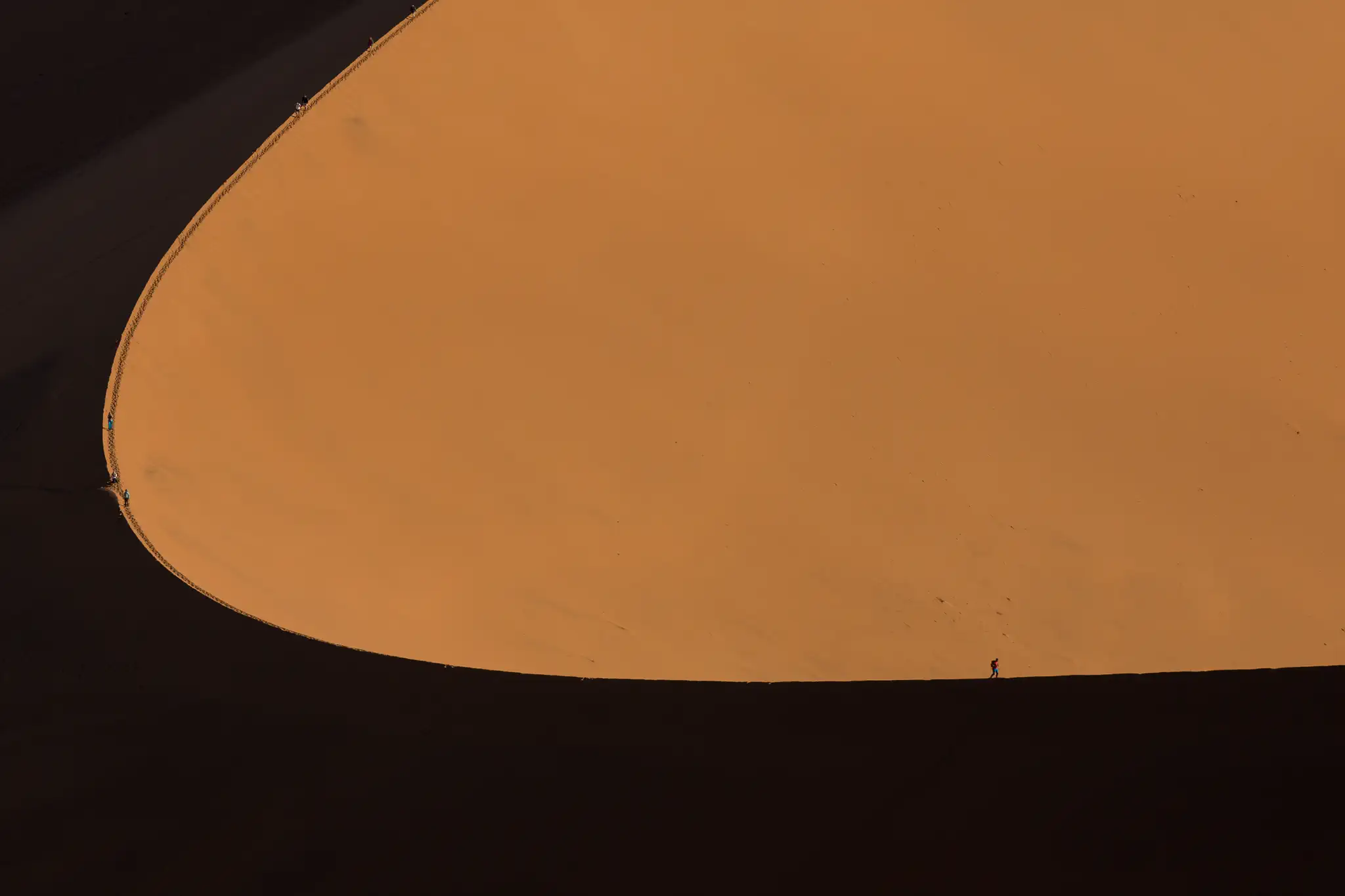
As we travel deeper into the valley, the dunes become higher and the landscape changes continuously. In the early morning, one side of a dune may glow in the first sunlight while the other remains completely in shadow. A few hours later, the same landscape can look entirely different.
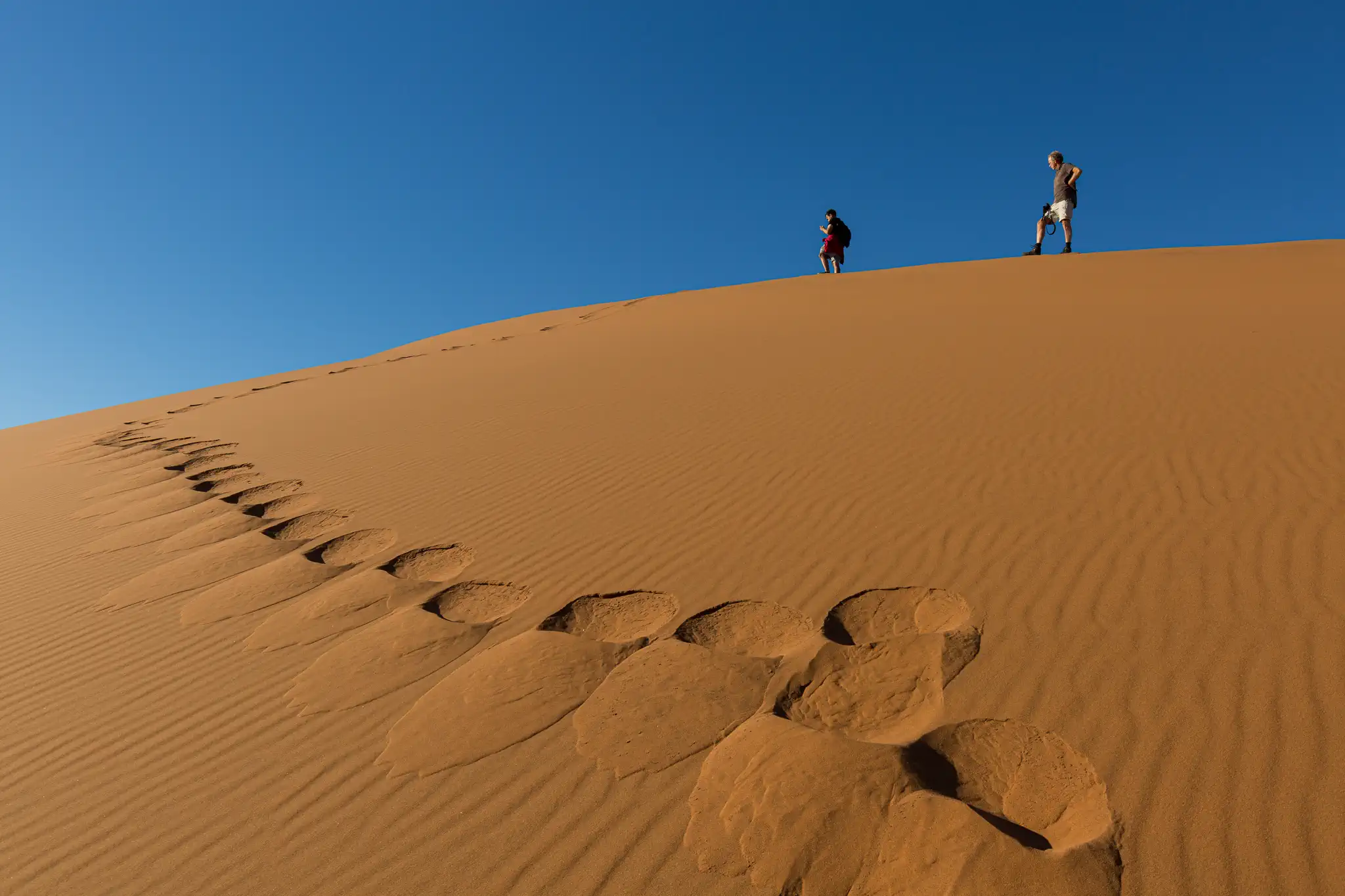
There is no need to rush directly to the end of the road. We stop where the landscape, the light or wildlife gives us a reason to stop, and take time to explore on foot.
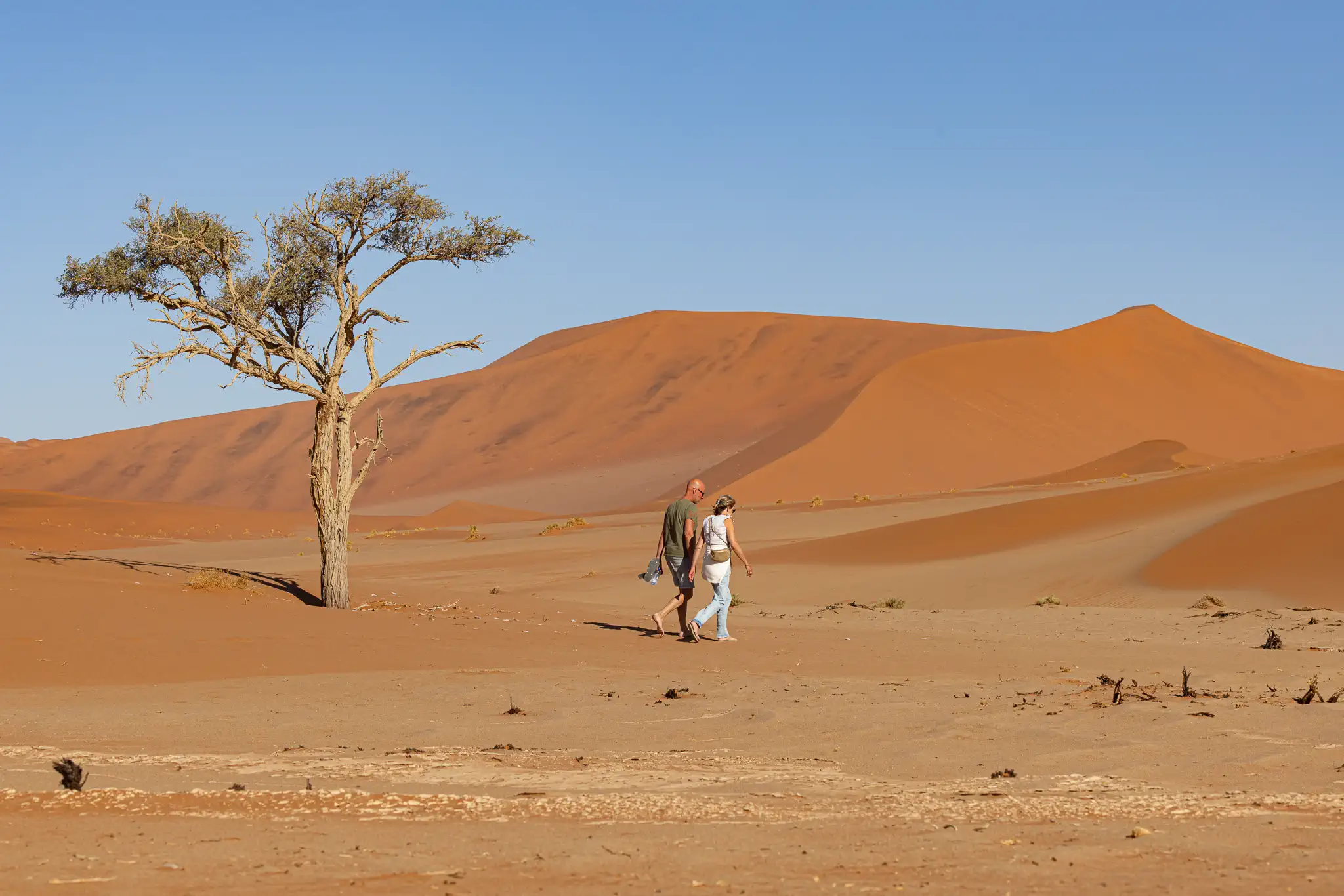
Walking into the dunes changes the sense of scale completely. Distances are deceptive, ridges are higher than they appear, and people quickly become tiny figures against an immense landscape of sand.
Deadvlei
Ancient trees on a forgotten floodplain
Deadvlei is one of Namibia’s most photographed places, but walking into the pan is still remarkable.
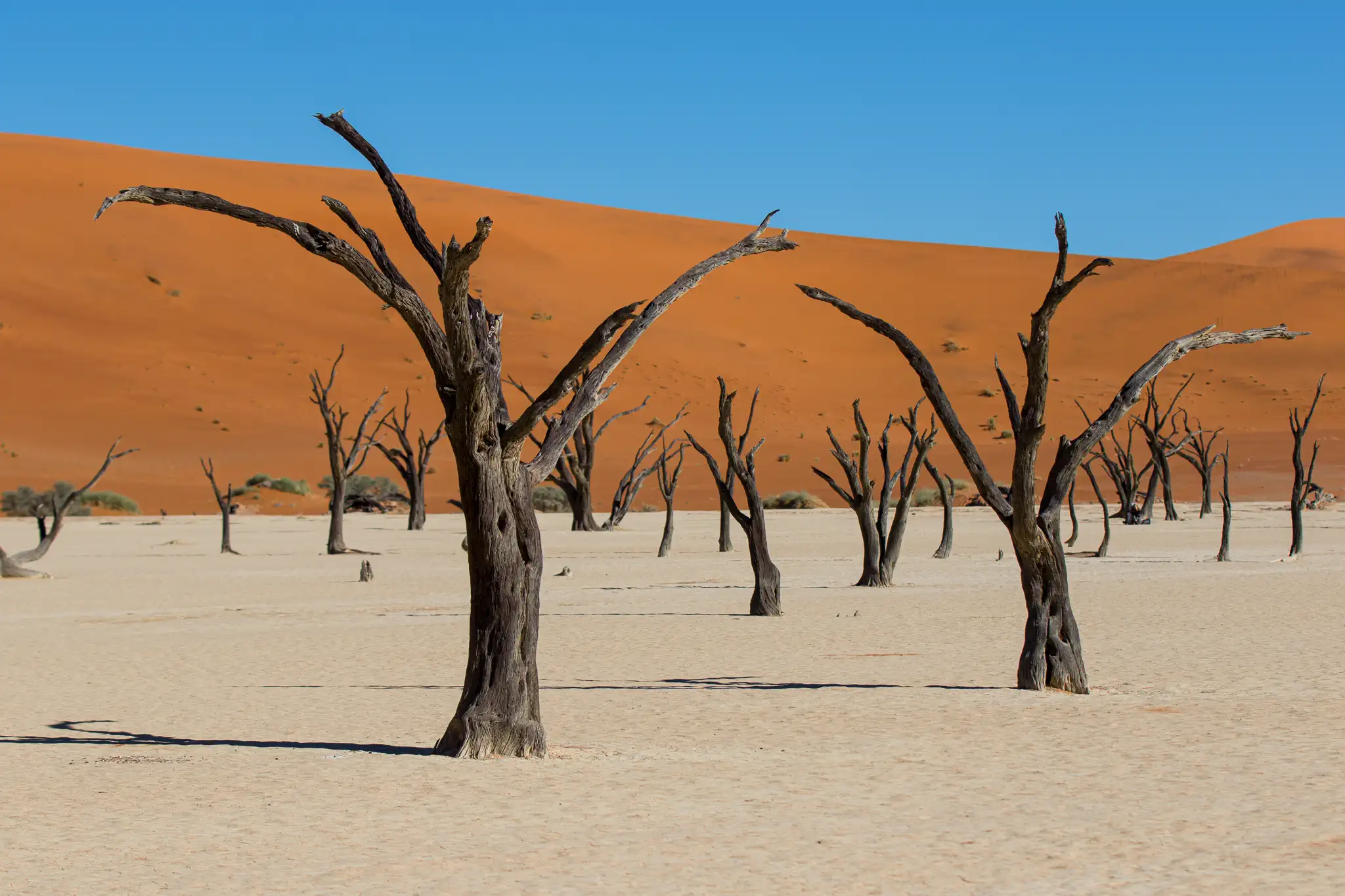
The dark trunks of dead camel thorn trees stand across a pale clay floor, surrounded by some of the highest dunes in the region. The trees grew when floodwater from the Tsauchab still reached the pan. As the dunes shifted and the river changed course, the water disappeared and the trees died.
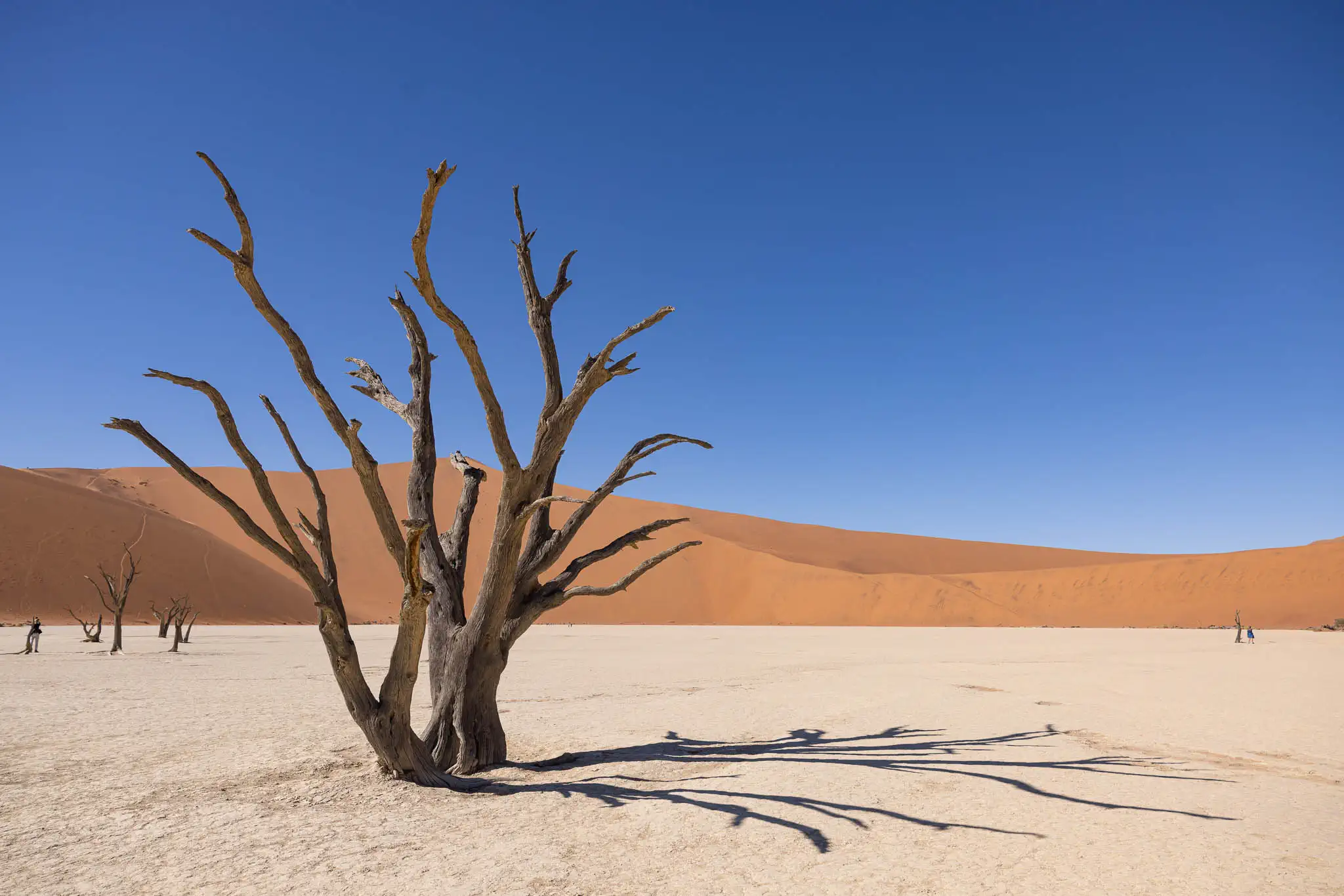
The extreme dryness of the desert has preserved their trunks for centuries.
The familiar photographs show the striking contrast between dark trees, white clay and red sand, but the scale of Deadvlei is less obvious until you are there. The pan is larger than it appears in photographs, and walking further across it reveals different groups of trees, changing perspectives and quieter parts away from the most familiar viewpoints.
Life in the Desert
Oryx, ostriches and signs in the sand
The Namib may appear empty, but life here has adapted to conditions of extreme heat and very little water.
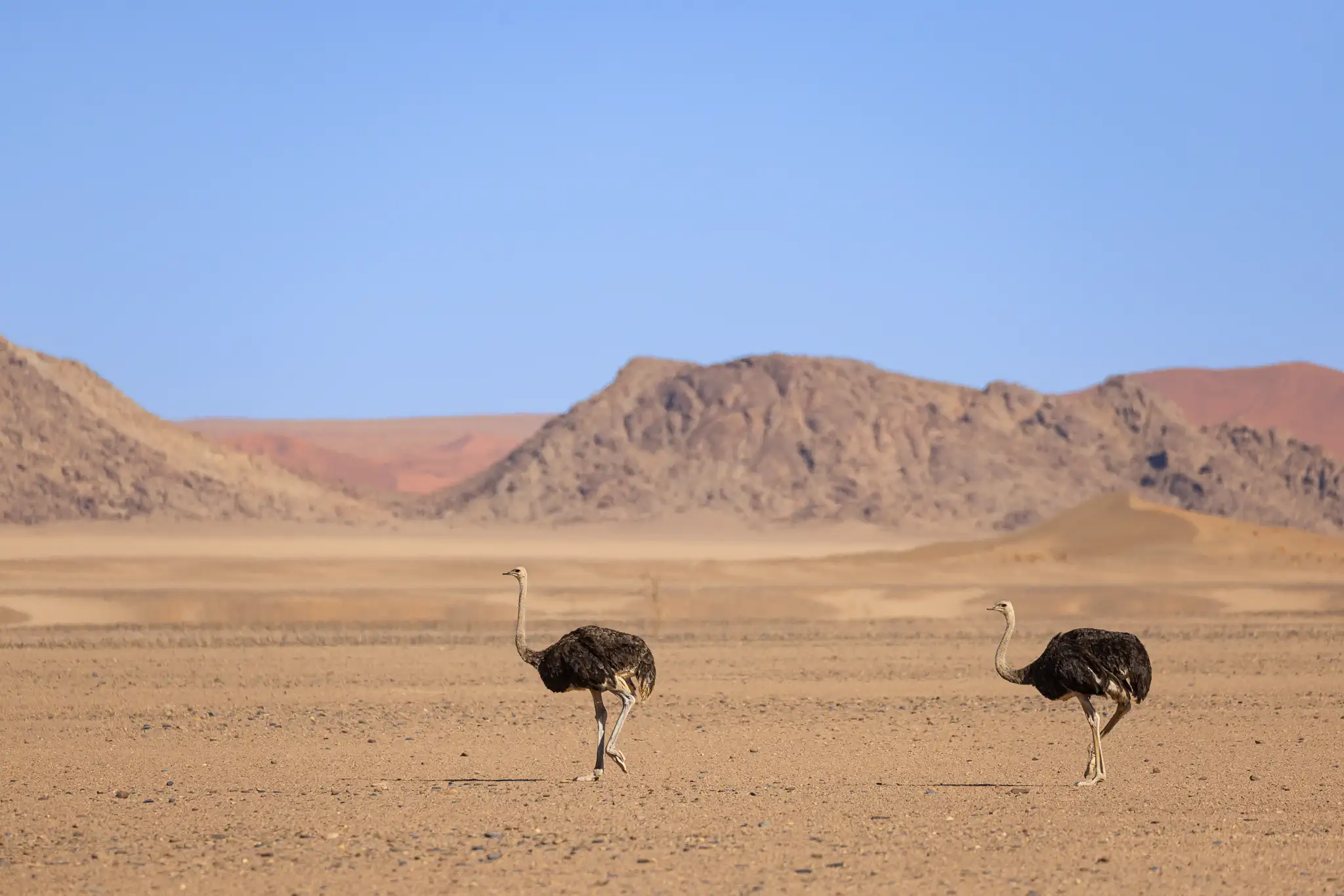
Oryx move through the open plains and between the dunes, while ostriches are often seen crossing the gravel flats. Smaller animals are less obvious, but tracks in the sand reveal activity that often goes unnoticed from the road.
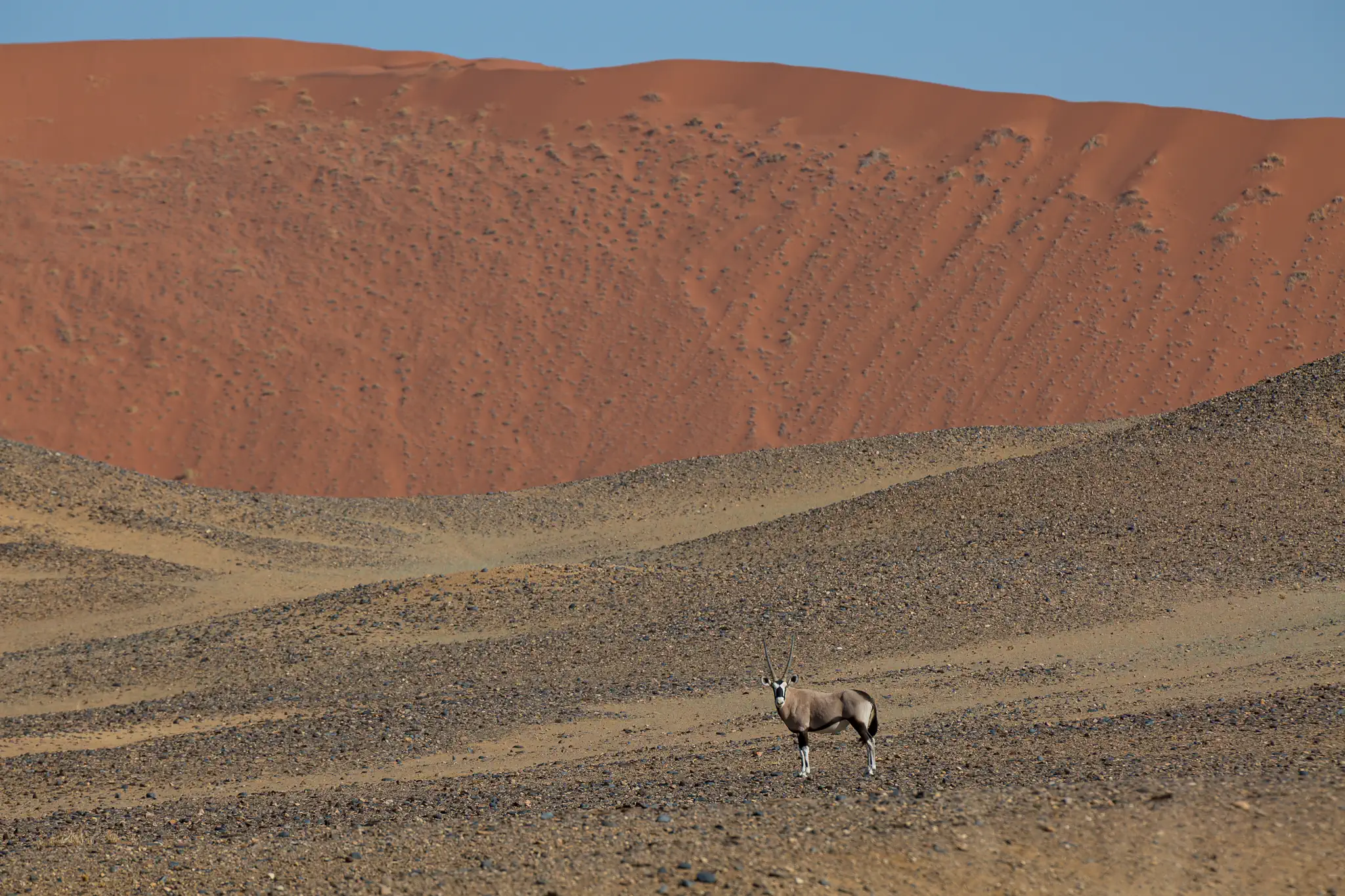
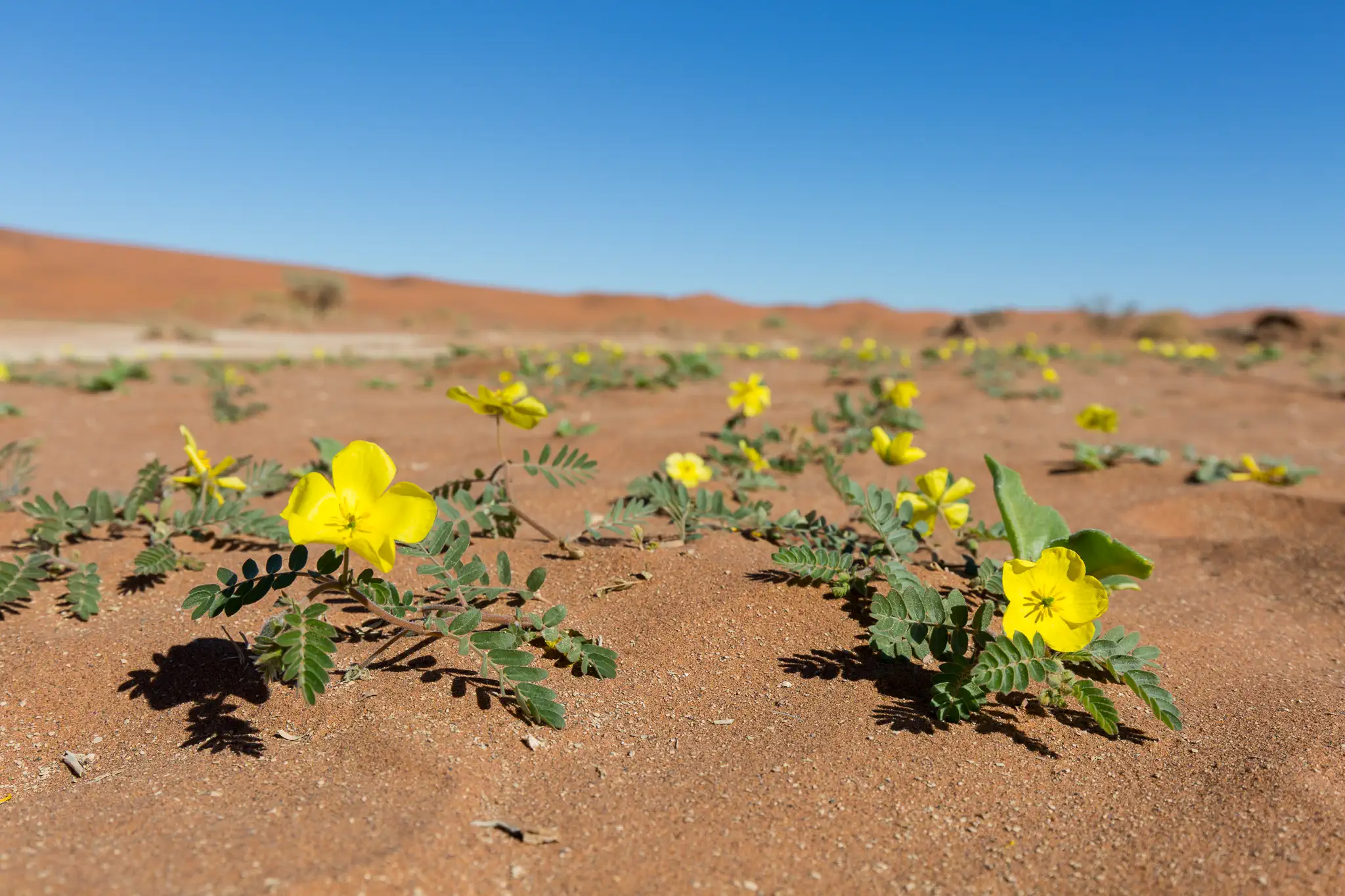
The desert can also change surprisingly quickly. After rare rainfall, plants emerge and flowers may appear across ground that seemed completely barren only a short time before.
These moments are unpredictable and often brief. They are also a reminder that the desert is not lifeless. Much of what survives here is simply adapted to waiting.
Light & Time
The same landscape never looks quite the same
Light is part of what makes Sossusvlei so remarkable.
In the early morning, long shadows divide the dunes into sharply contrasting shapes. As the sun rises, those shadows retreat and the colours change. Towards evening, ridges catch the last light while the valleys below have already fallen into shade.
For photography, timing matters. But even without a camera, seeing the landscape under different conditions changes the way you experience it.
This is why I prefer to give Sossusvlei enough time. Not to chase every viewpoint or climb every dune, but to have the freedom to walk, stop and respond to what the landscape is doing.
Part of the Wider Journey
For many travellers, Sossusvlei forms part of a longer journey across Namibia that continues north through the Namib towards the coast at Swakopmund and Walvis Bay, or crosses the central highlands towards Damaraland and Etosha.
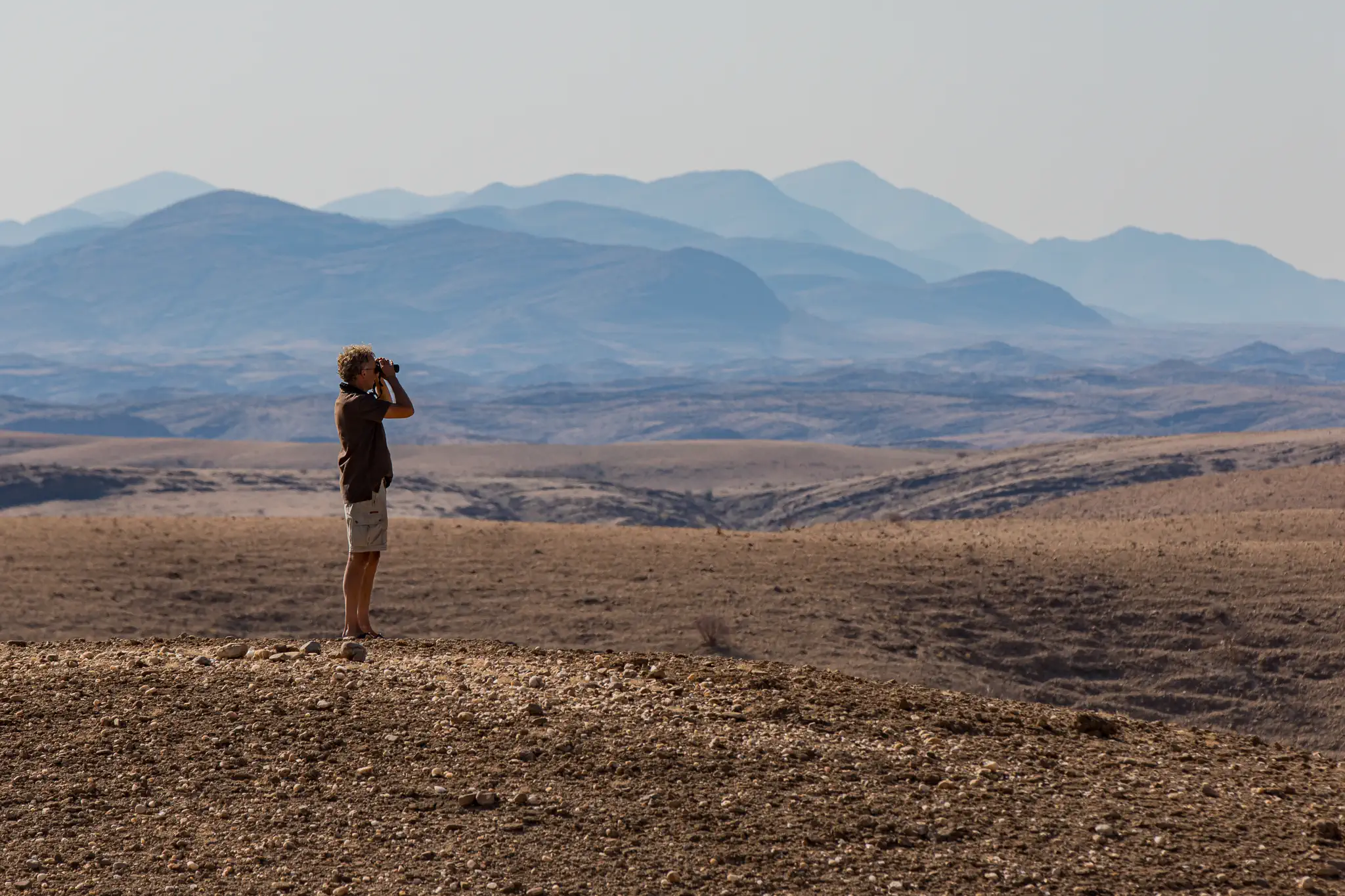
The distances are considerable, but the journey between these places is part of the attraction. Landscapes change gradually, settlements are few and the road passes through some of Namibia’s most sparsely populated country.
Sossusvlei may be one of the best-known destinations along the way, but it sits within a much larger desert landscape.
Continue Exploring
I’ve photographed this region over many journeys through Namibia. If you’d like to continue exploring, you’ll find a personal travel story and an extensive photo gallery on Duniart.
Personal observations and experiences from the field.
A curated collection of landscapes, desert light and moments from Sossusvlei and the Namib Desert.
Is Sossusvlei for You?
Sossusvlei will appeal to travellers who enjoy landscapes, walking and photography, but you do not need to be a serious photographer to appreciate it.
The dunes and clay pans are spectacular, but much of the pleasure comes from simply being in such an immense landscape: walking across Deadvlei, following a dune ridge or watching shadows move across the sand.
If you are willing to look beyond the familiar photographs and give the desert some time, Sossusvlei deserves its place on a journey through Namibia.