The Namibian Coast
Discover
where immense dunes meet the Atlantic,
desert wildlife survives among the sand —
and two very different worlds
exist side by side.
Where Desert Meets Ocean
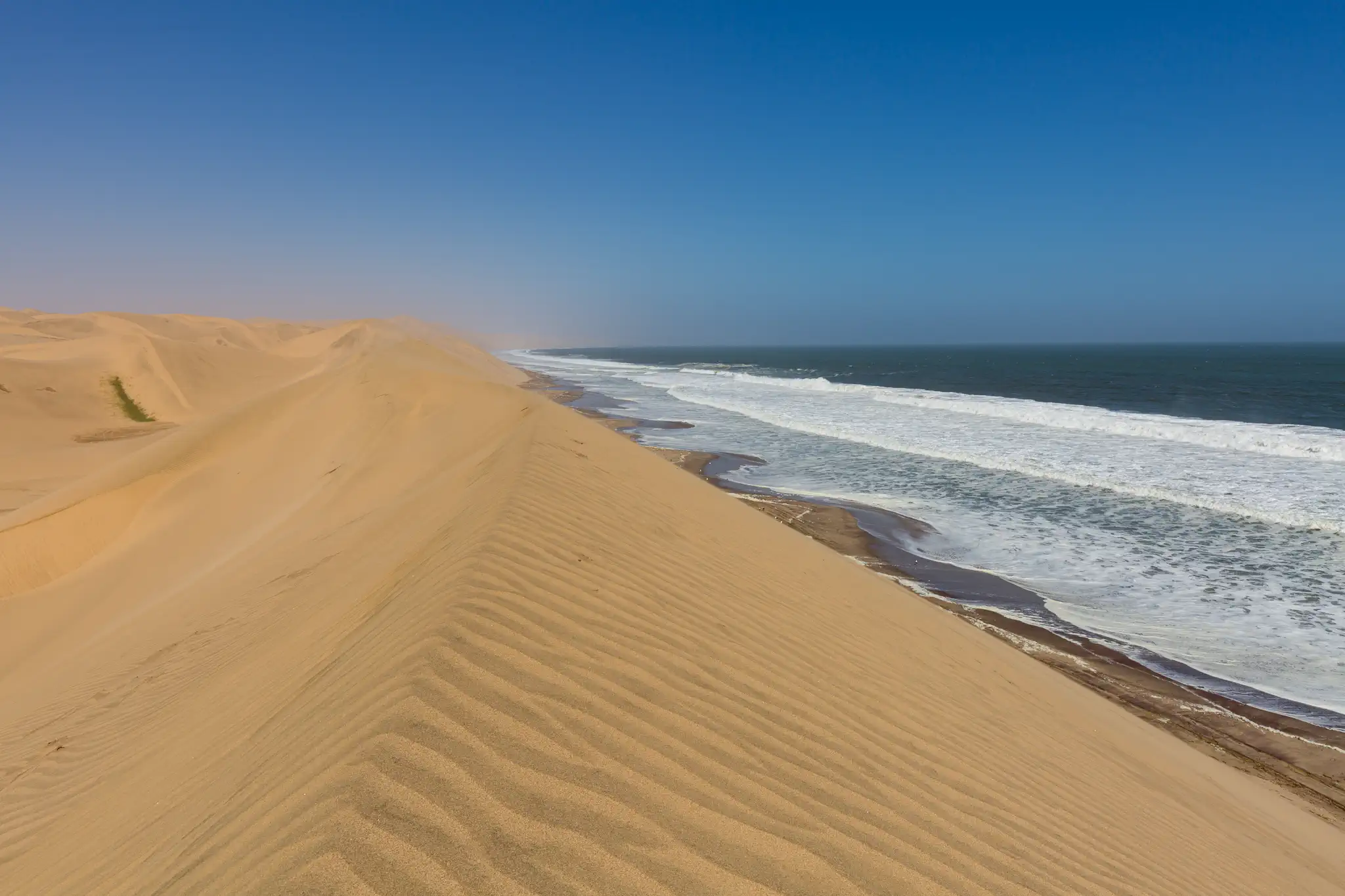
Namibia’s central coast is a place of striking contrasts, where the Namib Desert reaches the cold waters of the Atlantic.
Around Swakopmund and Walvis Bay, towering dunes, fog-bound beaches and productive coastal waters create an environment unlike anywhere else in the country. Marine life gathers in enormous numbers, jackals patrol beaches and salt flats, and a surprising variety of small animals survives among dunes that at first appear almost empty.
After days travelling through the dry interior of Namibia, arriving at the Atlantic feels like entering another country. The temperature drops, fog rolls in from the sea, and the landscape changes completely.
For me, the coast is not simply a break between inland destinations. It is a place worth exploring in its own right — from seal colonies and sheltered lagoons to dune fields where some of the most interesting wildlife is also the easiest to overlook.
Life Along the Atlantic
Where the ocean supports life in extraordinary numbers
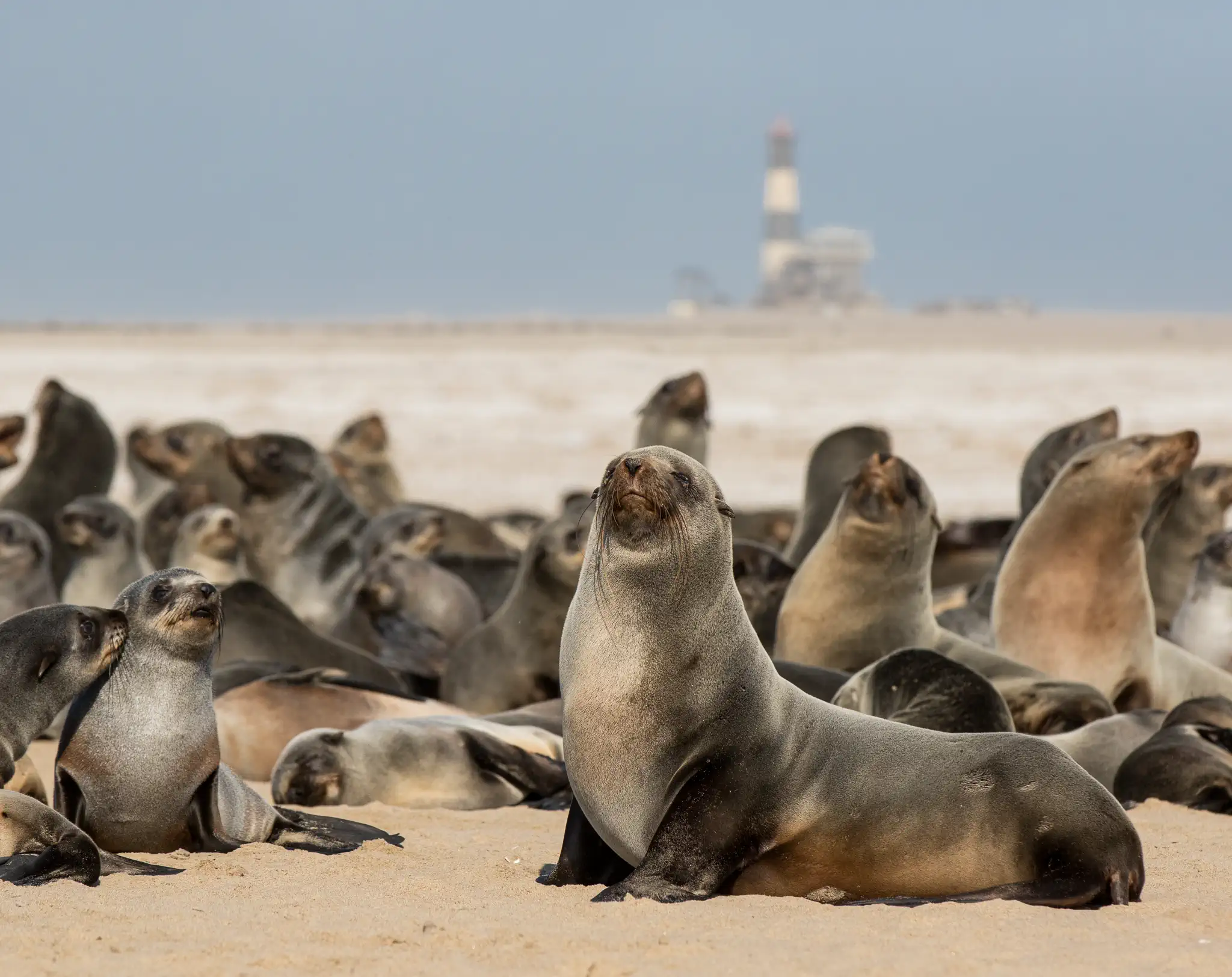
The cold waters of the Benguela Current support a remarkably rich marine ecosystem. Along this seemingly barren coastline, vast colonies of Cape fur seals gather on beaches exposed to wind, fog and Atlantic surf.
The noise, smell and constant movement can be overwhelming at first, but spending time among such concentrations of wildlife is remarkable.
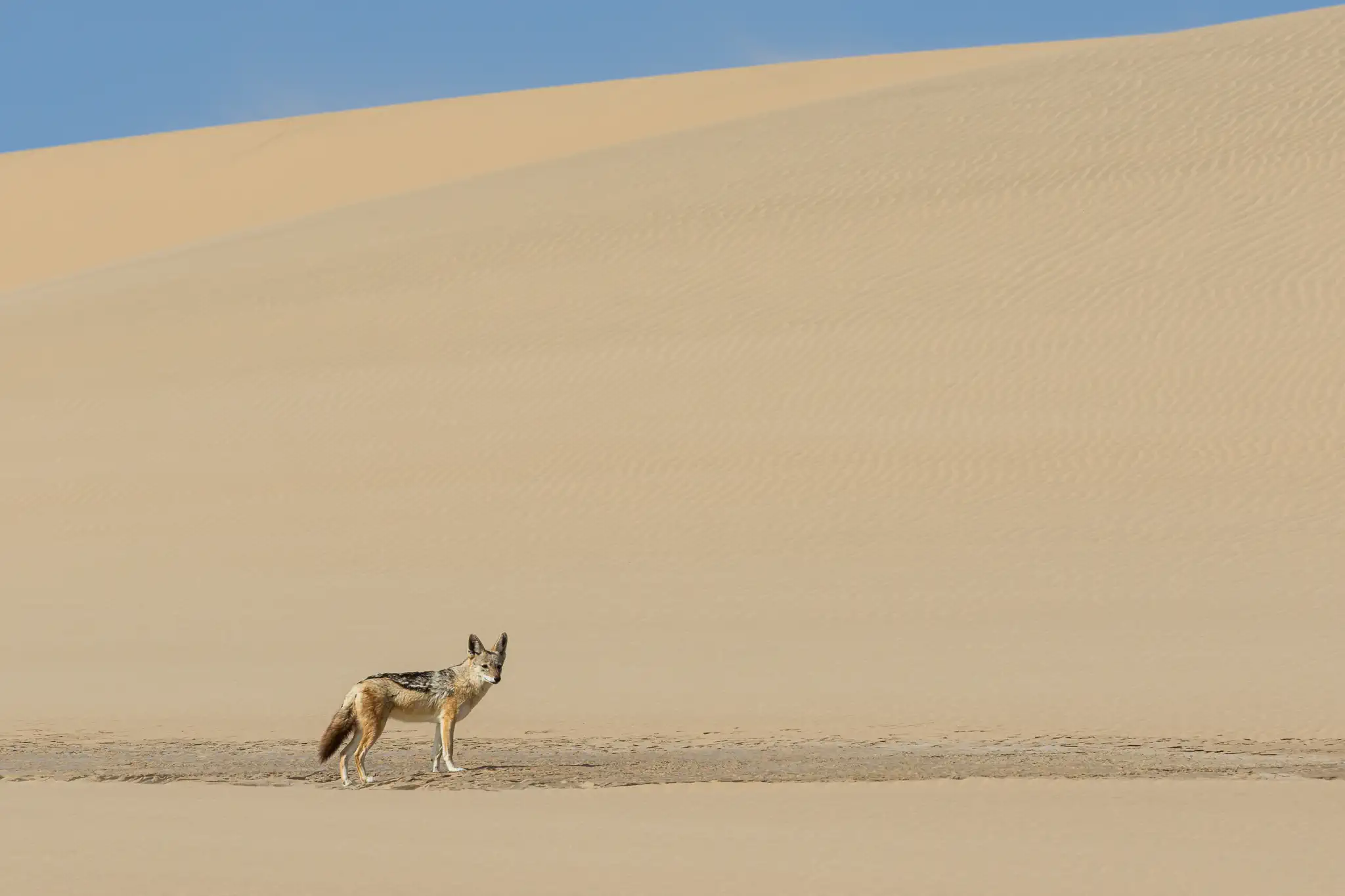
Black-backed jackals patrol the edges of seal colonies and beaches, searching for whatever the ocean provides. Elsewhere, seabirds gather along the shore and flamingos feed in the shallow waters around Walvis Bay.
The coast may appear barren, but it is far from empty.
Exploring from the Water
A different view of the coast
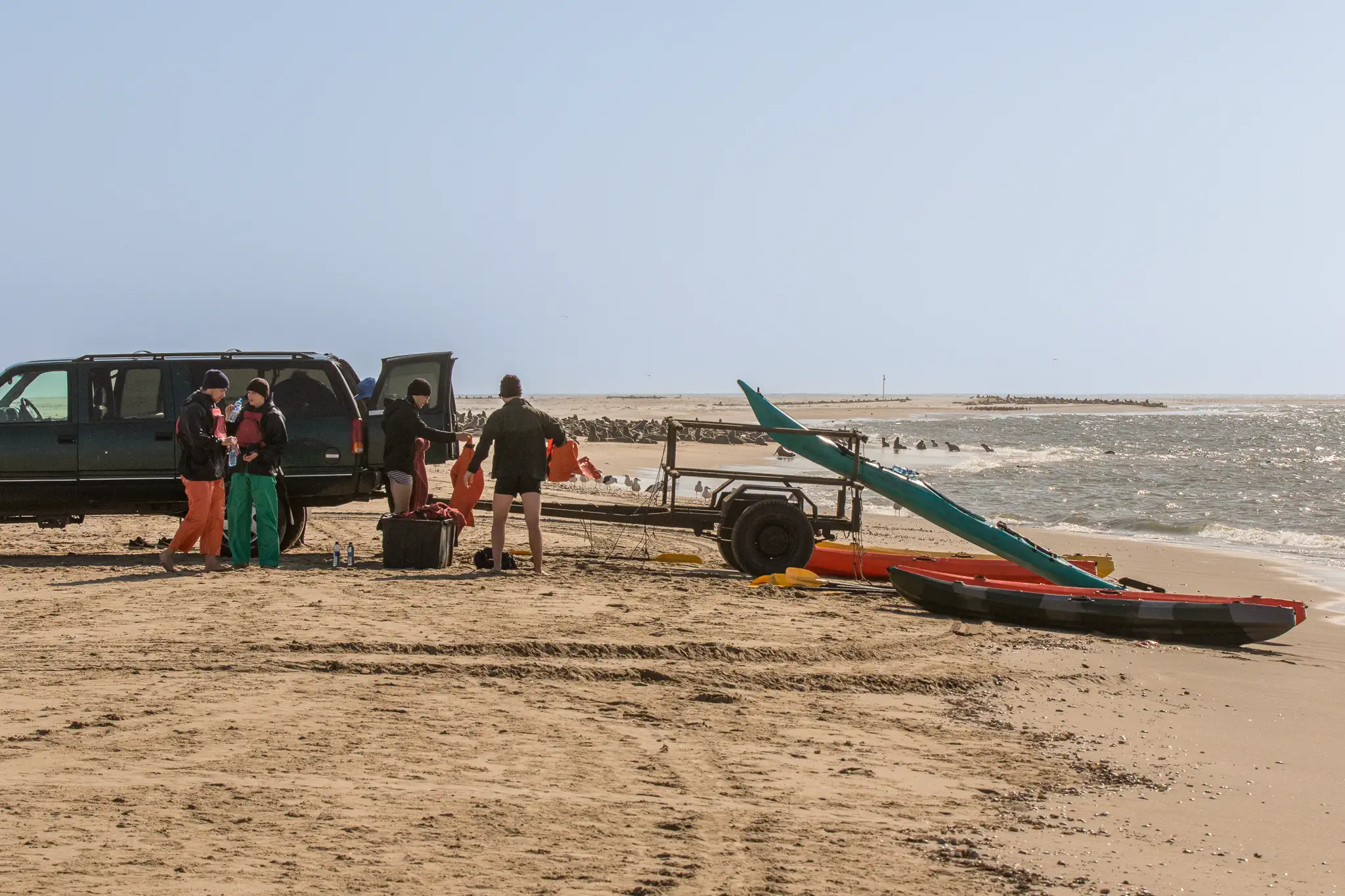
Some parts of the coast are best explored from the water.
Kayaking around the sheltered waters near Walvis Bay offers a quiet way to enter the marine environment. Cape fur seals are often curious and may approach closely, while dolphins and seabirds are also possible.
I like the contrast with travelling overland. After days of driving through dry landscapes, suddenly being at water level, surrounded by the sounds and movement of the coast, changes the rhythm of the journey completely.
Where the Desert Meets the Sea
Exploring the coastal dunes
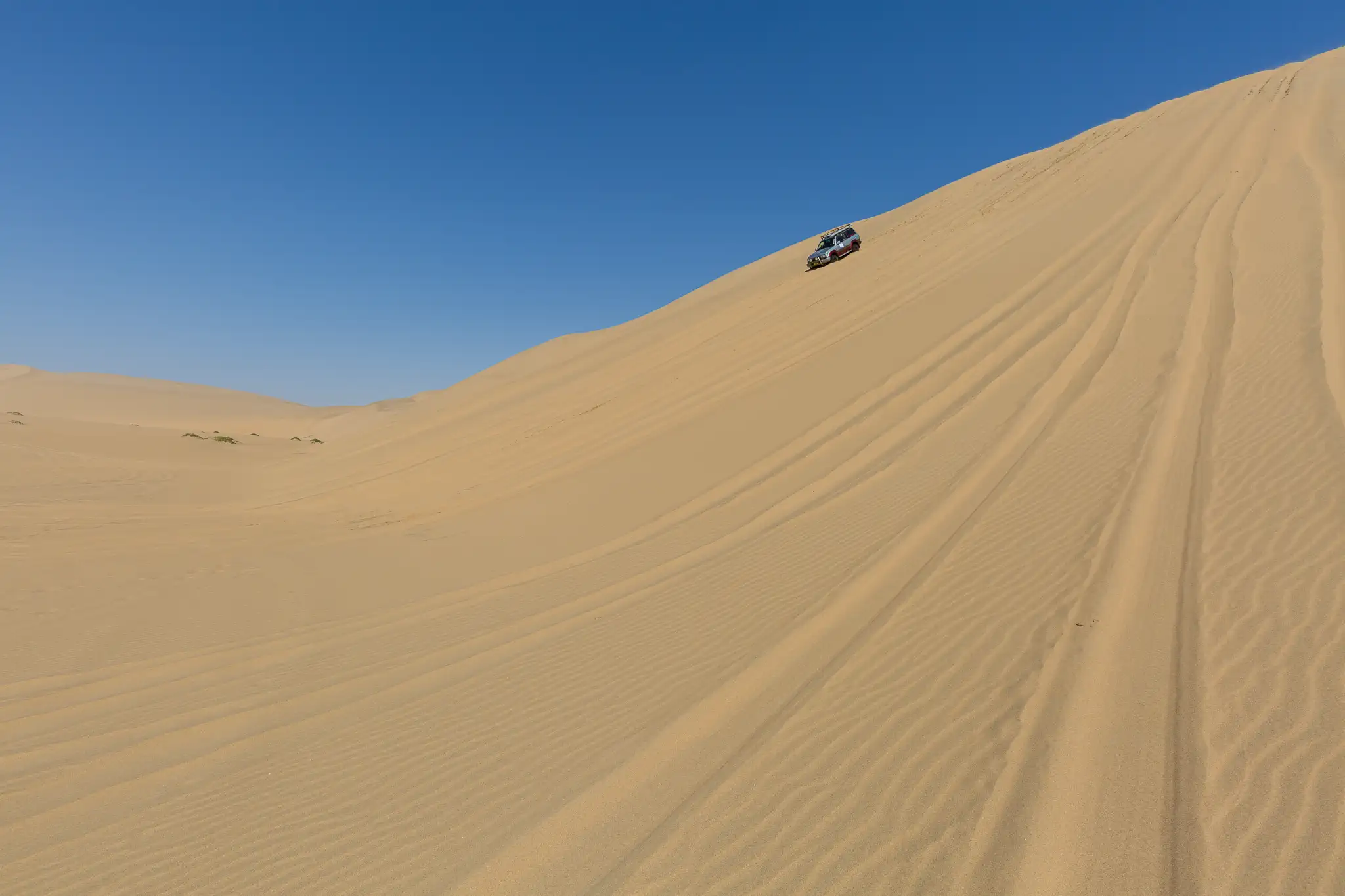
South of Walvis Bay, the dunes of the Namib Desert reach the Atlantic.
On one side lies an immense field of sand shaped by wind; on the other, the cold ocean stretches towards the horizon. Fog drifting inland from the Atlantic provides moisture to animals and plants living far from permanent water.
Travelling through the dune fields reveals a scale that is difficult to understand from the edge. Steep slopes hide valleys and distant ridges, while routes change with the movement of the sand.
This kind of driving requires local knowledge and respect for the terrain. For me, its value is not simply the excitement of crossing large dunes, but the access it provides to a landscape that appears simple from a distance and becomes increasingly complex the closer we look.
A Desert that is Far from Empty
Looking closer at life among the dunes
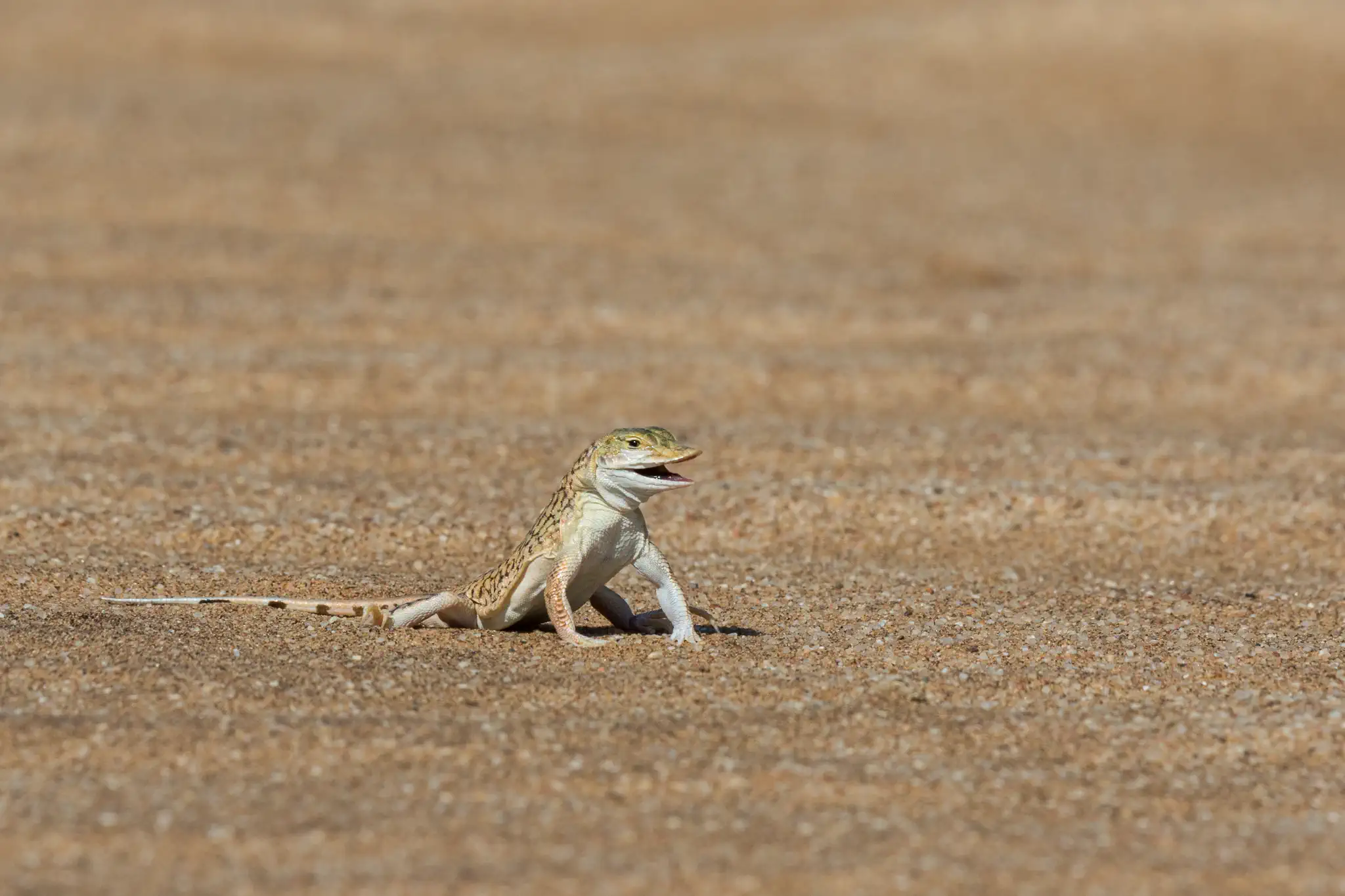
At first sight, the coastal dunes can appear almost lifeless.
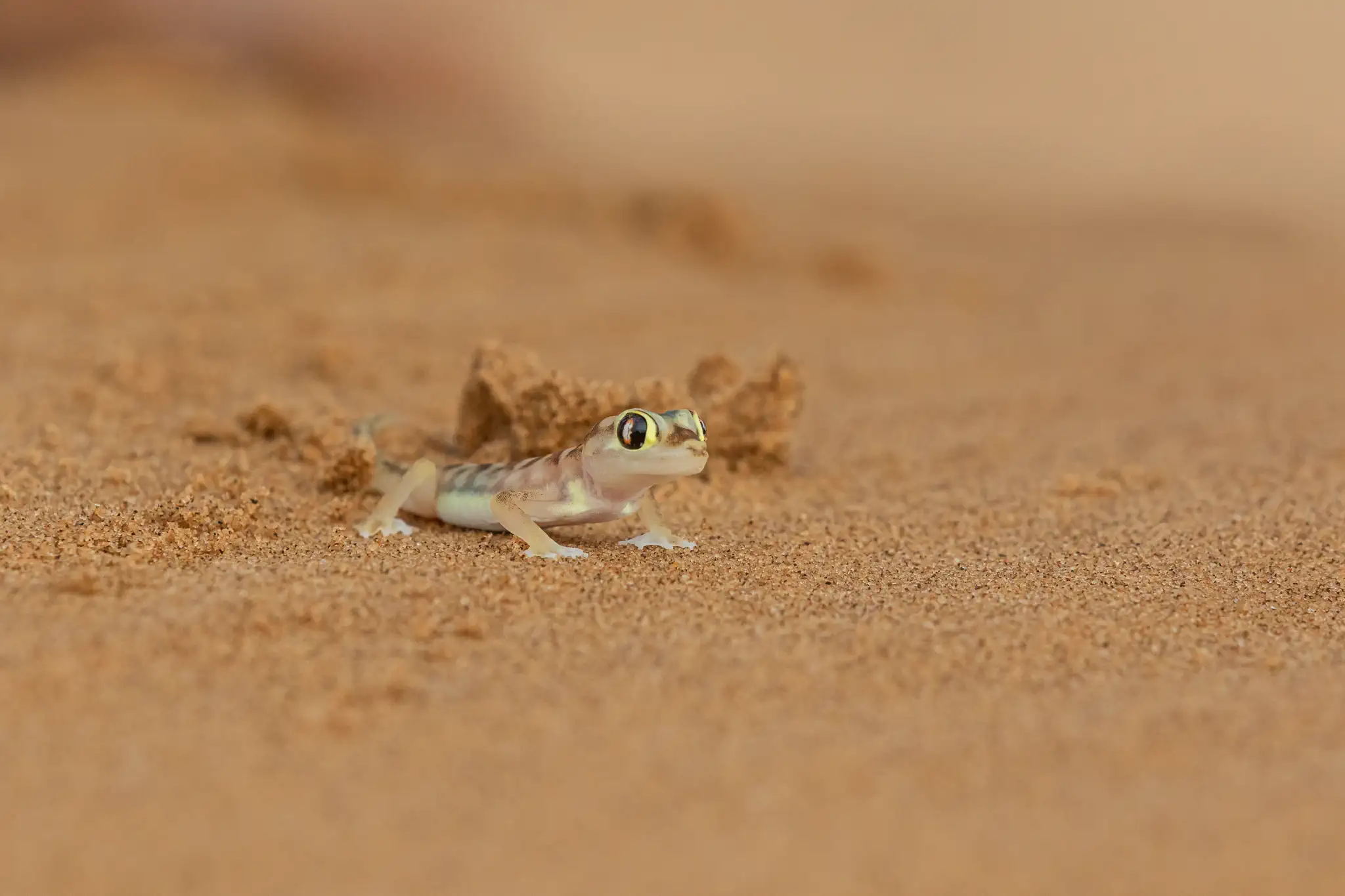
Look more closely, however, and the sand reveals tracks, burrows and signs of animals adapted to heat, shifting sand and the scarcity of water. Geckos, lizards, insects and other small creatures survive in conditions that seem almost impossible.
Finding them requires a completely different kind of wildlife watching from Etosha. Here, the challenge is not scanning the horizon for elephants or giraffes, but learning to notice tiny marks in the sand and understand what may be hidden beneath the surface.
For anyone interested in natural history, this smaller world is one of the most fascinating aspects of the Namib.
The Coast & the Wider Journey
The central coast forms a natural transition between very different parts of Namibia.
From Swakopmund and Walvis Bay, a journey may continue south towards the great dune landscapes of Sossusvlei, or inland towards Damaraland and Kaokoland as part of a longer journey across Namibia.
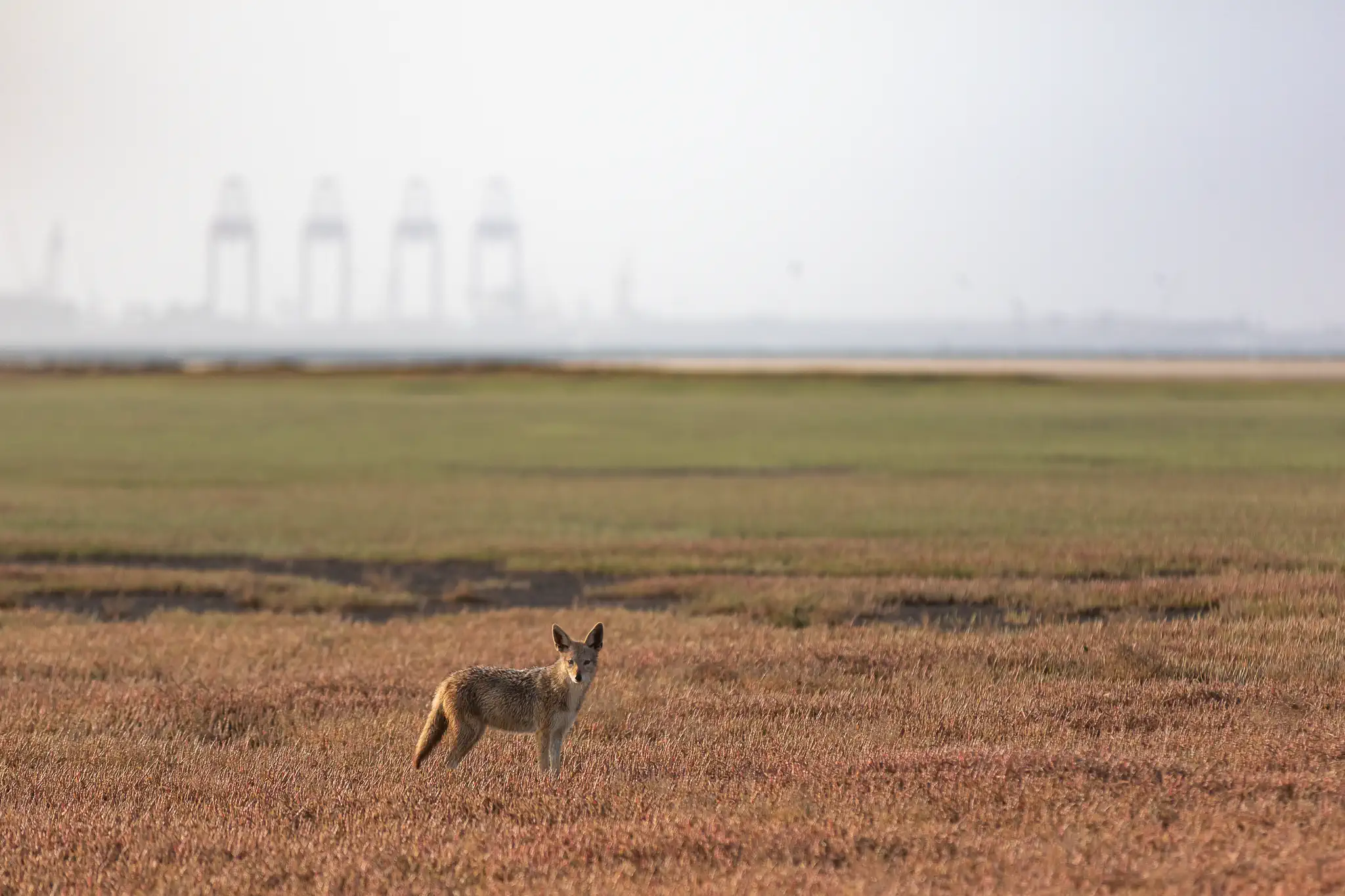
The coast is also a place where wilderness and human activity exist unusually close together. Salt works, harbour infrastructure and industry form part of the landscape, while jackals cross open ground, flamingos gather in shallow water and seals occupy beaches nearby.
For me, Swakopmund and Walvis Bay are therefore more than convenient stops between destinations. They reveal another side of Namibia, shaped by the meeting of desert and ocean.
Continue Exploring
I’ve photographed this region over many journeys through Namibia. If you’d like to continue exploring, you’ll find a personal travel story and an extensive photo gallery on Duniart.
Personal observations and experiences from the field.
A curated collection of landscapes, wildlife and moments from Swakopmund and Walvis Bay.
Is the Namibian Coast for You?
The coast will appeal to travellers who enjoy contrast and variety.
It combines dramatic landscapes with marine wildlife, small desert creatures and opportunities to explore from both land and water. It also offers a complete change of pace during a longer journey through Namibia.
If you are curious about how animals survive in extreme environments and enjoy looking beyond the obvious, the coast deserves more than a quick overnight stop.