Etosha National Park
Discover
vast open plains,
a salt pan stretching to the horizon —
and waterholes where
waiting quietly can reveal
an extraordinary world of wildlife.
A Landscape Built Around Water
Etosha is one of Africa’s great wildlife destinations, but what keeps me interested is not simply the number of animals we may see.
The landscape is remarkably open. Mopane woodland gives way to grasslands, dry plains and the immense Etosha Pan, while scattered waterholes become gathering places for wildlife across the park.
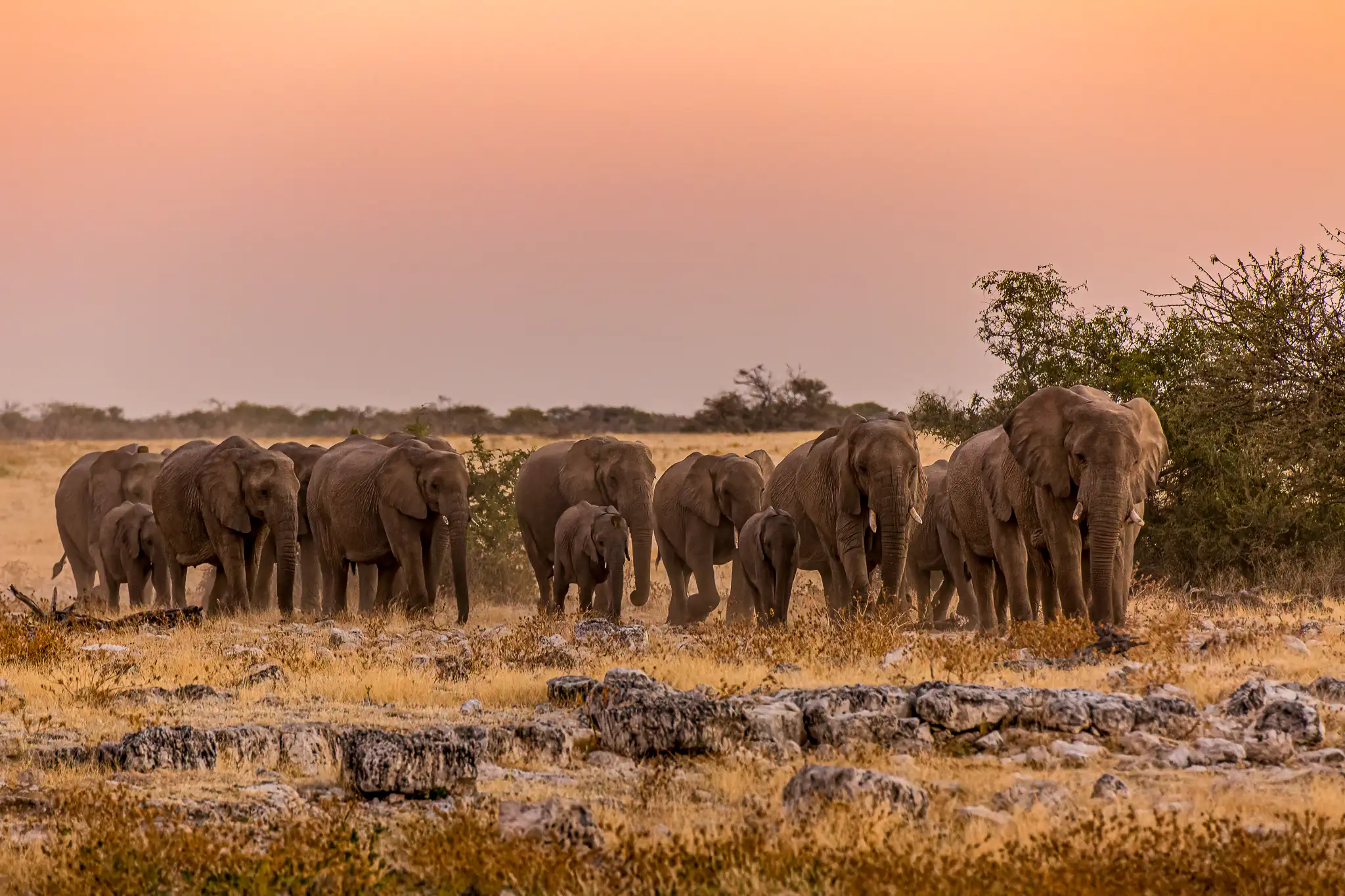
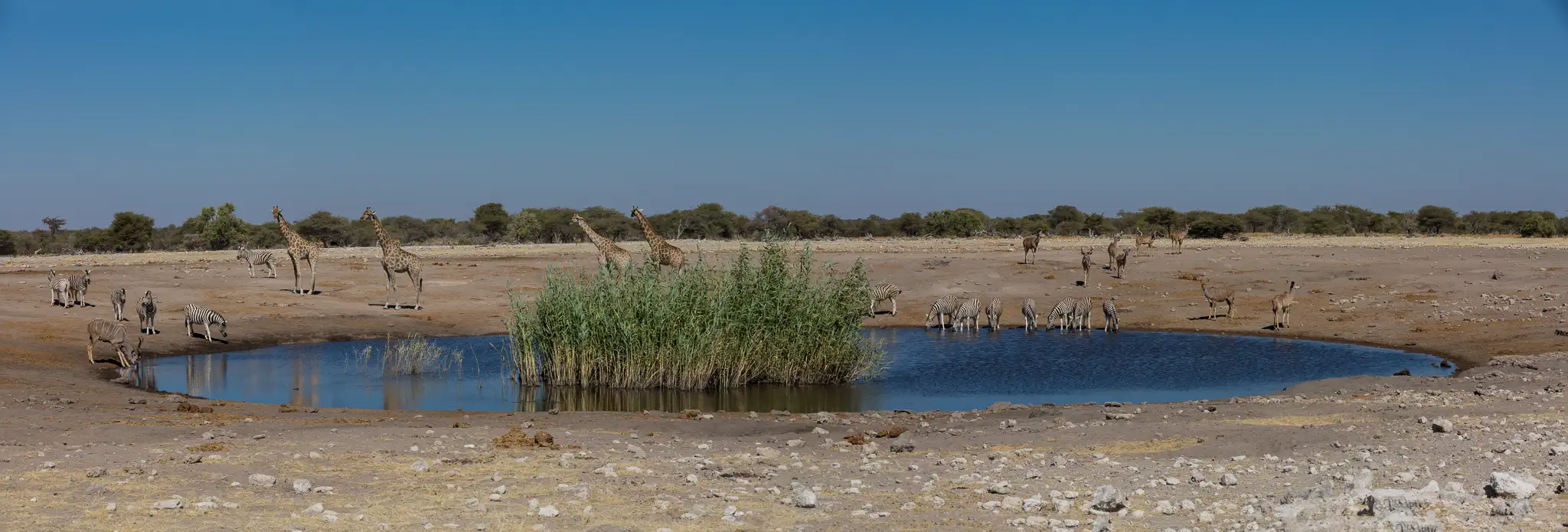
Especially during the dry season, much of the rhythm of life revolves around water. Elephants arrive in family groups, antelope approach cautiously, giraffes wait at the edge, and predators are never far away.
Exploring Etosha is partly about knowing where to look. But it is also about knowing when not to move.
Sometimes the best decision we make all day is to switch off the engine and wait.
Around the Waterholes
Patience is often rewarded
Every waterhole in Etosha has its own character.
Some are surrounded by open plains where approaching animals can be seen from a great distance. Others lie close to woodland, where wildlife may appear with little warning. Conditions change through the day, and a quiet waterhole can suddenly become busy within minutes.
I prefer not to race from one sighting to the next. If there are signs that something interesting may happen, we stay. We watch how animals approach the water, how different species respond to one another and how quickly the atmosphere can change when a predator appears.
There are days when patience brings very little. On others, a single hour at the right waterhole becomes one of the most memorable parts of the journey.
The Etosha Pan
An immense open landscape
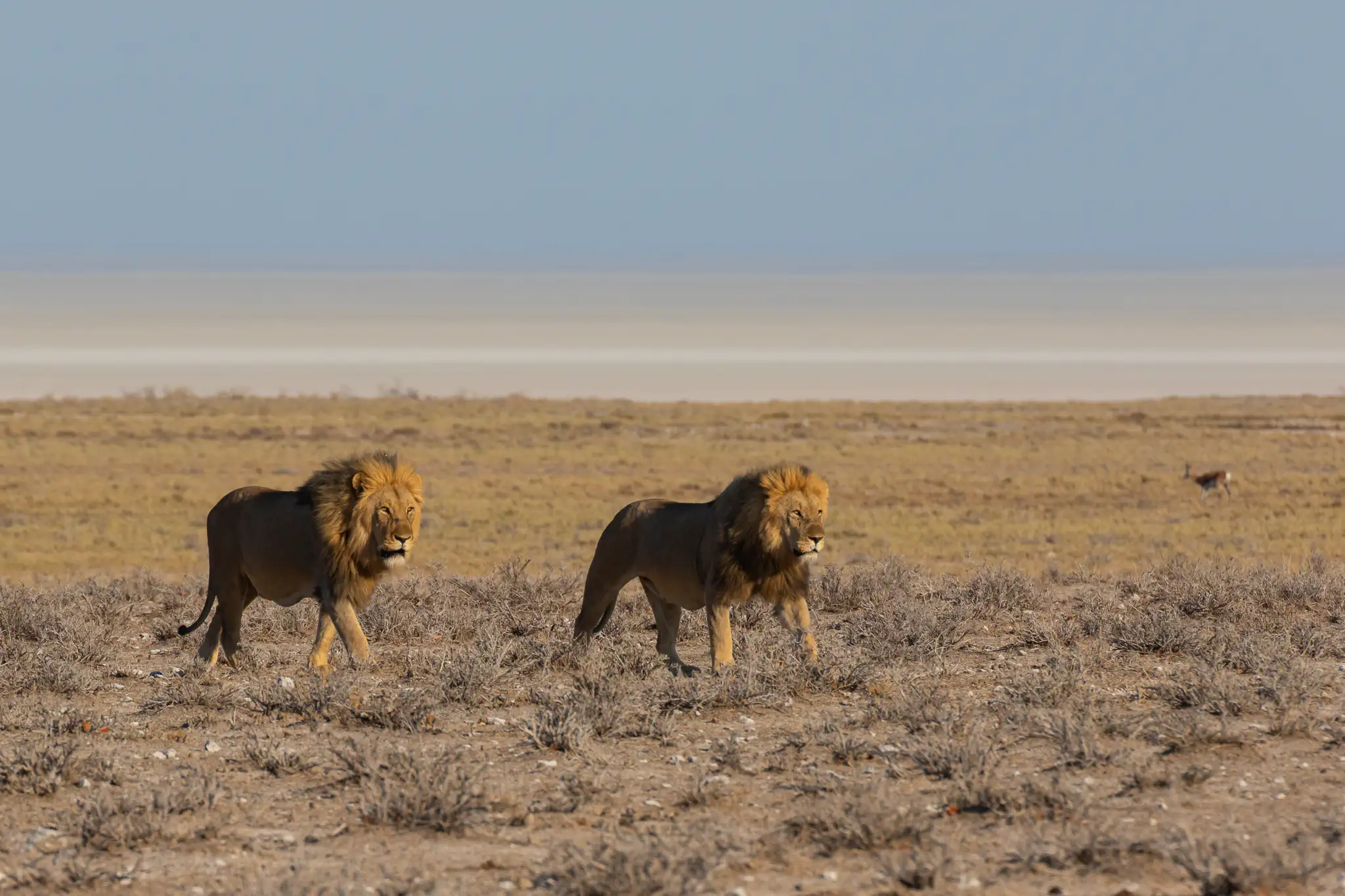
At the centre of the park lies the Etosha Pan, a vast salt basin that dominates the landscape.
For much of the year it appears dry and almost empty, stretching towards a horizon that can be difficult to distinguish from the sky. After good rains, parts of the pan may hold shallow water and attract large numbers of birds.
The pan also shapes the character of the surrounding country. Open grasslands and waterholes along its edges attract large concentrations of wildlife, while the enormous white expanse creates a sense of scale very different from the mountains and river valleys of western Namibia.
Etosha is known for its animals, but the landscape itself is an important part of the journey.
Wildlife at Close Range
From elephants to the smallest details
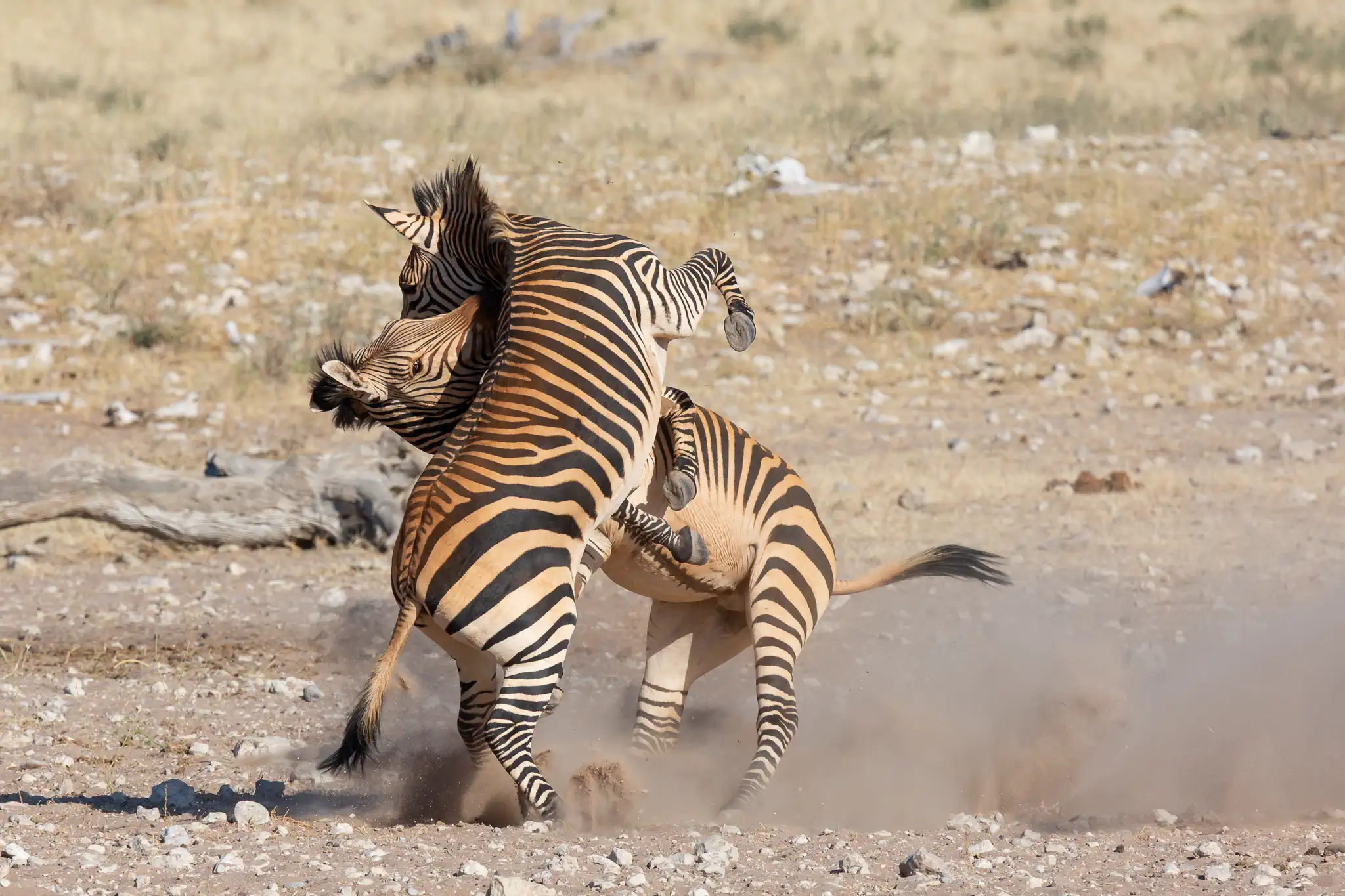
Etosha offers opportunities to see an extraordinary variety of wildlife.
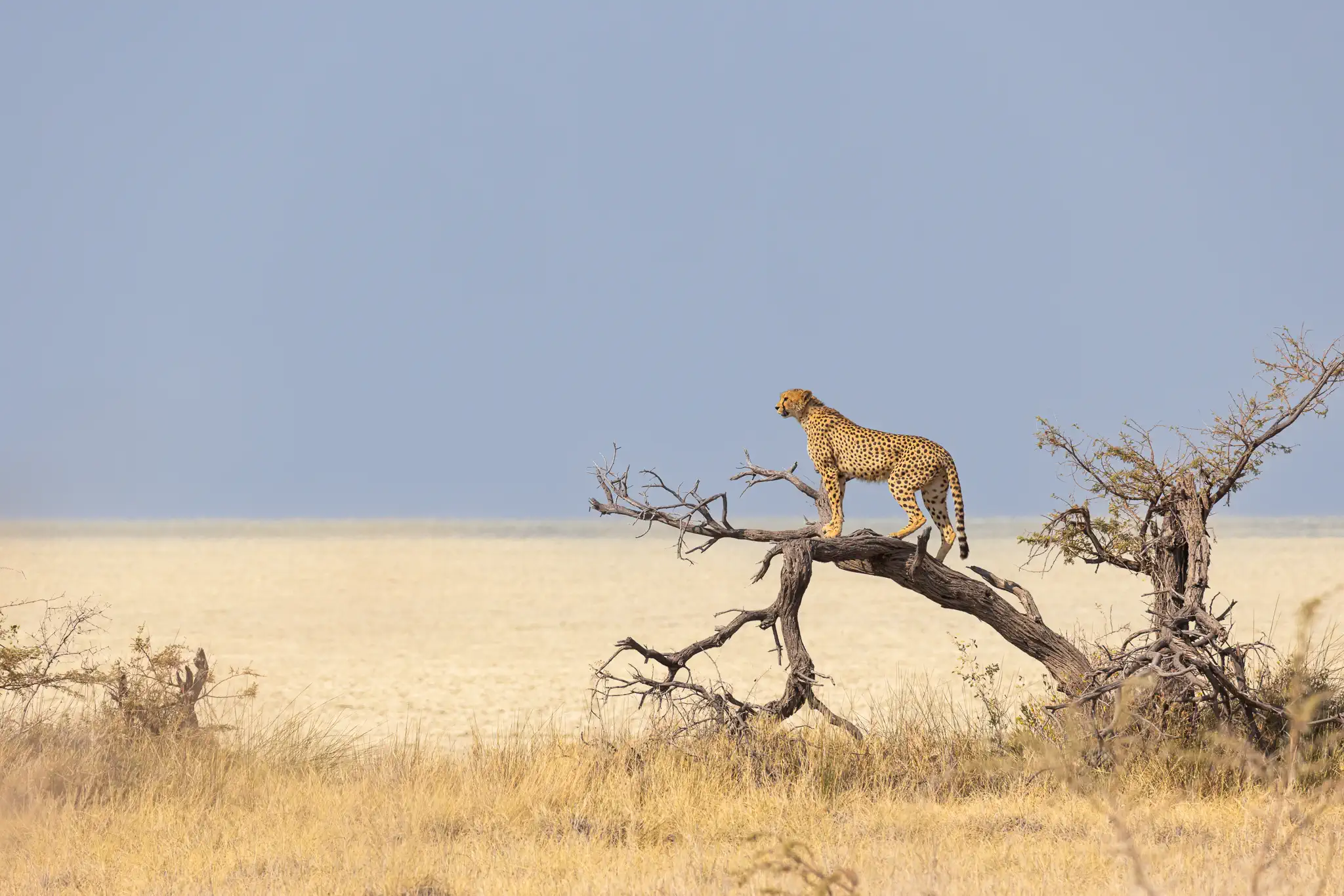
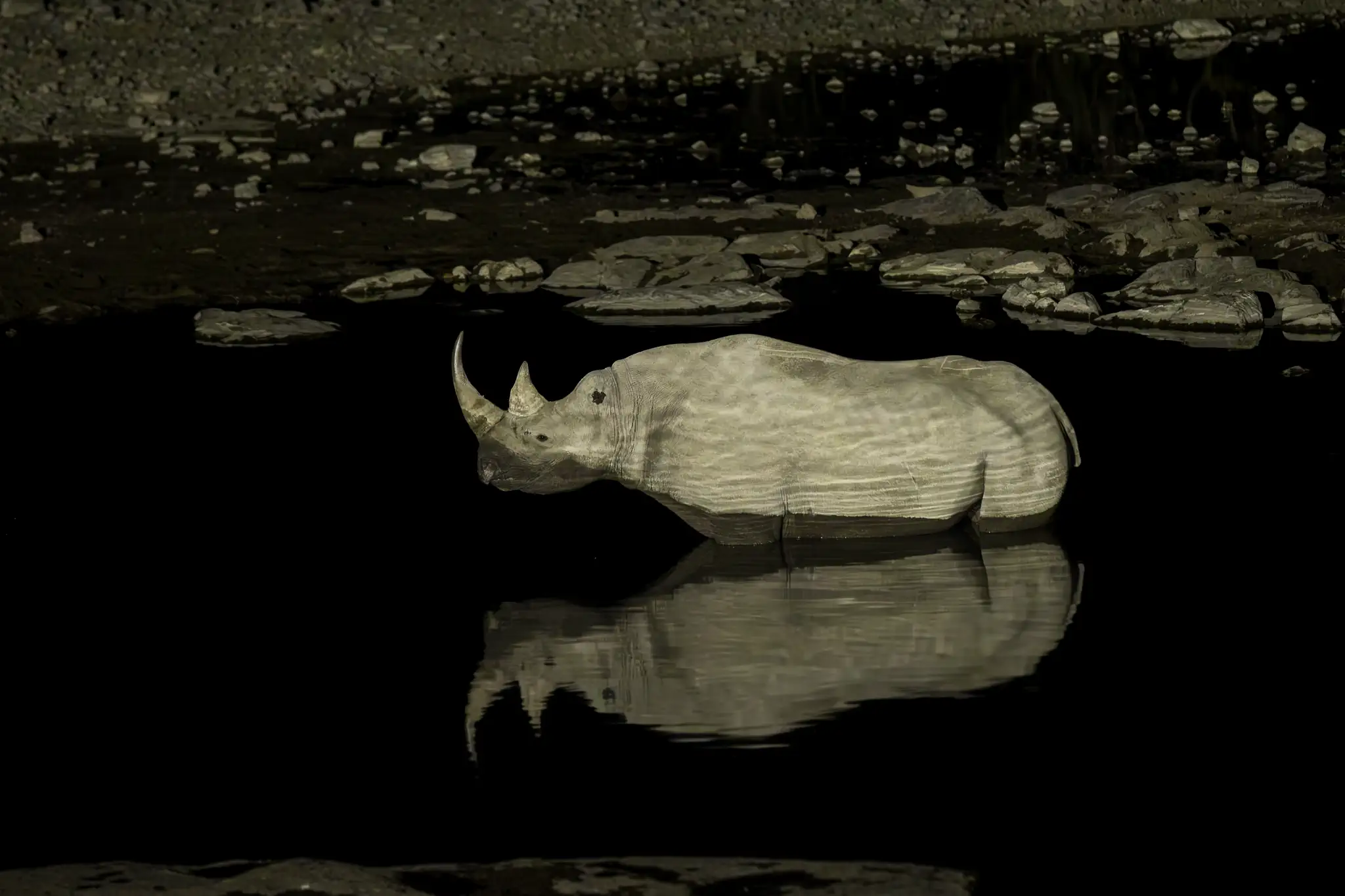
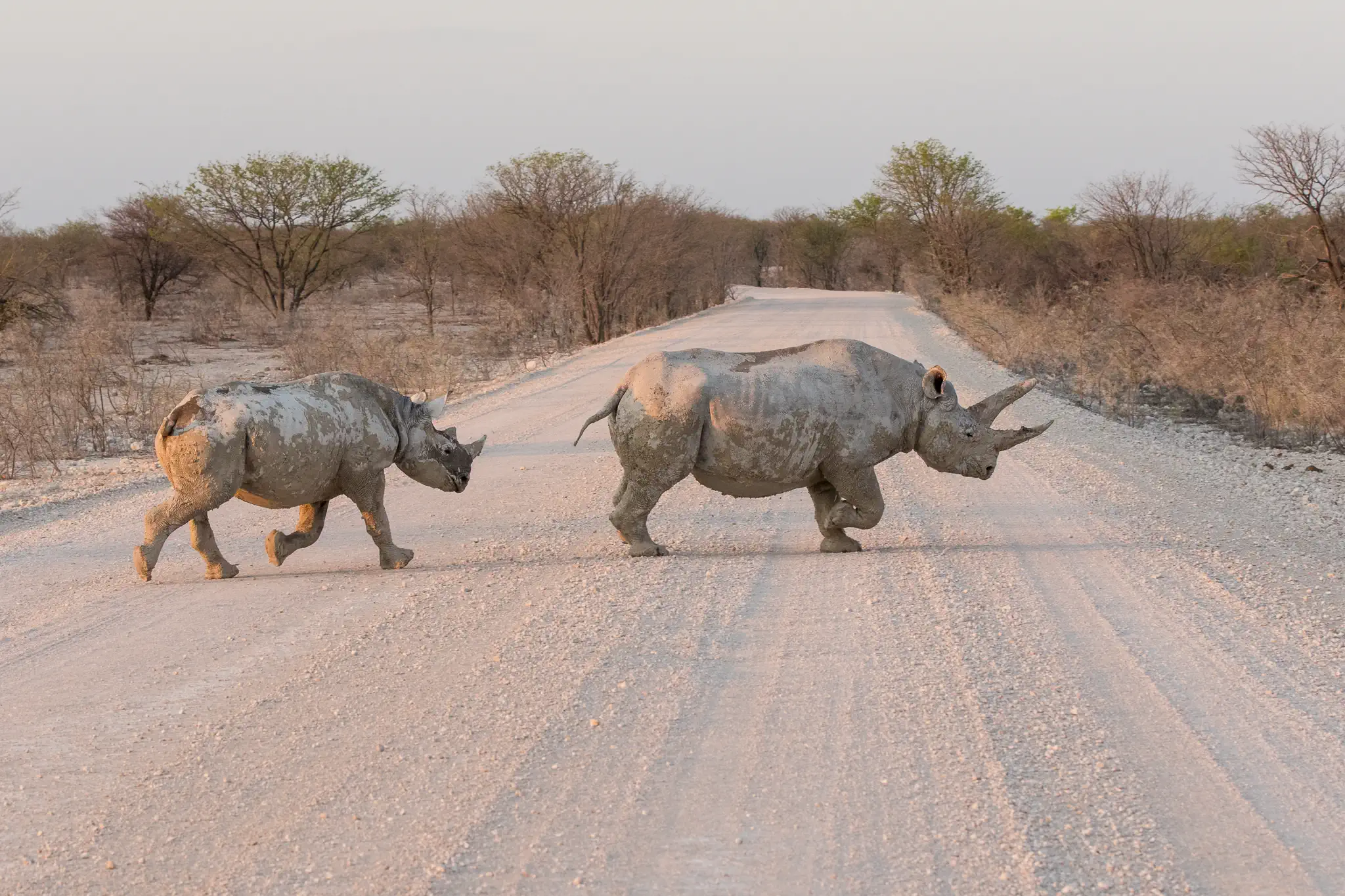
Elephants, lions, giraffes, zebras and large herds of antelope are among the more obvious inhabitants, while black rhinos can sometimes be encountered around waterholes or moving through the bush.
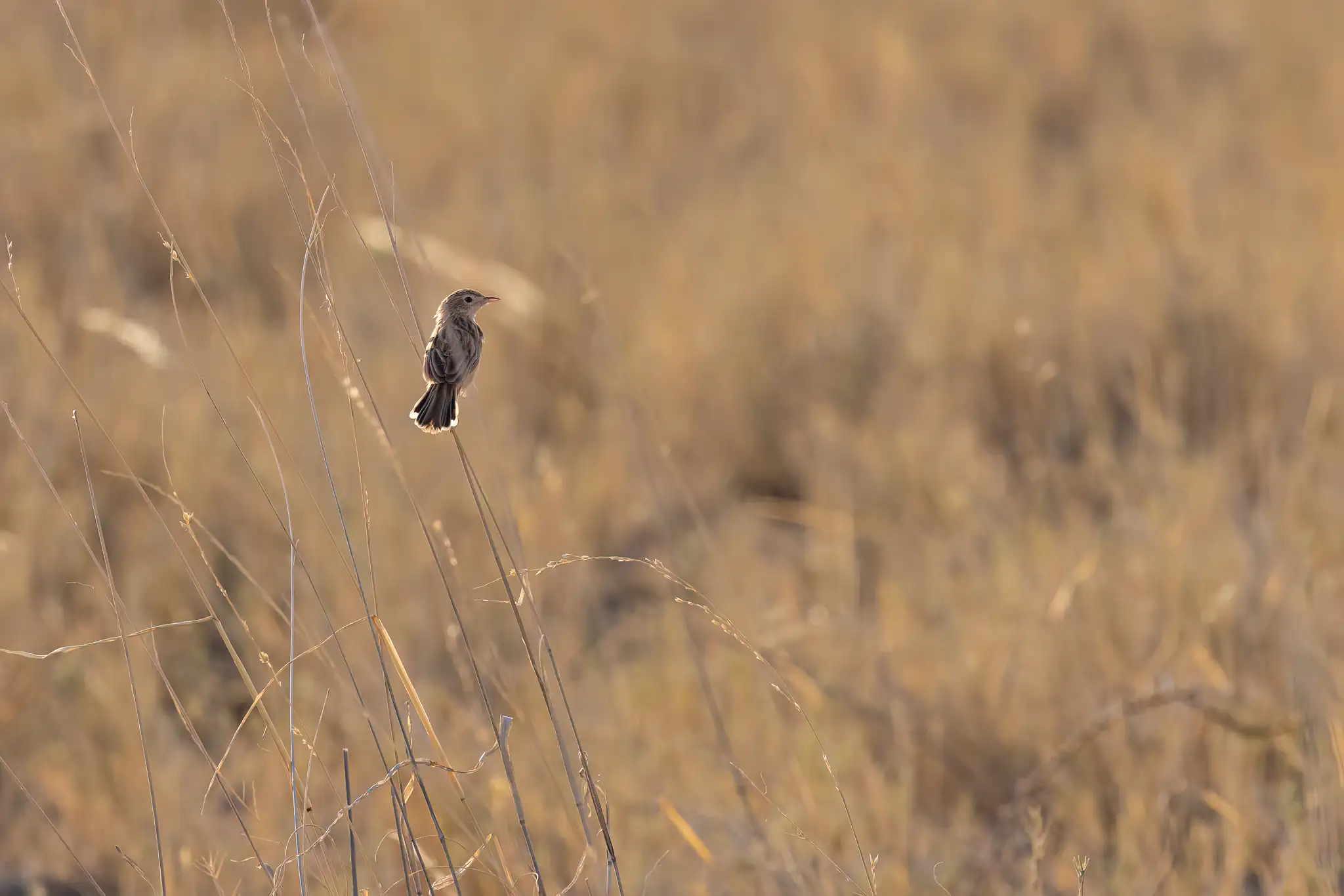
But not every interesting sighting needs to involve one of the famous species. Jackals hunting, a secretarybird walking across the plains, vultures gathering around a distant carcass or a small group of animals reacting to something we cannot yet see can be equally absorbing.
The longer we watch, the more there is to notice.
For photography, this is one of Etosha’s great strengths. The open landscape, pale soils and concentration of wildlife around water can create remarkable opportunities, but photography should never become a reason to rush from one animal to the next.
Reading the Landscape
Knowing when to move and when to stay
A good day in Etosha is not necessarily the day when we drive the greatest distance.
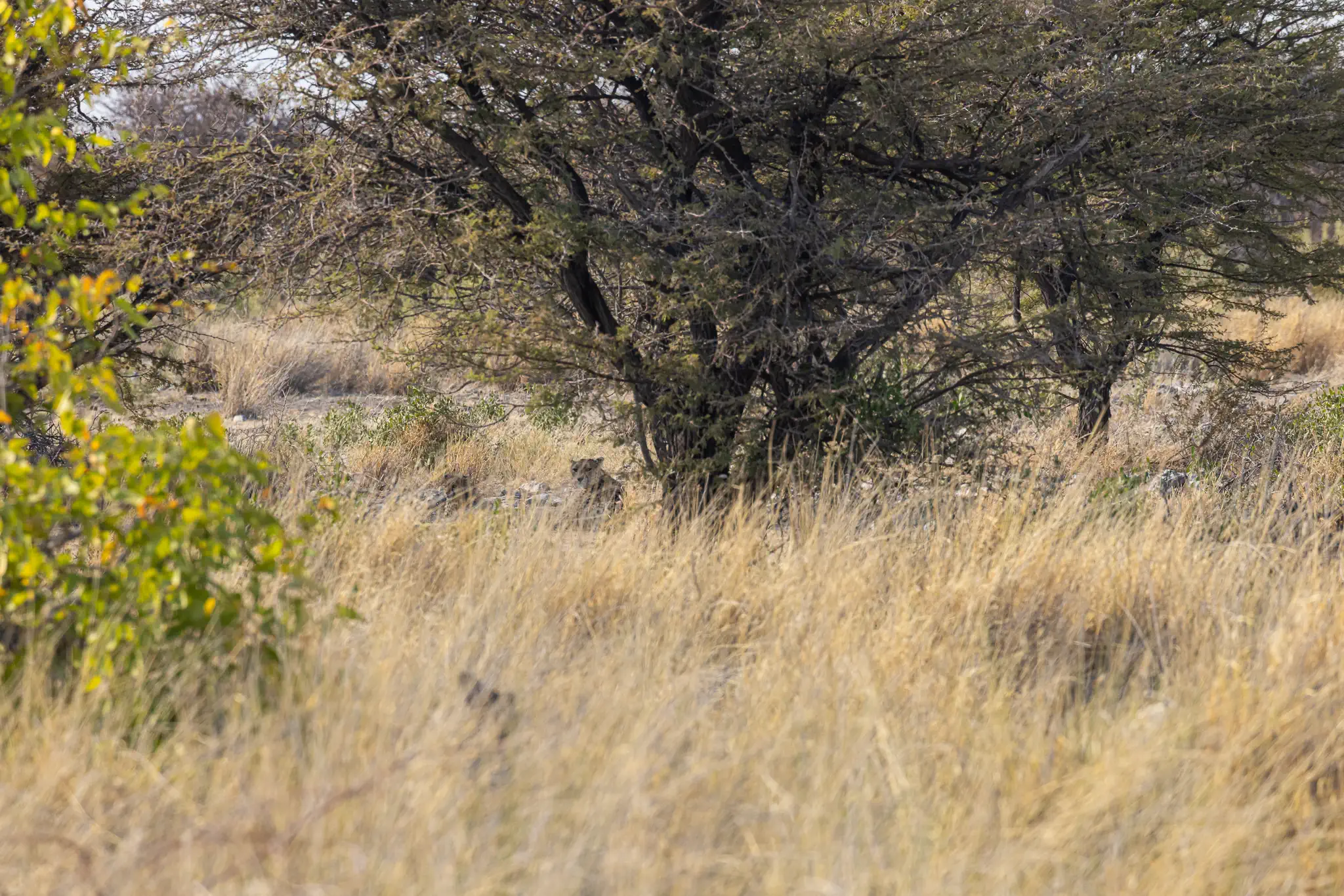
Wildlife changes with the season, the availability of water and the time of day. Local information can help, but yesterday’s lion sighting does not guarantee that the lions will still be there this morning.
We build the day around conditions rather than trying to follow a fixed circuit. We may leave early to explore quieter roads, spend several hours around an active area, return to a waterhole later in the day or change plans because of something we notice along the way.
There is always an element of chance in wildlife watching. Experience helps us make better decisions, but uncertainty is part of what keeps every day interesting.
More Than a Single Day
Giving Etosha enough time
Etosha is a large park, and I would not treat it as a quick stop between other destinations.
Different parts of the park have different landscapes and wildlife patterns. Spending several days allows us to explore without constantly watching the clock, and gives us the freedom to return to an area when conditions look promising.
It also allows the journey to develop its own rhythm. An early start, several quiet hours watching a waterhole, a break during the heat of the day and another drive towards evening can be far more rewarding than trying to cover as much ground as possible.
Wildlife does not work to an itinerary. Giving Etosha enough time simply gives us more opportunities to be in the right place when something happens.
Staying Inside Etosha
After the gates have closed
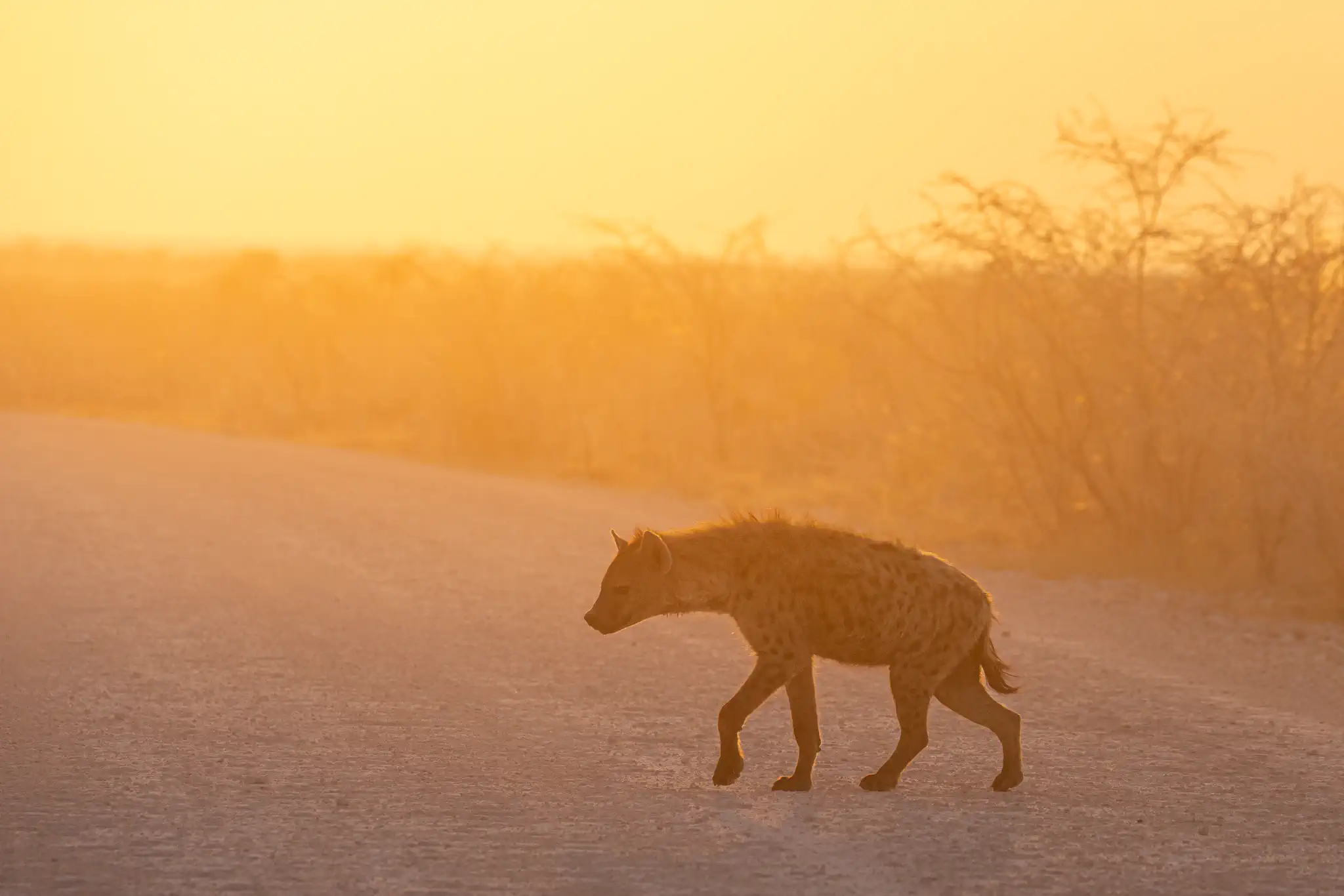
Staying inside Etosha National Park adds another dimension to a visit. The main rest camps offer everything from campsites with good facilities to simple rooms and comfortable chalets, allowing us to remain inside the park and close to the wildlife throughout our stay.
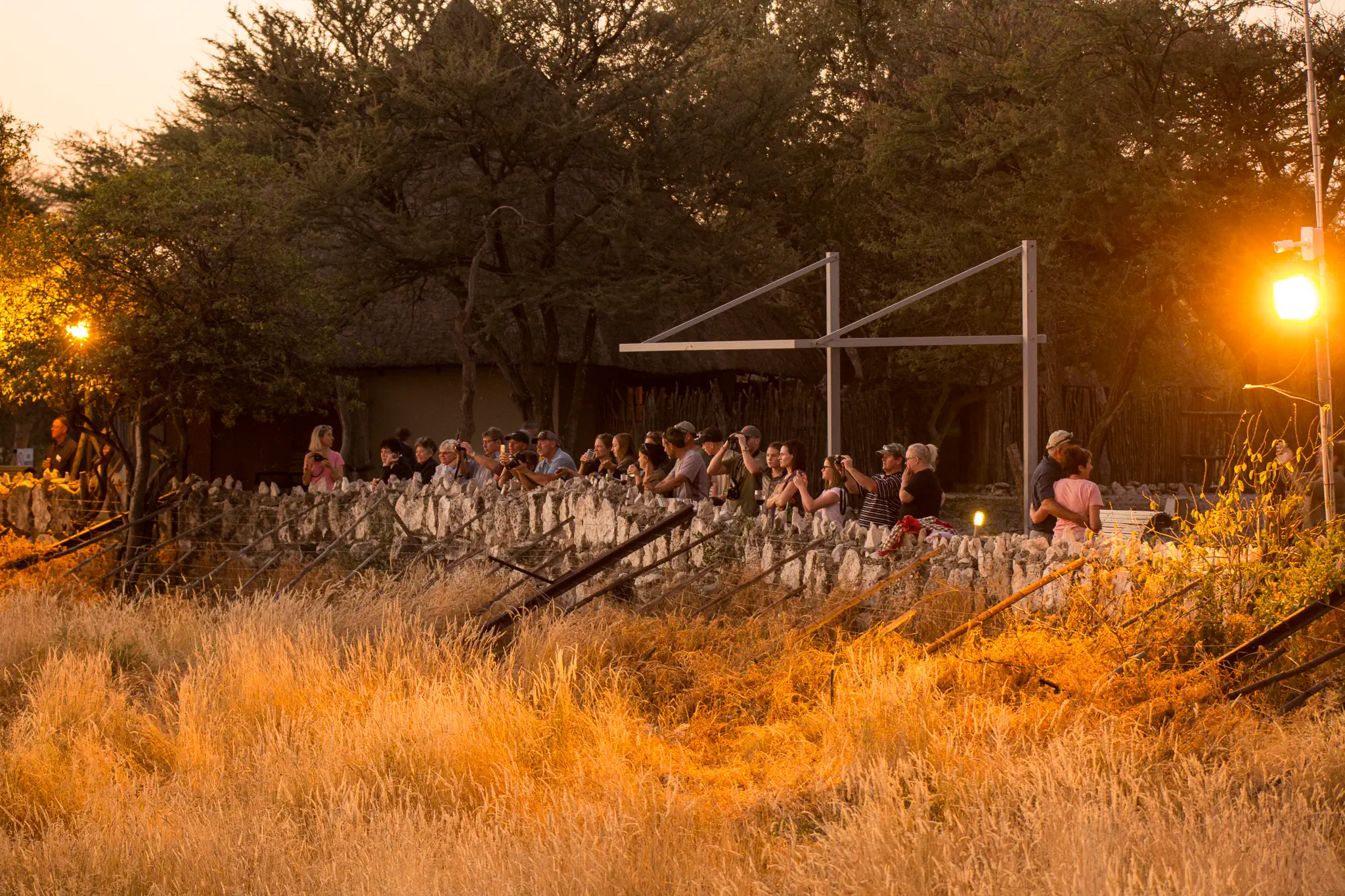
One of the great advantages is access to the floodlit waterholes after the park gates have closed. From camp, it is only a short walk to sit quietly beside the water and watch what arrives after dark. Some nights may be quiet; on others, rhinos, elephants and other wildlife appear from the darkness and remain for hours.
Etosha & the Wider Journey
Etosha often forms a natural link between very different parts of Namibia.
From here, a journey may continue west into Damaraland and Kaokoland, where wildlife encounters become less predictable and the landscapes increasingly remote. Travelling east can lead towards the Kavango River and eventually the Zambezi Region, where rivers and floodplains create a completely different environment.
That contrast is one of the things I enjoy about longer journeys through Namibia. Etosha offers extraordinary concentrations of wildlife, but it becomes even more interesting when seen as part of a country where animals survive in environments ranging from dry desert rivers to permanent wetlands.
Continue Exploring
I’ve photographed this region over many journeys through Namibia. If you’d like to continue exploring, you’ll find a personal travel story and an extensive photo gallery on Duniart.
Personal observations and experiences from the field.
A curated collection of landscapes, wildlife and moments from Etosha.
Is Etosha for You?
Etosha will appeal to anyone with a real interest in wildlife.
You do not need to be a serious photographer or know the difference between every species of antelope. Curiosity and patience are enough. Some days will bring dramatic encounters; others are about quieter observations and the gradual accumulation of small moments.
If you enjoy watching animal behaviour, spending time at waterholes and allowing wildlife to set the pace of the day, Etosha deserves more than a brief stop on your journey through Namibia.