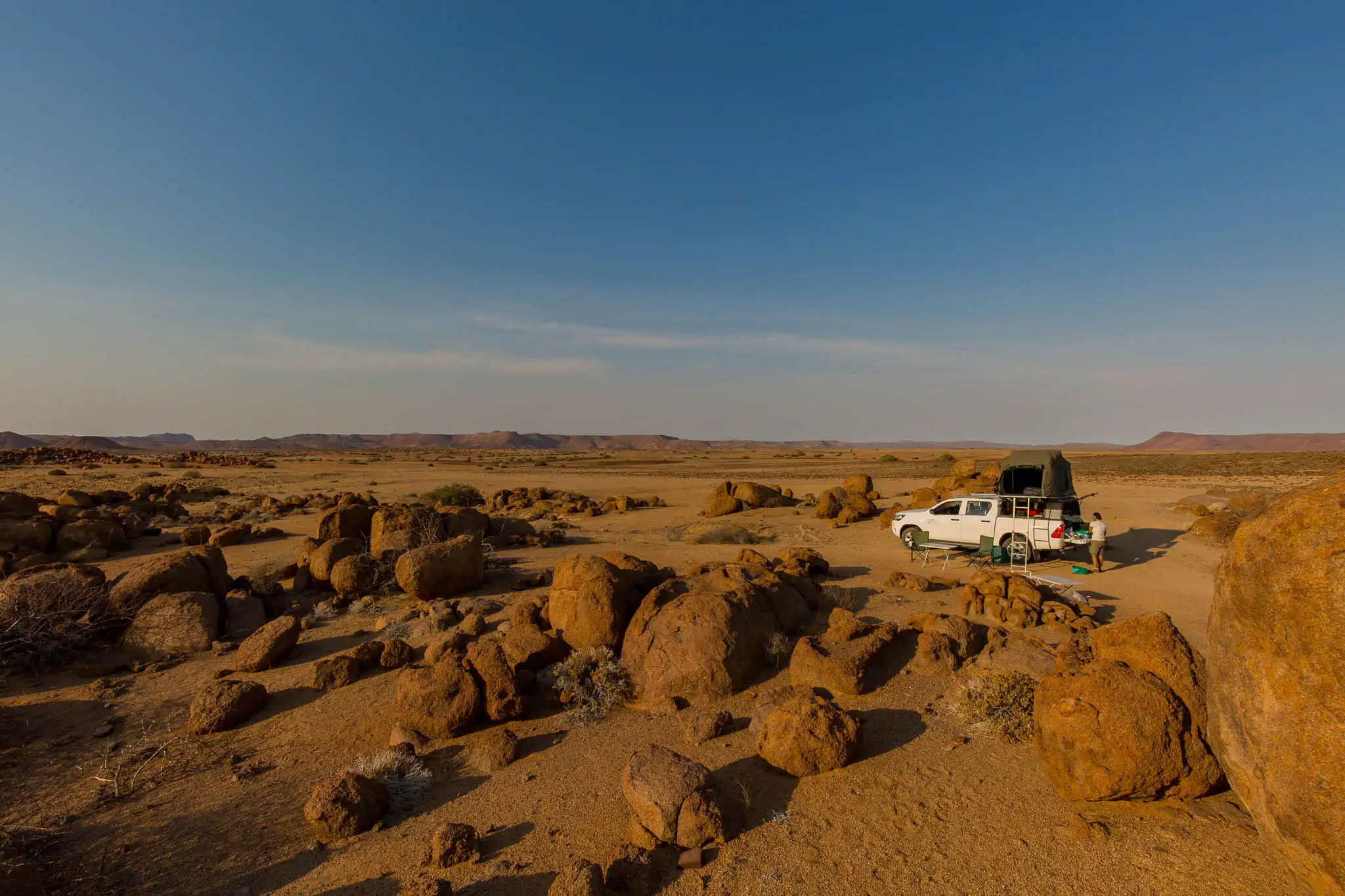
Damaraland & Spitzkoppe
Discover
ancient mountains,
dry river valleys and landscapes
shaped by time —
where wildlife, people
and geology are all part
of the same story.
Landscapes Written in Stone
Damaraland and Spitzkoppe are among the most geologically varied parts of Namibia.
At Spitzkoppe, enormous granite peaks rise from the surrounding plains. Further north, the landscape changes constantly, with broad valleys, volcanic formations, table mountains and dry river systems creating very different environments across relatively short distances.
At first, some of these landscapes may appear almost empty. But plants survive in remarkably dry conditions, wildlife moves through the river valleys, and ancient rock engravings show that people have travelled through and understood this environment for thousands of years.
For me, much of the appeal of travelling through Damaraland lies in that variety. There are well-known places to visit, but the landscapes between them are often just as interesting.
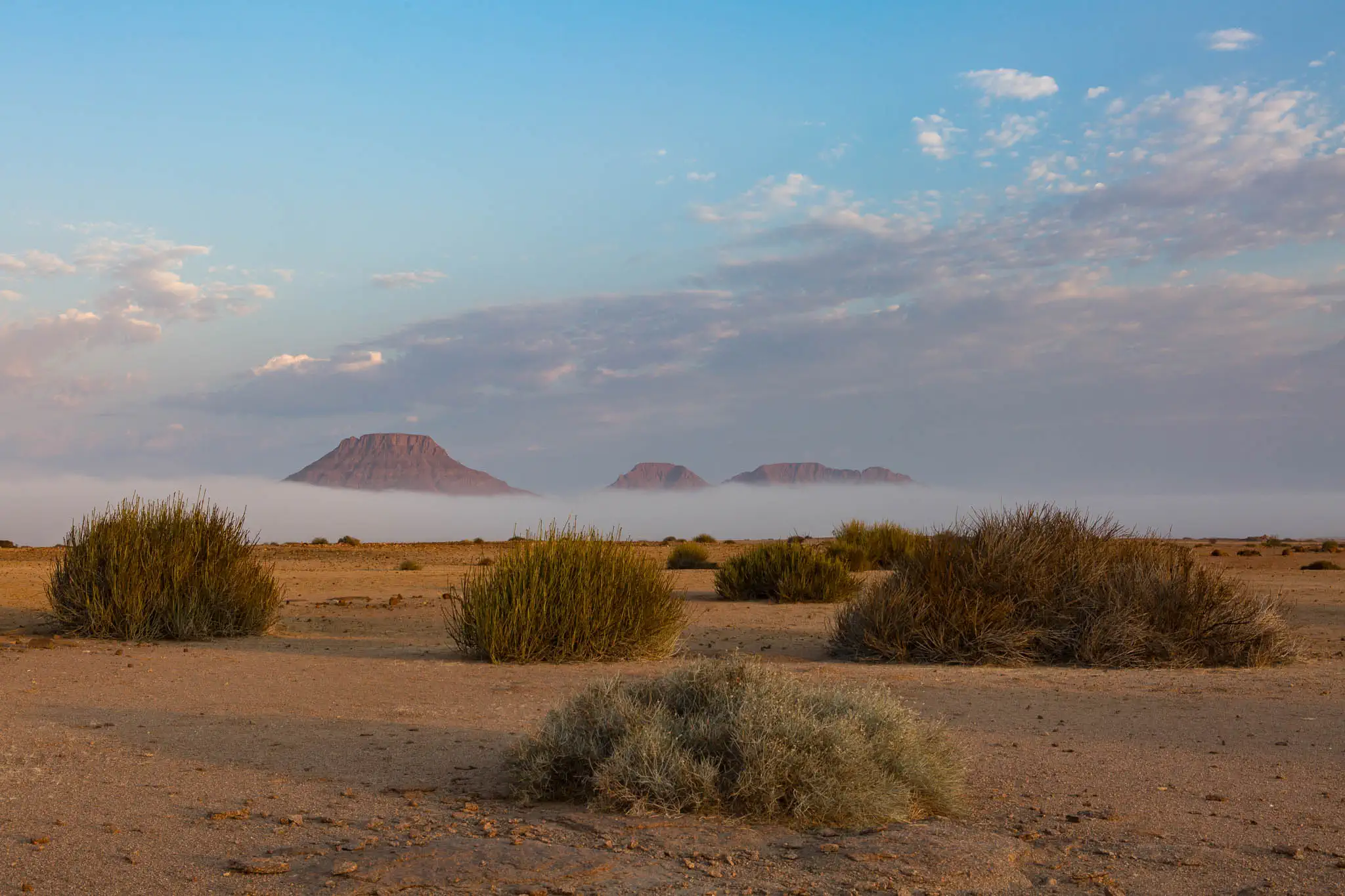
Among the Granite Peaks of Spitzkoppe
Granite mountains & changing light
Spitzkoppe is one of Namibia’s most recognisable landscapes, with granite peaks rising dramatically from the surrounding plains.
The mountains are particularly beautiful in the early morning and late afternoon, when the changing light brings out the colours and textures of the granite.
Rather than treating Spitzkoppe as a short stop between destinations, I prefer to spend enough time to explore on foot, visit some of the quieter areas and enjoy the landscape at different times of day.
It is a place that benefits from an overnight stay. The hours around sunrise and sunset are often the most rewarding, and staying nearby means there is no need to rush.
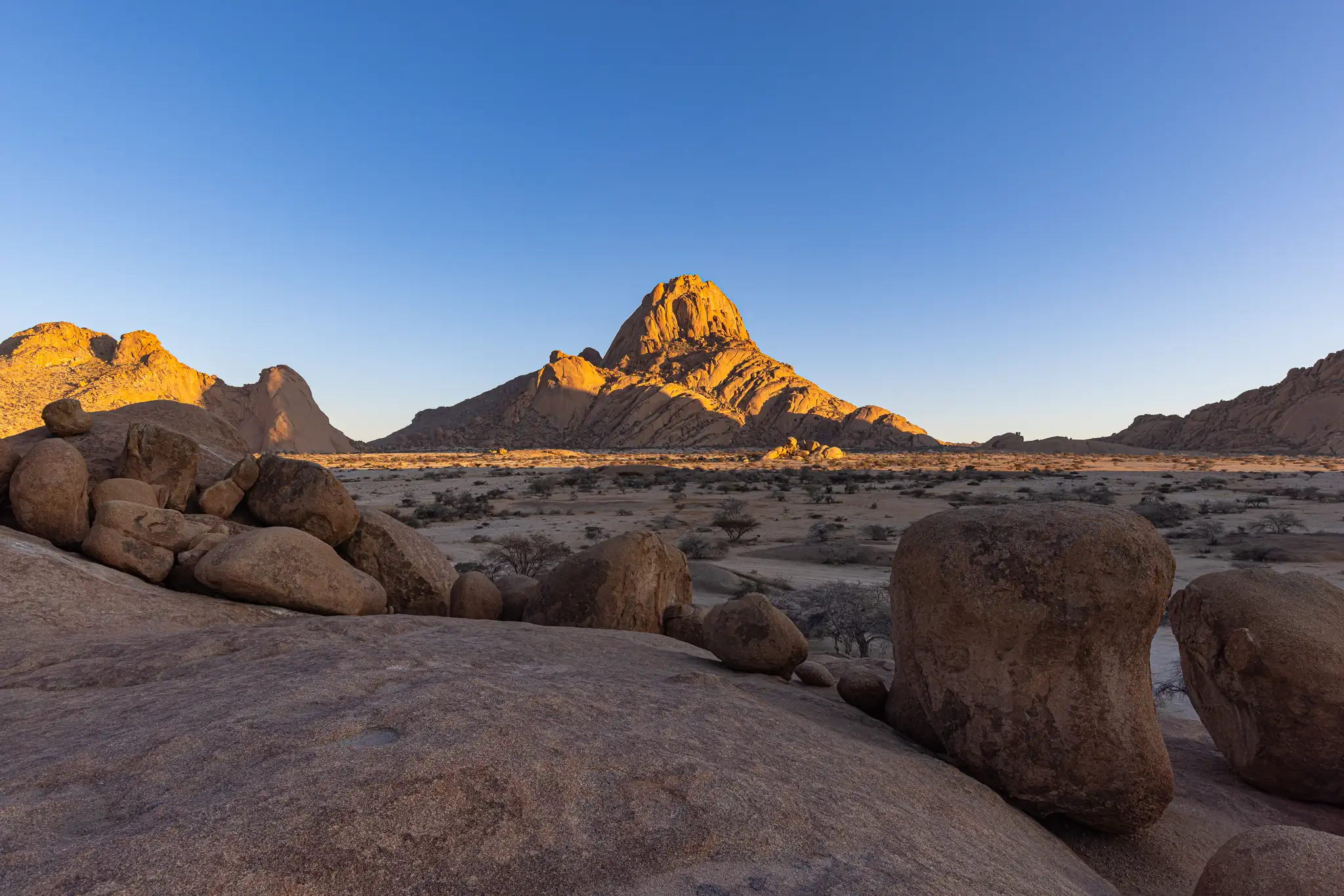
Traces of an Ancient Past
Twyfelfontein & the human story of the landscape
People have travelled through the landscapes of Damaraland for thousands of years.
At Twyfelfontein, thousands of rock engravings depict animals, tracks and other figures, offering a glimpse into how earlier communities observed and understood the environment around them.
A visit adds another dimension to a journey through Damaraland. Among a landscape shaped by geology and wildlife are also traces of the people who have known and travelled through this region for generations.
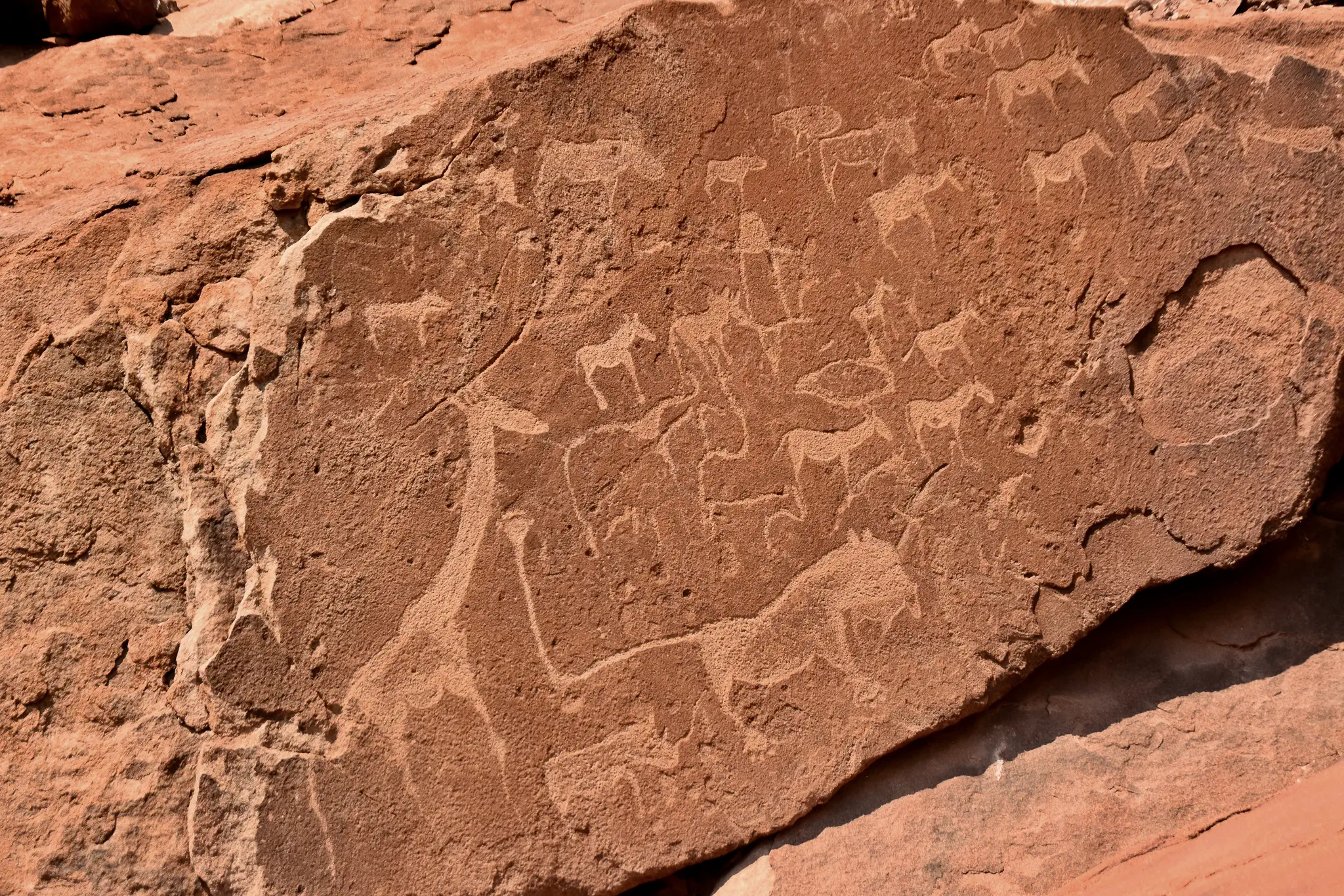
The Dry River Country
Life in an arid landscape
The dry rivers of Damaraland form important corridors of life through an otherwise arid landscape.
For much of the year, rivers such as the Aba Huab and Huab contain little or no surface water. Yet moisture below the surface supports trees and vegetation along their courses, providing food, shade and movement routes for wildlife.
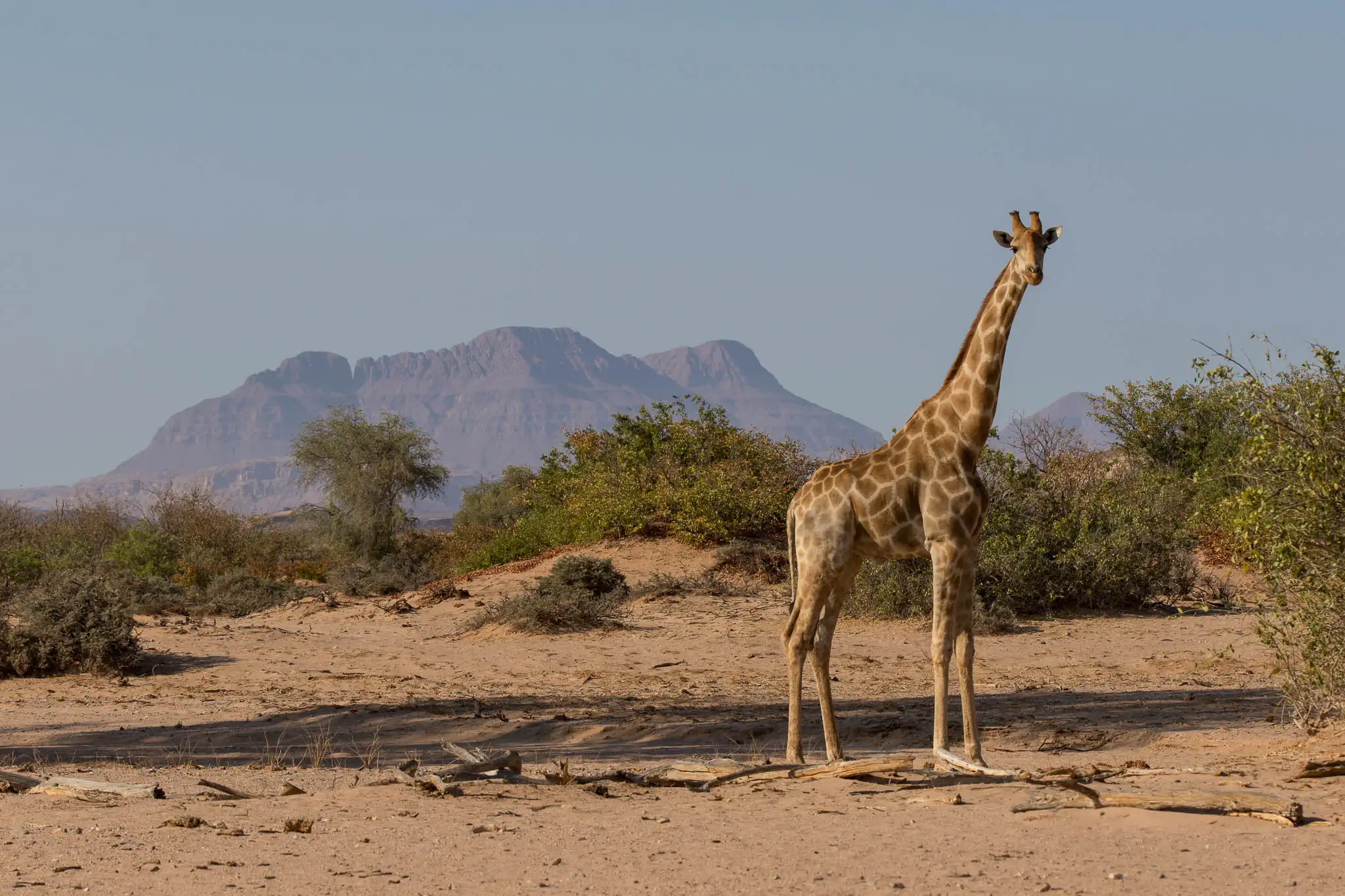
Desert-adapted elephants travel through this country in search of water and feeding areas, while giraffes, oryx, springbok and other animals survive in landscapes that can initially appear almost empty.
Wildlife encounters here are very different from those in Etosha. There are no waterhole circuits to follow. Animals move across large areas according to the availability of water and food, and understanding the relationship between the river systems, vegetation and surrounding terrain becomes part of finding them.
Sometimes we find what we are looking for. Sometimes we do not. That uncertainty is part of observing wildlife outside the boundaries of a national park.
Beyond the Familiar Roads
Doros, Palmwag & the country between
Some of Damaraland’s most interesting landscapes lie away from the better-known stops.
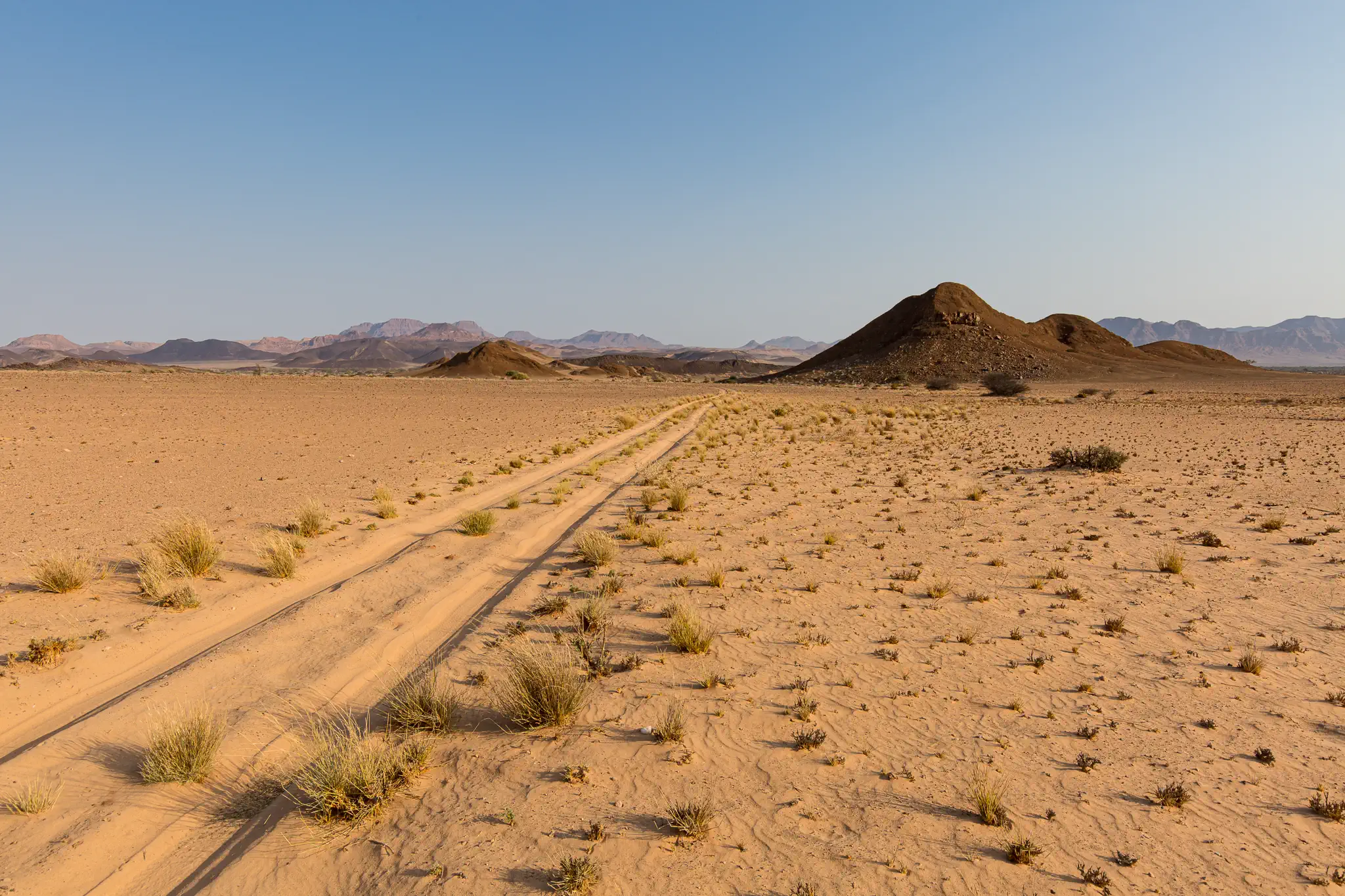
Around Doros Crater, volcanic formations, open plains and distant mountains create a very different kind of country. Further north, towards Palmwag, the landscape changes again, with broad valleys, rocky hills and dry river systems stretching through an increasingly remote region.
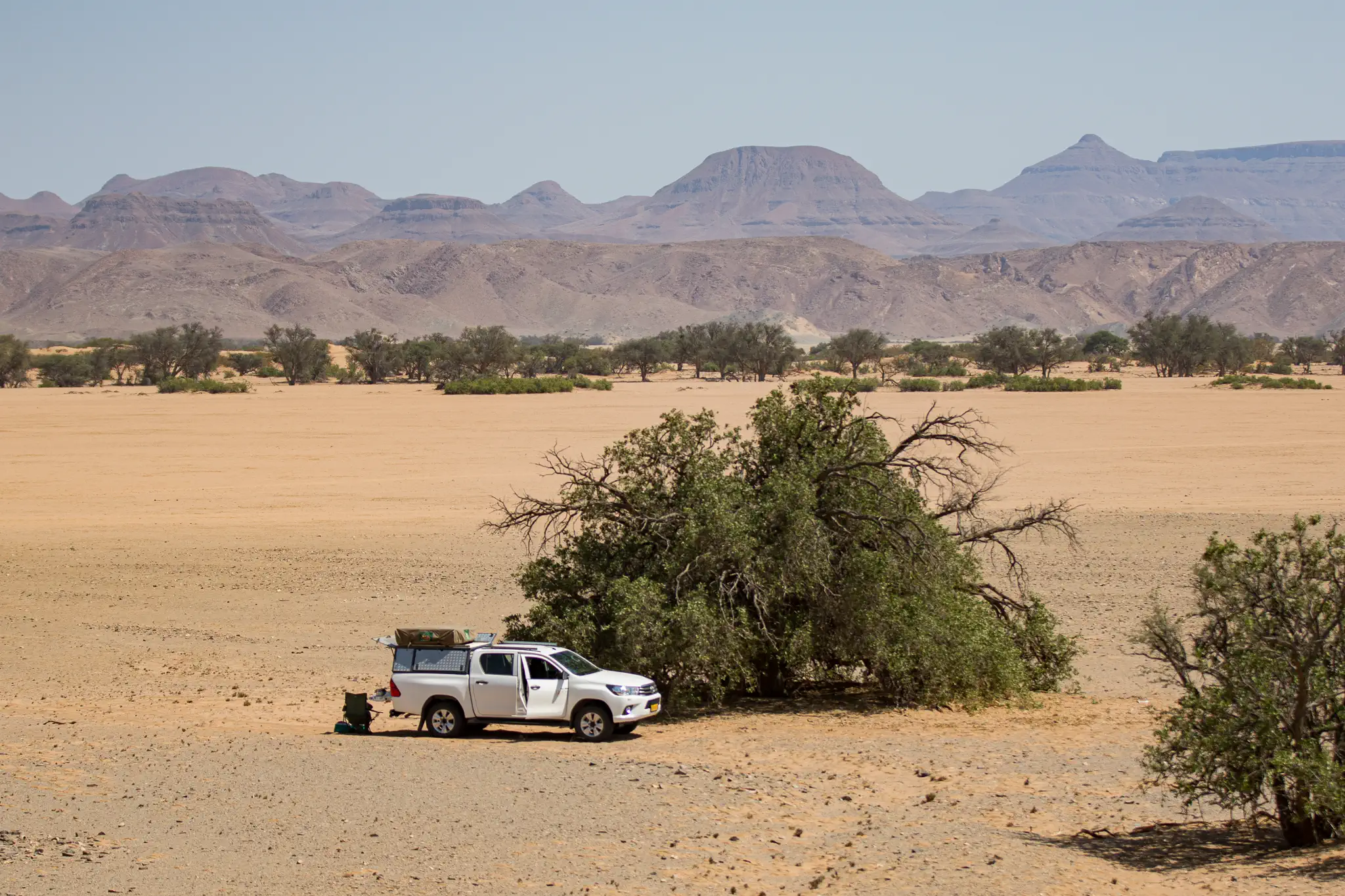
These are places where the journey is often as much about exploring the country as reaching a particular destination. Depending on the route, we may follow rough tracks through wide valleys, stop to walk, look for wildlife, or simply spend time in a landscape that deserves more than a passing glance.
Travelling Through Damaraland
The landscape between the destinations
One of the things I enjoy most about Damaraland is how much the landscape changes as we travel.
A day may begin among granite mountains and end beside a dry river valley. Roads cross gravel plains, descend into broad valleys and pass through landscapes shaped by very different geological processes.
That variety influences the rhythm of the journey. There are places where we stop to walk, others where wildlife gives us a reason to stay, and stretches of road where the landscape itself deserves our attention. A track towards distant mountains, an unexpected wildlife sighting or simply a viewpoint that deserves a longer stop can easily become part of the day.
Depending on the journey, we may camp in remote locations, stay in carefully chosen lodges, or combine both. The route and the places we stay are chosen to fit the journey rather than forcing the journey to fit around them.
I do not think of Damaraland as a collection of attractions. The well-known places are certainly worth visiting, but much of what makes the region special is found in the landscapes and unexpected moments between them.
Continue Exploring
I’ve photographed this region over many journeys through Namibia. If you’d like to continue exploring, you’ll find a personal travel story and an extensive photo gallery on Duniart.
Personal observations and experiences from the field.
A curated collection of landscapes and moments from Spitzkoppe and Damaraland.
A curated collection of landscapes and wildlife from the Aba Huab riverbed.
Is Damaraland for You?
Damaraland and Spitzkoppe will appeal to travellers who are drawn to landscapes as much as wildlife.
It is a region for walking among ancient mountains, looking more closely at the details of an arid ecosystem, discovering traces of people who travelled through these landscapes long before us, and watching for wildlife beyond the boundaries of national parks.
For photographers, the variety of landscapes, wildlife and changing light offers many opportunities, but a camera is certainly not necessary to appreciate the region.
If you enjoy journeys where the road between destinations matters as much as the places themselves, Damaraland may become one of the most rewarding parts of Namibia — whether you continue north into the remote landscapes of Kaokoland or east towards the wildlife-rich plains of Etosha National Park.