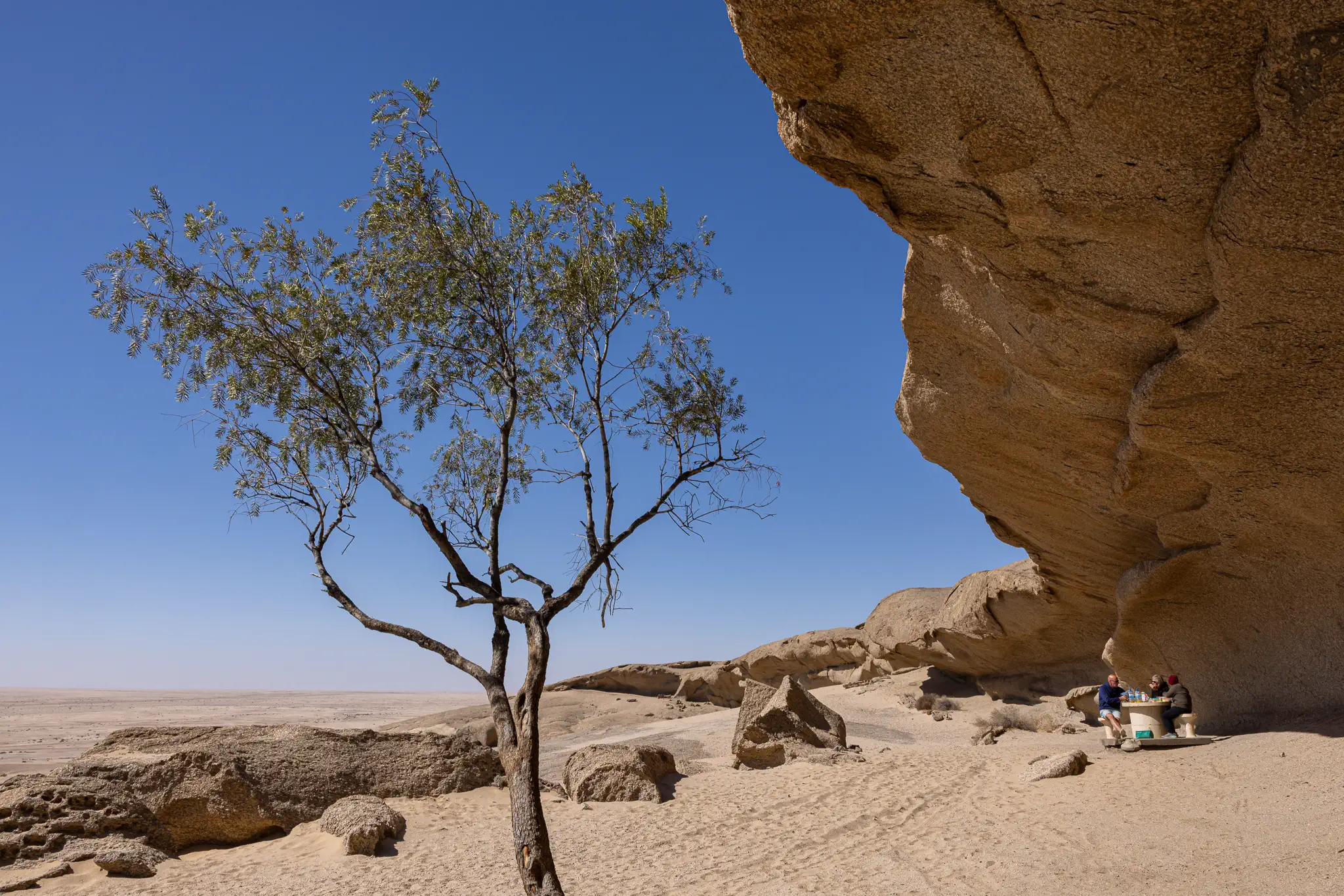
The Expedition
Discover
a private journey
shaped around you —
with the freedom to explore,
the time to slow down
and room for the unexpected.
A Different Way to Travel
Namibia is a country where the journey matters as much as the destination.
The distances are considerable, landscapes change gradually and some of the most memorable moments happen somewhere between the places marked on the map. A journey may begin with a clear route and carefully chosen places to stay, but there should always be enough freedom to respond to what happens along the way.
Every expedition is private. There are no scheduled departures and no strangers joining the group. We travel with you, your partner, family or friends, shaping the route and the rhythm of the journey around your interests and the way you like to travel.
You may want to drive yourself, share the driving with me or simply let me take the wheel. You may prefer comfortable lodges, remote campsites or a combination of both. Some journeys follow Namibia’s classic route at a relaxed pace; others continue into remote regions where roads become tracks and plans need more flexibility.
The starting point is not a fixed itinerary. It is a conversation about where you want to go and how you want to travel.
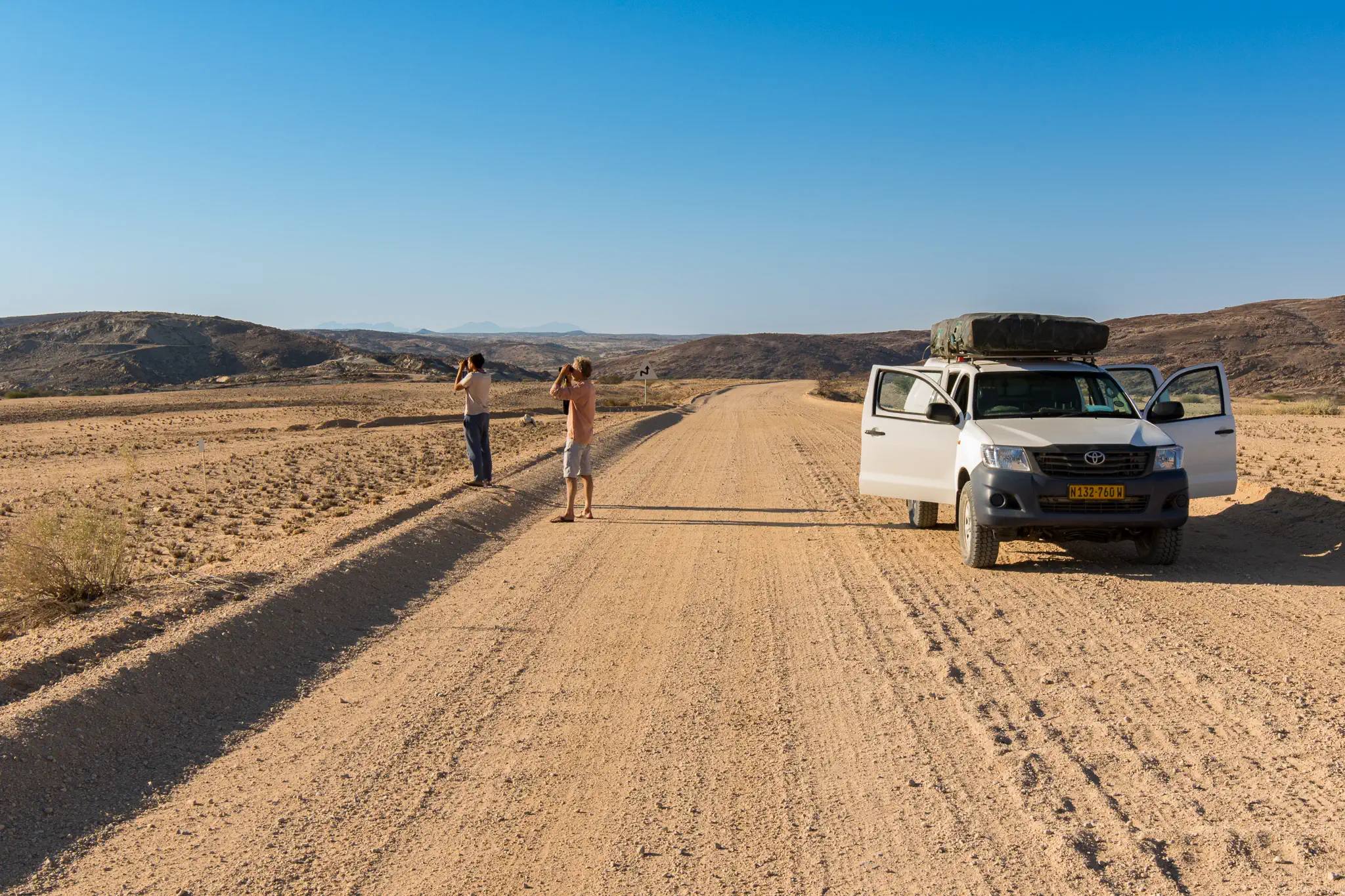
Shaping the Journey
Your interests come first
Every journey begins differently.
Some travellers arrive with a clear idea of the places they want to see. Others know that they are interested in wildlife, photography, landscapes or culture, but are less concerned about a particular route. Some want the freedom of camping and remote tracks; others prefer good lodges and a comfortable bed at the end of the day.
We start with those interests and build the journey from there.
The season, available time and distances between regions all influence what makes sense. Trying to include too much can turn a journey through Namibia into a race between destinations, so I would rather suggest a route that gives us enough time in each place than add another stop simply because it is famous.
Once the broad route is clear, we choose accommodation, activities and the balance between a clear plan and room for flexibility.
There is always a plan. But the plan should serve the journey, not control it.
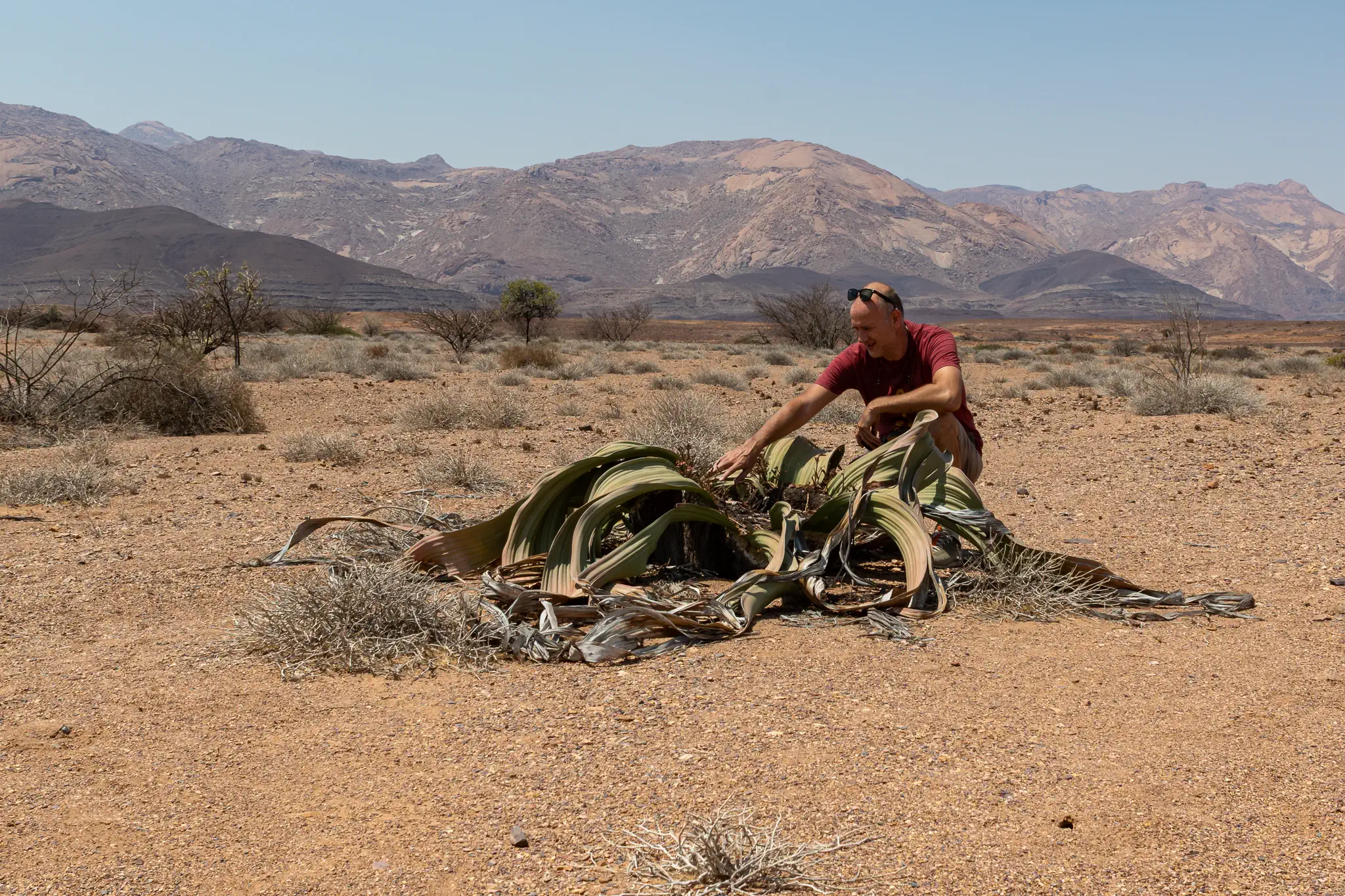
On the Road
The freedom to drive, share or simply enjoy the journey
Namibia is made for travelling by road.
A fully equipped 4×4 gives us the freedom to travel at our own pace, stop when something catches our attention and reach places that would be difficult to include in a conventional guided tour.
Depending on the journey and how you prefer to travel, you can drive yourself while I travel with you, we can share the driving, or I can take the wheel throughout the expedition.
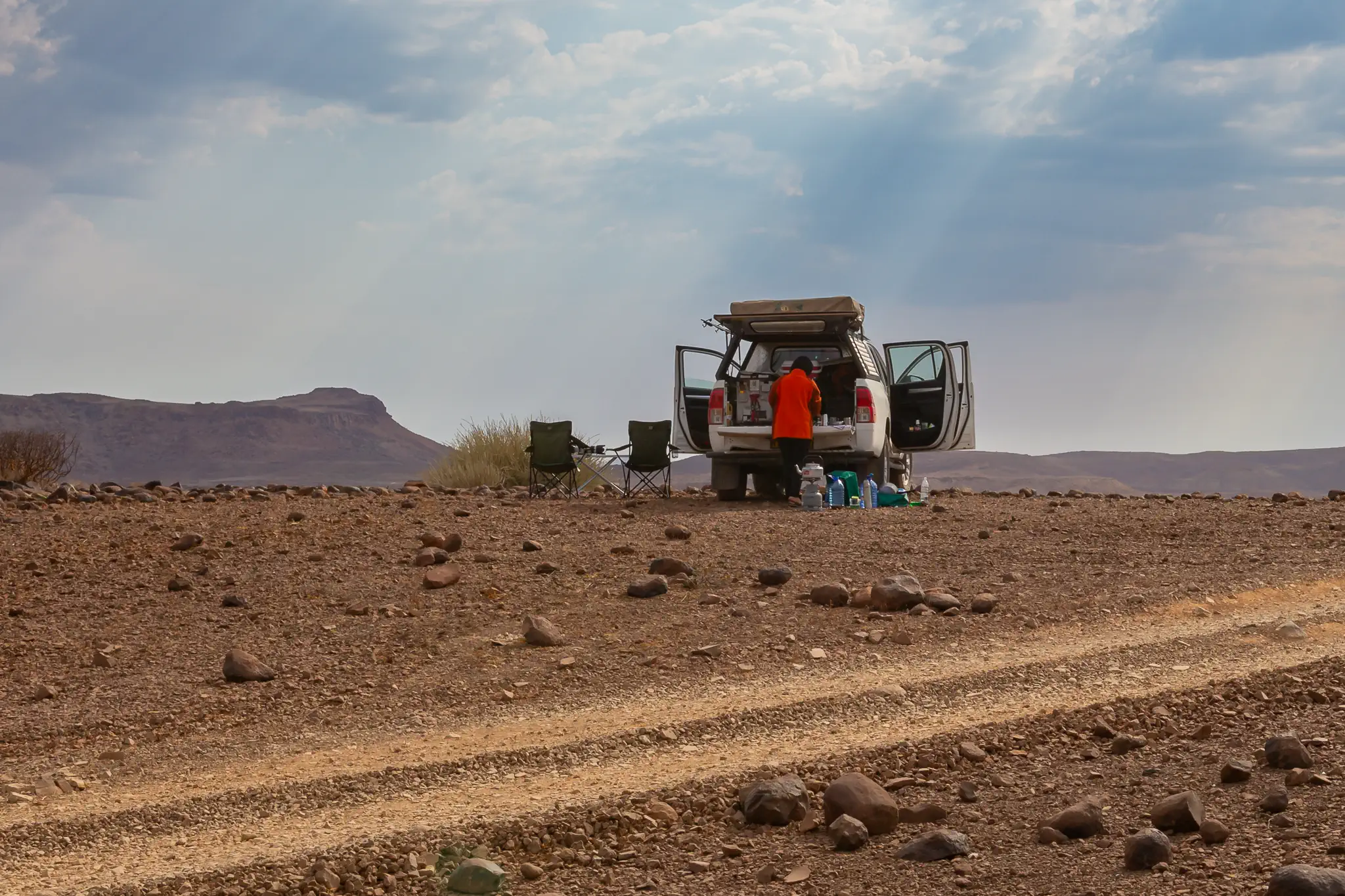
There is no expectation that you need previous off-road experience. Much of Namibia is travelled on good gravel roads, while more remote journeys may involve sand, rocky tracks, dry riverbeds and changing conditions. When the route becomes more demanding, I take over where necessary.
The vehicle is chosen to suit the journey rather than the other way around. A couple travelling mainly between lodges has different needs from a camping expedition carrying equipment and supplies into remote areas.
Wherever we are going, the vehicle is more than transport. For several weeks, it becomes part of the journey: carrying what we need, taking us into remote country and often providing the best seat for an unexpected wildlife encounter.
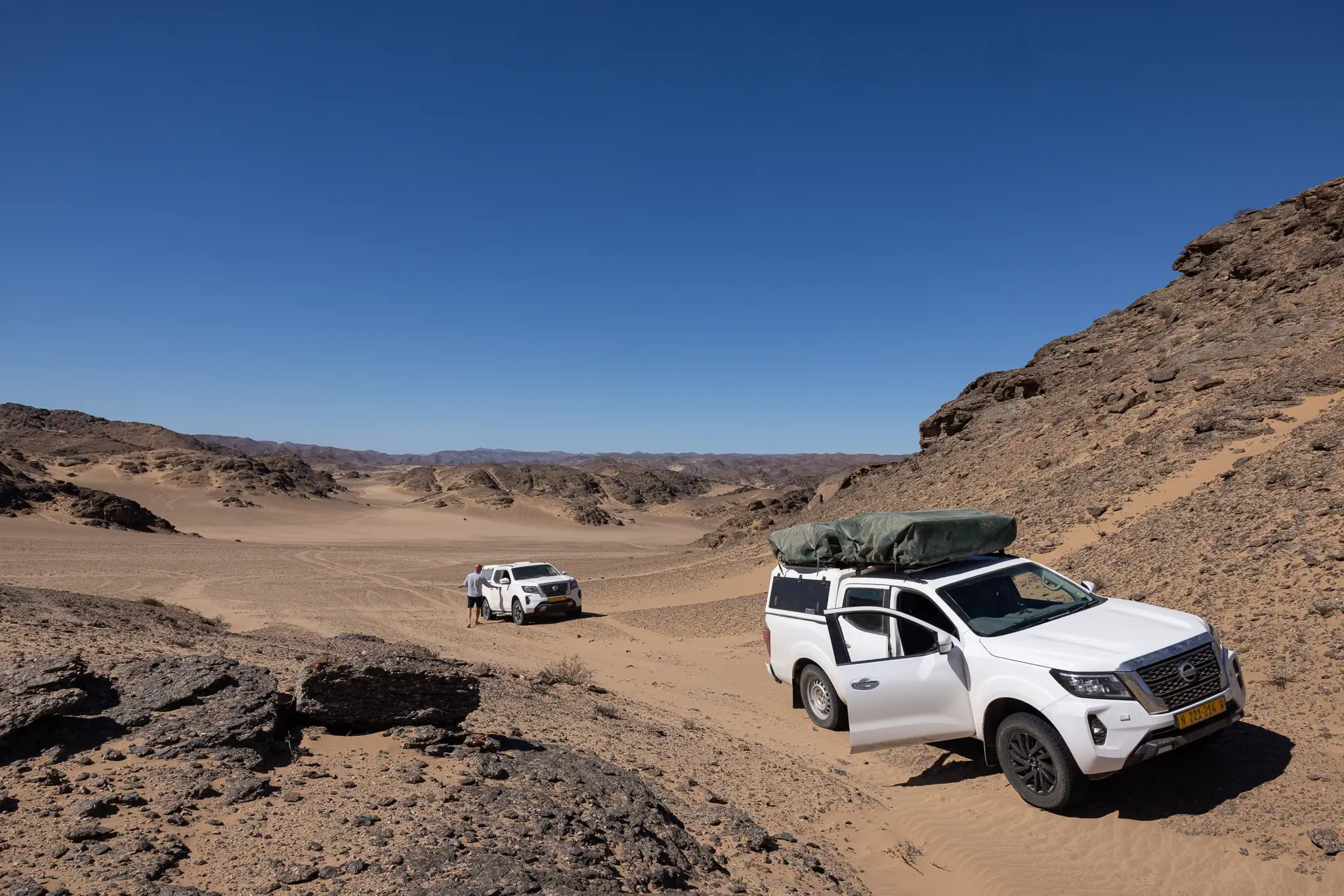
Camping in Wild Places
Simple camps, remarkable locations
Camping brings a particular freedom to travelling through Namibia.
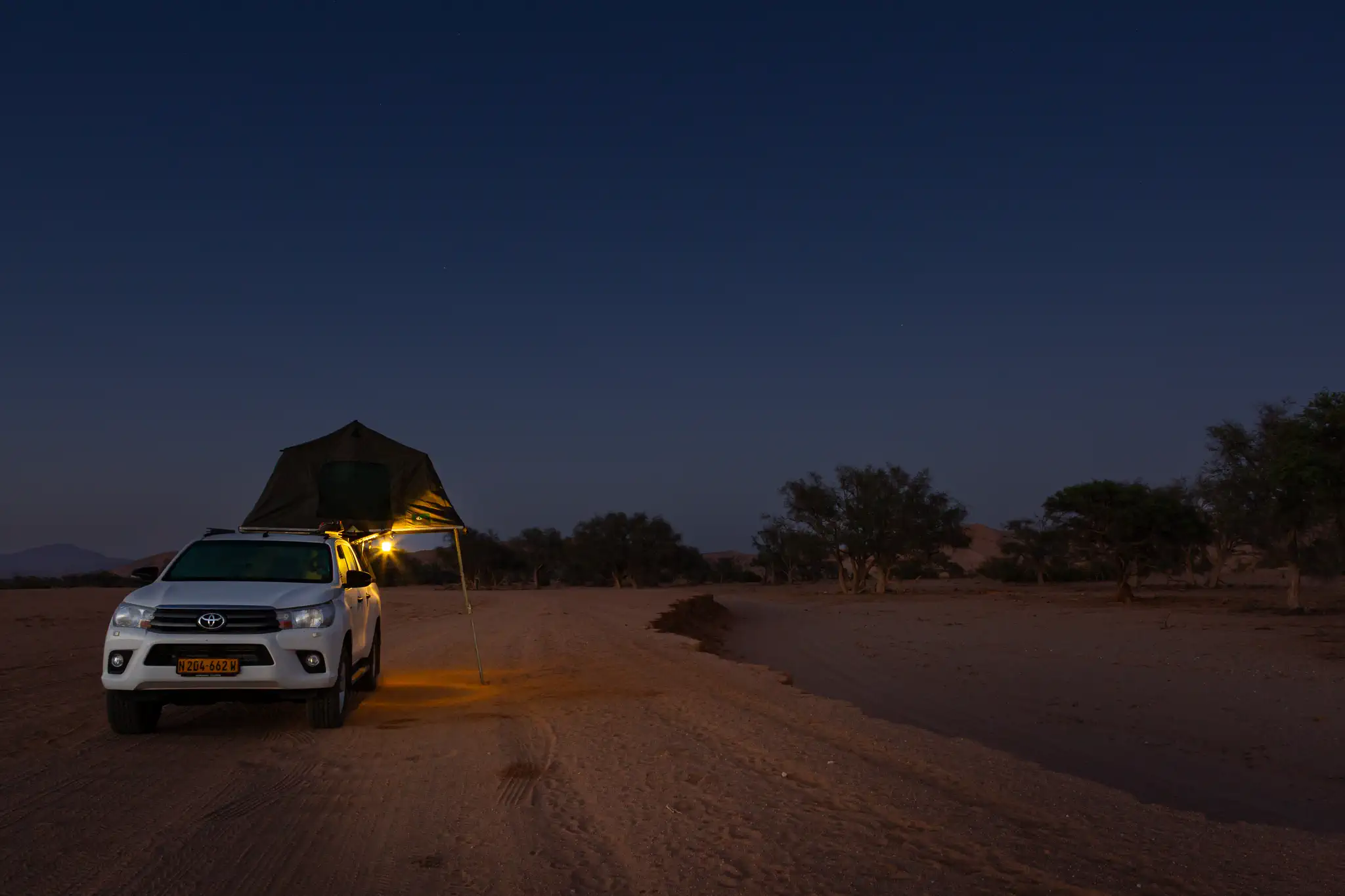
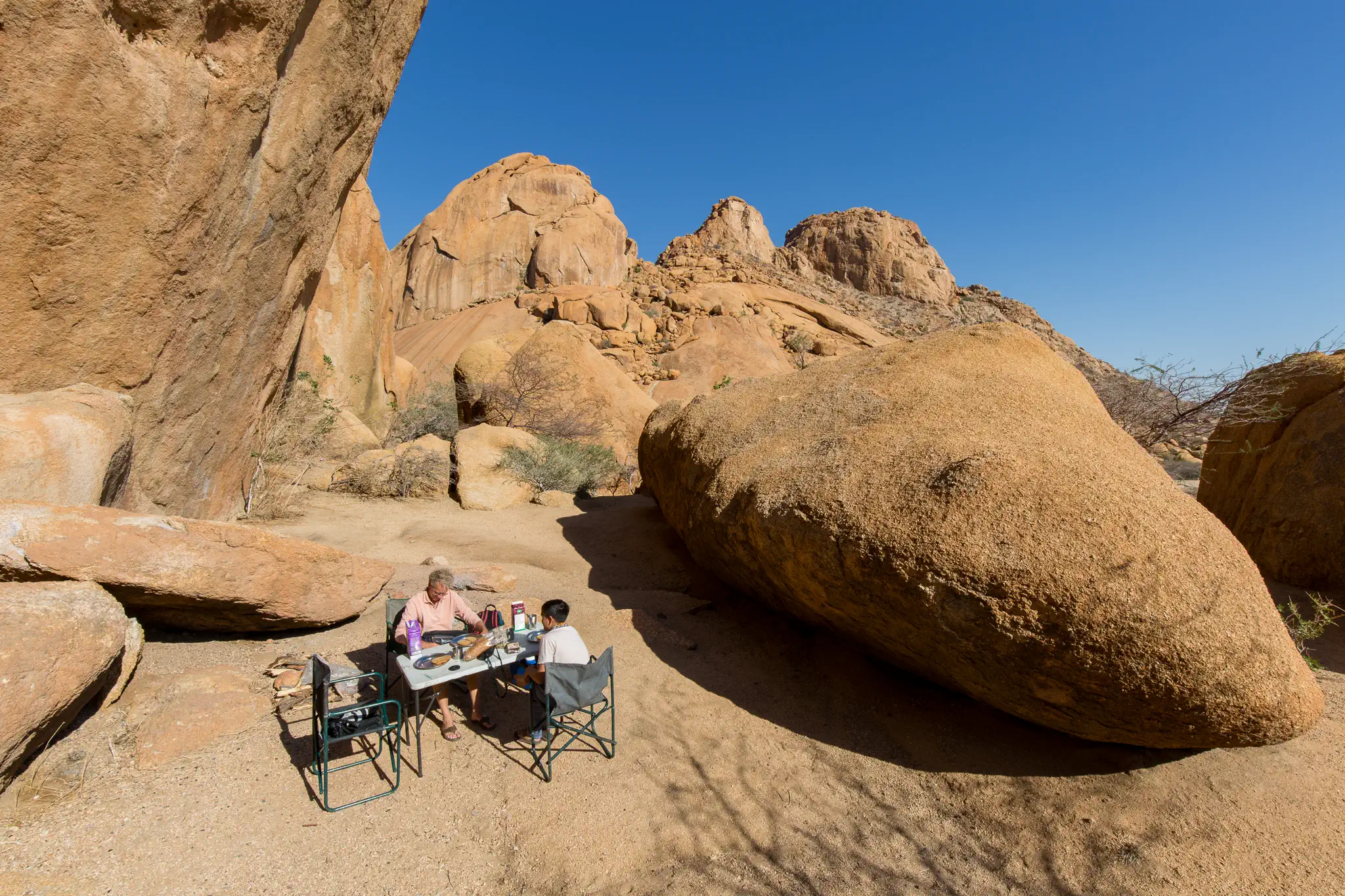
Some campsites have excellent facilities, hot showers and a restaurant nearby. Others are little more than a place to stop beneath trees beside a dry riverbed or among mountains, where the evening becomes quiet as soon as the engine is switched off.
The camping itself does not need to be difficult. Depending on the vehicle and journey, we use well-equipped rooftop tents or other suitable camping arrangements, with the equipment needed for comfortable nights and simple meals along the way.
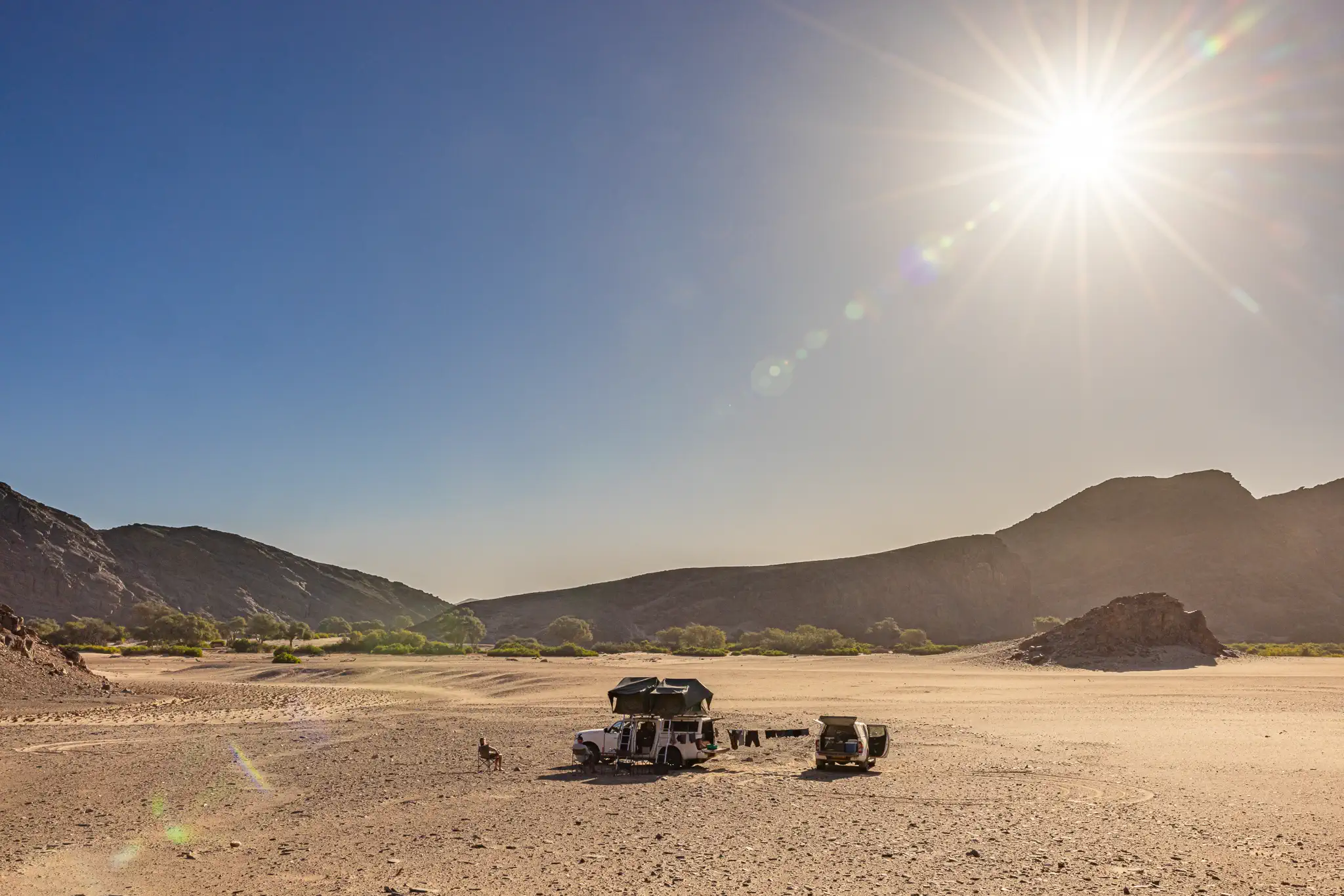
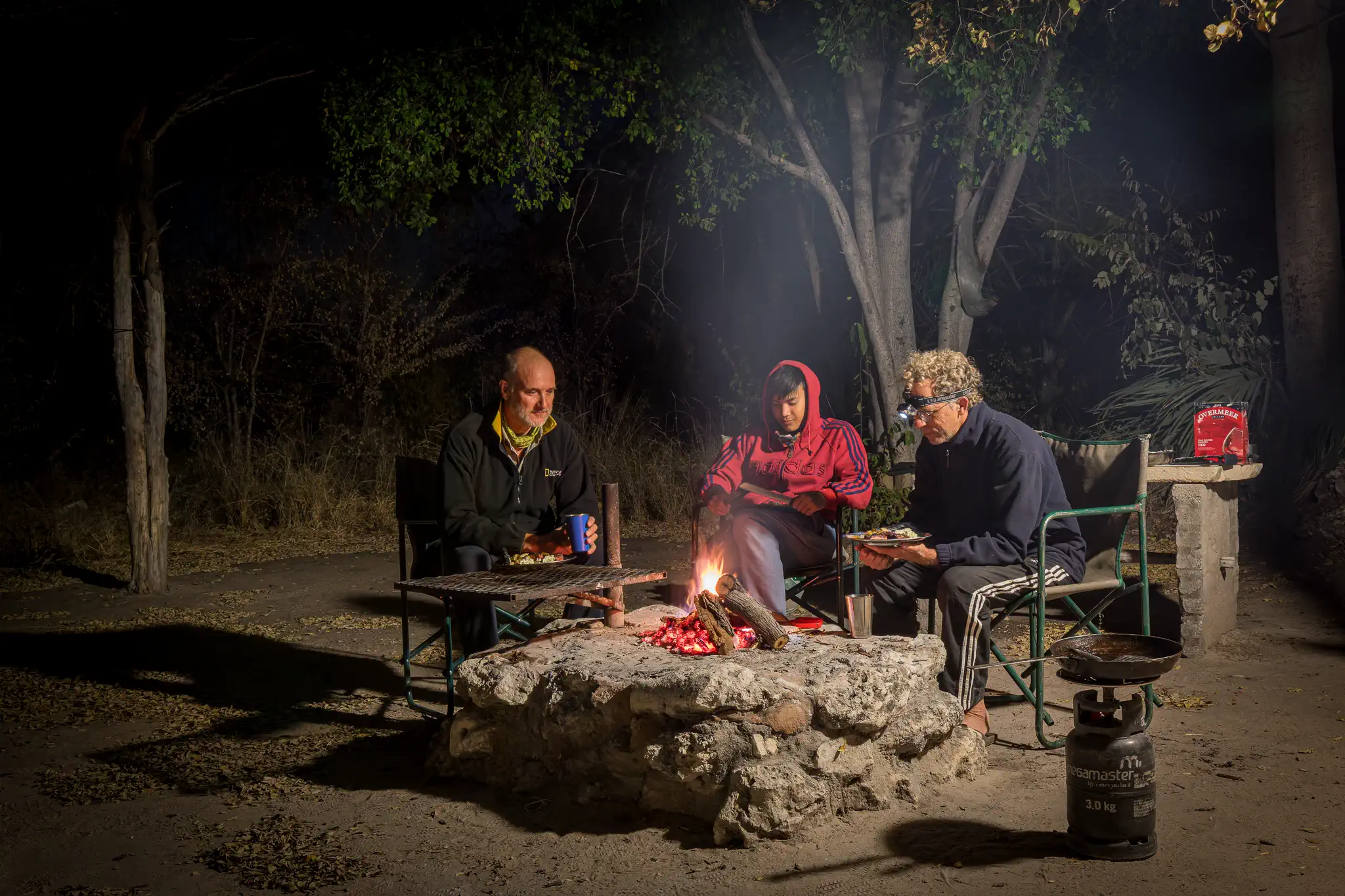
Camping allows us to stay closer to the landscapes we have travelled to see. Mornings begin with tea or coffee as the first light reaches the mountains. Evenings are spent cooking and talking, usually around a campfire, beneath a sky without the lights of towns or cities.
For many travellers, these quiet hours at camp become as memorable as the destinations themselves.
Lodges Along the Way
From simple guest farms to remote lodges
Not everyone enjoys camping, and every expedition can be travelled entirely with lodge accommodation if that is what you prefer.
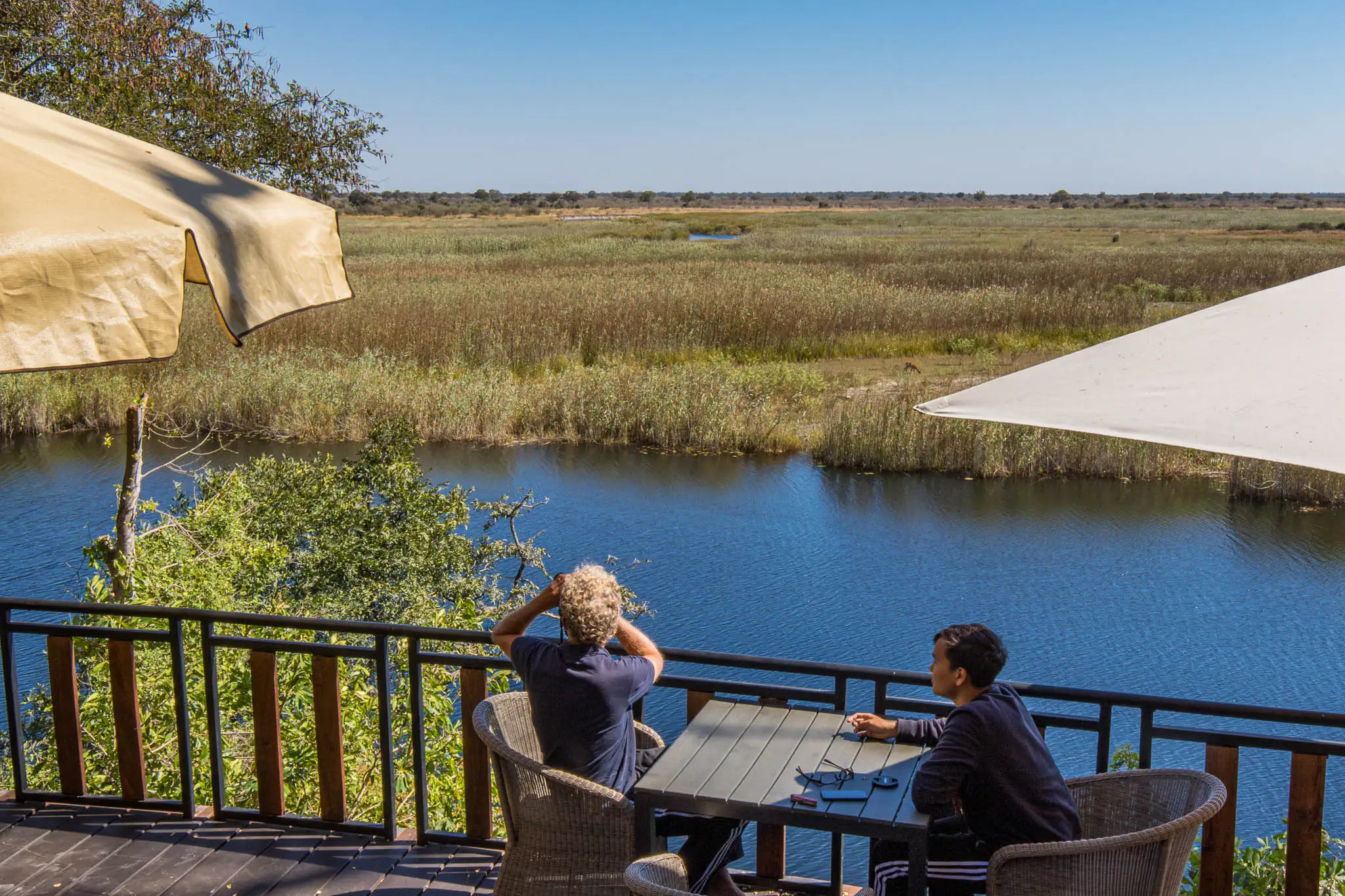
Namibia has an enormous range of places to stay, from simple guest farms and small owner-run lodges to remarkable properties in remote landscapes. The choice depends on your preferred level of comfort, the route and, of course, the budget available.
I do not choose a lodge simply because it is luxurious or well known. Location matters, atmosphere matters and the people running the place matter. A good lodge should fit naturally into the journey rather than become a destination that dictates the route.
Sometimes the right choice is a simple place in exactly the right location. Elsewhere, a more comfortable lodge may offer exceptional access to wildlife, a remarkable setting or simply a place where it is worth staying for more than one night.
The aim is not to choose the most expensive accommodation available, but to find places that suit the way you want to travel and add something to the journey.
Camping & Lodges
Finding the right balance
For many journeys, my preference is a combination.
Camping gives us access to quieter and more remote places. Lodges provide comfort, good meals and a chance to slow down differently. Moving between the two can create a natural rhythm during a longer expedition.
The balance can change from one region to another. We may camp where the location is exceptional, stay in a lodge where it offers better access to wildlife or activities, and use a comfortable guesthouse when we need to restock, do laundry or simply take an easier day.
The choice is practical as well as personal. The aim is not to prove how adventurous we are, nor to make every night luxurious. It is to stay in places that make sense for the journey.
The Daily Rhythm
Adapting to the place and the conditions
There is no standard expedition day.
In places where wildlife is most active early, we may leave before sunrise. On another day, there may be little reason to rush. We might spend several hours at a waterhole, stop for lunch somewhere along the road or arrive early enough to enjoy the place where we are staying.
Distances matter in Namibia, and some days involve several hours of driving. But driving is rarely dead time. The landscape changes around us, wildlife appears unexpectedly and there is always the possibility of stopping when something deserves attention.
Photography may influence our timing, particularly around sunrise and sunset, but these are not photography workshops unless that is specifically what you want. You do not need an expensive camera—or any camera at all—to travel this way.
The rhythm develops naturally from the place, the conditions and the people travelling together.
Photography Along the Way
For those who travel with a camera
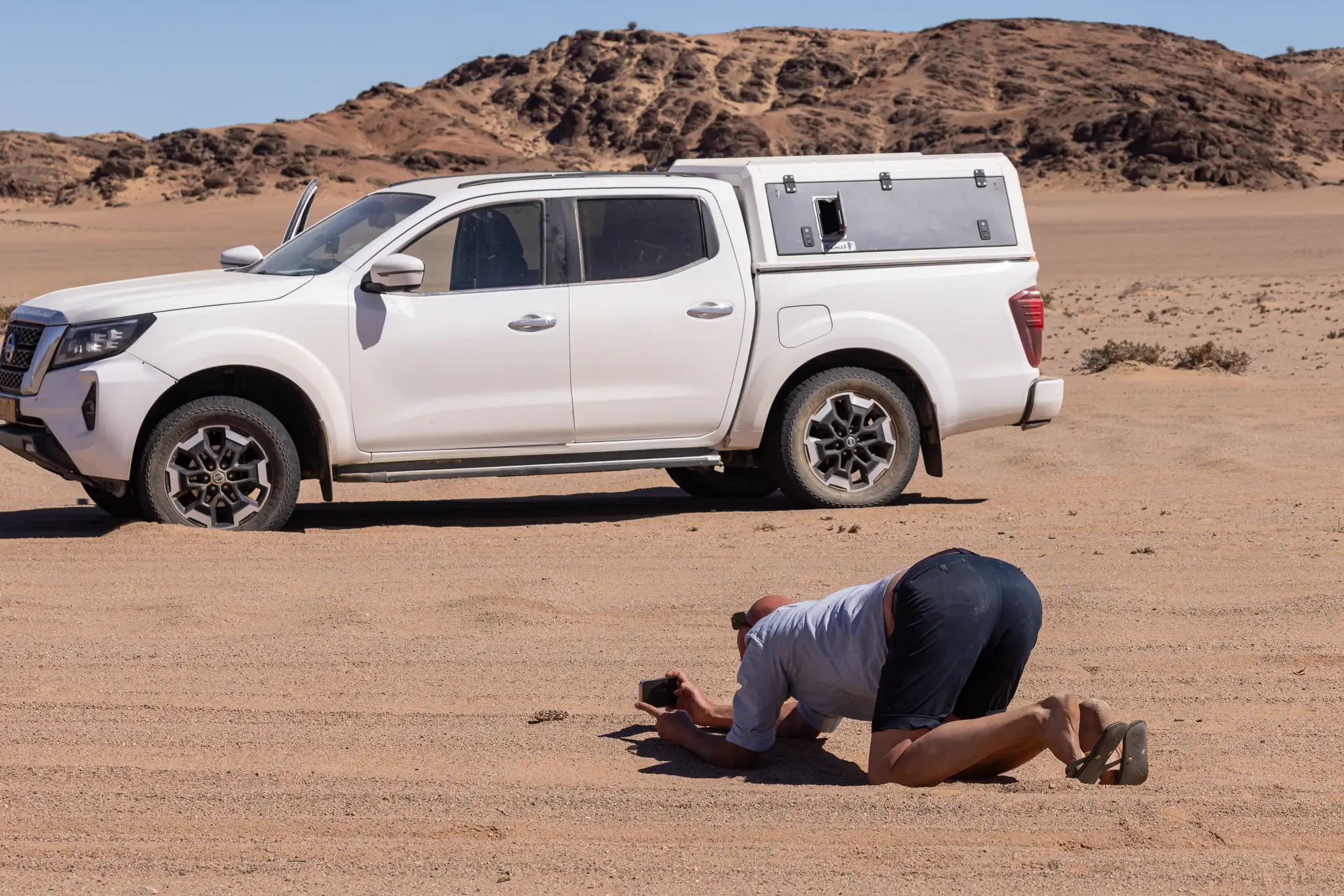
You do not need to be a photographer to travel with me, but photography has been part of the way I explore and understand the natural world for many years.
For travellers who enjoy photography, this naturally influences the journey. We can make use of the best light, spend time with wildlife when something interesting is happening, return to a place when conditions are better, or stop for something small that might otherwise be overlooked.
This is not a photography workshop, unless that is specifically what you are looking for. I am equally happy travelling with someone carrying professional equipment, a phone, or no camera at all.
But if photography matters to you, there is time for it.
Food Along the Way
Part of life on the road
Food on an expedition varies with the journey.
At lodges, meals are usually part of the stay. For camping sections, we stock up in advance and carry the food and supplies we need with us, replenishing along the way when necessary.
Meals at camp are straightforward and enjoyable. Cooking is part of the evening, and when conditions allow, that often means a braai over the fire. After a day on the road, preparing food and sitting together around the campfire becomes part of the rhythm of the journey.
Flexibility, Preparation & Remote Travel
Freedom works best with a good plan
Travelling flexibly does not mean travelling without preparation.
Routes are planned carefully, vehicles and equipment are chosen for the journey, accommodation is arranged where necessary and remote sections are prepared with fuel, water, supplies and road conditions in mind.
Once we are travelling, that preparation gives us freedom. We can spend longer somewhere when there is a reason to stay, adjust a route when conditions change or take advantage of an opportunity that could not have been predicted months earlier.
In remote areas, plans sometimes change because they have to. Roads can deteriorate, rivers can become difficult to cross and wildlife may be somewhere other than where it was yesterday.
That uncertainty is part of travelling through these places. Good preparation allows us to respond to it calmly.
How Long Should You Travel?
Enough time to enjoy where you are
For a broad Classic Namibia journey, around 18–21 days gives us time to travel through several very different regions without turning every day into a long drive.
More focused journeys can be shorter. Expeditions into remote regions or journeys combining Kaokoland in the northwest with the Zambezi Region need more time.
There is no ideal duration for every traveller. It depends on the route, the pace you enjoy and how much of the country you want to include.
When we discuss a journey, I will tell you if I think the route is trying to do too much. Namibia is a large country. Leaving something for another journey is often better than seeing everything through the windscreen.
How Costs Are Calculated
Every journey is different
The cost of an expedition depends on the route, duration, number of travellers and the way you choose to travel.
The main variables are the vehicle, fuel, accommodation, camping arrangements, park fees and activities along the route. A camping-focused expedition has a very different cost structure from a lodge journey, while the number of people travelling also affects the cost per person.
After discussing the journey you have in mind, I prepare a proposal based on the actual route and travel style rather than trying to fit every journey into a standard package.
Is This Way of Travelling for You?
An expedition like this is for travellers who value independence and flexibility but appreciate travelling with someone who knows the country and can take care of the route, logistics and decisions along the way.
You do not need to be an experienced overland traveller, photographer or camper. The journey can be comfortable, adventurous or somewhere between the two.
What matters more is curiosity, patience and a willingness to leave some room for the unexpected. Namibia is not a country that needs to be rushed.
If that sounds like the way you like to travel, we can start with a conversation and build the journey from there.