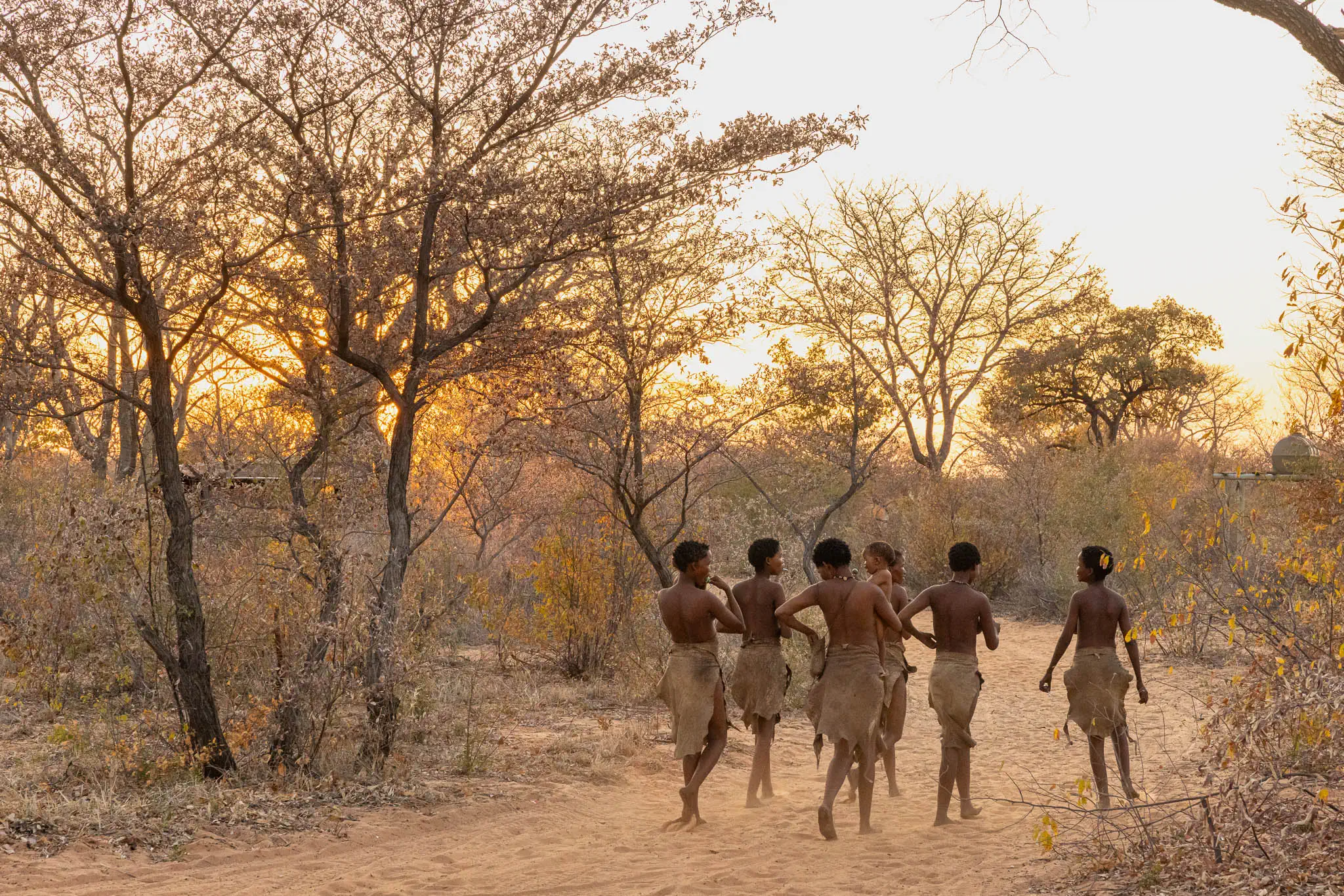
The Ju/’Hoansi San of Namibia
Discover
the knowledge,
the landscape,
and a different way
of seeing it.
A Different Way of Seeing
The Ju/’Hoansi are one of several San peoples of southern Africa, with communities living in northeastern Namibia and neighbouring Botswana.
For thousands of years, their lives were closely connected to the woodlands and savannas of the Kalahari. Hunting and gathering required an intimate understanding of the landscape: tracking animals, recognising edible and medicinal plants, finding water, reading the seasons and knowing how wildlife behaved.
This knowledge was never written down. It was passed from one generation to the next through observation, experience and time spent together.
Today, life has changed considerably. Most Ju/’Hoansi families no longer depend entirely on hunting and gathering, and modern education, settlements, employment and tourism have all become part of daily life.
Yet much of their traditional knowledge remains, and it is this remarkable understanding of the natural world that makes a visit so rewarding.
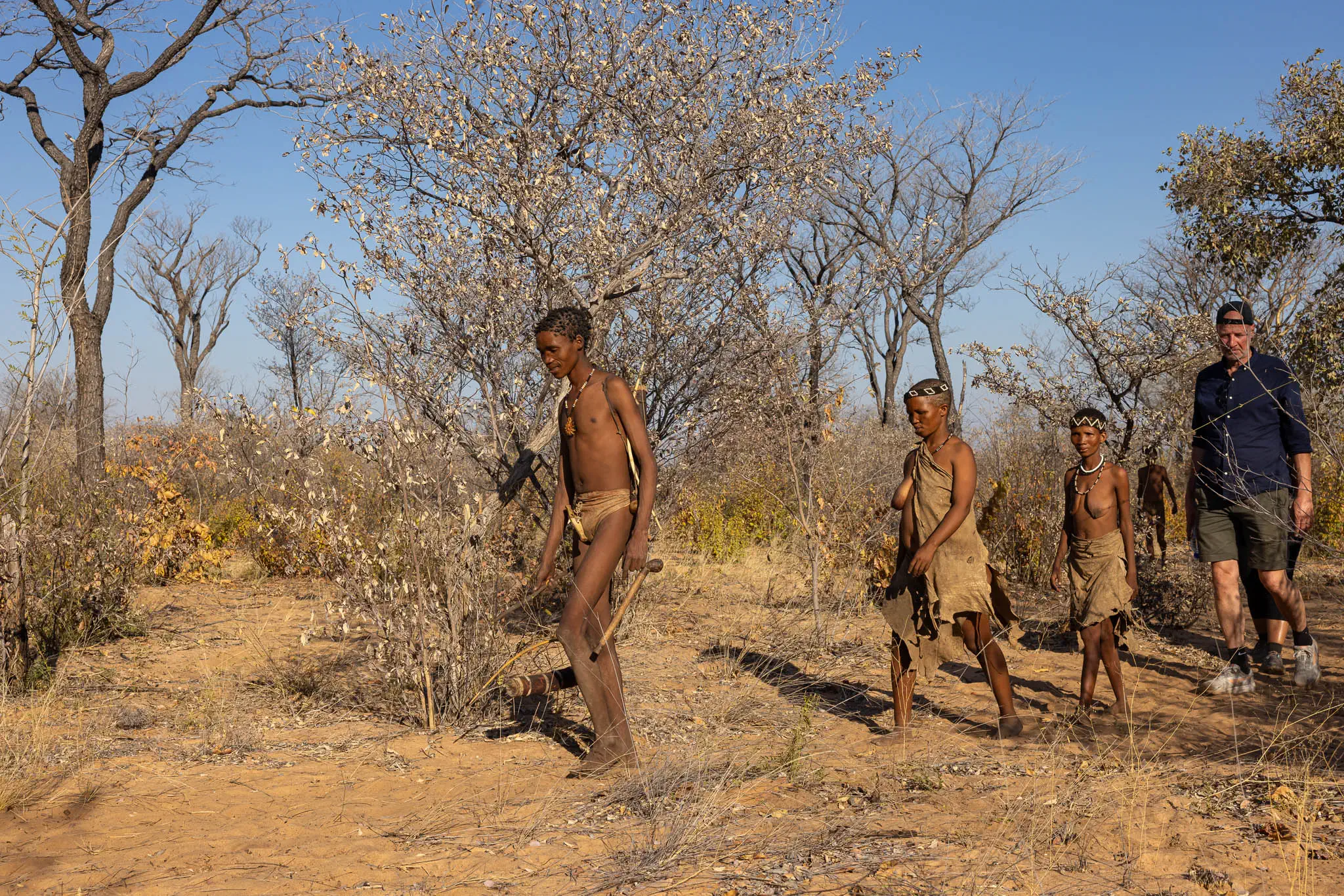
Reading the Landscape
One of the first things visitors notice is how differently Ju/’Hoansi guides see the bush.
What appears to be an empty landscape soon becomes full of detail. A footprint reveals which animal passed by, how long ago and often what it was doing. Plants that most people would walk past have traditional uses as food, medicine, fibres or hunting materials.
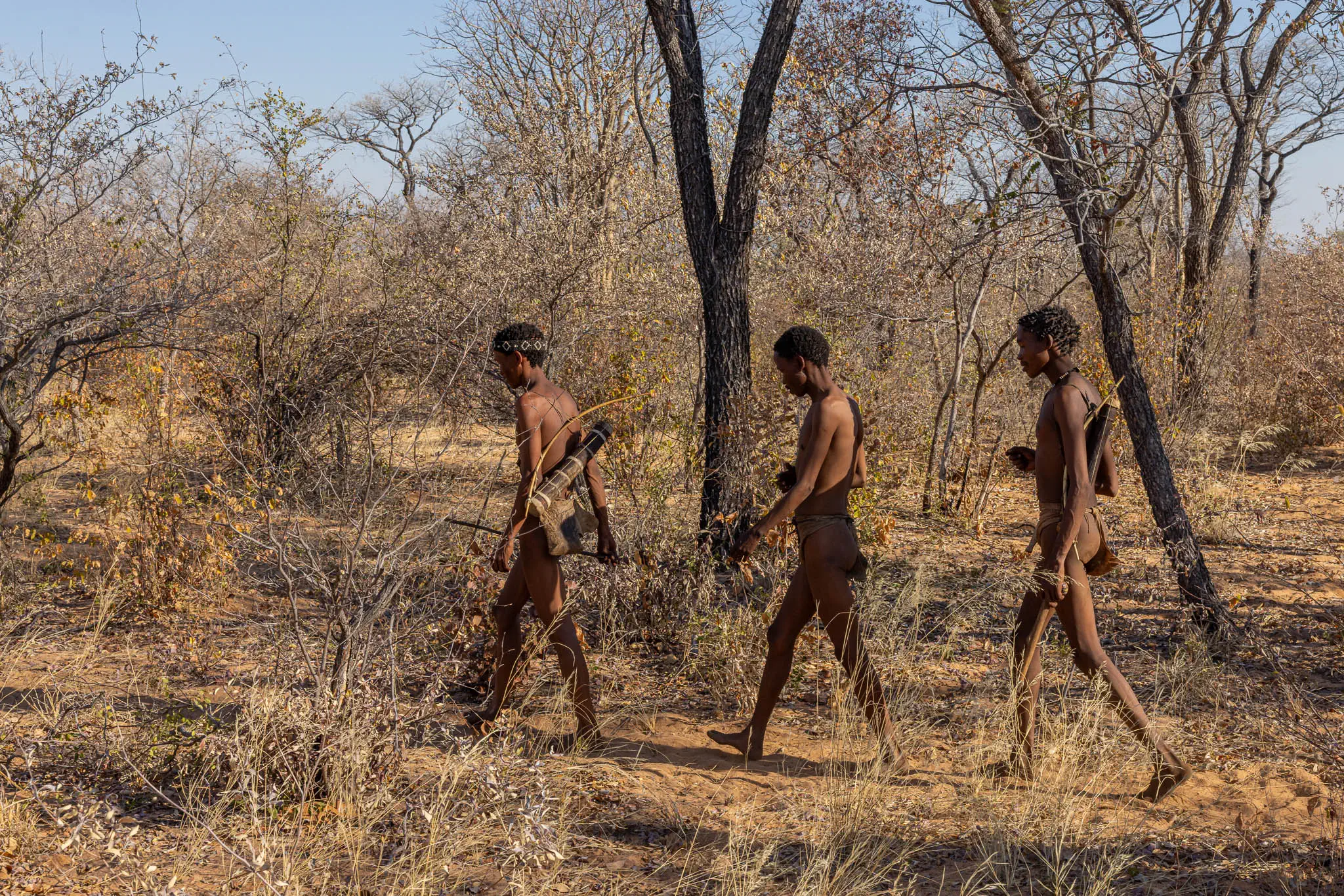
Tracking is perhaps the best-known skill, but it is only one part of a much broader understanding of the environment.
Walking through the bush with Ju/’Hoansi guides is less about finding wildlife than learning to notice things most of us would never have seen on our own.
The Living Museum at Grashoek
My visits with the Ju/’Hoansi take place at the Living Museum near Grashoek, in northeastern Namibia.
It is worth explaining what a Living Museum actually is.
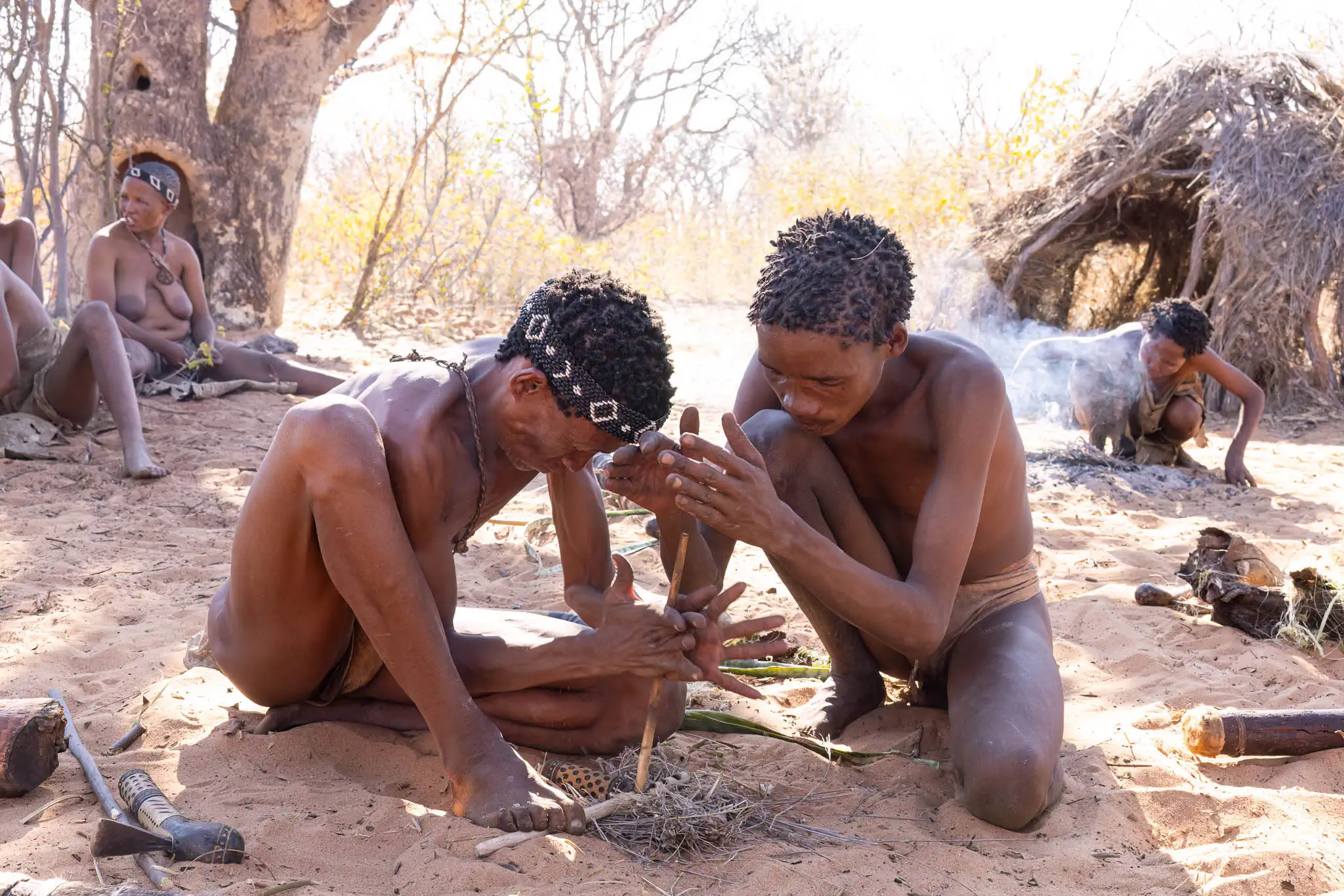
The museum was established by members of the Ju/’Hoansi community as a way of preserving traditional knowledge while creating an income through cultural tourism. Visitors are introduced to activities such as tracking, identifying useful plants, making fire, preparing traditional hunting equipment, crafts, music and dancing.
These demonstrations are organised for visitors, and I think it is important to be open about that.
At the same time, they are based on genuine knowledge that has been passed down through generations. The skills, stories and traditions belong to the people sharing them. The visit is not about pretending life has remained unchanged, but about understanding how traditional knowledge continues to have meaning today.
I think that honesty makes the experience more interesting, not less.
Spending Time with the Ju/’Hoansi
The programme itself provides a good introduction, but I have found that the most memorable moments often happen between the demonstrations.
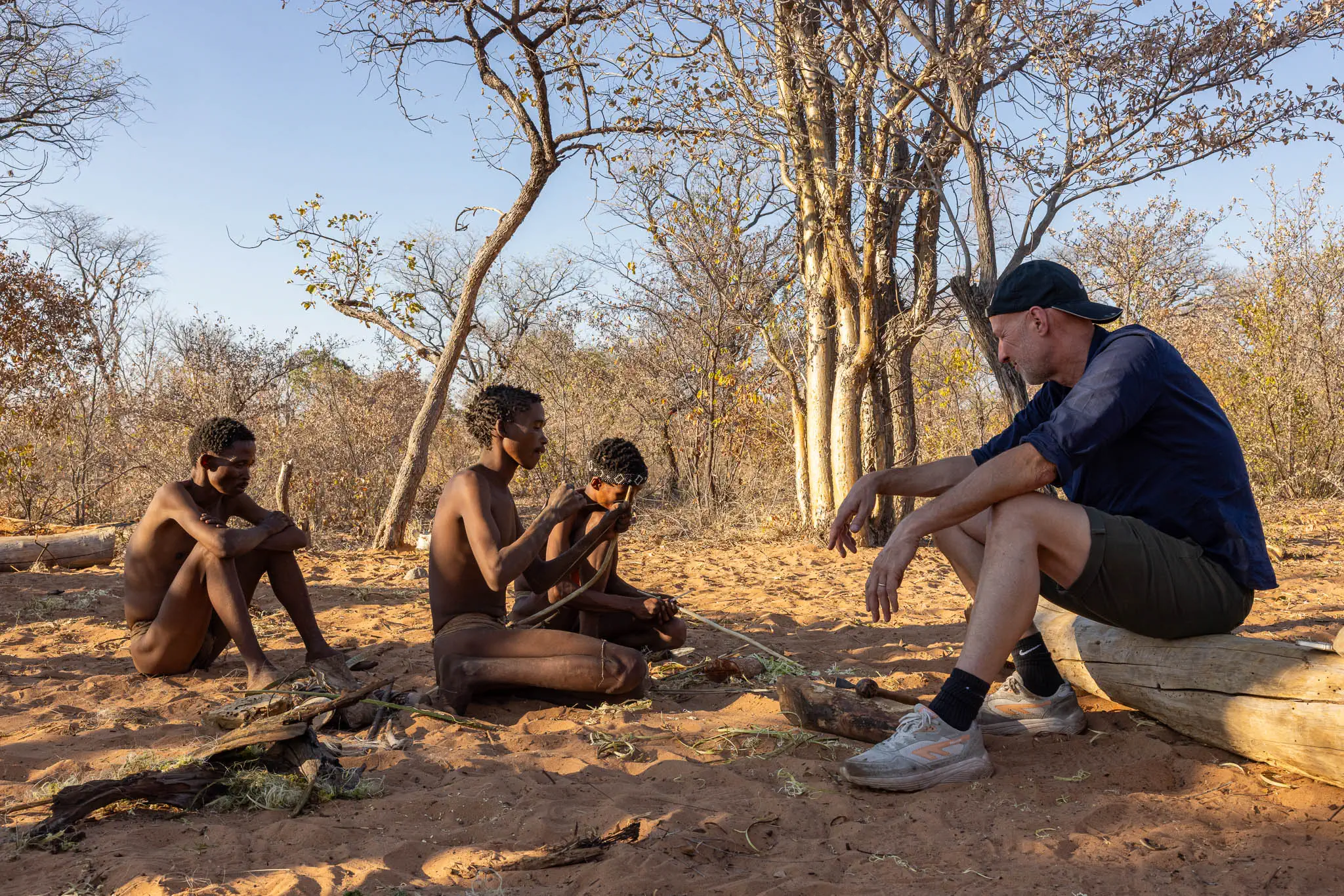
There is time to ask questions, walk through the bush, sit together and simply enjoy conversation.
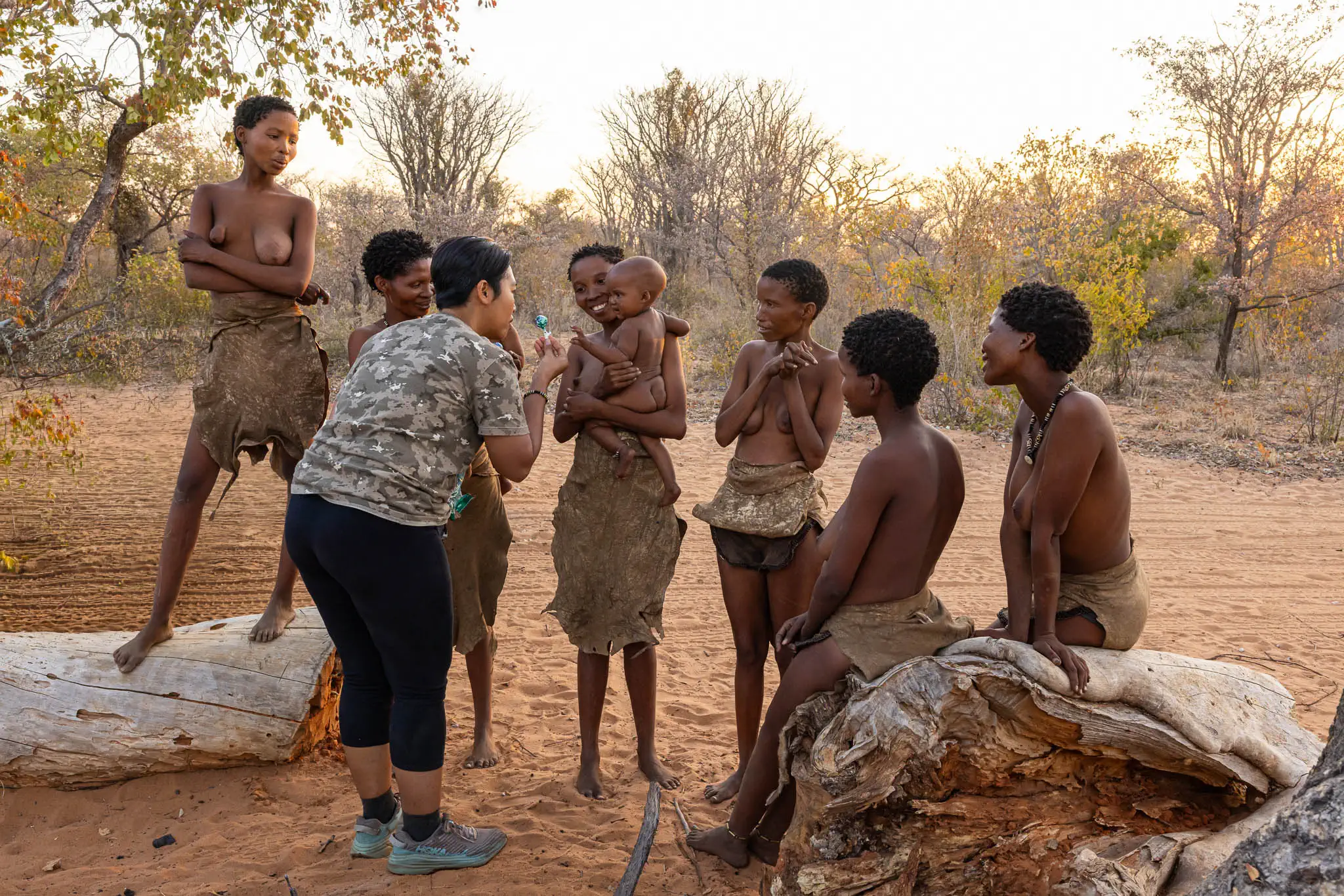
As with my visits to Himba communities, I prefer not to rush. Spending more time allows the visit to feel less like a performance and more like an opportunity to get to know the people behind it.
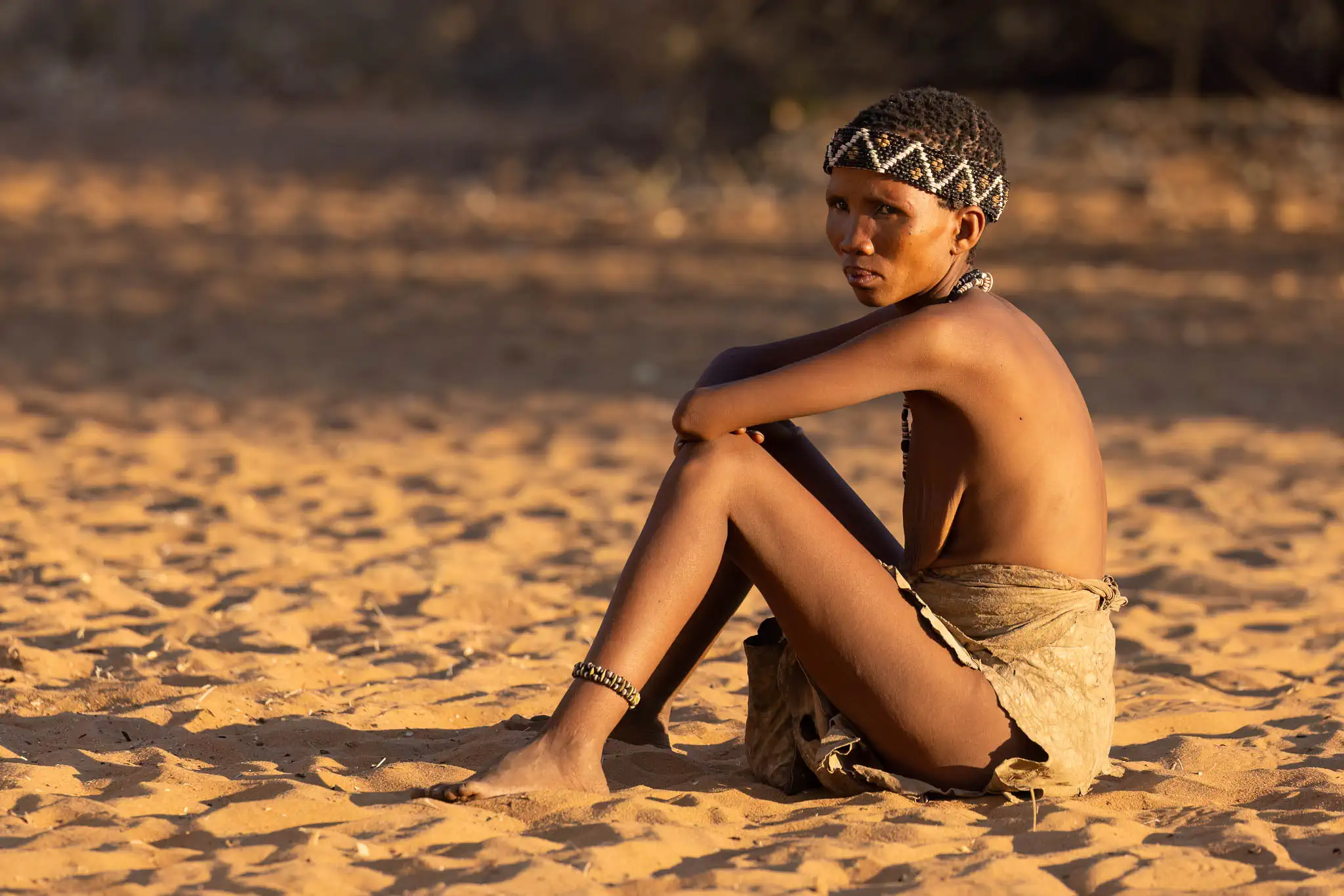
For photographers, the same principle applies.
Photography can be part of the visit, but I don’t like arriving with a checklist of pictures that have to be made. The best photographs usually come naturally once people have had time to relax and become comfortable with one another.
Tradition, Choice & Change
The Ju/’Hoansi are often described as one of the world’s last hunter-gatherer societies.
That description only tells part of the story.
Like every community, the Ju/’Hoansi have adapted to changing circumstances. Young people attend school, many families live in permanent settlements, and modern technology has become part of everyday life.
That does not mean traditional knowledge has disappeared.
The skills of tracking, understanding wildlife, recognising plants and reading the landscape still exist, even if they are no longer essential for daily survival in the way they once were.
Projects such as the Living Museum help ensure that this knowledge continues to be practised, demonstrated and passed on to younger generations.
For me, that is far more interesting than the idea of trying to preserve a culture exactly as it was a century ago.
Travelling to Grashoek
The Living Museum at Grashoek fits naturally into a journey through northern Namibia, particularly when travelling between Etosha National Park and the Zambezi Region.
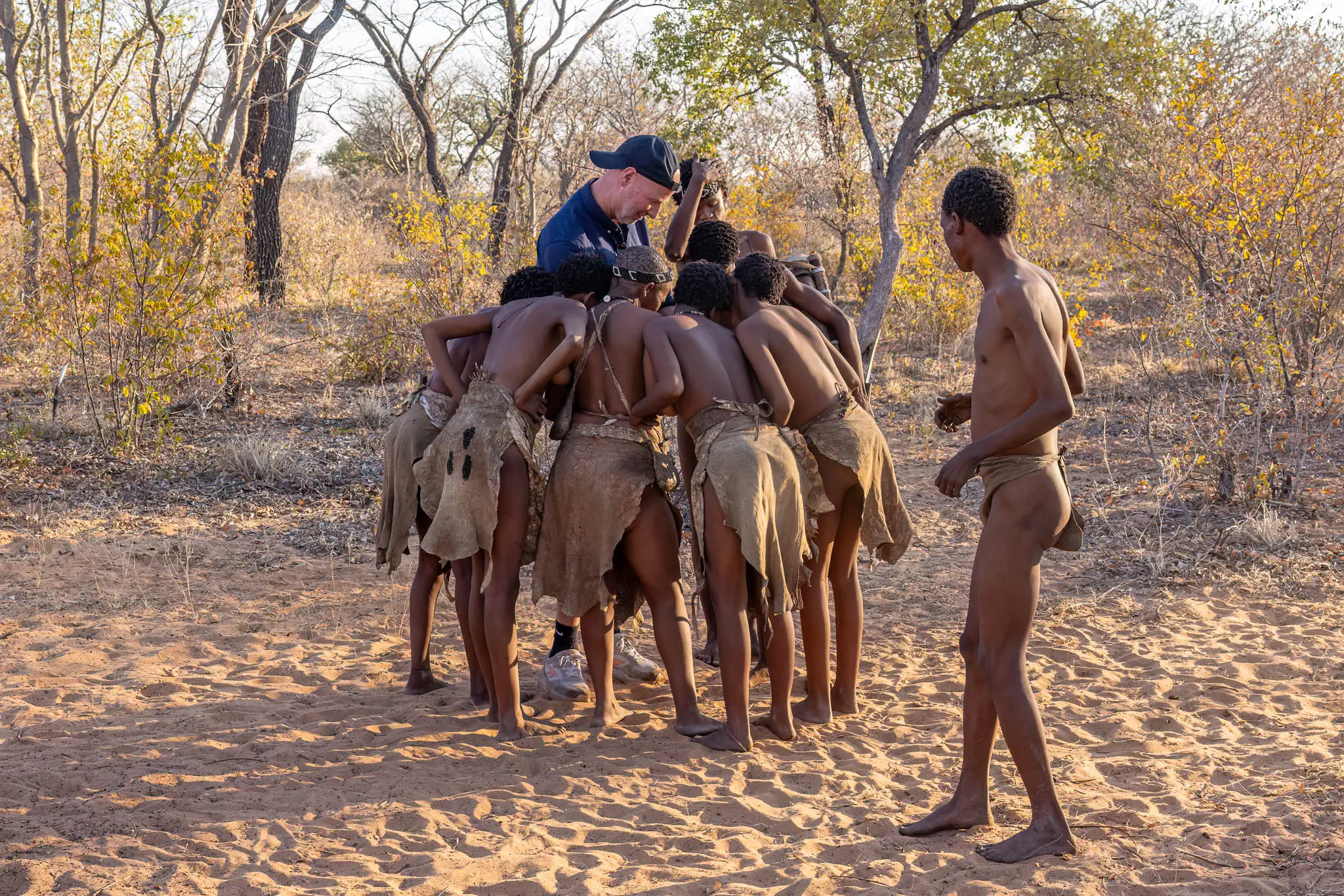
The visit can include a bush walk, tracking demonstrations, learning about traditional plant use, crafts, music and dancing. Depending on the itinerary, we can also stay overnight on Ju/’Hoansi land rather than making only a brief daytime visit.
Like much of my travel in Namibia, I prefer to spend enough time in a place rather than treating it as another attraction to tick off along the way.
Continue Exploring
I’ve photographed the Ju/’Hoansi over several journeys through Namibia. If you’d like to continue exploring, you’ll find a personal travel story and an extensive photo gallery on Duniart.
Personal observations and experiences from the field.
A curated collection of the people, culture and daily life.
A Journey Through Northern Namibia
A visit with the Ju/’Hoansi can become one of the quieter and more memorable parts of a journey through northern Namibia.
Whether your interests lie in wildlife, photography or learning more about Namibia’s people and cultures, we can build enough time into the itinerary for places like this.
Tell me what draws you to Namibia, how you like to travel and how much time you have. From there, we can shape a journey around the landscapes, wildlife and encounters that interest you most.