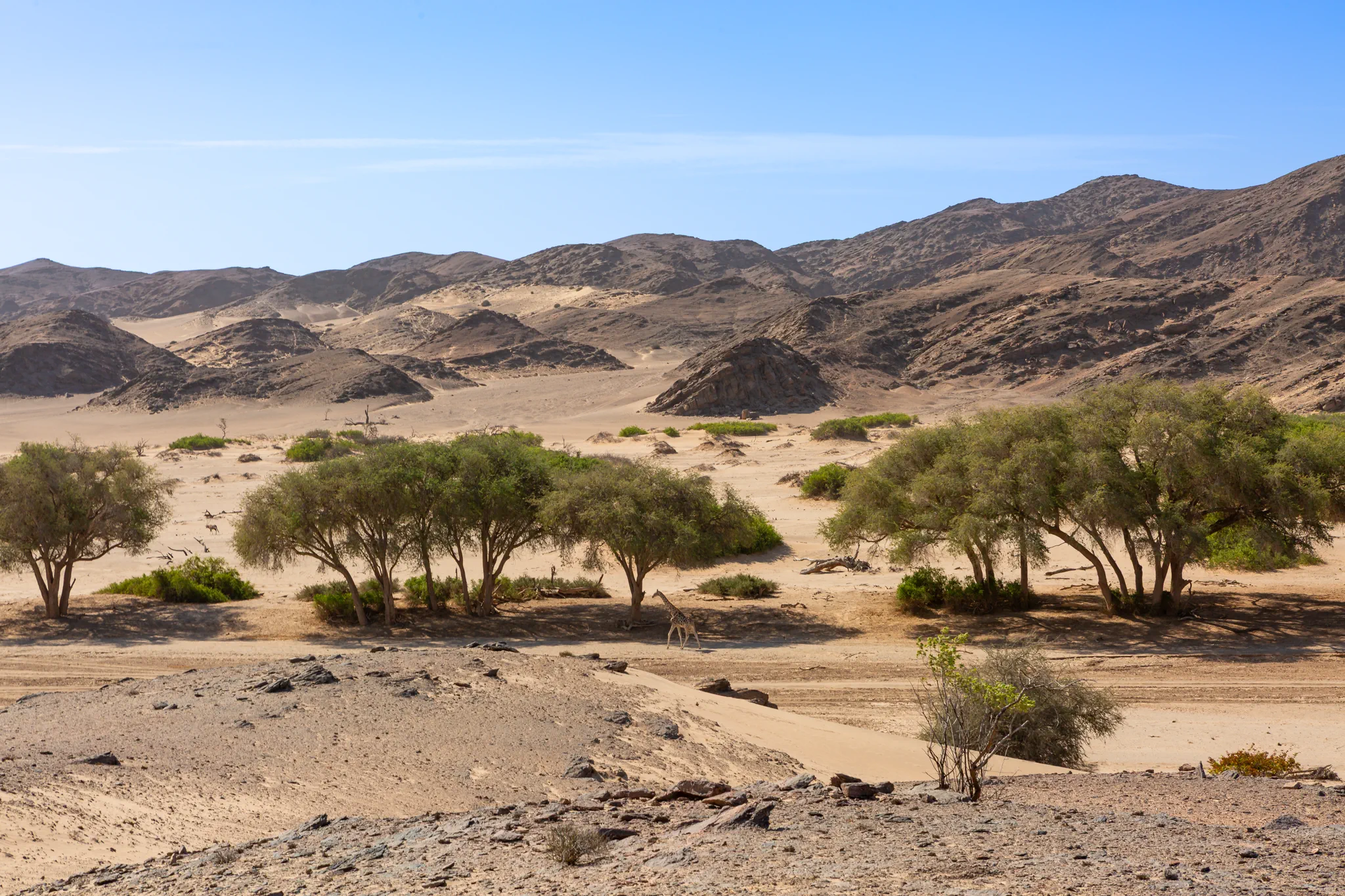
A Search for Desert Lions
Desert-adapted lions are among the most elusive animals in Namibia.
I had spent a lot of time reading about them, where they lived and how they moved through the remote river systems of northwestern Namibia. I knew that actually seeing one was far from guaranteed — particularly when travelling independently.
But that was precisely why I had chosen our route through the Hoanib.
Somewhere in the back of my mind was the hope that we might get lucky.
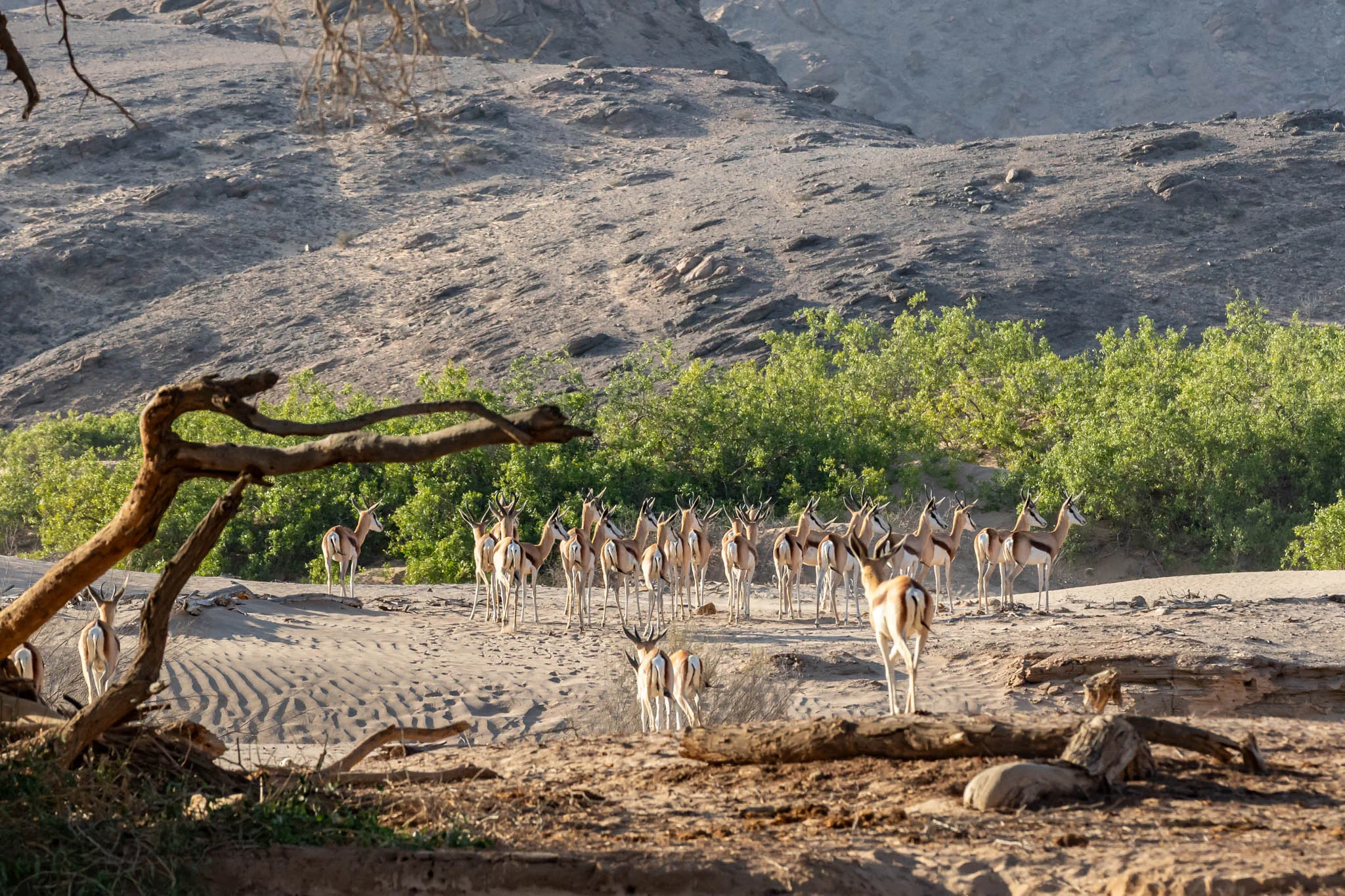
We had been driving along the riverbed when suddenly we ran into a herd of panicking springbok. They were clearly spooked by something.
We drove onto the sandy riverbank and soon found what I had been hoping for.
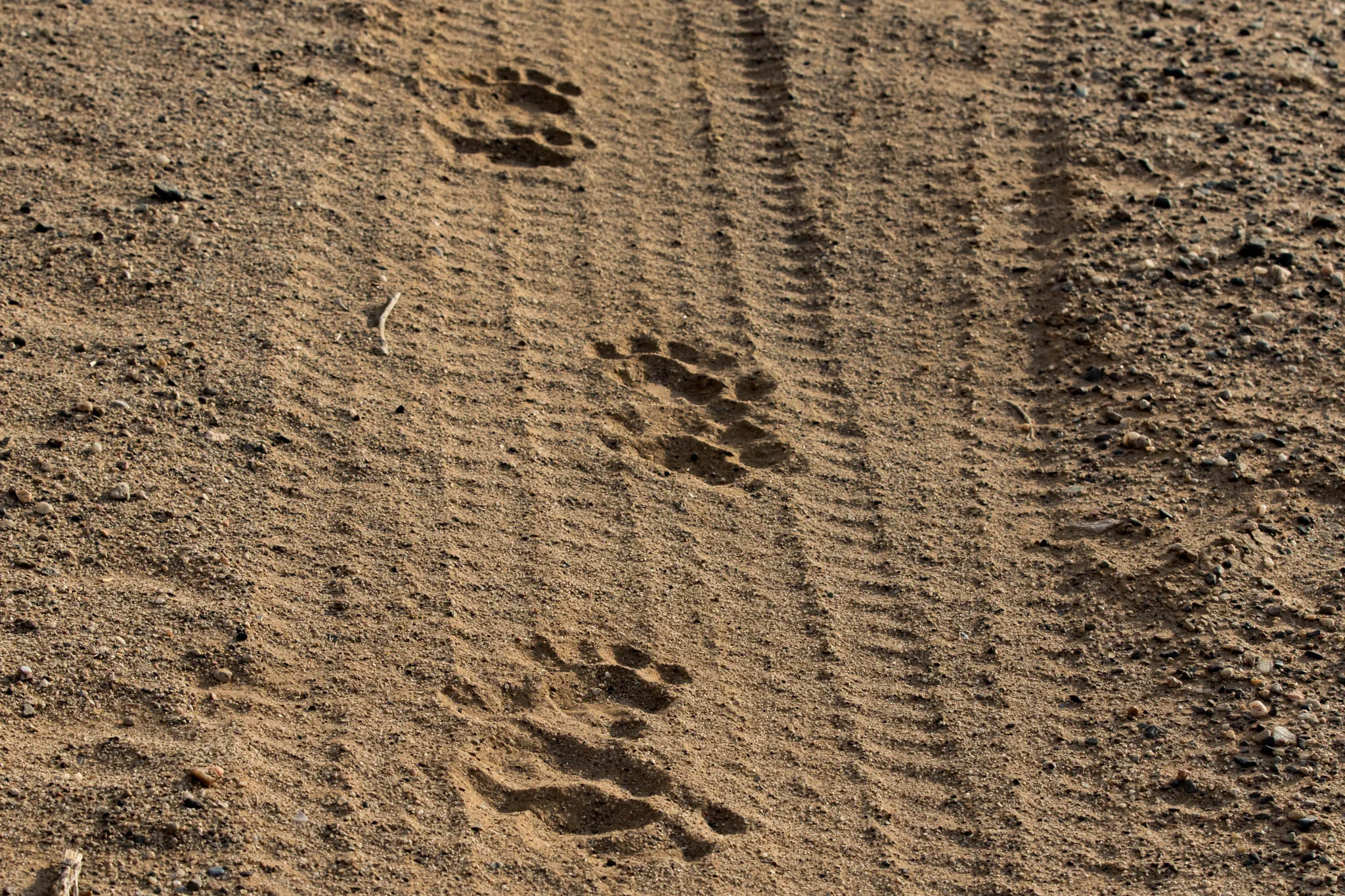
Lion tracks. Fresh ones.
Could this really happen?
Even a giraffe nearby seemed unusually alert, clearly aware that something was not quite right.
We followed the tracks through the riverbed. They led in and out of several patches of bush, until eventually they disappeared into one particular area where there were no tracks leading out.
Were the lions still there?
We couldn’t see anything from the vehicle, but I was almost certain they were.
I marked the location on my GPS.
The plan was simple: come back later, towards sunset, and see what happened.
Waiting for the Riverbed to Come Alive
As the sun began to drop, we returned to the area where we had found the tracks.
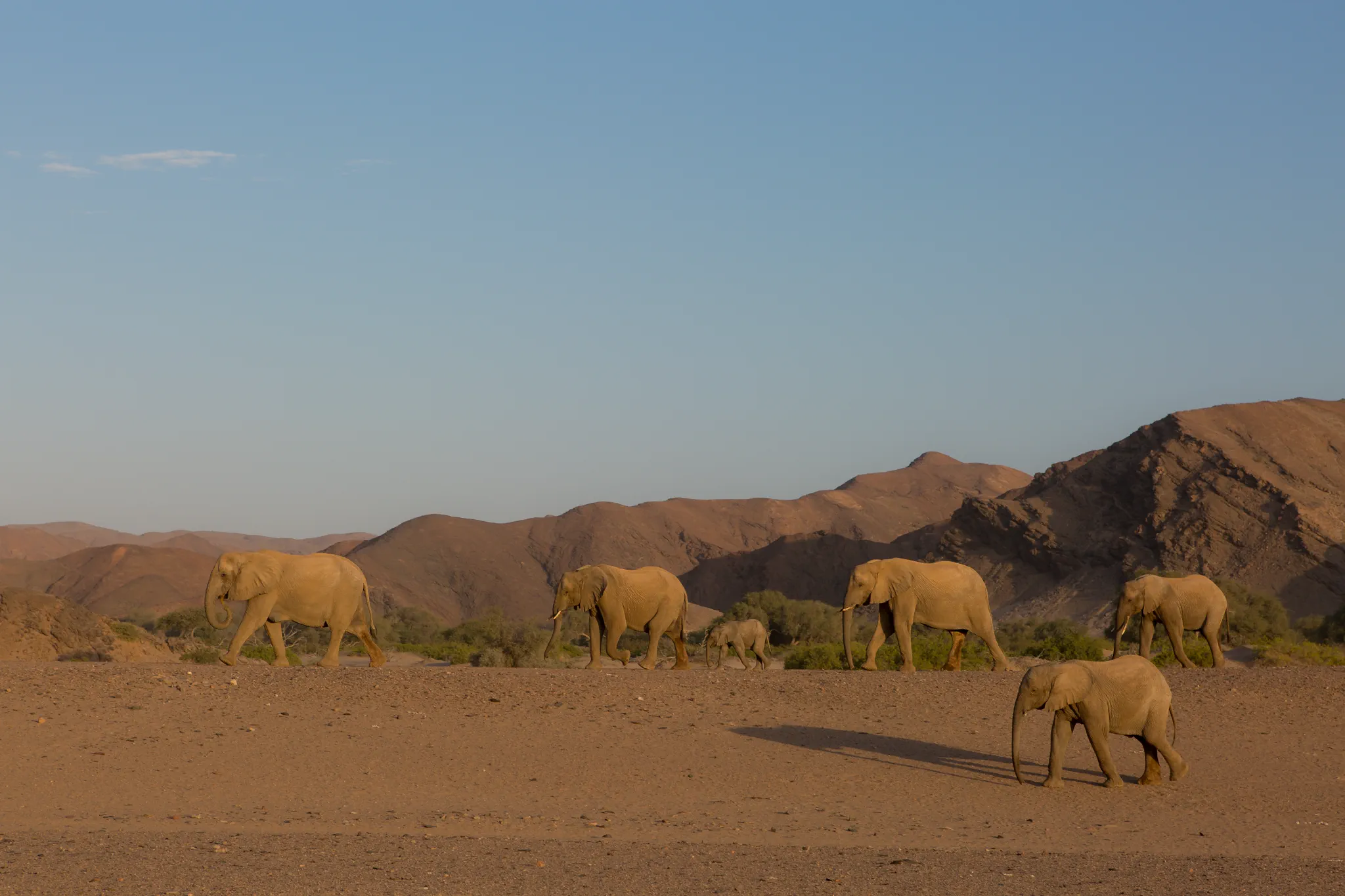
We were also hoping the elephants we had seen earlier might come this way.
We didn’t have to wait long.
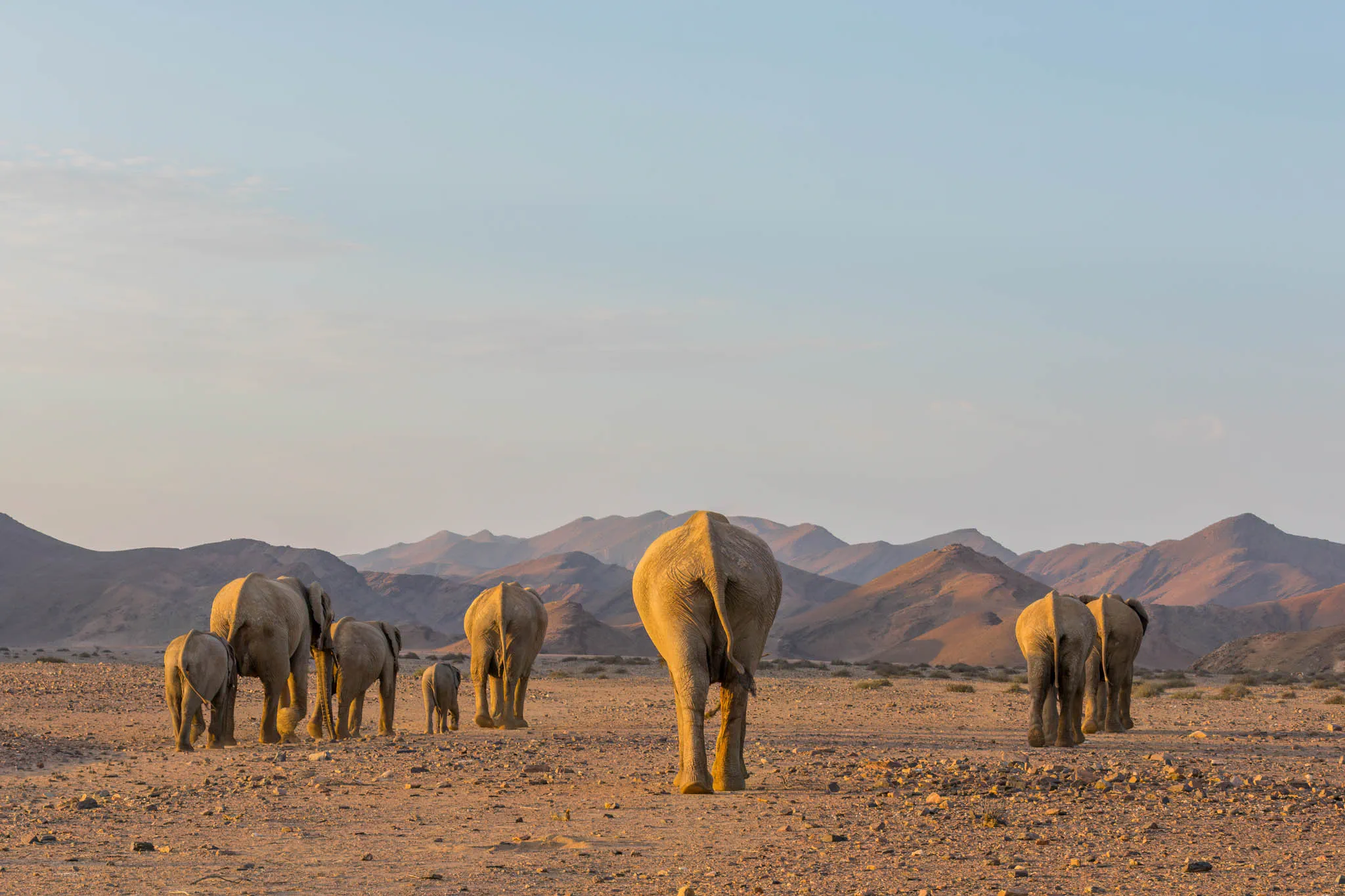
A herd appeared, including a young elephant.
Perhaps they knew something we didn’t. With a young elephant in the herd, they seemed to prefer spending the night away from the riverbed, on the more open plains to the north.
The scenery became increasingly spectacular as the light changed.
By now the elephants were completely ignoring us. They allowed us to follow slowly as they moved farther away from the riverbed.
It was almost too perfect.
But it was time to leave them alone and hope we would find them again the next day.
We turned back towards the lion tracks.
After Dark
It was getting dark quickly.
We decided not to drive any further and simply wait in the vehicle until it was completely dark.
There we were, parked among the small sand dunes along the Hoanib riverbank, with patches of bush all around us.
Engine off.
Flashlights ready.
And the adrenaline slowly increasing.
The silence was eerie.
I kept thinking:
No way.
What were the chances of actually seeing desert-adapted lions?
But there were fresh tracks nearby.
So we waited.
It was almost completely dark when I suddenly thought I saw a vague, dark shadow moving in front of the vehicle.
It was too dark to see what it was.
I switched on the headlights.
Oh my God.
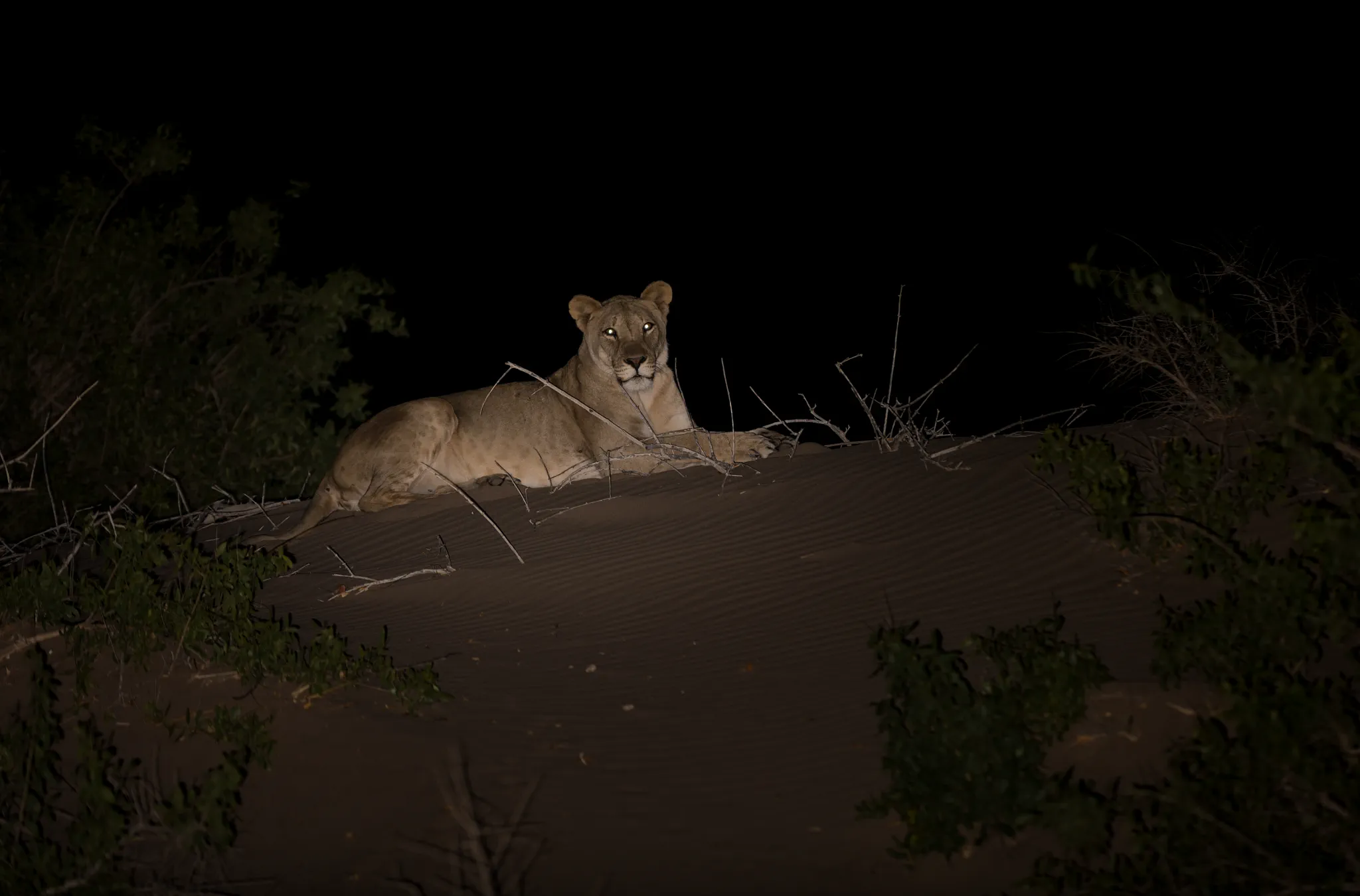
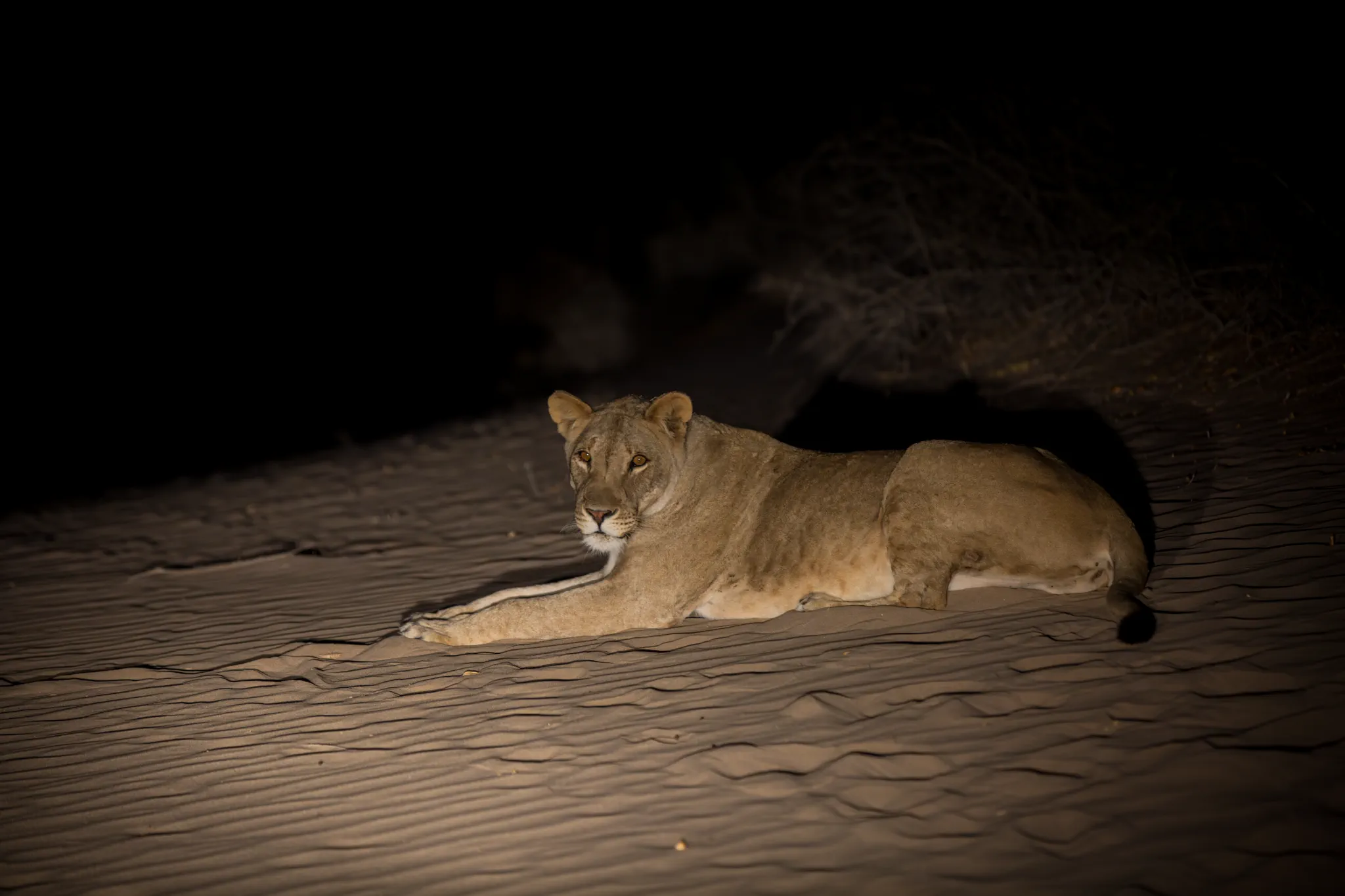
Right in front of us stood a large female lion.
She stopped, looked at us, and then continued walking.
About twenty metres further on, she settled down in the soft desert sand.
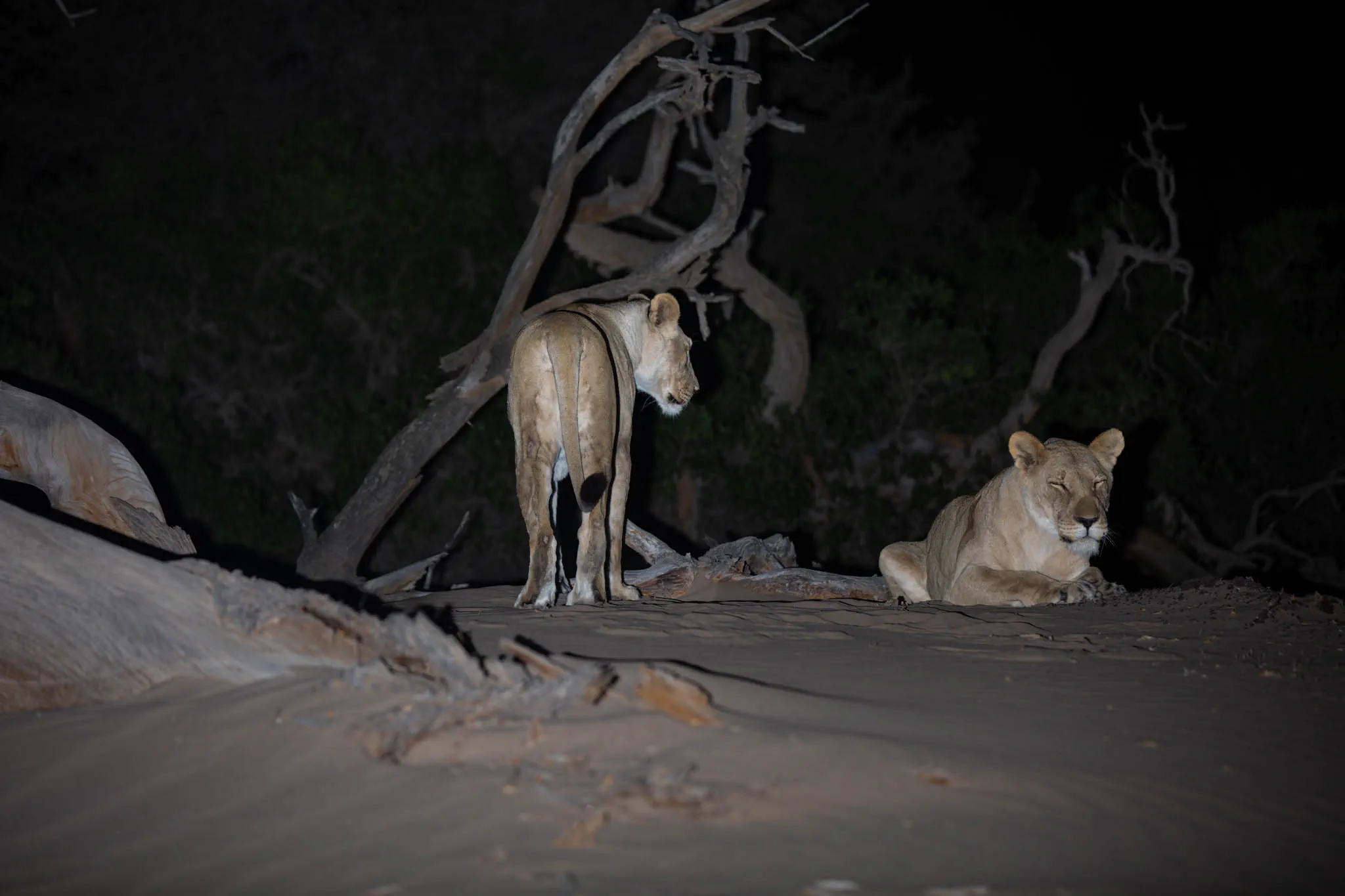
Then another female appeared.
She was more skittish and clearly didn’t like the flashlight, so we tried to disturb her as little as possible.
For about half an hour we watched the two lions.
They moved slowly through the dunes, occasionally lying down. At one point they chased a springhare.
Gradually, their behaviour changed.
They were becoming more focused.
More alert.
They were beginning to hunt.
It was time for us to leave them alone.
We drove to what we thought was the safest place to spend the night, away from the riverbed and surrounded by a sea of sand.
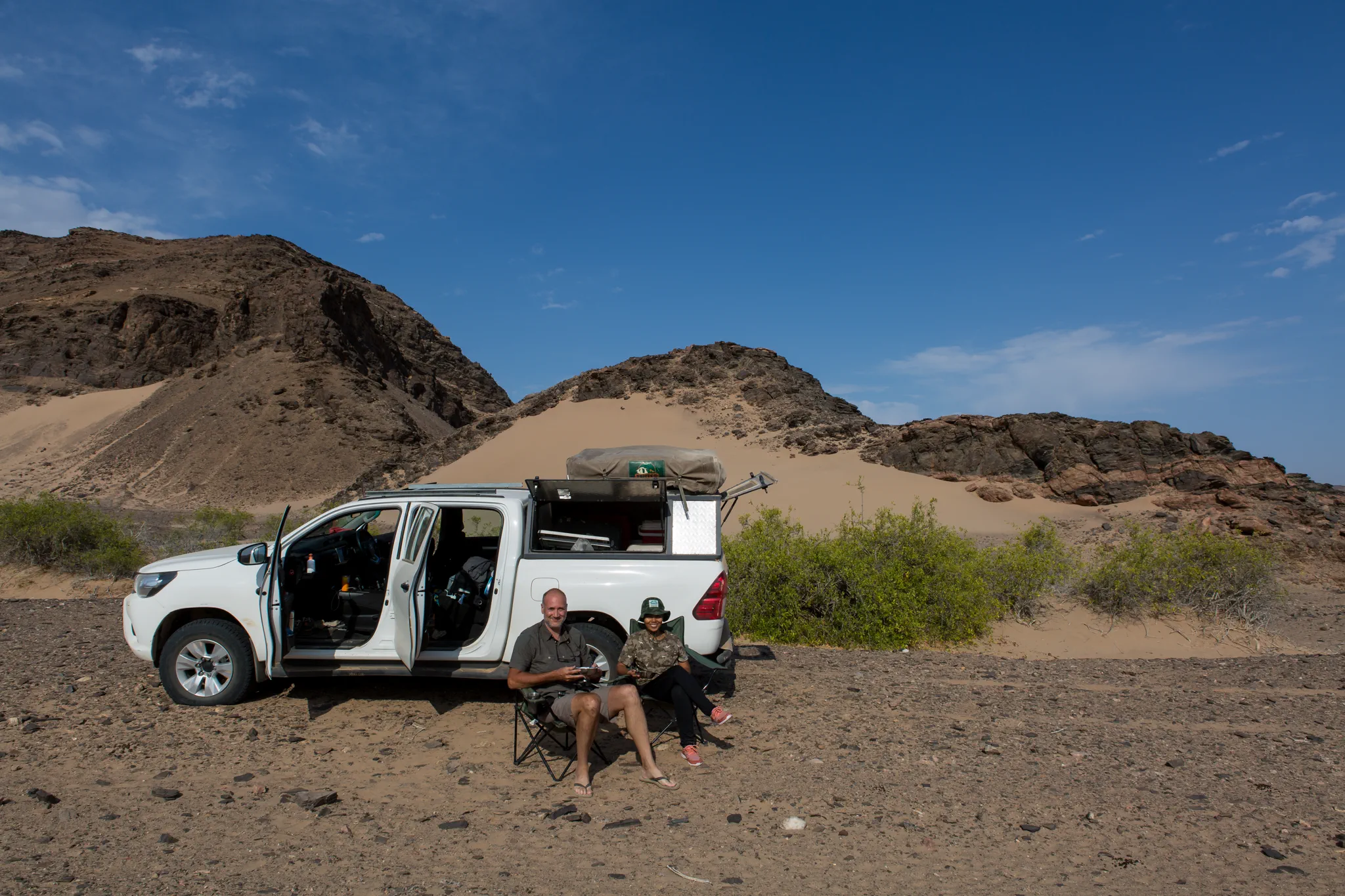
We made dinner around the campfire.
Every few minutes, I scanned the darkness around us with my flashlight.
Just in case.
Another perfect day and night in the Namibian bush.
The Next Morning
First things first.
We drove back to where we had seen the lions the night before.
It didn’t take long to find their tracks.
We followed them — only to discover something rather unexpected.
The lions had followed our vehicle tracks.
They had walked along the same route we had taken, right to the edge of the riverbed, only a few hundred metres from where we had camped.
I suppose they had been curious about us too.
But apparently not curious enough to cross the open plains and expose themselves.
We followed their tracks for another hour before eventually losing them.
Time for breakfast.
While keeping a very close eye on the surrounding bushes.
One of Those Namibia Moments
Seeing desert-adapted lions is never something I could promise.
Even knowing where they might occur, choosing the right route and spending time in the right river systems does not mean they will appear.
That is part of what makes an encounter like this so special.
We had gone looking for a story.
Instead, we found one.
Not because we had booked a special lion drive or followed a guaranteed wildlife route, but because we had chosen to spend time in a remote part of Namibia, followed the tracks when we found them, and were willing to wait.
For me, that is what travelling through places like the Hoanib is about.
Sometimes the plan gets you there.
Then you have to wait and see what happens.