Discover
a vast and remote corner of Namibia,
where ancient landscapes, desert and history
meet beneath enormous skies.
Vast Landscapes & Forgotten Places
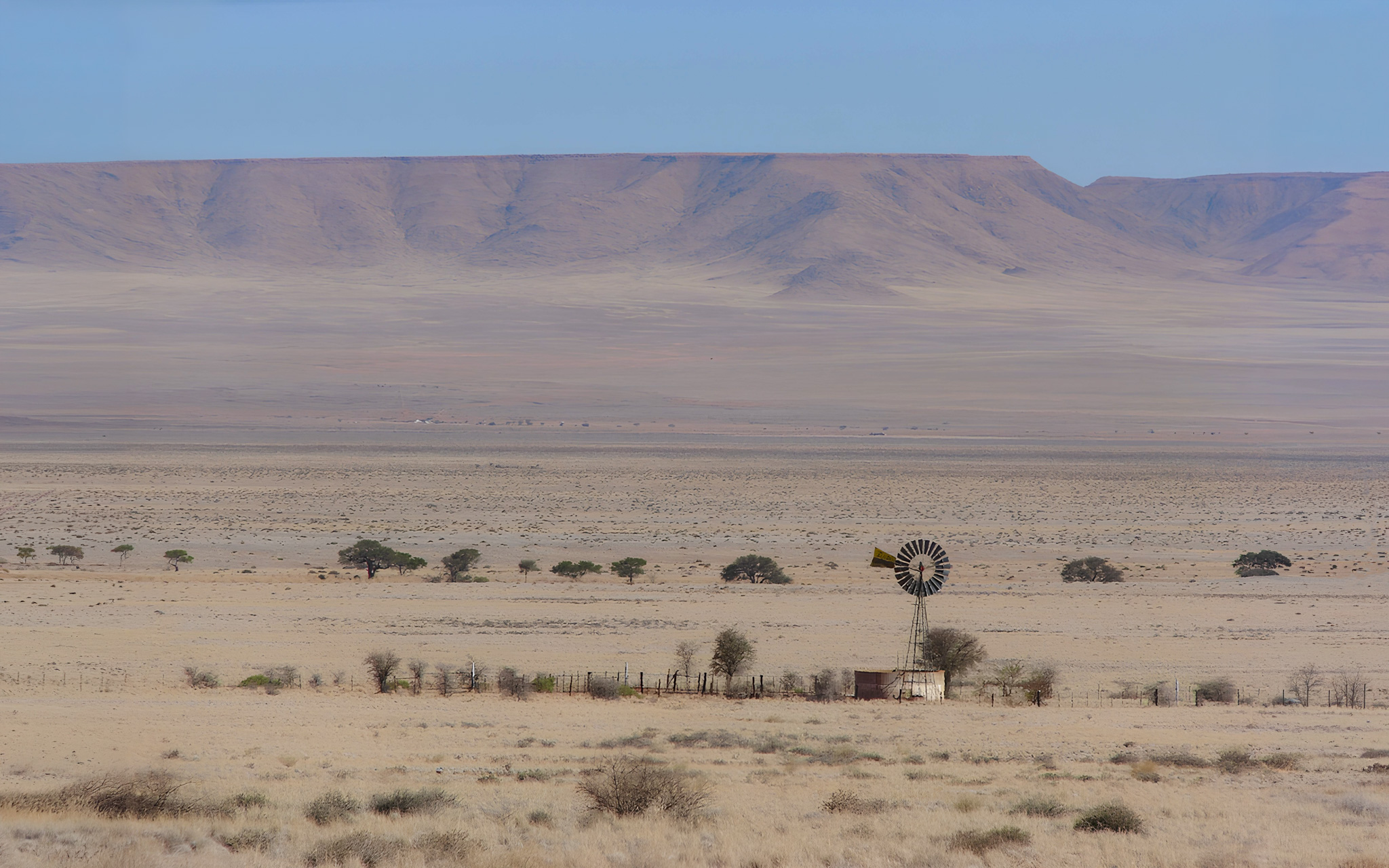
Southern Namibia feels different from the better-known routes further north. Distances are greater, landscapes more open and the sense of isolation stronger.
From the immense Fish River Canyon to the Atlantic coast around Lüderitz and the abandoned buildings of Kolmanskop, the south combines ancient landscapes with a fascinating human history.
It is a part of Namibia that rewards travellers who have time to slow down and explore beyond the usual circuit.
Trees from another time
South of Keetmanshoop, the landscape changes again. Among the rocks and dry plains stand the strange, sculptural forms of the quiver trees — tall, branching aloes that seem almost too distinctive to be real.
The trees belong to one of the characteristic landscapes of southern Namibia, where they grow among rocky outcrops and other plants adapted to the harsh conditions. The nearby dolerite formations add another layer to the scene, with large dark rocks scattered across the landscape.
It is particularly beautiful towards the end of the day, when the low light catches the pale trunks and long branches. For photographers, the combination of trees, rocks and enormous open skies offers something very different from the dunes of the Namib or the wildlife landscapes further north.
There is no need to spend hours here. The attraction is quite simple: walk among the trees, look at the shapes, wait for the light — and appreciate how such an unusual landscape has developed in such an apparently empty part of Namibia.
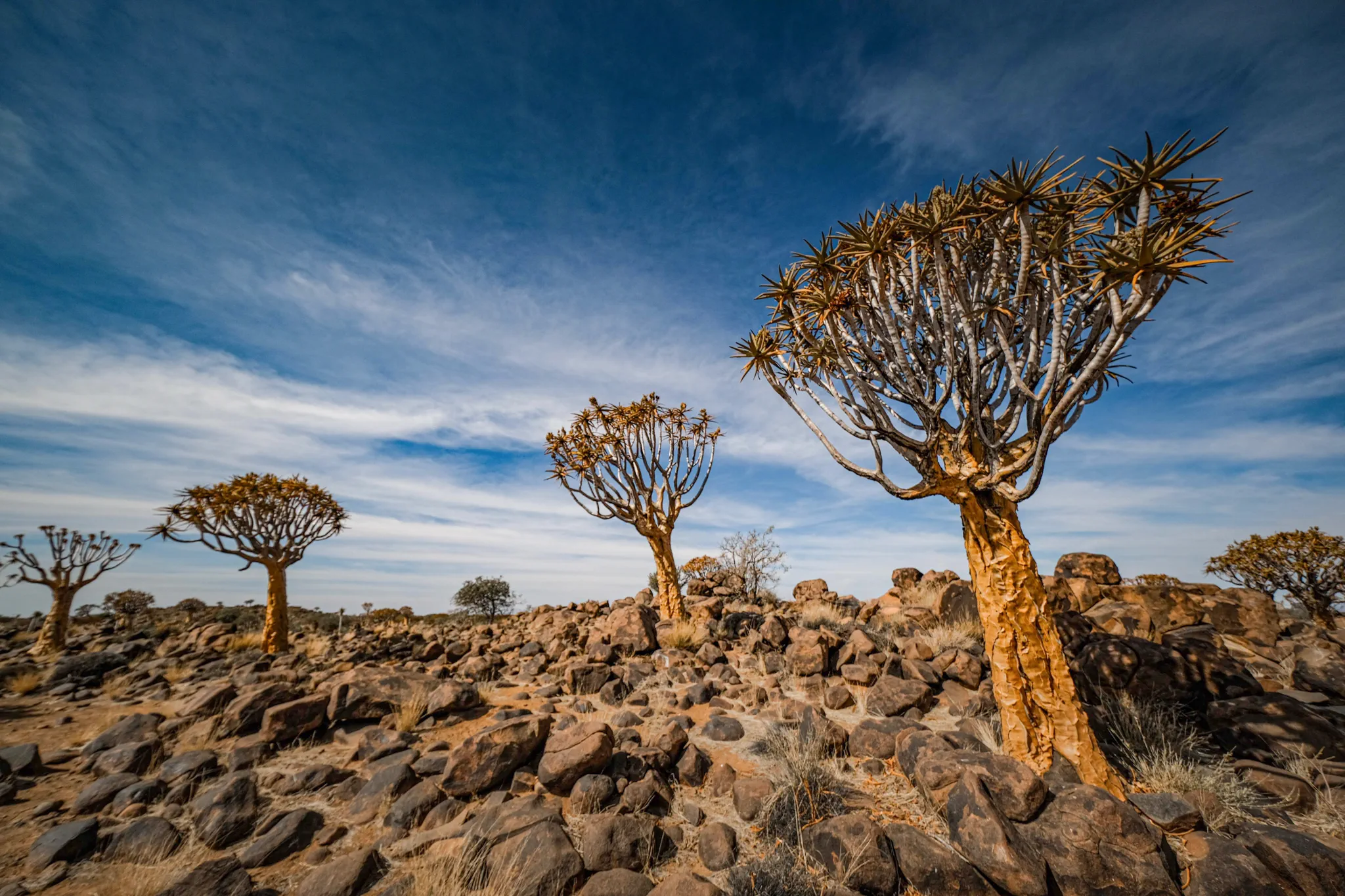
Photo: Francesco Ungaro / Unsplash
Ancient landscapes & enormous scale
The Fish River Canyon is one of those places that is difficult to understand from photographs. From the rim, the landscape stretches away in layers of rock and dry riverbeds, while far below, the Fish River winds through one of the oldest landscapes in Namibia.
The canyon extends for roughly 160 kilometres and reaches depths of more than 500 metres. Its enormous scale is part of what makes the experience so striking — there is very little to interrupt the view, and almost nothing to give you a sense of distance.
The most accessible way to experience the canyon is from the viewpoints around Hobas. For those with more time and the right conditions, the canyon can also be explored on foot. The famous Fish River Canyon Hiking Trail follows the river for several days and is a very different experience from simply looking into the canyon from above.
The Far South is not about rushing from one attraction to the next. At the canyon, it is worth taking time to simply stand at the edge and let the scale of the landscape sink in.
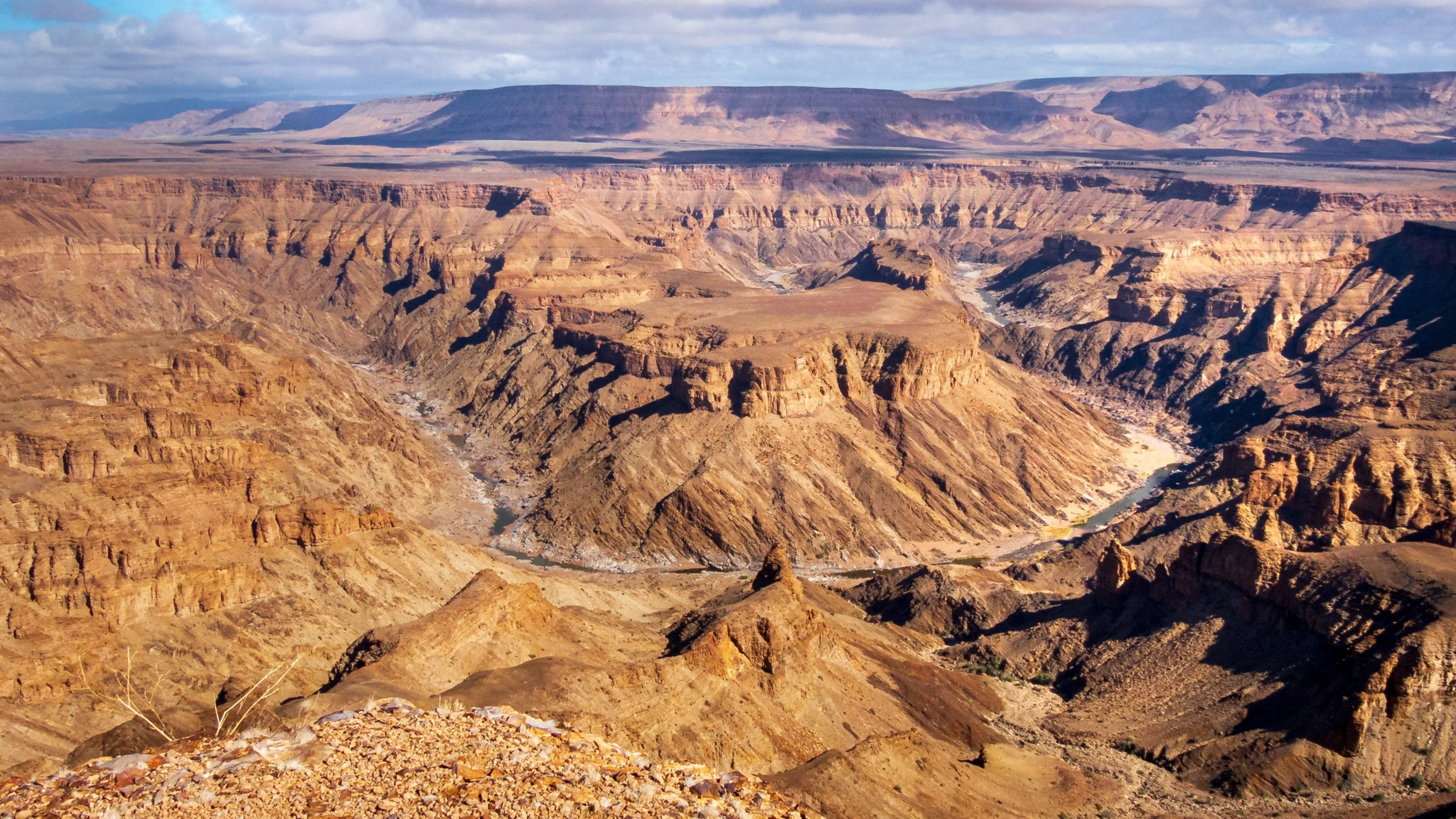
Photo: Reto Wiezel / Pexels
Desert, diamonds & the Atlantic
Lüderitz feels almost detached from the rest of Namibia. The town sits on the Atlantic coast, surrounded by desert and exposed to the wind, with colourful German colonial buildings and a harbour facing the cold waters of the Benguela Current.
Its history changed dramatically after diamonds were discovered in the area in 1908. A few kilometres outside town, the abandoned settlement of Kolmanskop tells that story in a much more tangible way. Once a prosperous diamond-mining town, it was gradually abandoned as the diamond fields were exhausted, and the desert has been reclaiming its buildings ever since.
The journey to Lüderitz is part of the experience. Near Aus, the landscape becomes a vast expanse of gravel plains and desert, and around Garub you may encounter one of southern Namibia’s most unusual inhabitants: the wild horses of the Namib. They live in an environment where water and food are scarce, and have become closely associated with this remote corner of the country.
There is also a very different side to Lüderitz and the surrounding coast. Beyond the town lies the enormous Tsau ||Khaeb National Park, also called Sperrgebiet, with rugged coastline, dunes, rocky plains and an extraordinary variety of desert-adapted plants and wildlife. Access to much of the area is restricted, which is part of what has kept this landscape so wild.
For me, this is what makes the far southwest so interesting: history, desert and ocean all meeting in one remote corner of Namibia.
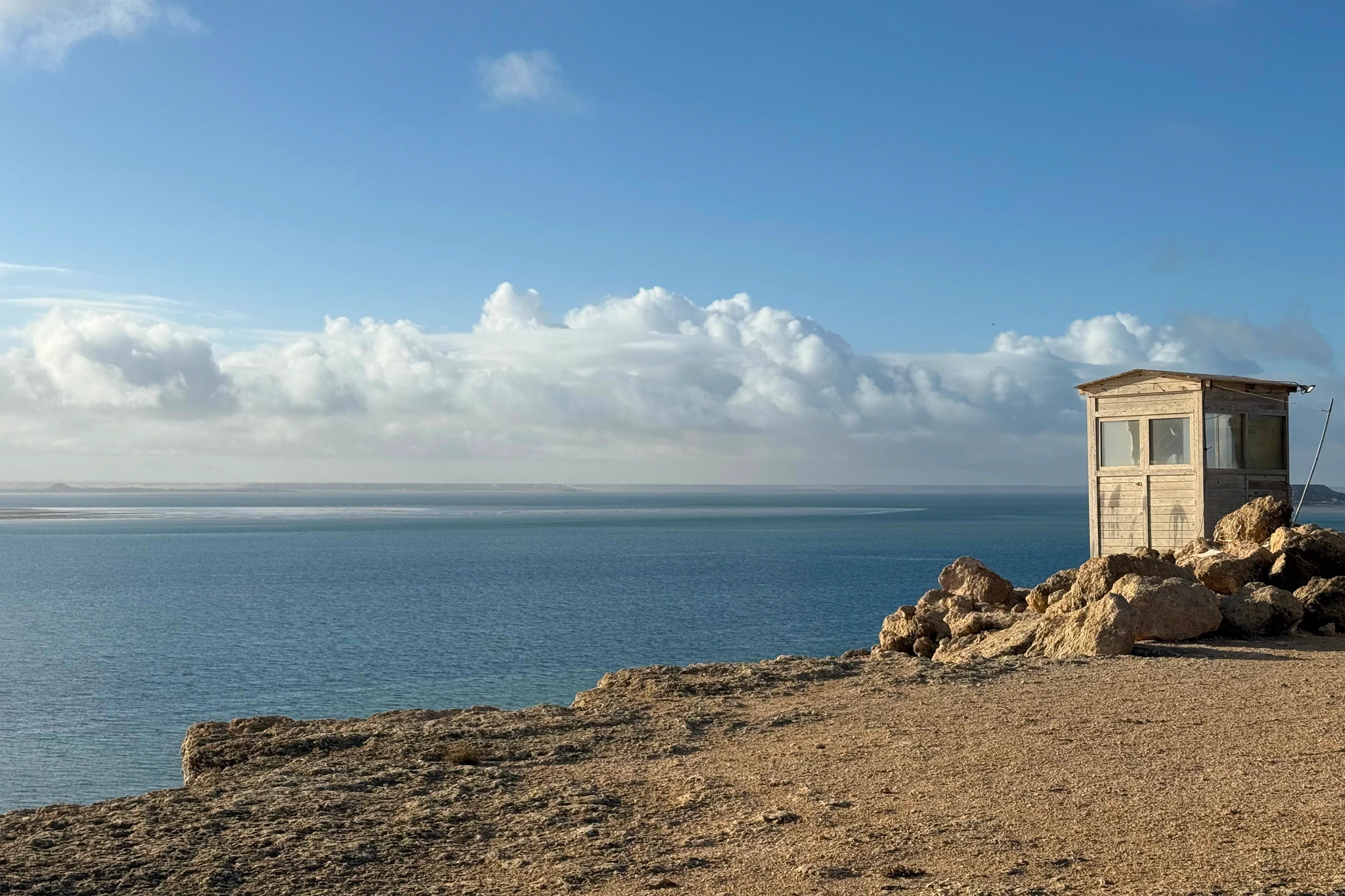
Photo: Mone Kostner / Pexels
The Far South is for travellers who don’t mind long distances and who enjoy landscapes, geology, history and the feeling of being somewhere few visitors take the time to explore. It can form the basis of a journey in its own right, or be combined with Sossusvlei and the Namib Desert as part of a longer expedition.
Explore the destinations yourself, see how they connect, and shape a journey around the places that interest you most.
Prefer to talk through the possibilities?