Discover
a route through some of Namibia’s most contrasting landscapes —
and the experiences that made the journey unforgettable.
From the Namib Desert to the Zambezi Region — 2018
A four-week self-drive expedition through Namibia and Botswana, travelling with my son Dio and an old university friend. We drove about 6,500 kilometres, mostly on gravel and sand, camping for 24 nights at 16 different places.
I started planning this journey almost a year before we left.
I wanted to see Namibia properly — not just the famous places, but the landscapes in between them. I spent months researching routes, roads, campsites and the places where we might have a chance of seeing wildlife. By the time the route was finished, I could almost visualise the entire journey.
The result was a 27-day journey from Windhoek through the Namib Desert, along the Atlantic coast and into the remote northwest, before crossing the country towards the Zambezi Region and eventually continuing into Botswana.
There was a plan.
But some of the best moments happened when we decided to ignore it.
Into the Namib
We left Windhoek early and headed south towards Sossusvlei, taking the more scenic route over Spreetshoogte Pass and through Solitaire.
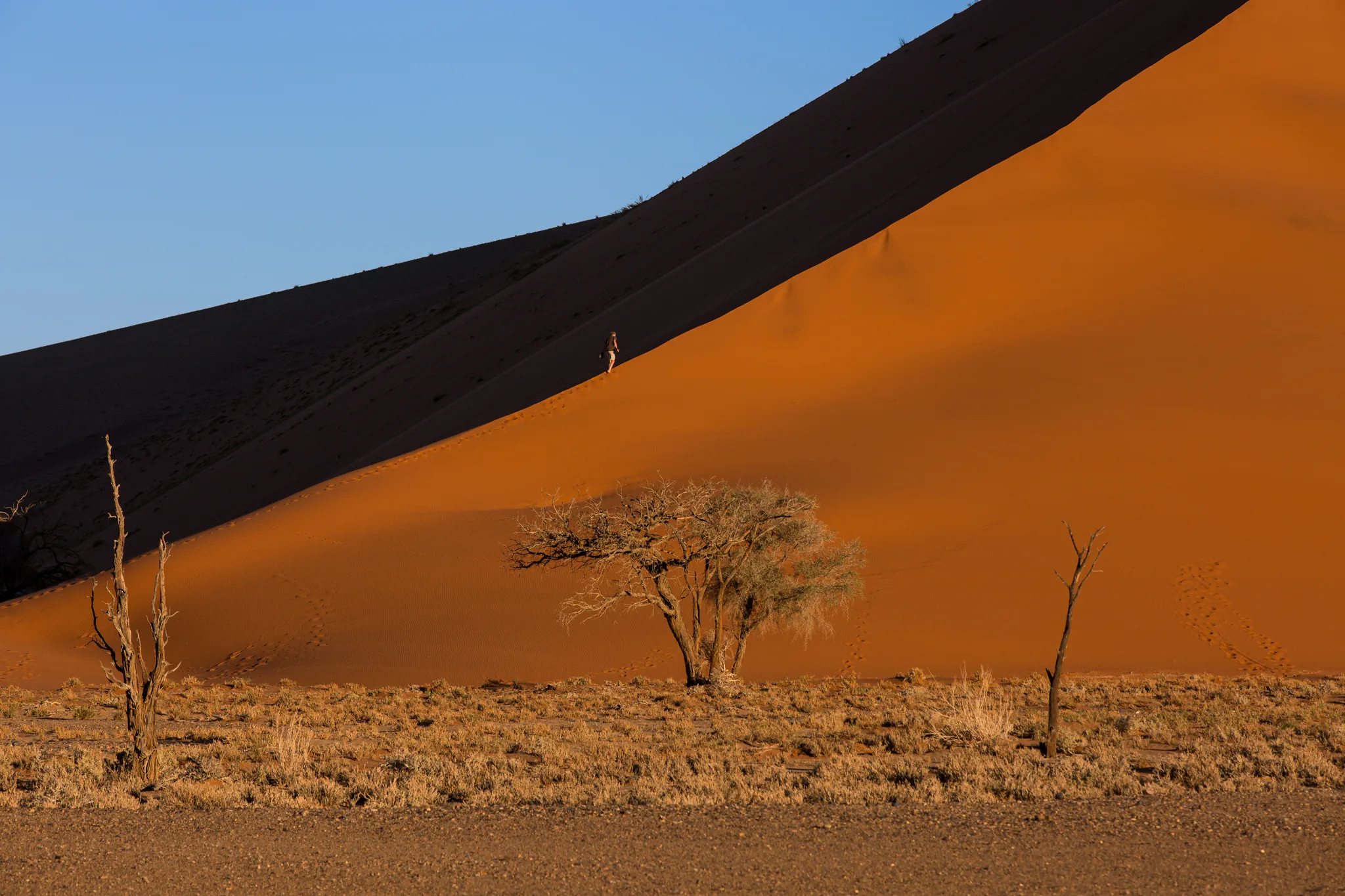
By early afternoon we had reached Sesriem. We put up camp, jumped back into the car and headed into the dunes.
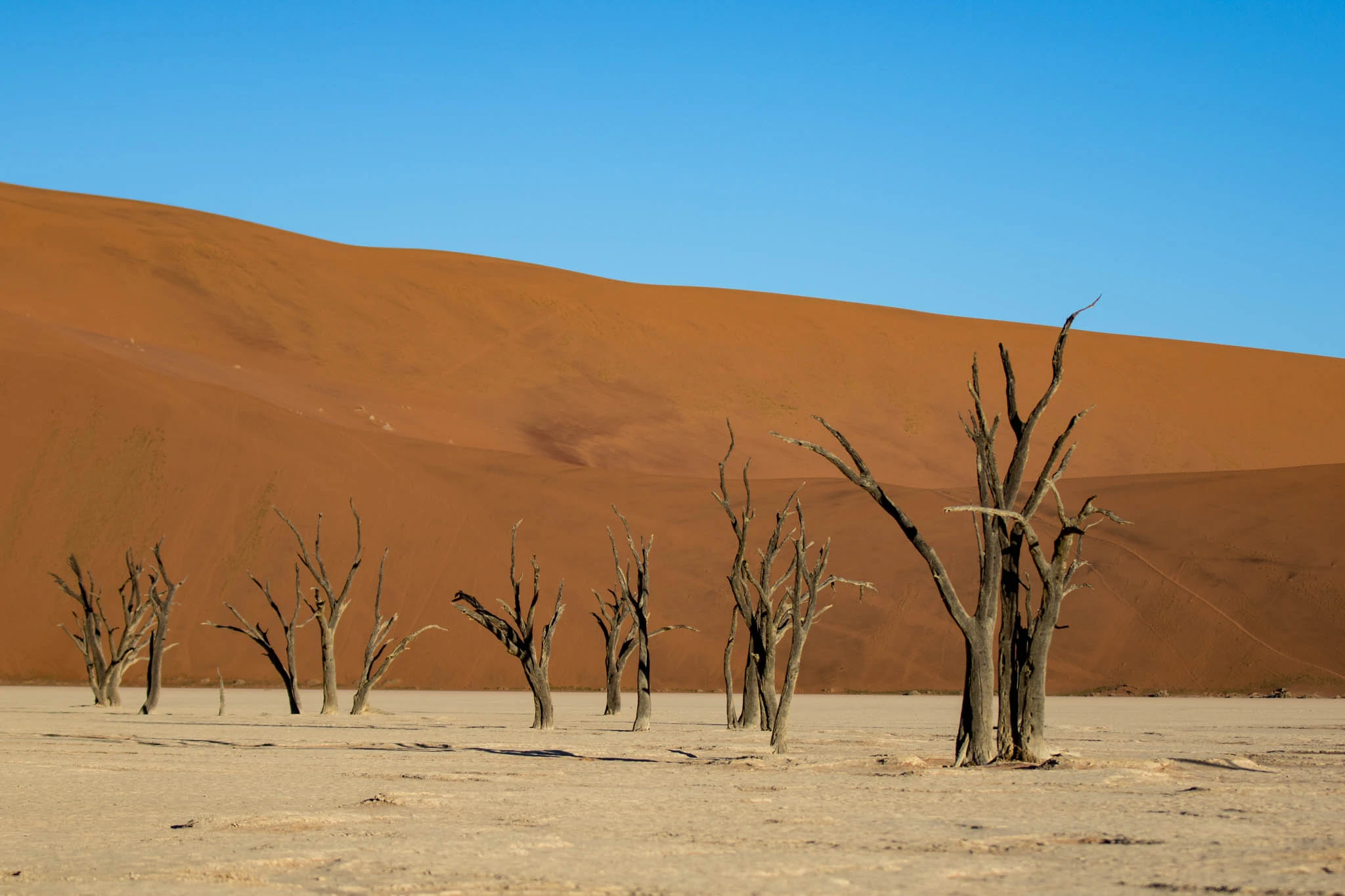
At Deadvlei there was almost nobody around. We walked into the white clay pan and, for much of the afternoon, had this extraordinary landscape almost entirely to ourselves.
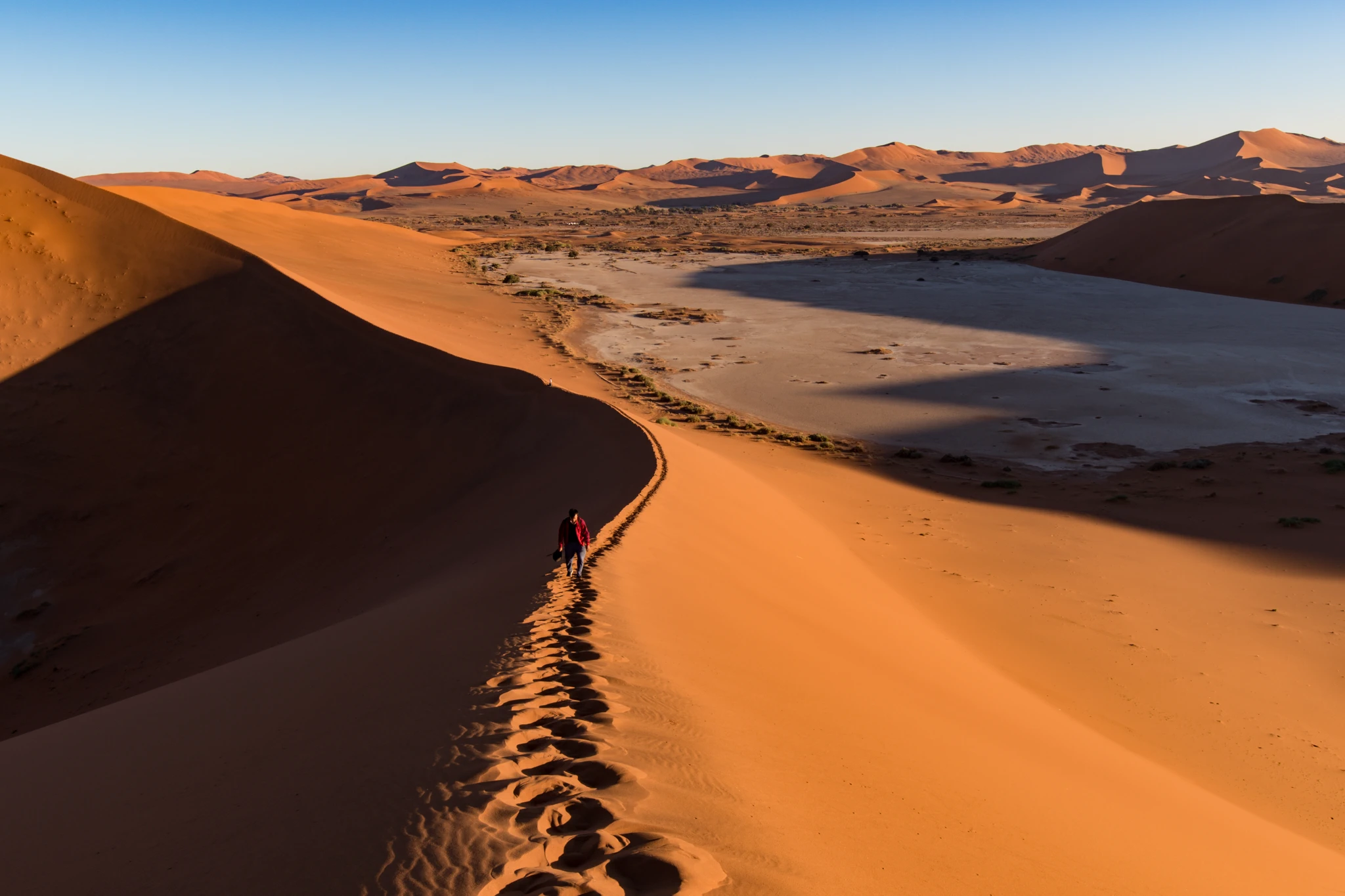
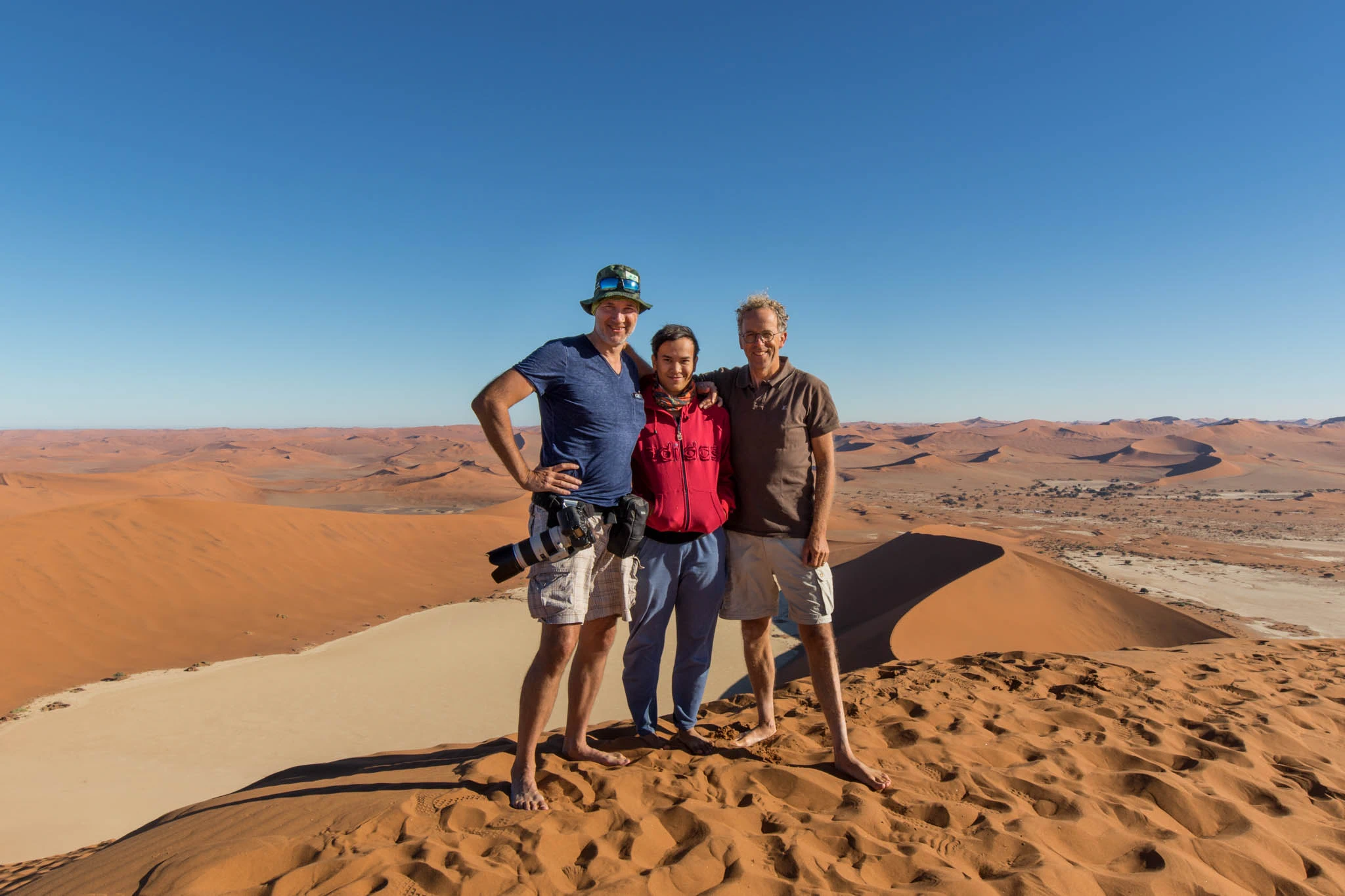
The following morning we were first through the gate and climbed Big Daddy before running barefoot down through the cold sand into Deadvlei.
Later that afternoon we found a dune away from the crowds and watched the sunset alone.
This was Namibia at its most spectacular — but also at its most peaceful.
Where desert meets ocean
From Sossusvlei we drove west towards the Atlantic.
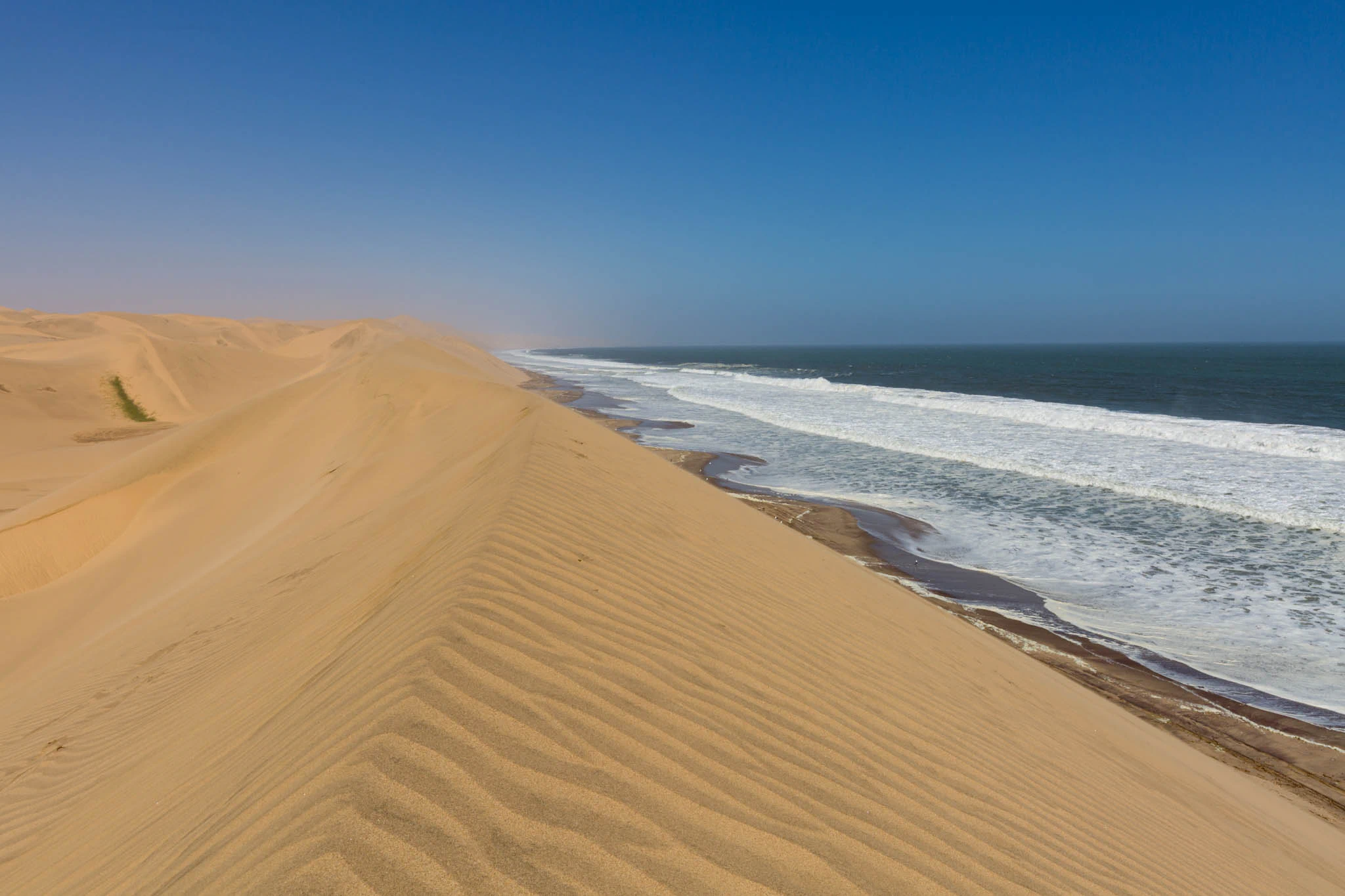
At Walvis Bay we saw hundreds of flamingos in the lagoon. The following day we went kayaking with seals at Pelican Point before heading out through the dunes towards Sandwich Harbour.
It was cold, windy and rough on the water.
We went anyway.
The next morning we traded the ocean for the desert again, joining a Living Desert tour around Swakopmund. We went looking for the small creatures that survive in the Namib — geckos, snakes, lizards and scorpions hidden beneath apparently empty sand.
It was a good reminder that in Namibia, empty doesn’t mean lifeless.
A night beneath the stars
From the coast we headed inland to Spitzkoppe, our first real taste of Damaraland.
The granite peaks rise dramatically from the surrounding plains, and the landscape changes completely as the sun moves across the rocks.
We arrived early enough to choose our own campsite and simply drove around until we found a place we liked.
There was no need for much else.
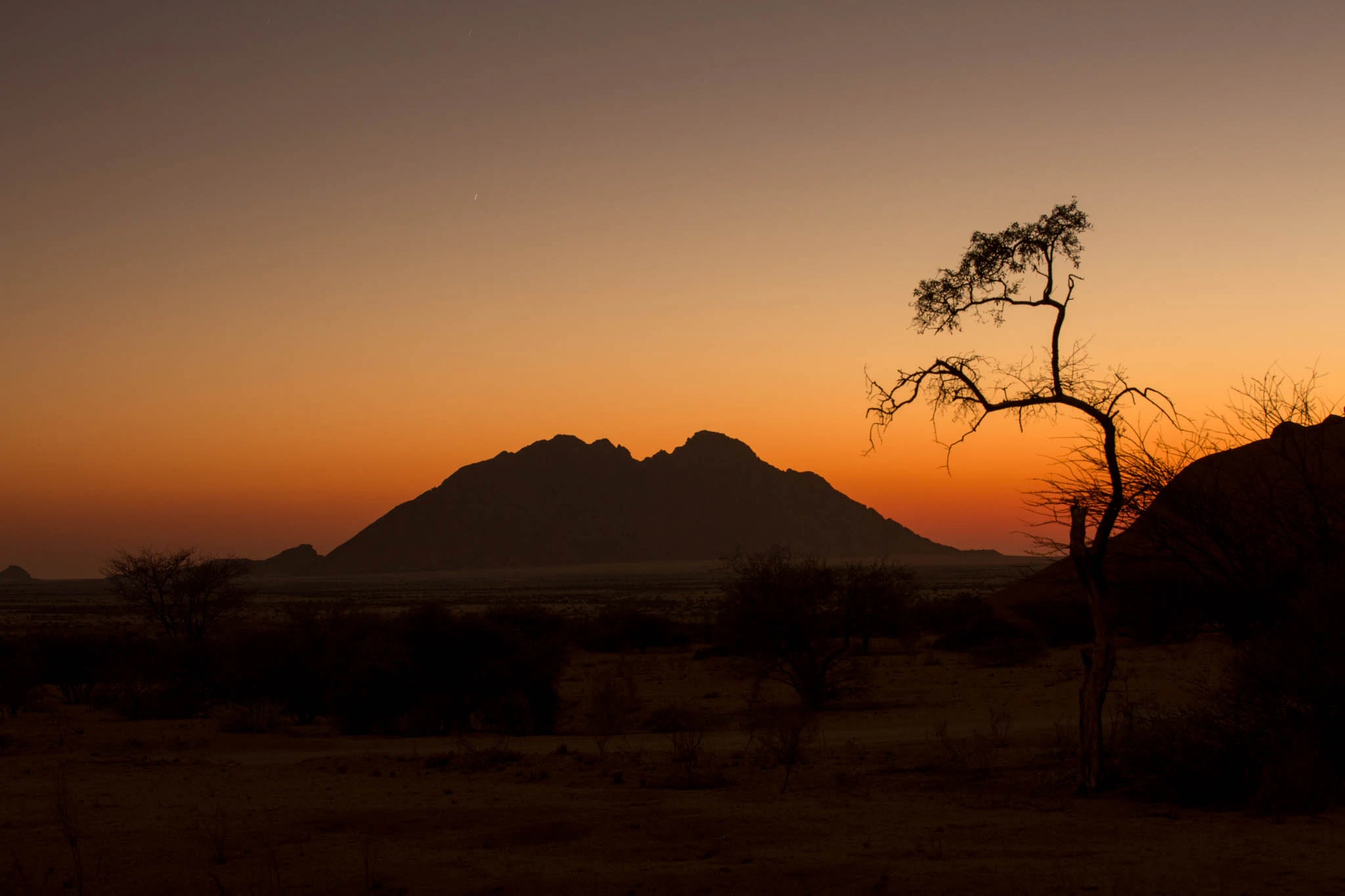
We cooked a braai, watched the light disappear from the rocks and spent the night beneath an extraordinary sky.
Spitzkoppe became one of my favourite campsites of the entire journey.
Following the elephants
This was one of those moments when the original plan stopped mattering.
I had learned about Namibia’s desert-adapted elephants too late in the planning process. We were already travelling towards Palmwag and there wasn’t really time to change the itinerary.
Then I remembered reading about elephants in the Aba Huab and Huab river valleys.
So we turned around.
At a small campsite somebody told us that a herd had been seen the previous day and suggested we follow their tracks.
A few minutes later we were driving through a completely deserted river valley.
No other cars.
No people.
Just us.
Eventually we found the tracks — and followed an increasingly fresh trail of elephant dung for about an hour.
Then we found them.
A breeding herd of around fifteen desert elephants was quietly feeding along the riverbank. We had been alone in that riverbed for roughly two hours before two safari vehicles eventually arrived.
We had gone looking for a story. Instead, we found one.
Into the remote northwest
We continued towards Palmwag, one of the more remote landscapes in northwestern Namibia.
We spent several hours driving through the concession without seeing another vehicle. We didn’t find the rhinos we had hoped for.
But that hardly mattered.
The landscape itself was the attraction — vast, dry and almost completely empty.
On the way towards Etosha, we stopped at the Veterinary Fence, where we briefly met Himba people selling handcrafted souvenirs. It was only a brief encounter — but it was my first glimpse of a culture that would later become a much more important part of my travels in Namibia.
Five days around the pan
Etosha was one of the main reasons I had chosen Namibia in the first place.
We entered through the remote Galton Gate and spent several days moving between Olifantsrus, Okaukuejo and Halali, following the waterholes and seeing what the dry season would bring.
It brought plenty.
Elephants appearing suddenly from the bush.
Lions at waterholes.
Giraffes crossing the road against the setting sun.
Bat-eared foxes.
A honey badger.
And, completely unexpectedly, an aardwolf.
But one evening became particularly memorable.
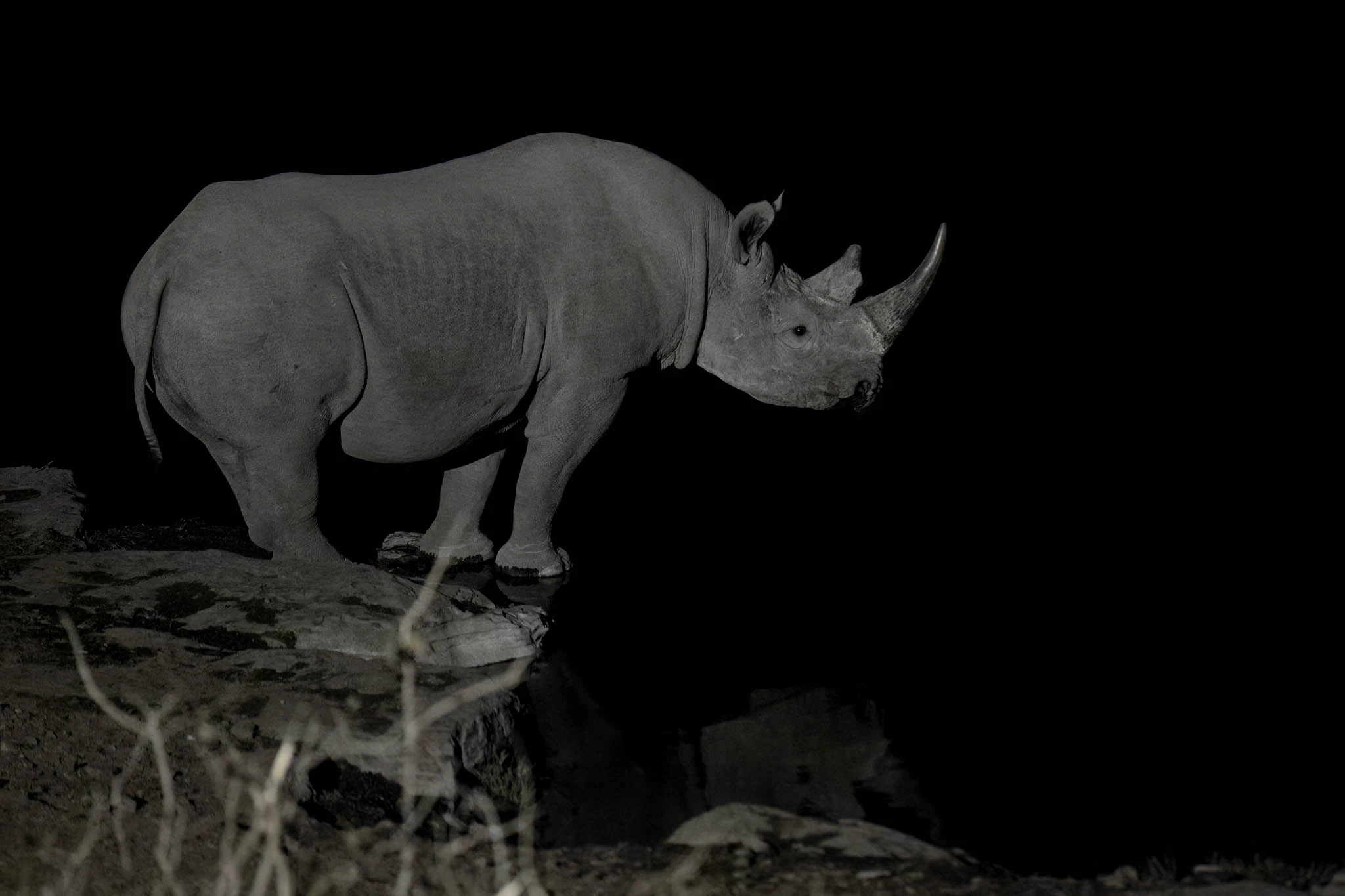
I had been waiting at the Halali waterhole for more than three hours. It was almost midnight, everyone else had left and it was getting very cold.
Then, out of the darkness, a black rhino appeared.
He walked straight towards the waterhole and stopped only a few metres away.
I stayed there watching him for another half hour before he disappeared back into the darkness.
The following morning we still had one mission:
find a cheetah.
We spent hours searching.
Nothing.
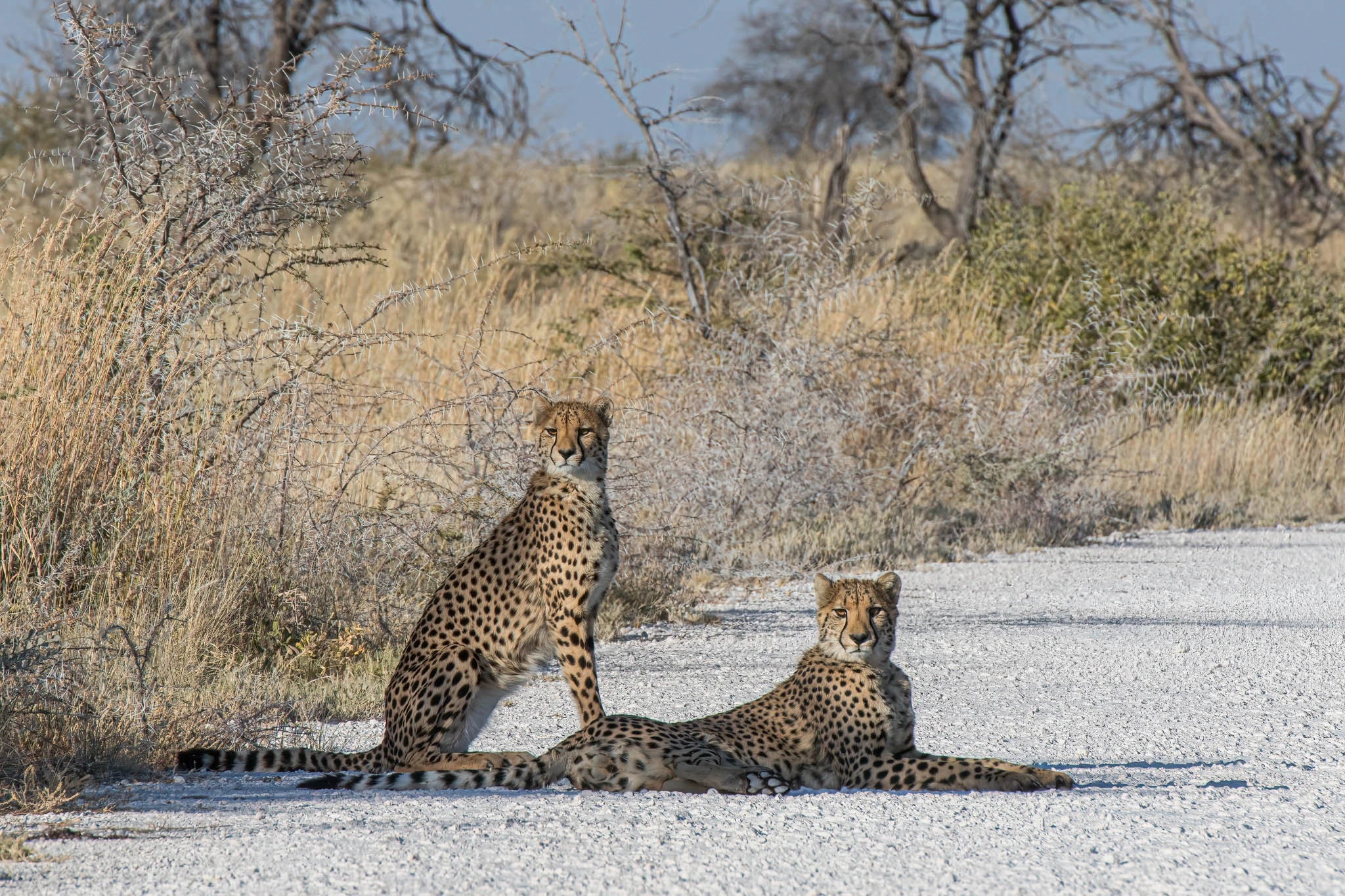
Then Dio suddenly spotted movement in the bushes.
One cheetah.
Then another.
Then a third.
They came onto the road only about ten metres behind us. We stayed with them for roughly an hour and a half, watching them search unsuccessfully for prey.
And once again, we had the place almost entirely to ourselves.
That was Etosha.
A completely different Namibia
After Etosha we drove east towards Grootfontein and crossed the Veterinary Fence.
The landscape changed.
The dry open country of western Namibia gradually gave way to villages, fields, woodland and, eventually, water.
We continued through Rundu to Divundu and the Kavango River, where we stayed beside the water and explored Mahango Game Reserve.
The following morning we took a sunrise river cruise.
Hippos in the water.
Birds along the floodplains.
Red lechwe moving through the grass.
A completely different side of Namibia.
From Divundu we continued towards Kongola and the Kwando area. Here the landscape became greener still, with savanna, forest, riverbanks and floodplains supporting large herds of elephants and buffalo.
After several days in this water-rich corner of the country, we crossed the border into Botswana.
Namibia had taken us from desert to ocean, from dry riverbeds to salt pans, and finally to rivers and wetlands.
And that was only the first half of the journey.
This 2018 expedition was a self-drive camping trip, but it also shaped the way I think about travelling through Namibia.
I learned how much there is between the famous places, how important it is to leave room for unexpected encounters, and how rewarding it can be to slow down rather than simply collect destinations.
Because sometimes the best part of Namibia is what happens when you turn around and follow a set of elephant tracks.
Looking back, it wasn’t one particular destination that made this journey special.
It was the combination.
The freedom of driving for hours without seeing another vehicle.
Choosing our own campsite beneath Spitzkoppe.
Following elephant tracks into a dry riverbed.
Waiting patiently at an Etosha waterhole.
Getting caught in a sandstorm.
Having a black rhino appear from the darkness.
And those moments when you realise that you are somewhere extraordinarily wild, with nobody else around.
The route had taken months to plan.
But the experiences that stayed with me were mostly the ones we couldn’t have planned at all.
The route took us through a remarkable variety of Namibia’s landscapes:
Sossusvlei & Deadvlei Swakopmund & Walvis Bay Damaraland & Spitzkoppe Etosha National Park Zambezi Region
Explore the individual destinations to see more photographs and stories from the journey.
For a journey beyond the classic route: