
Discover
the red ochre,
the scented smoke,
and the traditions
shared inside a Himba home.
We had met this Himba family two years ago, and got to know each other a little. When we visited them this time, we were instantly welcomed with open arms by the tribal chief, his two wives, his oldest son and his wife, and their many, many children.
What instantly caught my eye when I walked into the homestead, called an onganda, was that they had renovated the mud hut of one of the chief’s wives. The work was still going on. The hut was almost finished, with the walls freshly plastered, while another hut was further behind. The wooden structure had already been replaced, but the plastering had not yet been done.
Soon, the wife of the chief invited us to come and see her hut. During our previous visit, we had only been invited to enter one of the communal, more simple huts. I guess they appreciated us visiting them again.
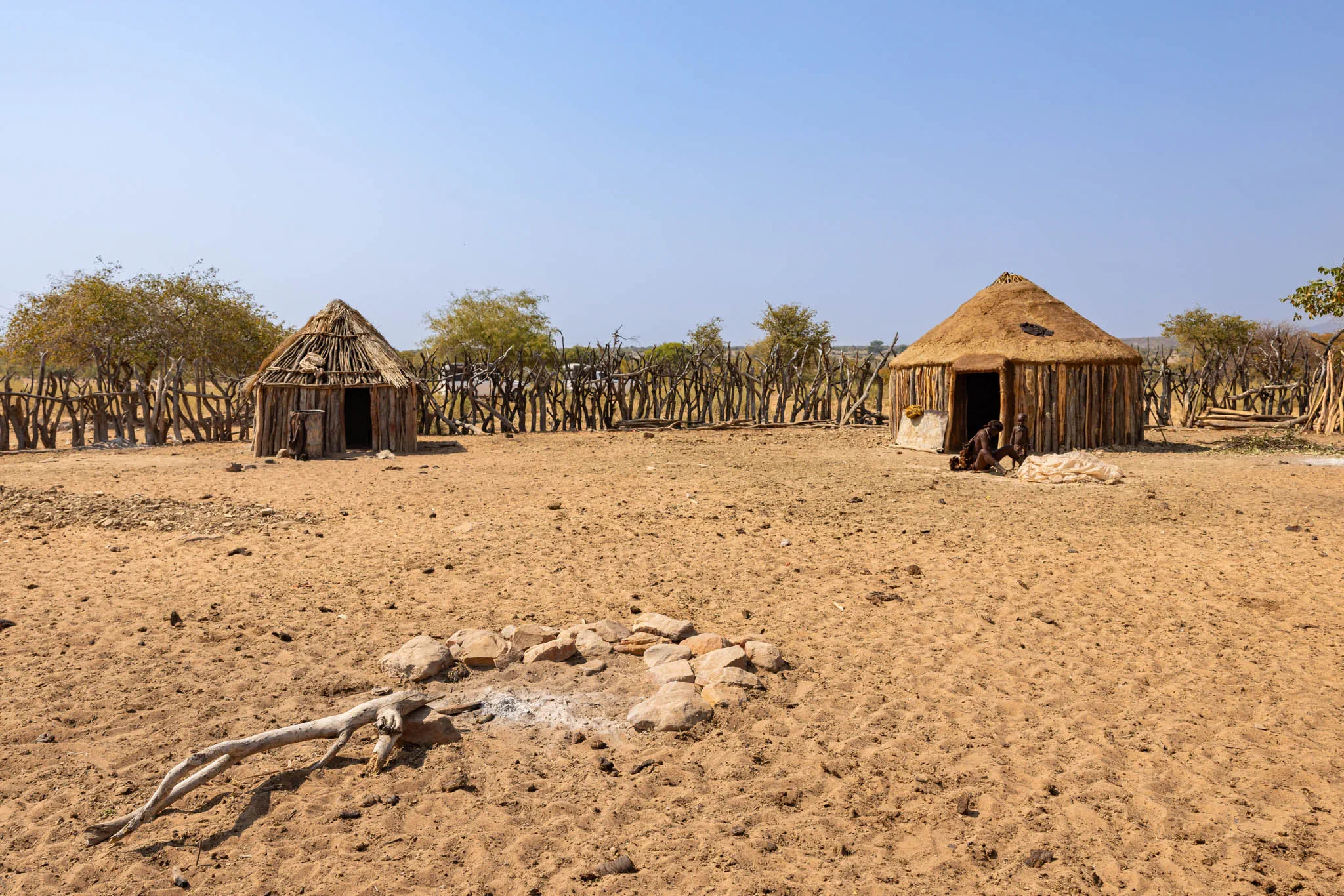
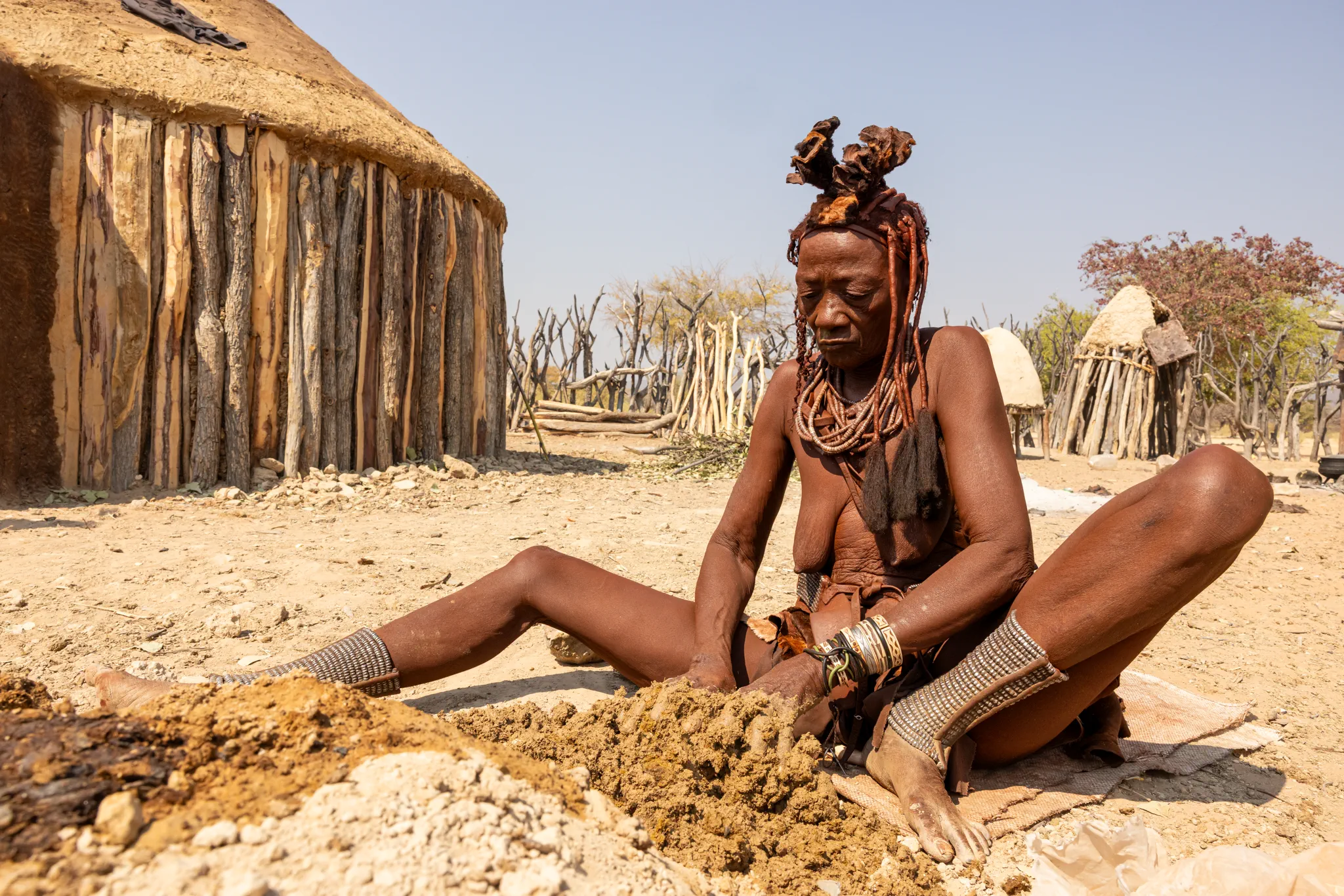
The hut we were going to enter was the one almost finished. Outside, the family was working around it, preparing fresh plaster: mixing clay soil, water and cow dung.
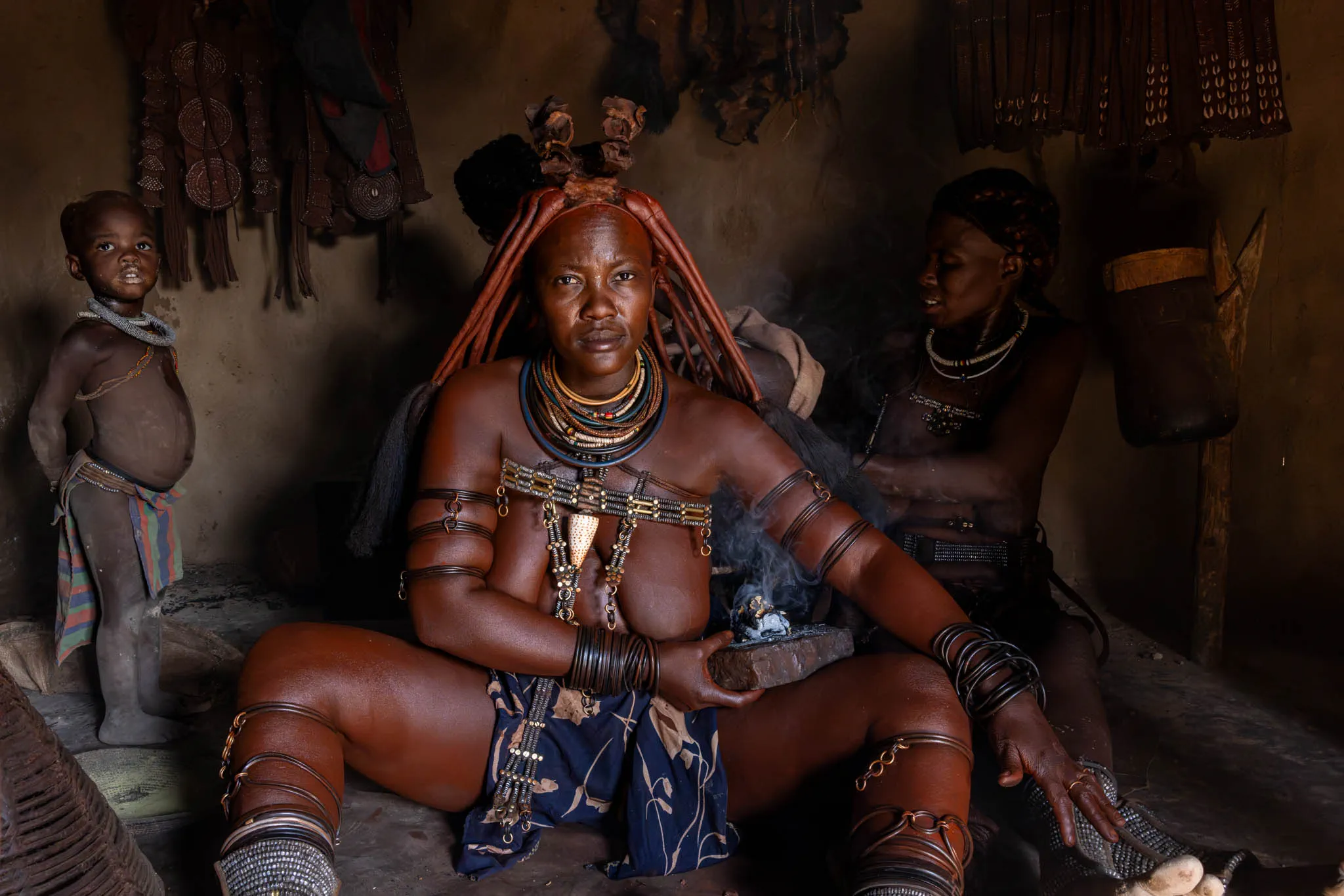
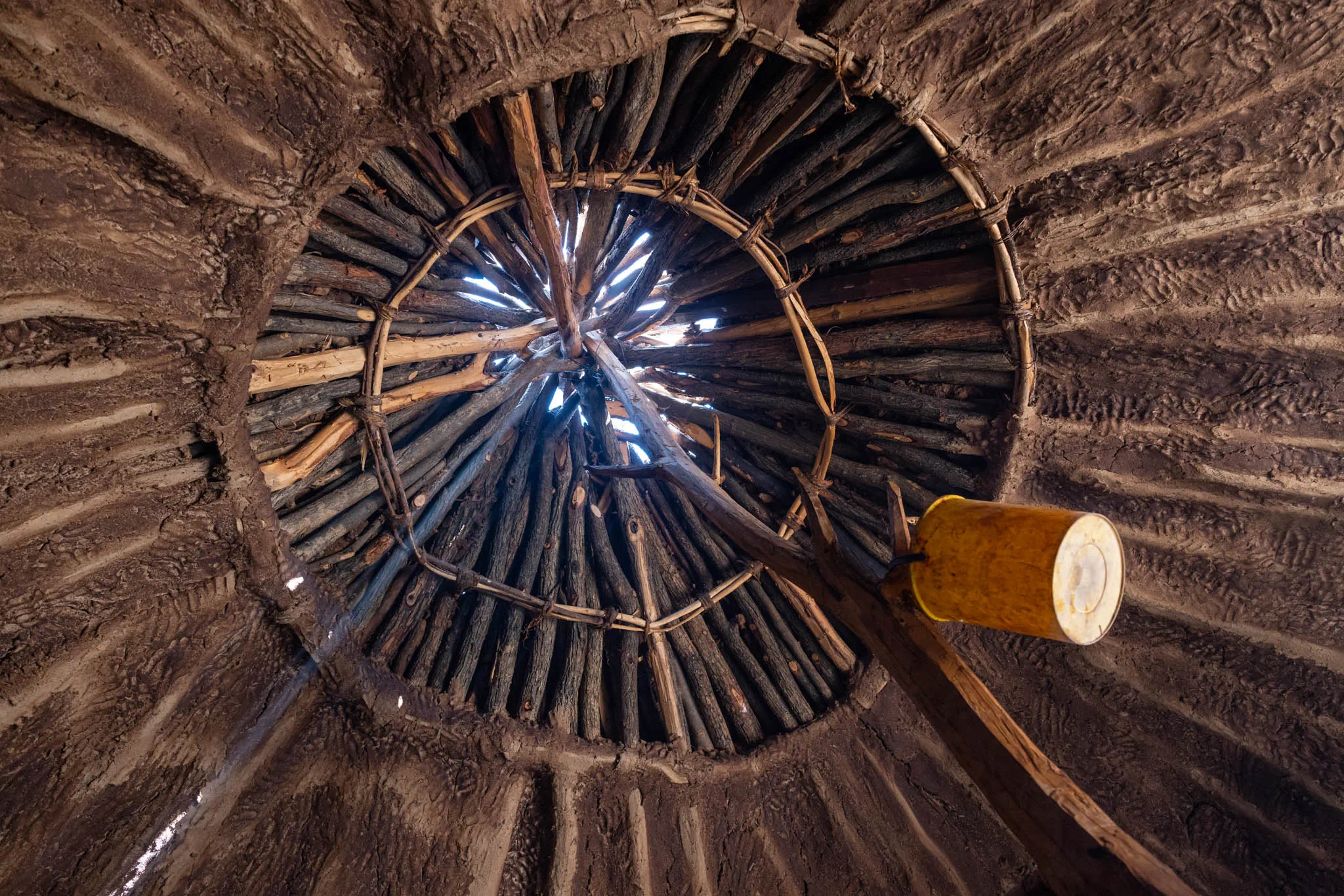
Inside the hut, it was a completely different world from the bright, dry afternoon outside. The walls were dark, and hanging from them were leather garments, ornaments and other things belonging to the women. The only light came through the open door, and a little through the top of the roof, which was not yet completely covered.
The woman who had invited us inside her hut started to dress herself up. (I assumed this was customary when receiving guests.) She was already wearing much of her traditional daily adornments, jewellery and clothing, but there was still quite a bit to do.
The first part involved otjize, the red mixture made from ochre and butterfat that Himba women use on their skin and hair. It is probably the most recognisable part of Himba appearance, but sitting there and watching it being prepared made it much more obvious that this is not simply something that is “put on” before going out. There is a whole process behind the finished appearance.
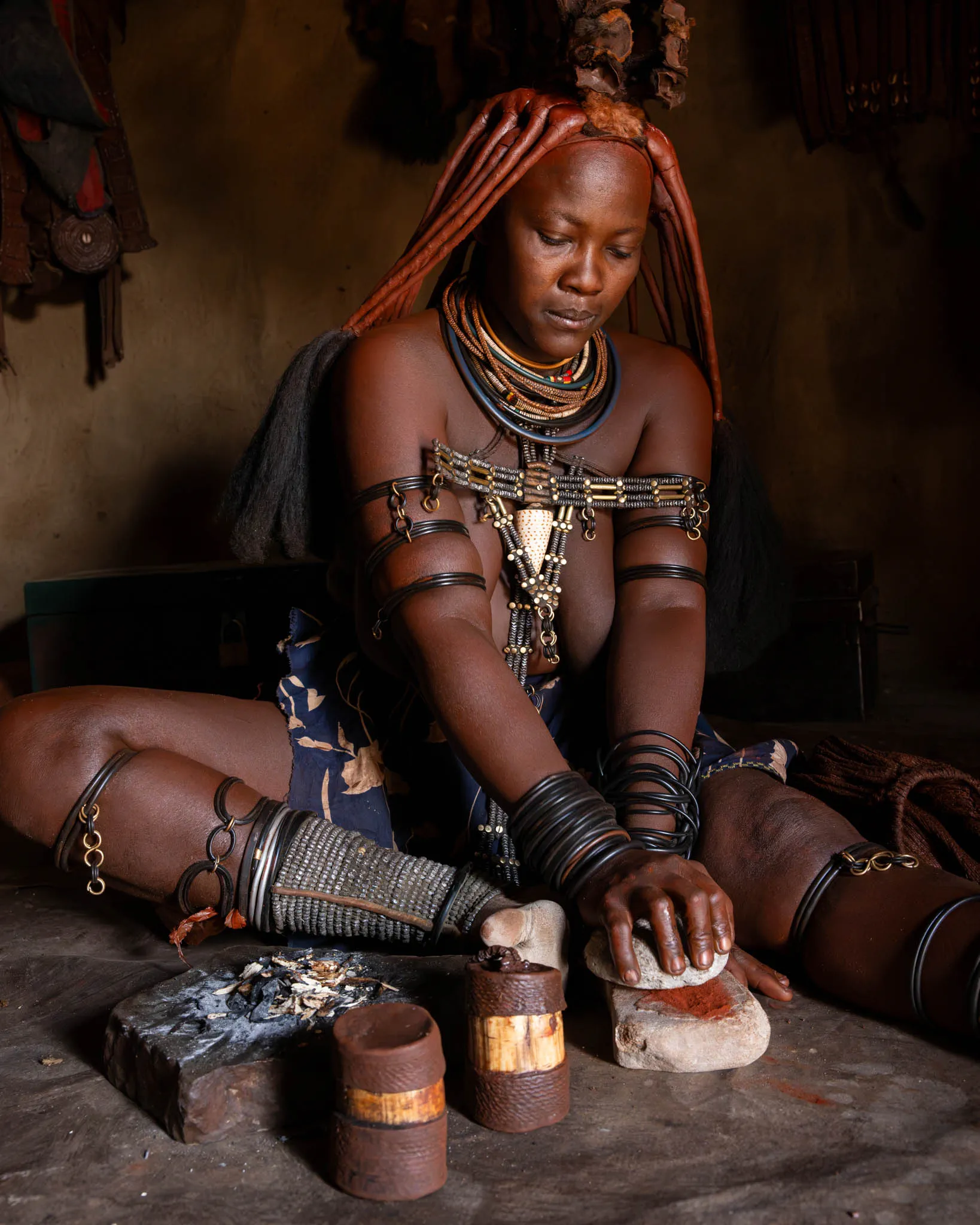
She worked the ochre on a stone, gradually producing the red powder that would be used in the preparation.
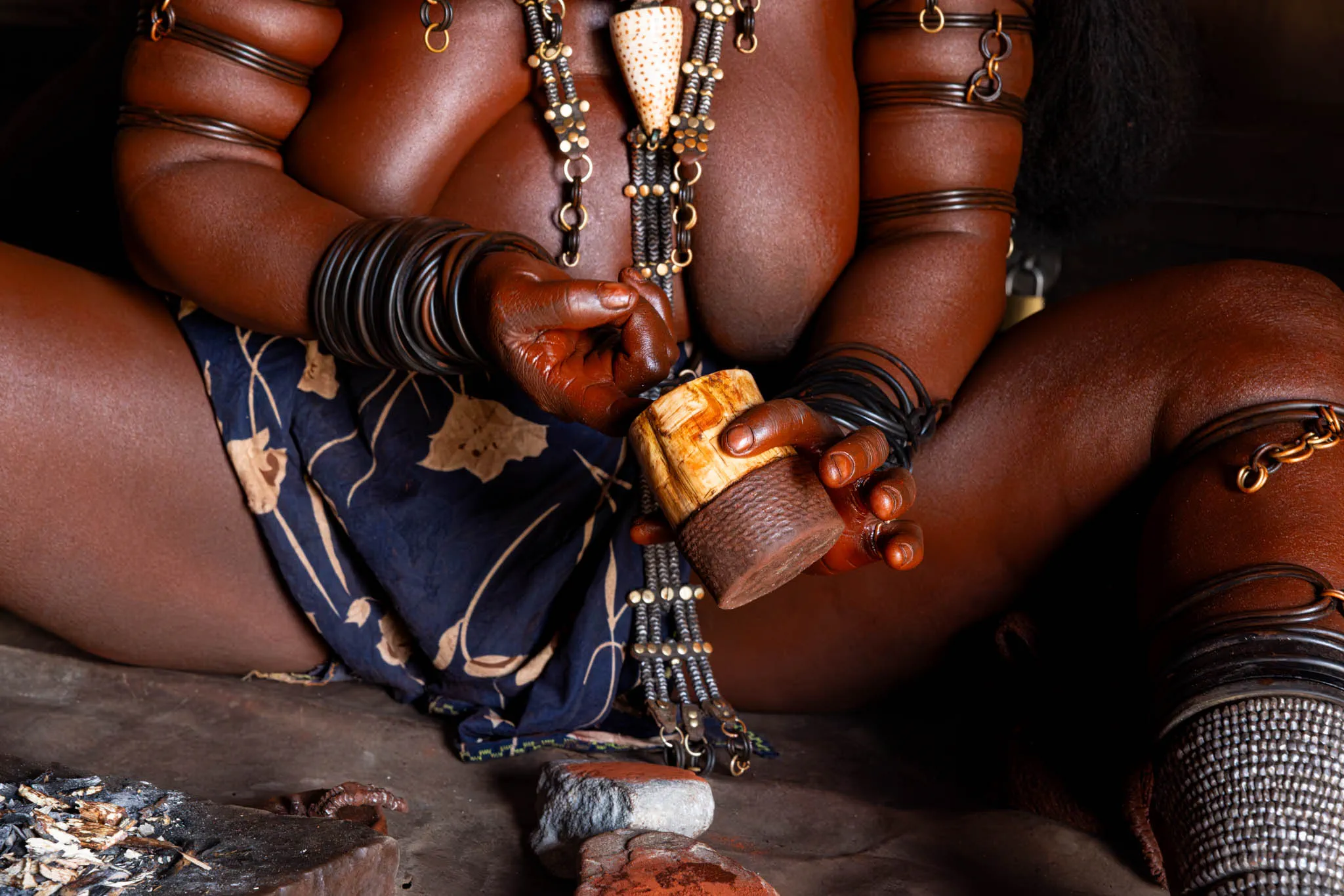
She then took a small container, made from cow horn and goat or cow skin. Inside she kept butterfat. She scooped some out with her fingers, and then mixed it with the ochre powder into a smooth, thick red paste.
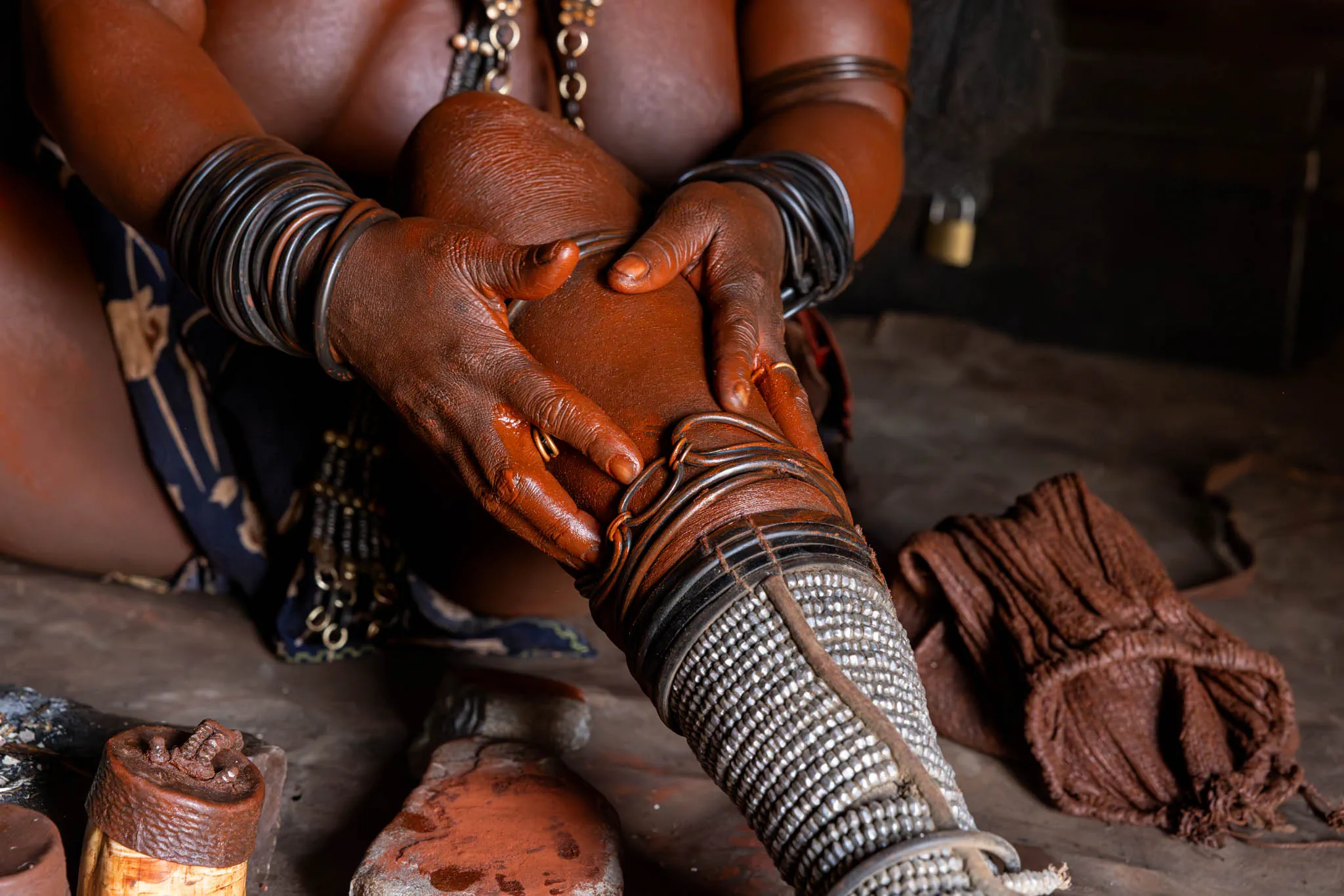
She then applied the otjize to her body, starting with her legs and working herself upwards over her body.
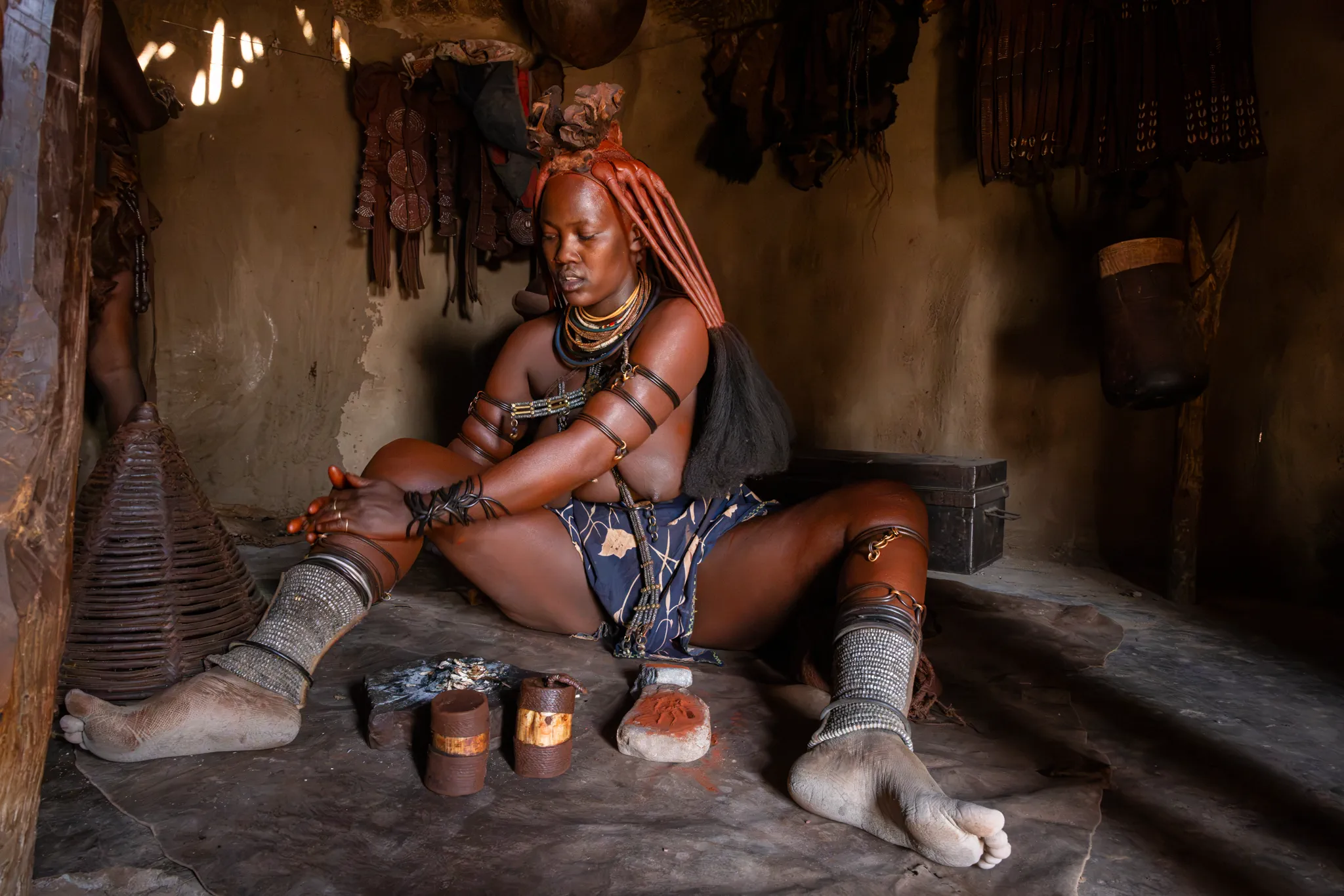
When she was done, making sure the otjize was spread evenly over her skin, it was time for perfume; smoke perfume, that is.
She carefully mixed pieces of aromatic material — bark, resins and leaves — on a large flat stone. One of the most important traditional perfume ingredients is omumbiri, an aromatic resin collected from the Commiphora wildii tree. But there are many other aromatic plants and materials that can be used, and apparently each family — and sometimes each woman — has her own preferred mixture. Almost like a personal secret recipe.
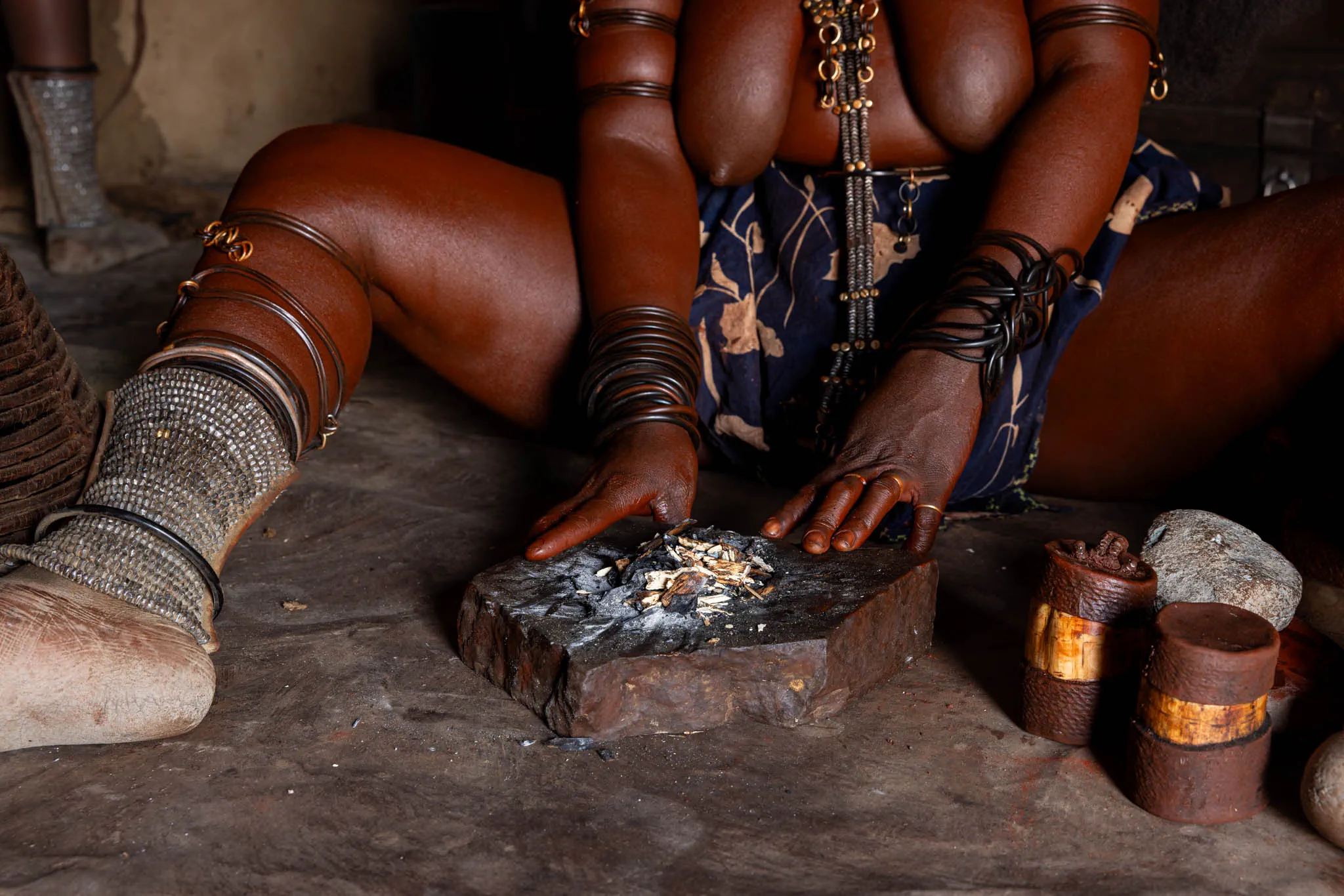
She then took some hot embers from a plate of smouldering ash and placed them carefully on top of the mixture. The heat slowly smouldered the aromatic material, releasing its oils and fragrance into the smoke.
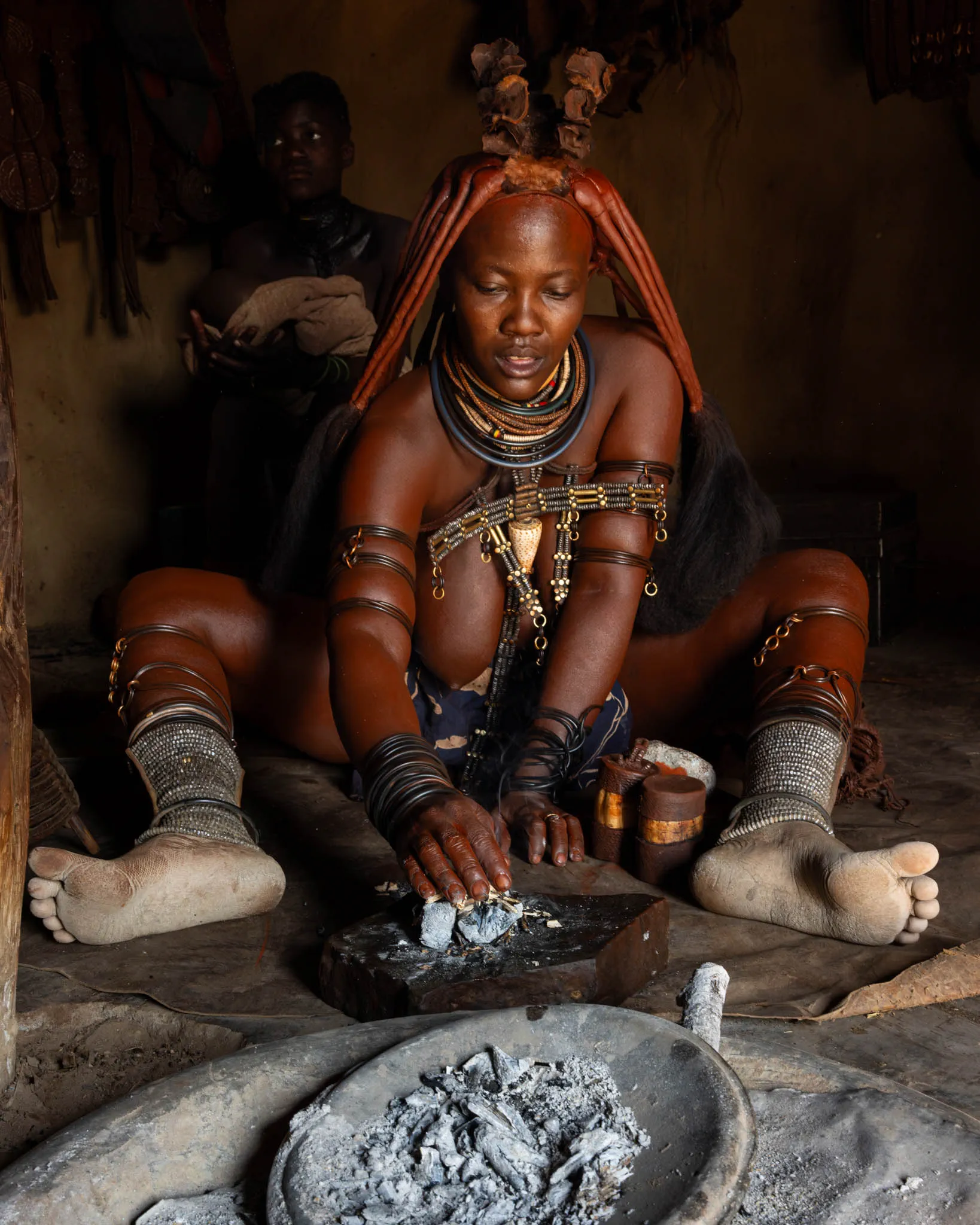
Soon, the first wisps of smoke began to rise.
And then the smoke really started to fill the hut.
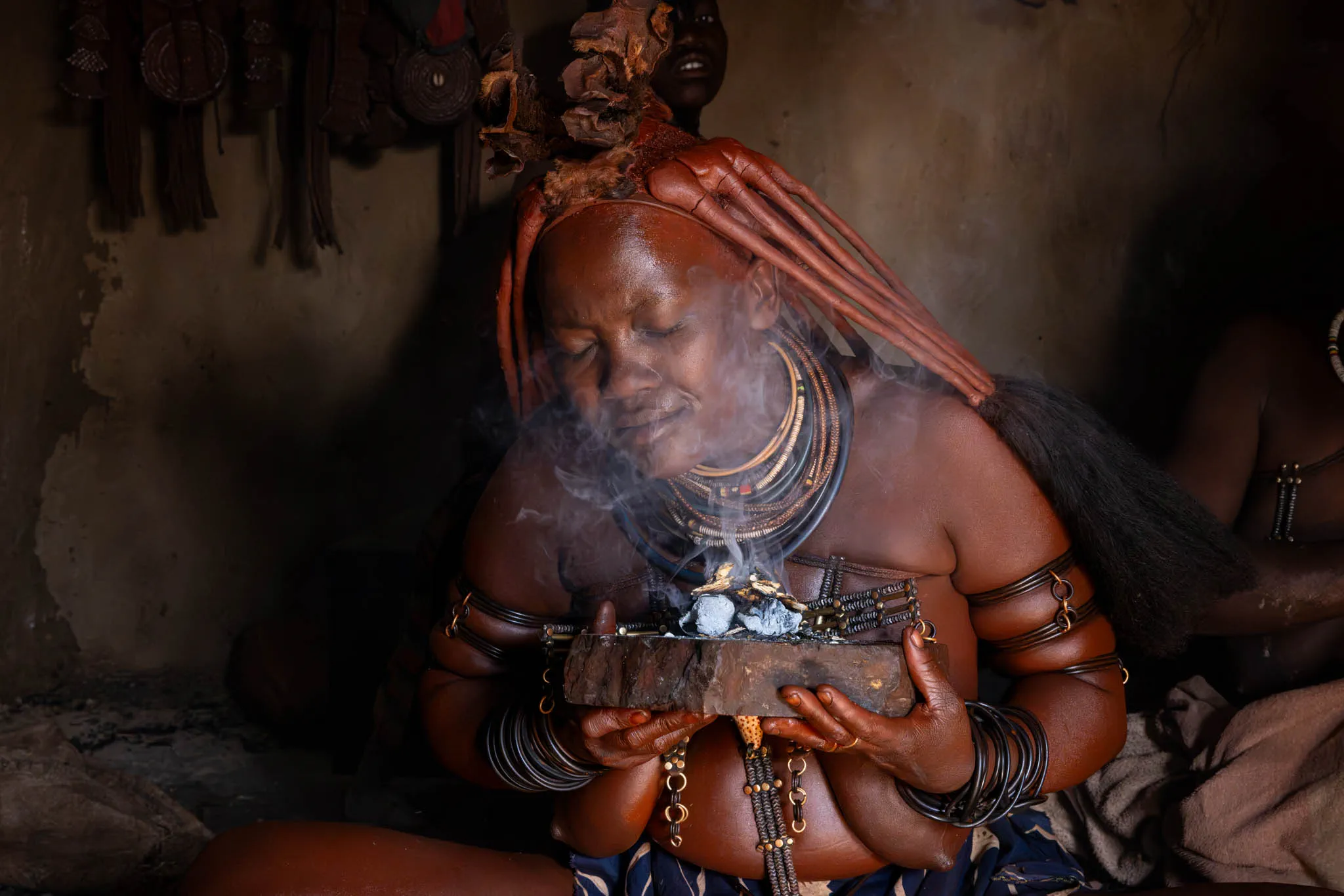
She used the scented smoke to perfume herself, carefully moving the smoking stone around her body and letting the perfume settle on her skin and clothes.
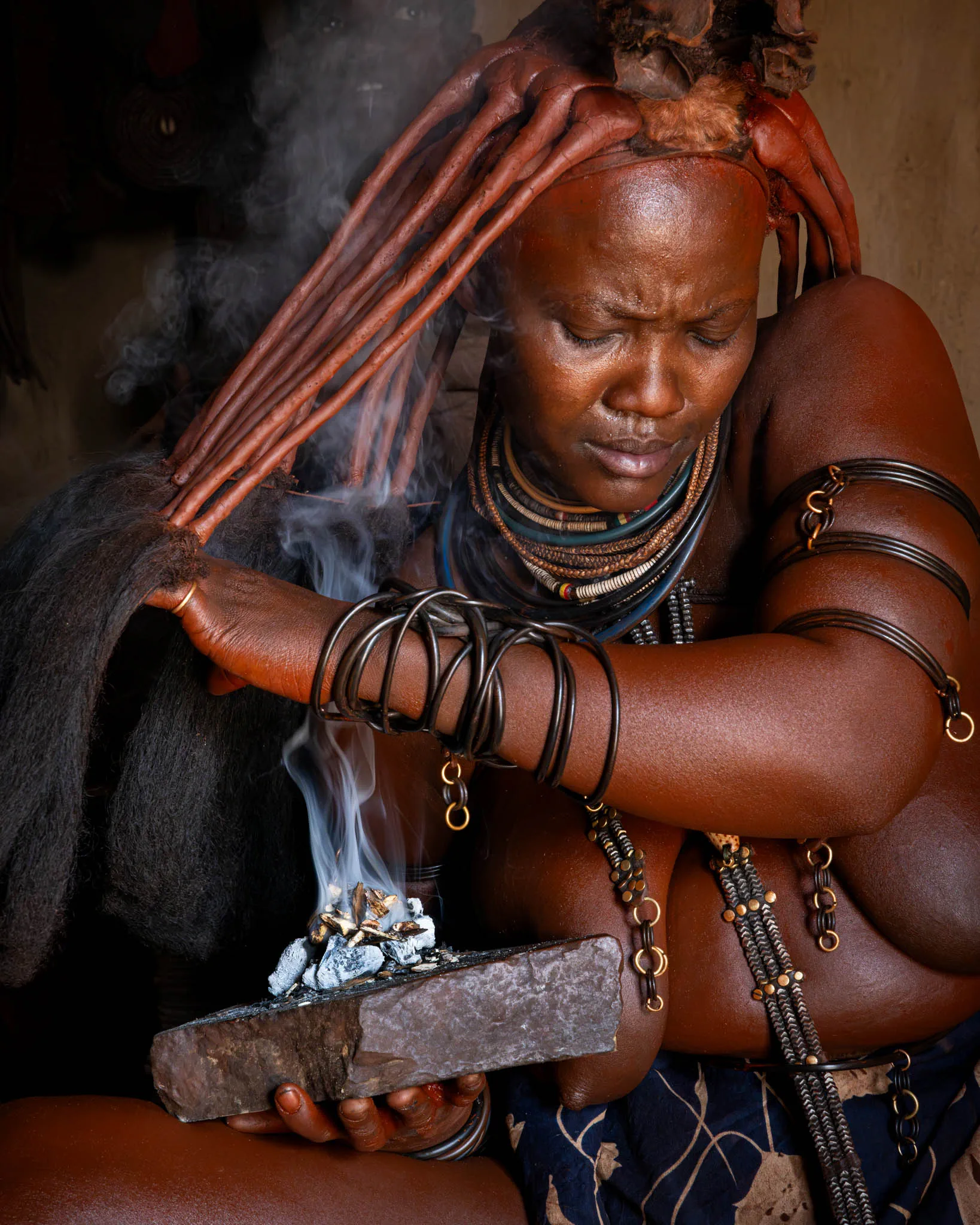
The smoke was thick and intensely fragrant inside the small hut. She brought her hair over the smoke, allowing the scent to penetrate the long strands, already covered in otjize.
It was not simply a matter of standing over the smoke for a moment. She moved the stone and positioned herself carefully, directing the scented smoke towards different parts of her body and hair.
Then she showed us something I had not expected.
The same fragrant smoke was also used to perfume the leather skins.
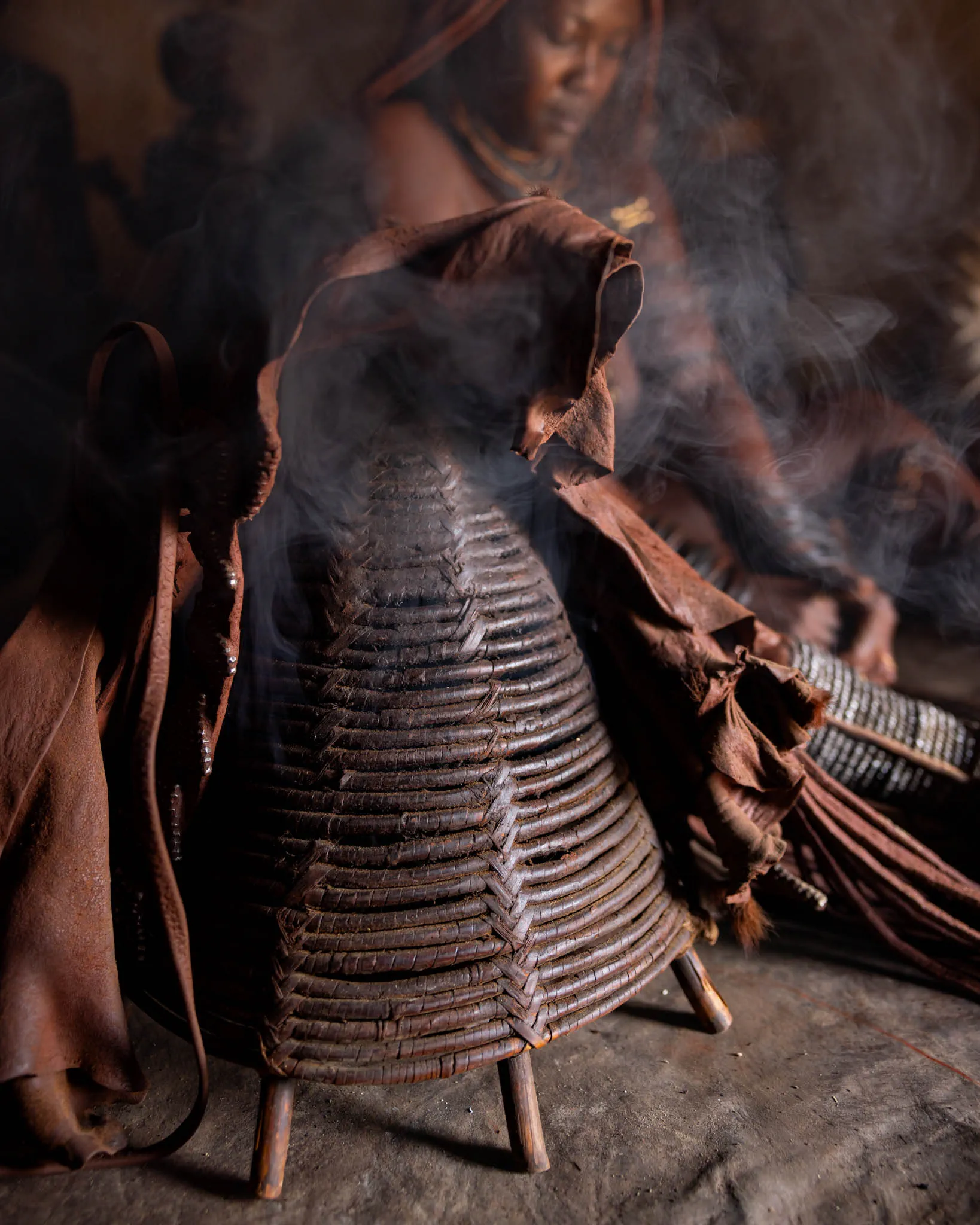
She placed the smoking stone underneath a cone-shaped basket, with the smoke spreading upwards through its spiral-shaped opening. She then spread some of her cow- and goat-skin clothing over the basket, giving them a smoke bath as well.
The hut gradually filled with the smell of the burning aromatic material.
We thought she was finished.
But then something rather unexpected happened.
Her daughter-in-law came with an elaborate headpiece, made from goat skin. It was not the traditional erembe, a goat-skin headpiece traditionally worn by married women, but a much larger head decoration.
The headpiece she was about to put on was the ekori.
There is a tendency, when photographing Himba women, to concentrate on the finished appearance: the red hair, jewellery, leather and elaborate headwear. But this time I had been there long enough to see some of what goes into it.
The ekori has a particular place in Himba women’s ceremonial dress. It is especially associated with marriage: traditionally, a bride receives the ekori from her mother and wears it during the first period of her married life. Later, the erembe becomes the more usual headpiece for a married woman, while the ekori is also worn on ceremonial occasions.
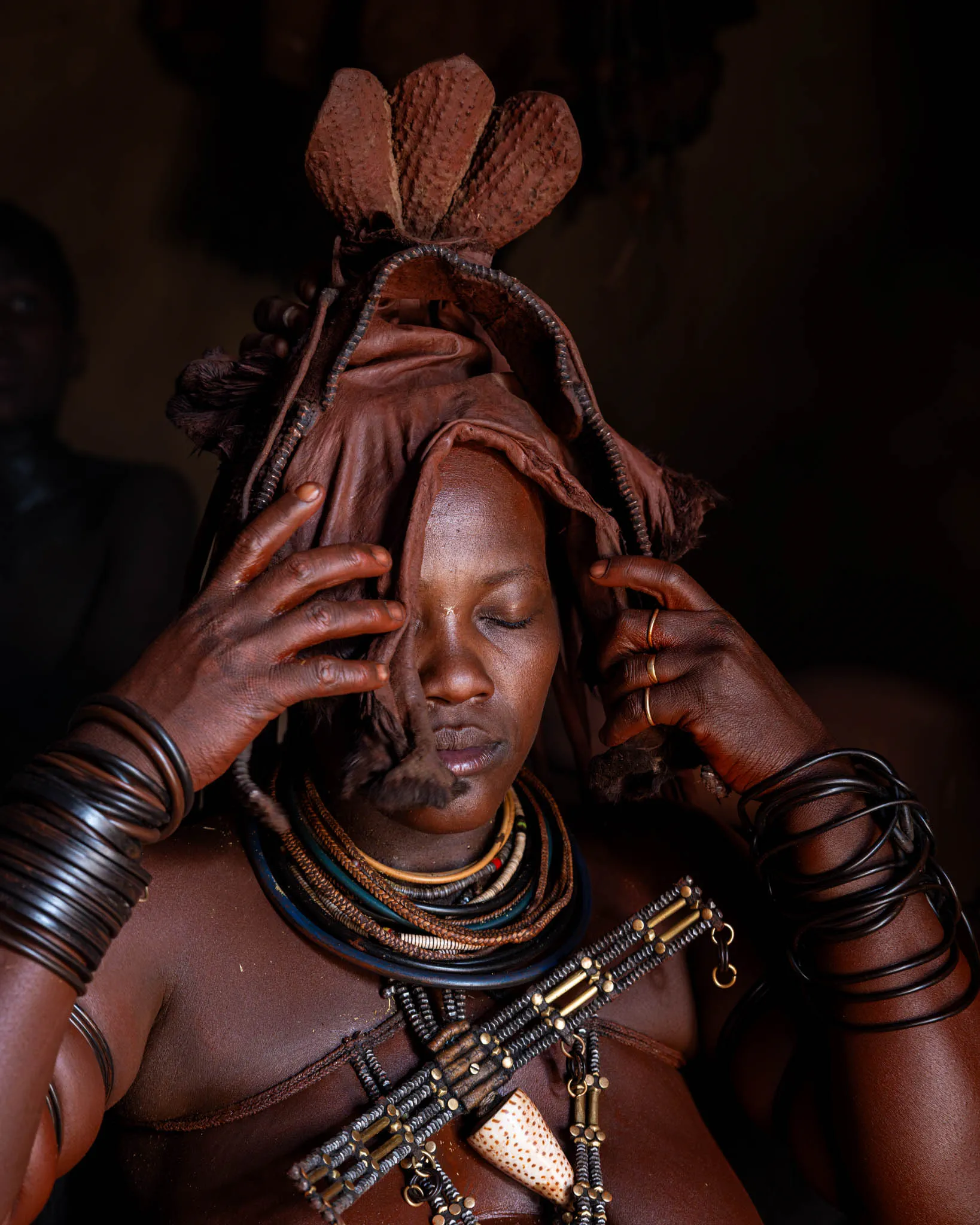
The woman helping her carefully adjusted the leather and the hair around the headpiece.
There were still some final adjustments to be made.
And suddenly she was finished.
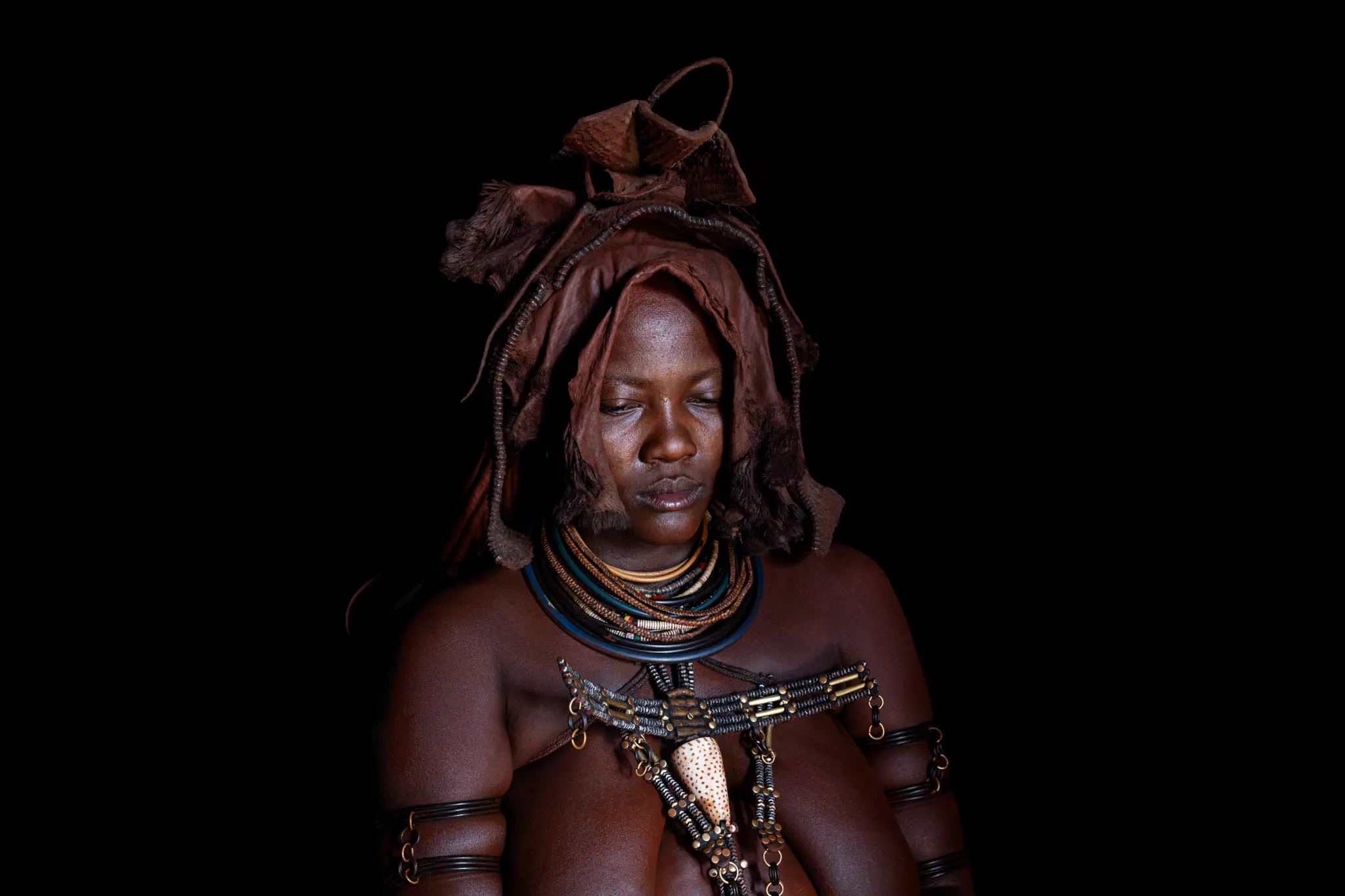
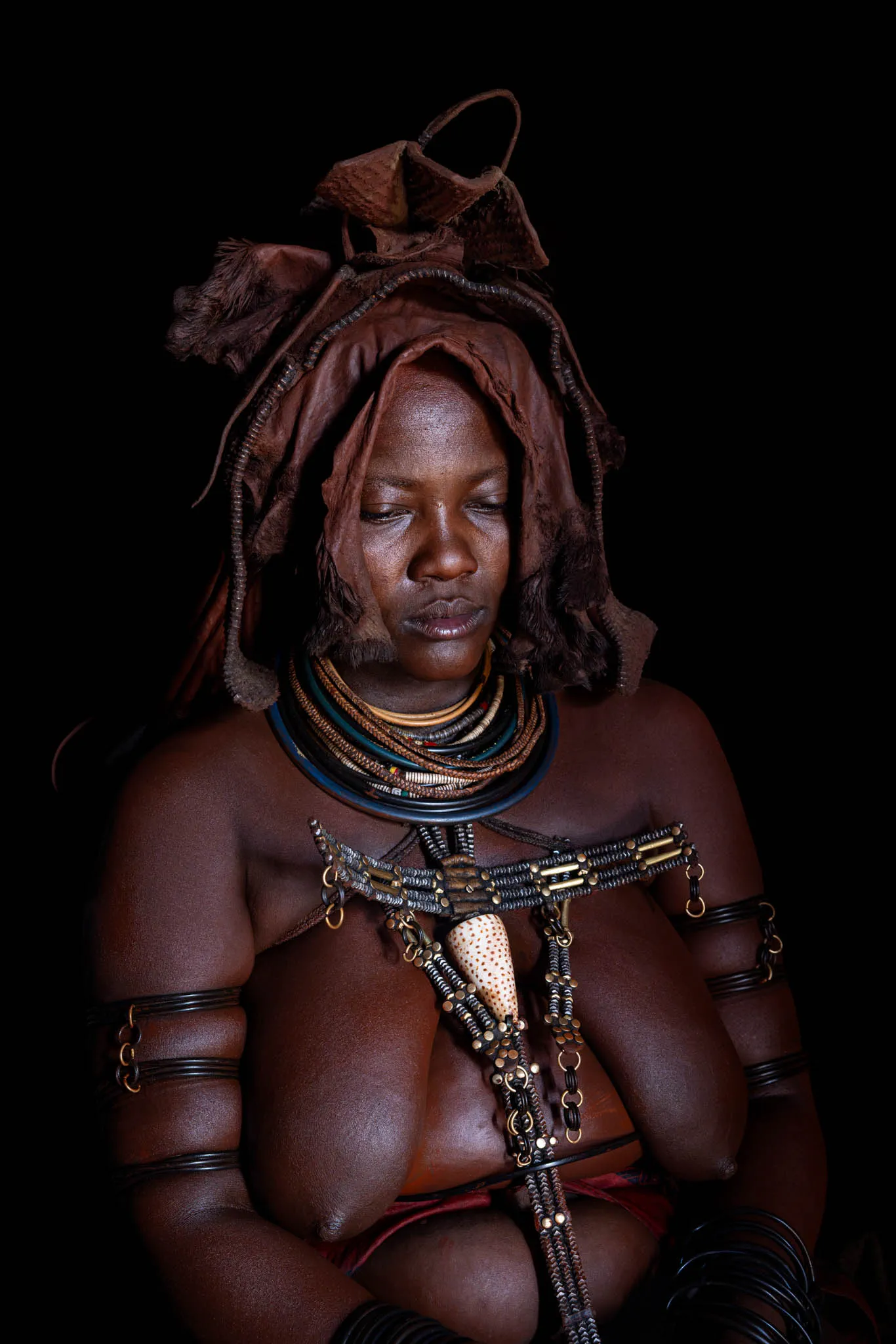
When a woman wears the ekori her mood changes. She becomes quiet, with her eyes looking down, solemn, almost as if she is in a different state of mind.
The ekori is almost a sacred piece of ritual adornment; at least that was how it felt to me. I was wondering why she wanted to show us how it is worn. I can only guess that she wanted to share some of the more intimate moments of Himba culture with us.
Once she was done, she took off the ekori, took her baby in her arms and simply sat down inside the hut.
Her daughter-in-law sat next to her, with her baby as well.
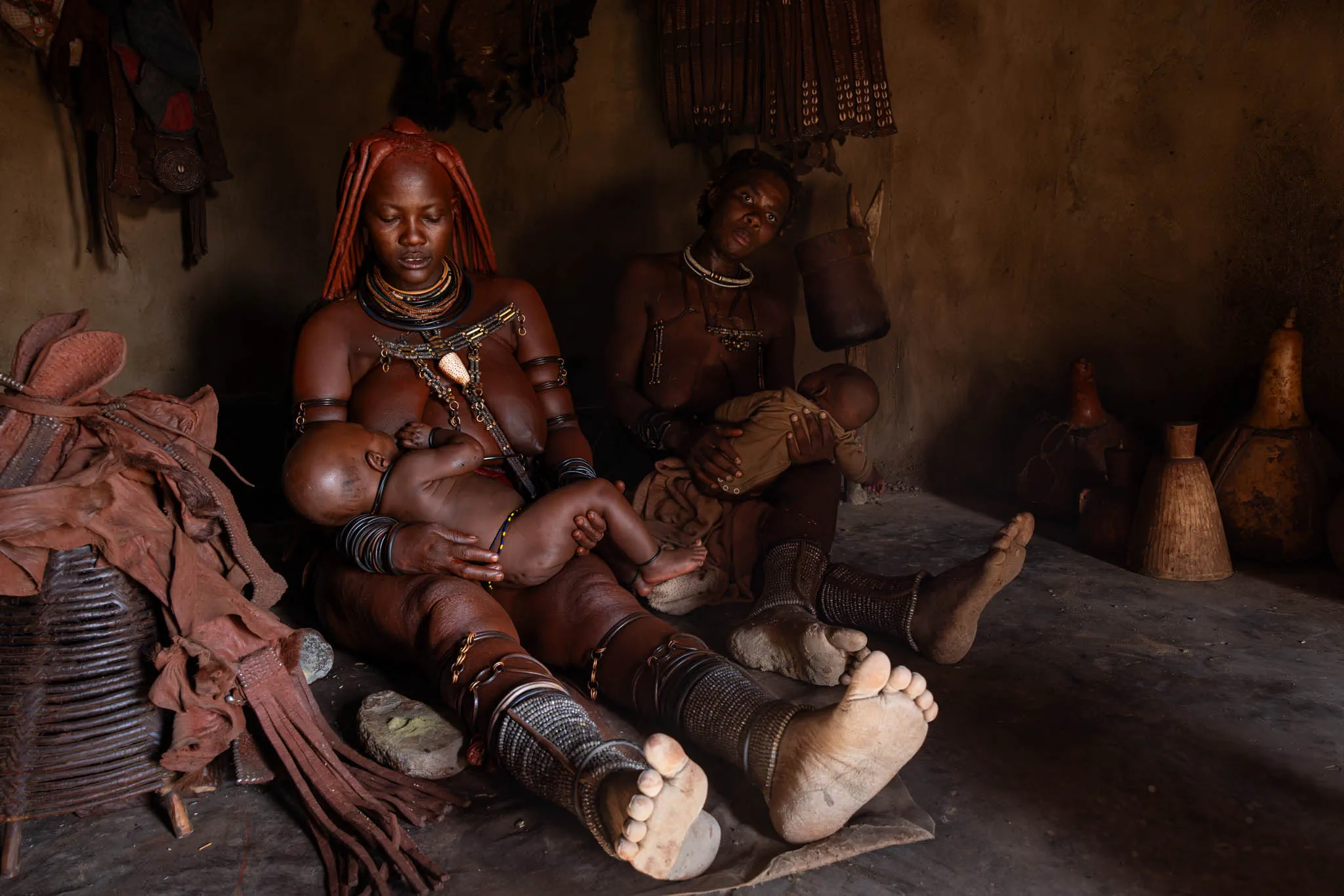
By the time she was done, she looked (and smelled!) remarkably different. And only then did she seem to feel really ready to host us as her guests.
What also stayed with me was not simply the finished appearance, but everything that had led to it. We had been sitting inside her mud hut, watching quietly as she went through each step, and sharing a small part of her life.
For me, these are the encounters that make travelling through Namibia so special. Not simply seeing something unfamiliar, but being given the opportunity to sit down, listen and watch.
The photographs bring the experience back to me. But they can never quite reproduce what it was like to sit there, in the dim light of that small mud hut, surrounded by the smell of ochre, butterfat and fragrant smoke.
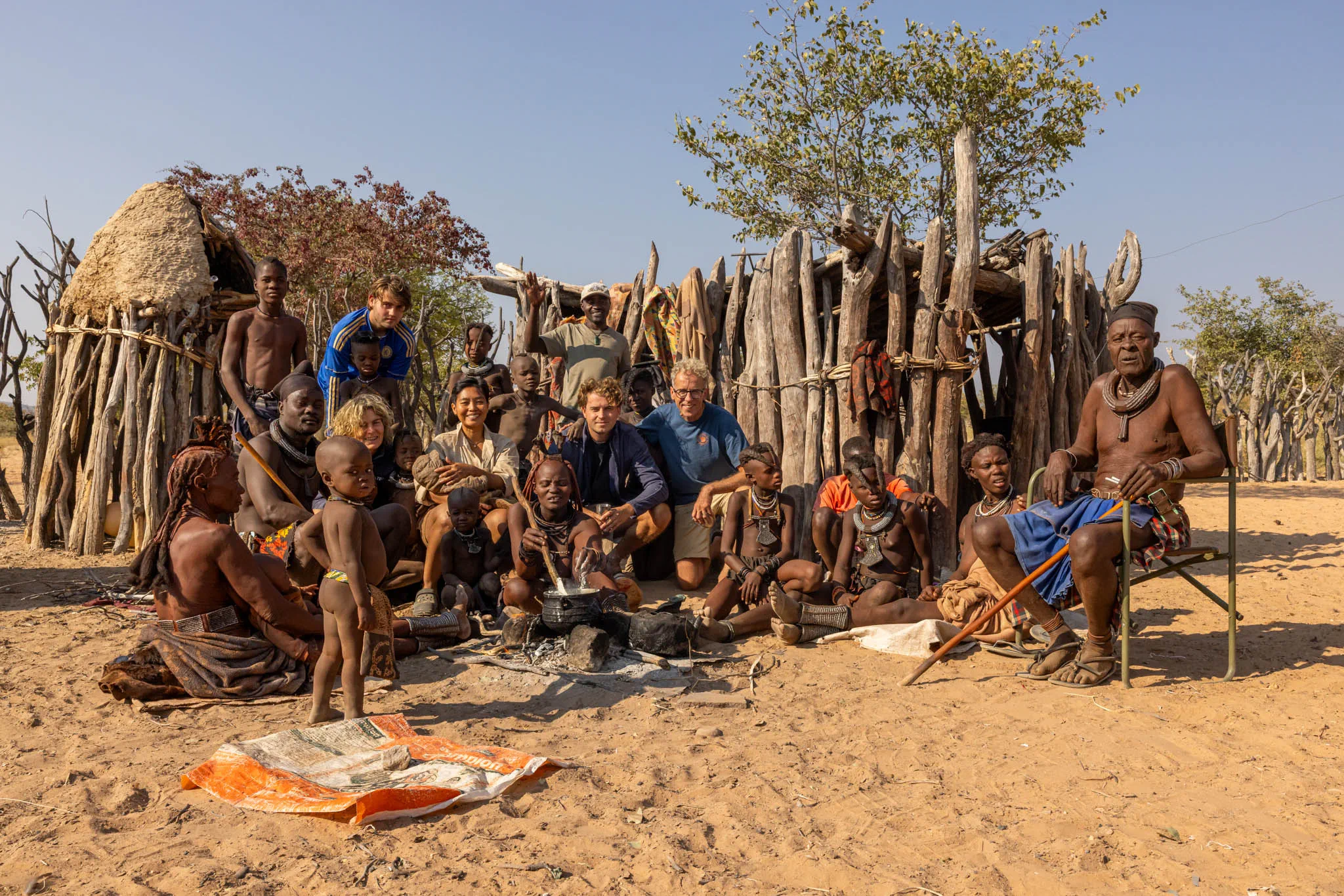
A visit made possible by Tjingi
My friend and Himba guide Tjingi Tjinginda introduced us to this family a few years ago and helped us understand and communicate with them. I have known Tjingi for many years and created and now manage his website, Himbatribe.com, to help him develop his own sustainable and responsible guiding business. He deserves it!
The Himba live across the remote landscapes of northwestern Namibia. Explore the Himba to discover more about their traditions, their way of life and how these encounters can become part of a private journey through the region.
This is one of the Stories Along the Way, featuring a unique experience during a journey through Namibia. Explore more such stories.