The Himba of Northern Namibia
Discover
the people,
the landscape,
and the traditions
that connect them.
A Life Shaped by the Land
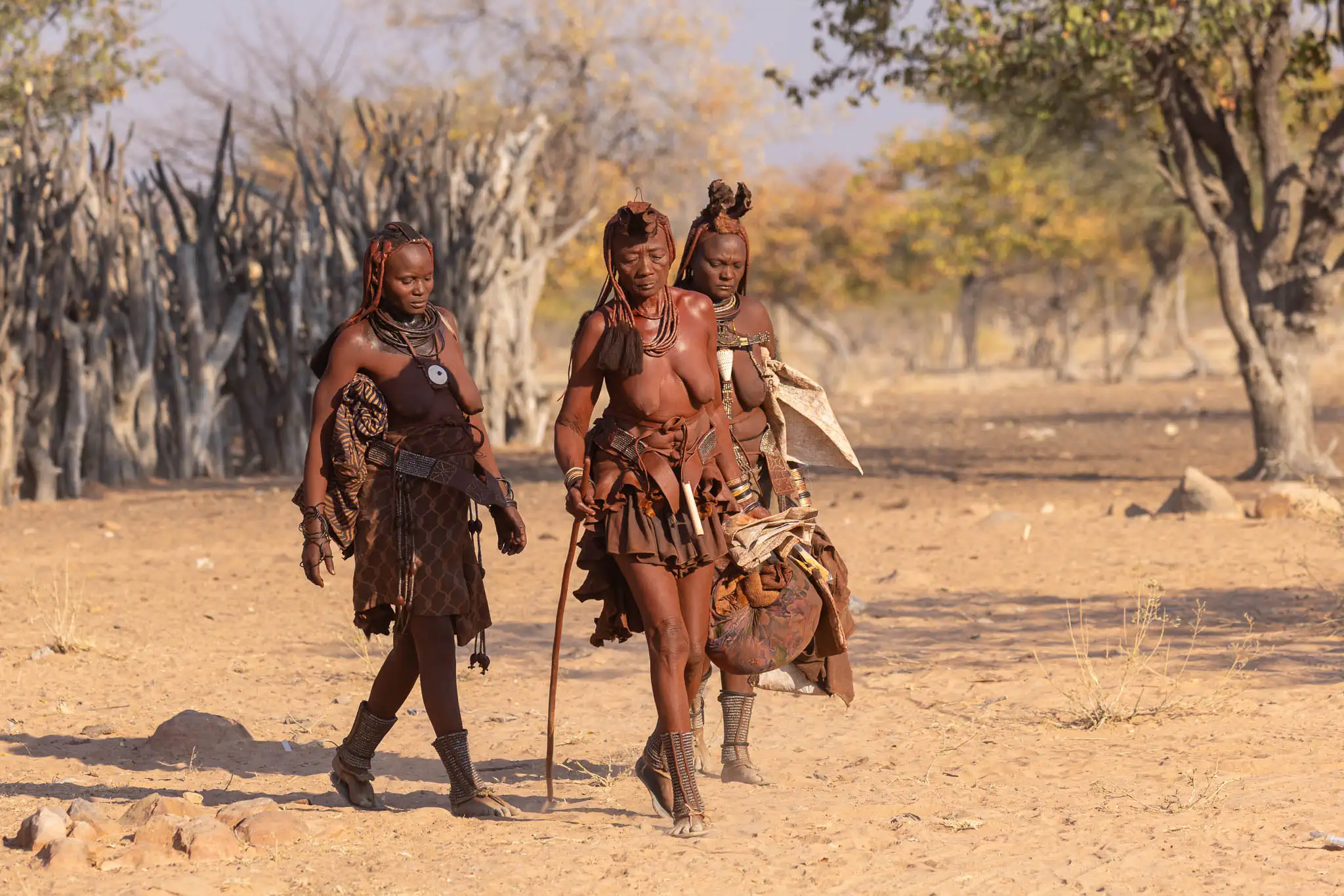
The Himba are closely associated with the remote northwest of Namibia, particularly the Kunene Region and the landscapes historically known as Kaokoland. It is a vast, dry country of mountains, seasonal rivers and scattered grazing land, where water has always shaped where people and livestock can live.
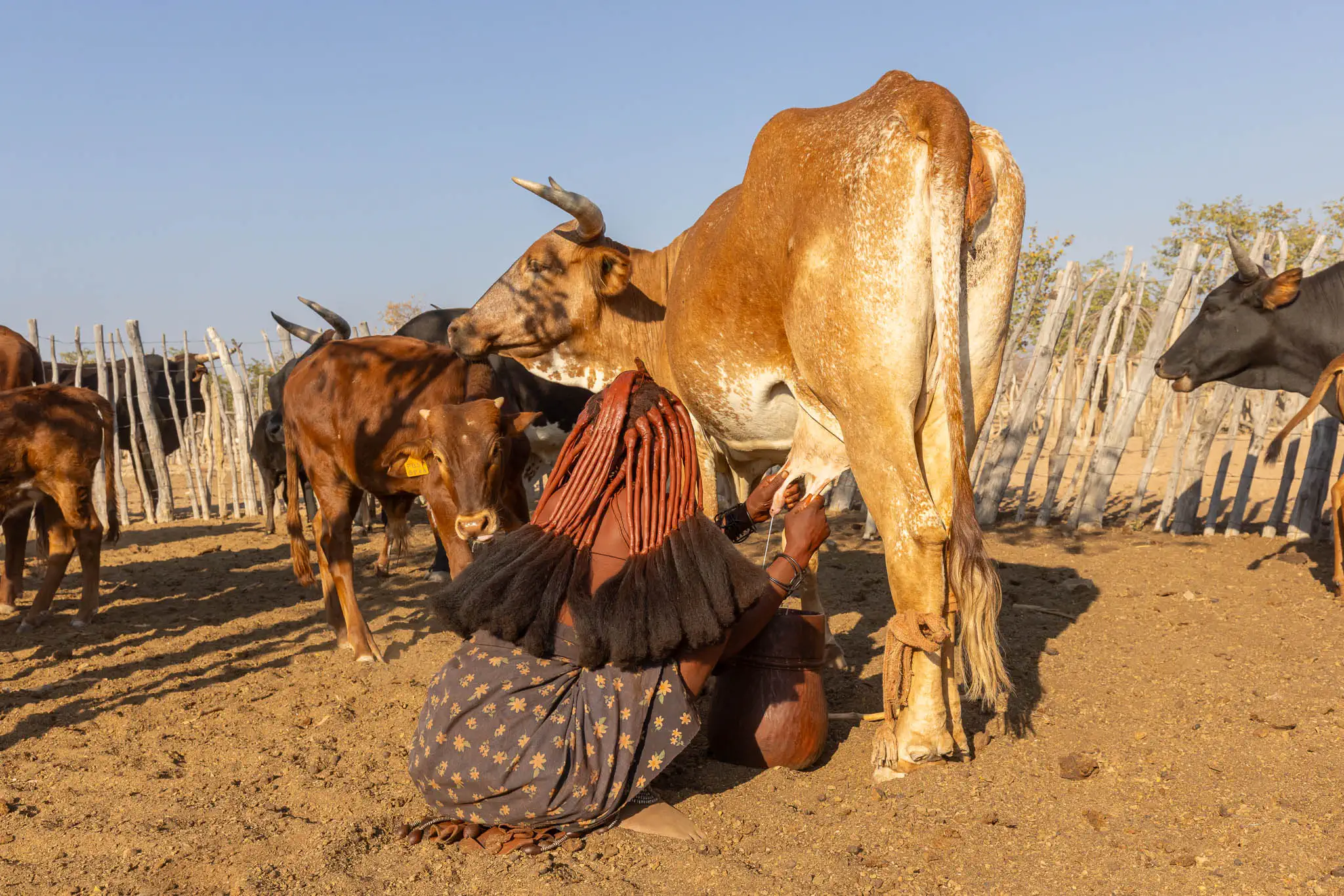
The Himba are traditionally pastoralists. Cattle are central to social life, while goats and sheep are better able to use some of the drier landscapes. Livestock represent far more than an economic resource: they are connected to family relationships, status, exchange and the continuity of the household.
A Himba homestead, or onganda, is usually home to an extended family. Huts and working areas are arranged around the livestock enclosure, while the sacred fire, the okuruwo, has an important place in the spiritual relationship between the living and their ancestors.
To travel through Himba country is therefore not simply to visit a culture in isolation. The people, their livestock and the land are inseparable. Drought, grazing and distance have shaped life here for generations, and they continue to do so today.
A Living Culture
For many travellers, the first impression of Himba culture is visual.
The deep red colour of otjize, elaborate hairstyles, leather garments and jewellery are immediately distinctive. But these are not costumes created for visitors. Hair, clothing and adornment can communicate age, status and stages of life, while daily practices are embedded in family and social relationships.
Life in a homestead has its own rhythm. Livestock must be cared for. Water and firewood need to be collected. Food is prepared, children are cared for, jewellery is made, and people come and go between homesteads, grazing areas and towns.
Some traditions are highly visible; others are less easily seen. Family relationships, obligations between relatives, cattle ownership and the relationship with ancestors are all part of a social world that cannot be understood from appearance alone.
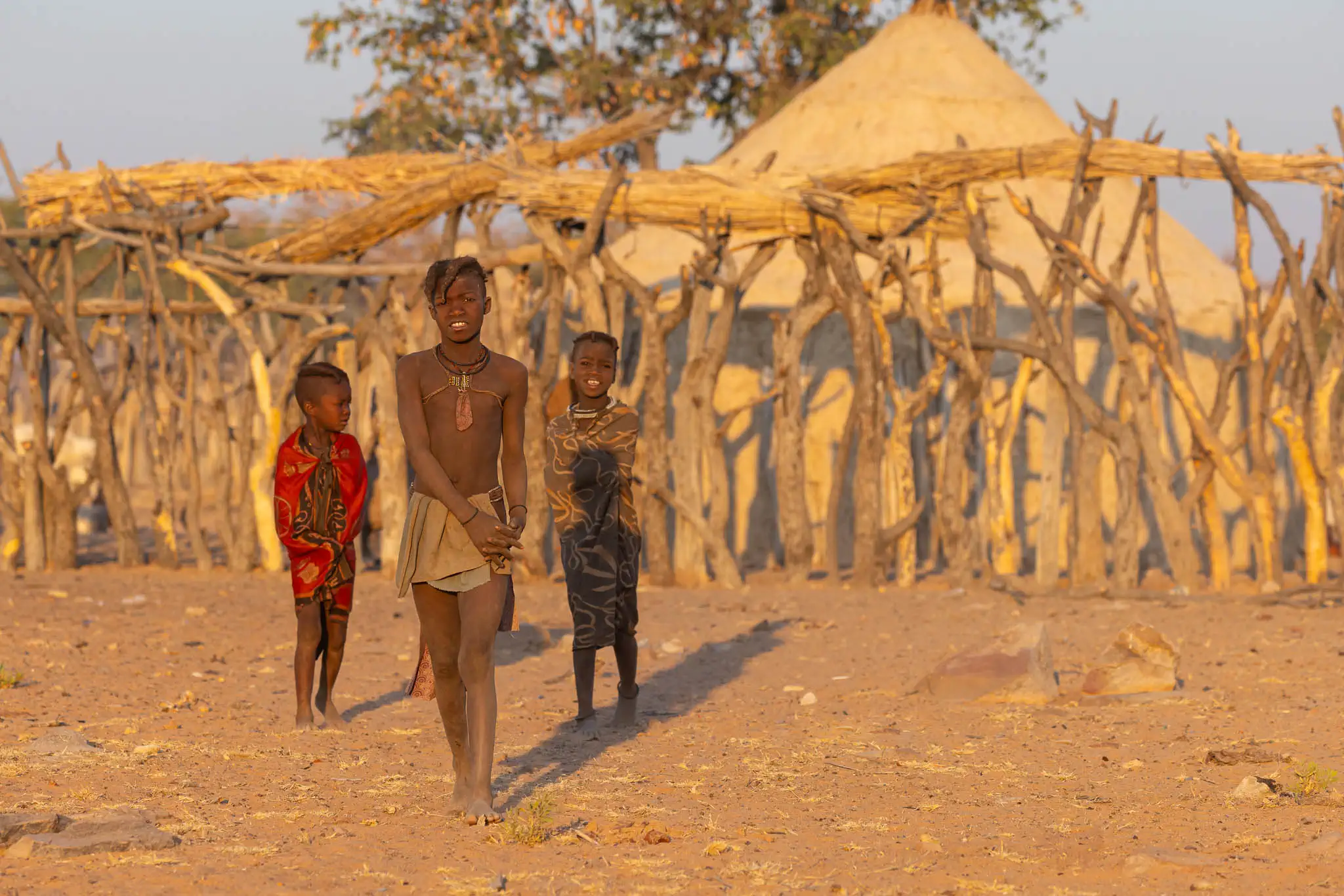
The Himba have often been described as if they exist outside the modern world. The reality is more complex. Traditional pastoral life can exist alongside school, mobile phones, travel to Opuwo and other towns, paid work and the many choices younger people make about their own lives.
Culture is not made less real because it changes.
Otjize: The Colour of Himba Identity
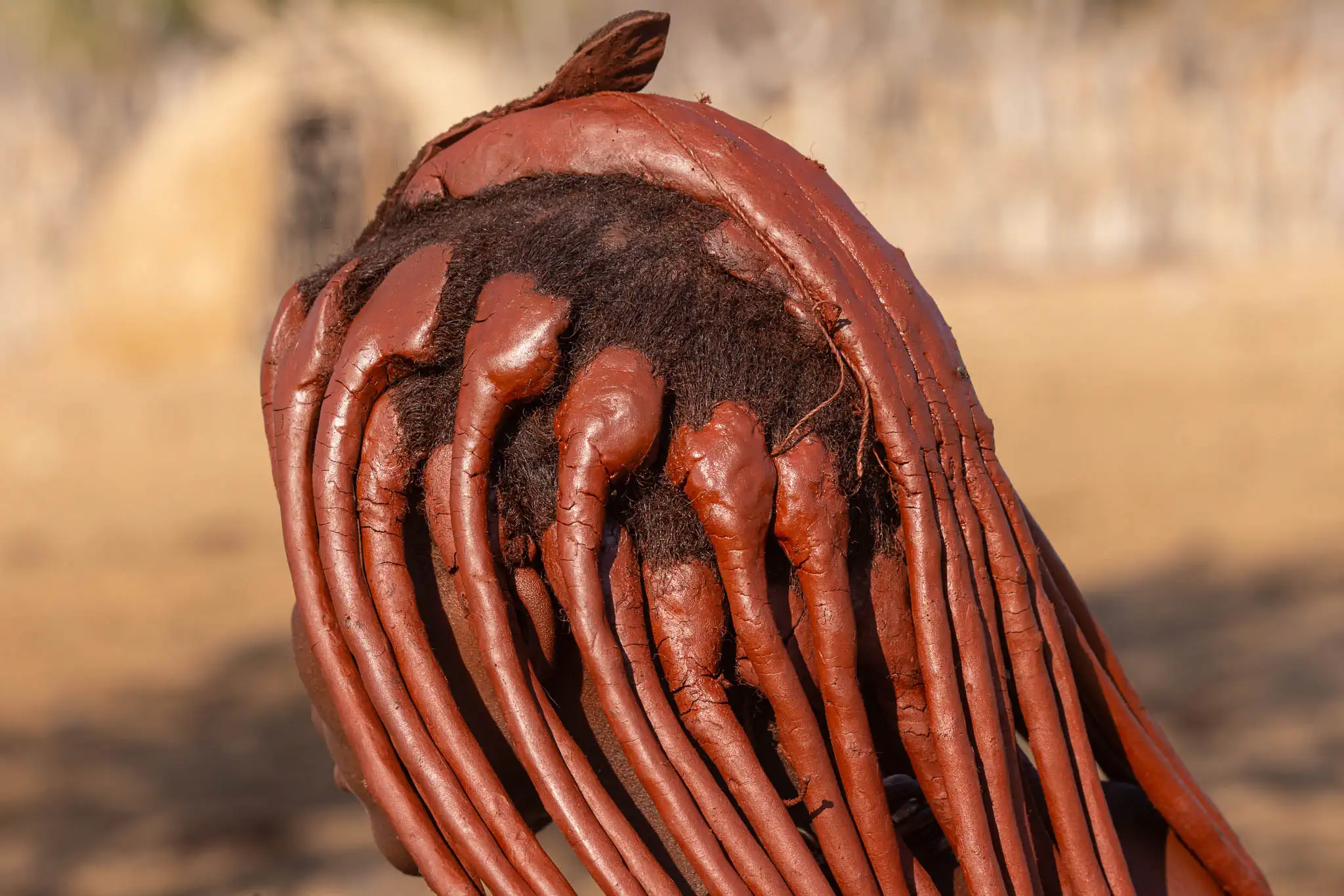
One of the most recognisable Himba traditions is the use of otjize, the red paste applied to the skin and hair by many Himba women.
Made from butterfat and finely ground red ochre, often with aromatic ingredients added, otjize is part of daily care, beauty and cultural identity. Its rich red colour has become one of the most familiar visual symbols of Himba culture.
The application of otjize is closely connected with hairstyles and adornment. Different hairstyles can indicate stages of life, and considerable time and care go into their preparation.
It is easy for a visitor to see only the striking appearance. The tradition becomes more interesting when there is time to understand the practices and relationships behind it.
I have written a separate, more detailed photographic story about otjize, its preparation and its place in Himba culture on my photography website Duniart.
Read the full story: Otjize — the Sacred Red Ochre of the Himba Tribe
Meeting the Himba
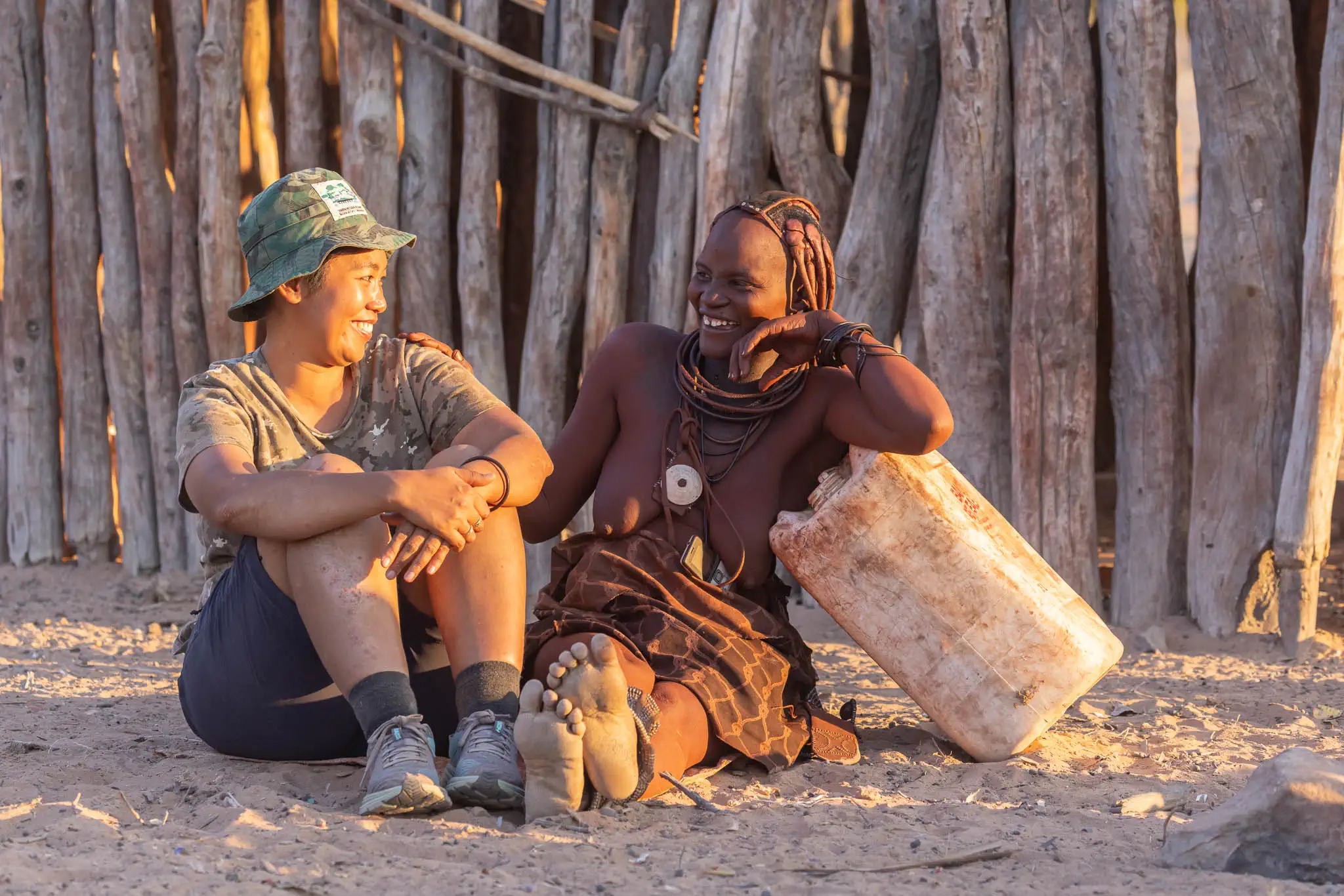
Meeting a Himba family can become one of the most memorable parts of a journey through northern Namibia, but much depends on how the visit happens.
I am not interested in arriving at a settlement, taking a few photographs and leaving again.
A meaningful visit begins with the person who introduces us: someone who knows the family, speaks the language and understands both the community and the visitors. Someone who knows the family, speaks the language and understands both the community and the visitors can make the difference between simply looking at people and actually spending time together.
There may be conversation, questions in both directions, laughter, curiosity and long periods when very little appears to happen. That is often when a visit begins to feel natural.
Not every encounter needs a programme. We might walk through the surrounding area, learn about livestock and the homestead, sit with a family or simply spend time observing daily life. What happens depends on the family, the place and the time available.
For photographers, the same principle applies. Photography can be part of the encounter, but it should not be the only reason for it.
Travelling with Tjingi
During one of my journeys through northern Namibia, I met Tjingi Tjinginda, a Himba guide who grew up in Okamue, a small Himba community north of Opuwo.
Tjingi chose to attend school as a child and later trained in tourism before becoming a licensed guide. He is proud of his Himba background and passionate about introducing visitors to his culture through families and communities he knows personally.
Since we first met, Tjingi has become a friend. I have travelled with him and spent time with Himba families through his introductions, including staying overnight in a community rather than making only a short visit.
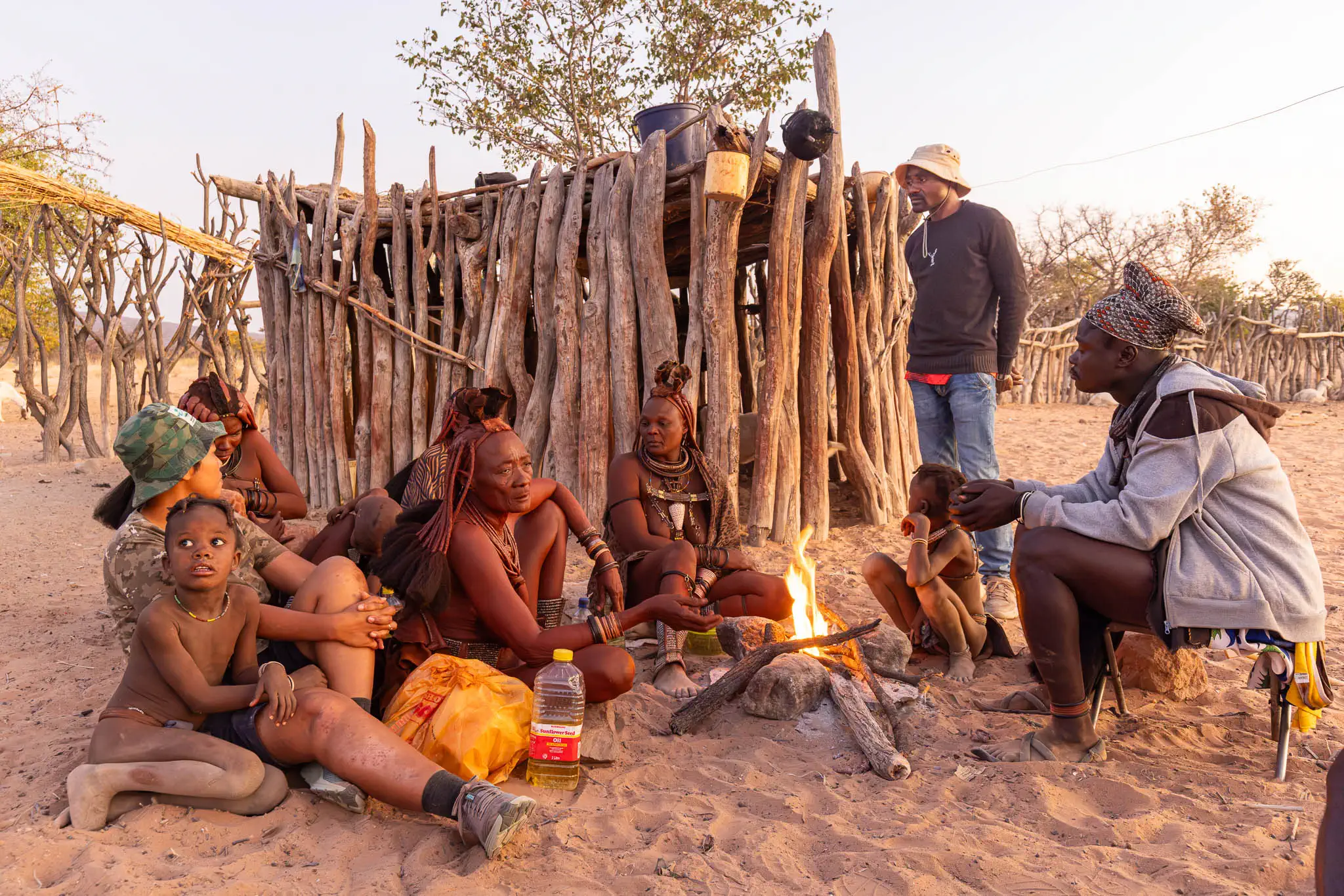
For travellers passing independently through the Opuwo area, Tjingi also arranges his own visits directly. These can range from shorter introductions to longer visits and overnight stays, depending on what visitors are looking for and what is appropriate for the community.
I helped Tjingi create his own website so that travellers can learn about him and contact him directly.
Photography and People
Photographing people is different from photographing a landscape or waiting beside a waterhole.
Technically, a portrait can be made in seconds. The photographs that remain meaningful to me usually take longer.
The camera changes an encounter. There is no point pretending otherwise. But when enough time is available, photography can become one small part of a wider exchange rather than the reason everybody is there.
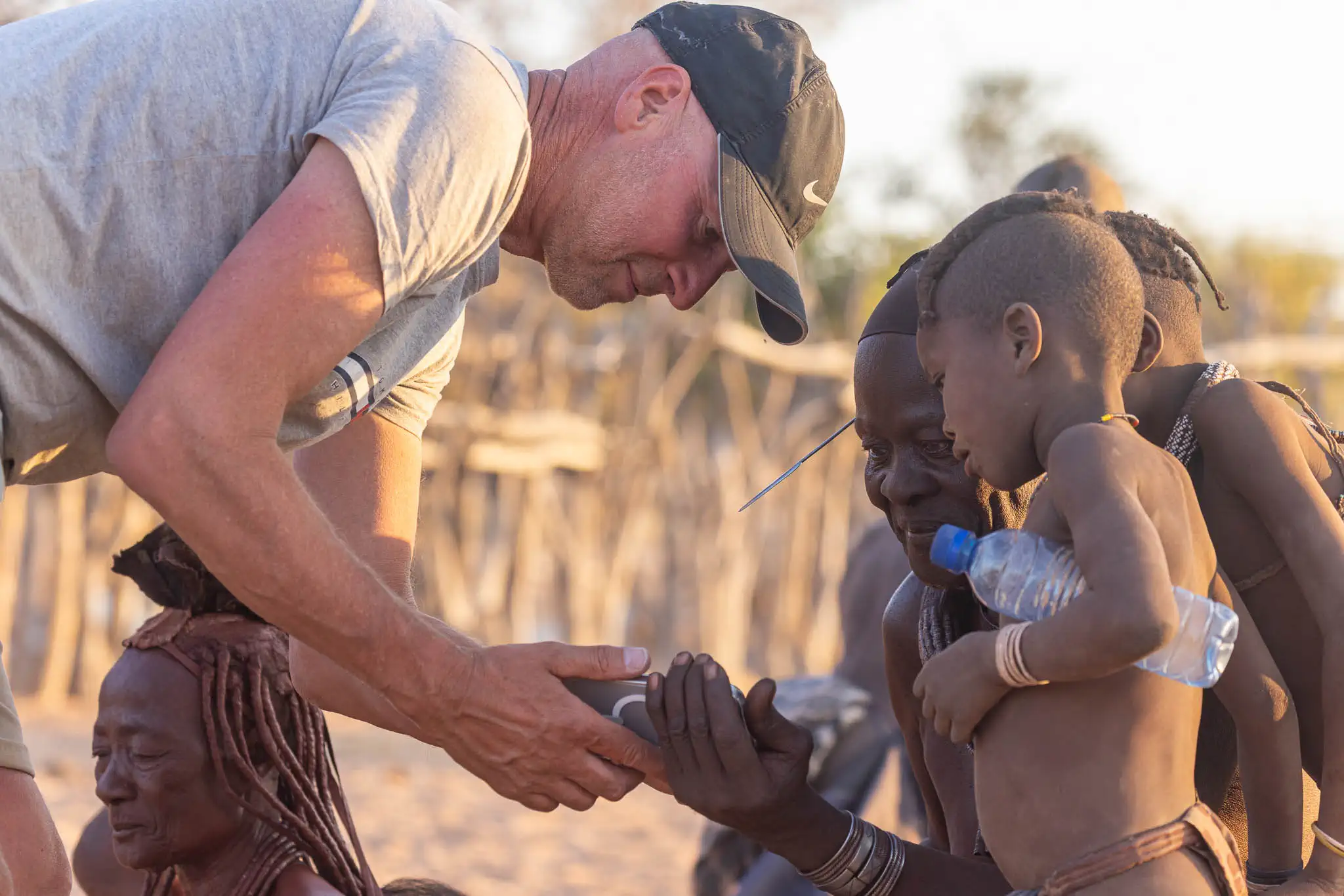
I prefer to arrive without a list of portraits that must be made. Conversation comes first. Sometimes people are interested in being photographed; sometimes the more interesting photographs emerge from ordinary moments between formal portraits; and sometimes the camera stays in the vehicle for a while.
For a photography journey, time with Himba communities can be included as part of a wider route through Kaokoland. But these visits are never arranged simply as access to photographic subjects.
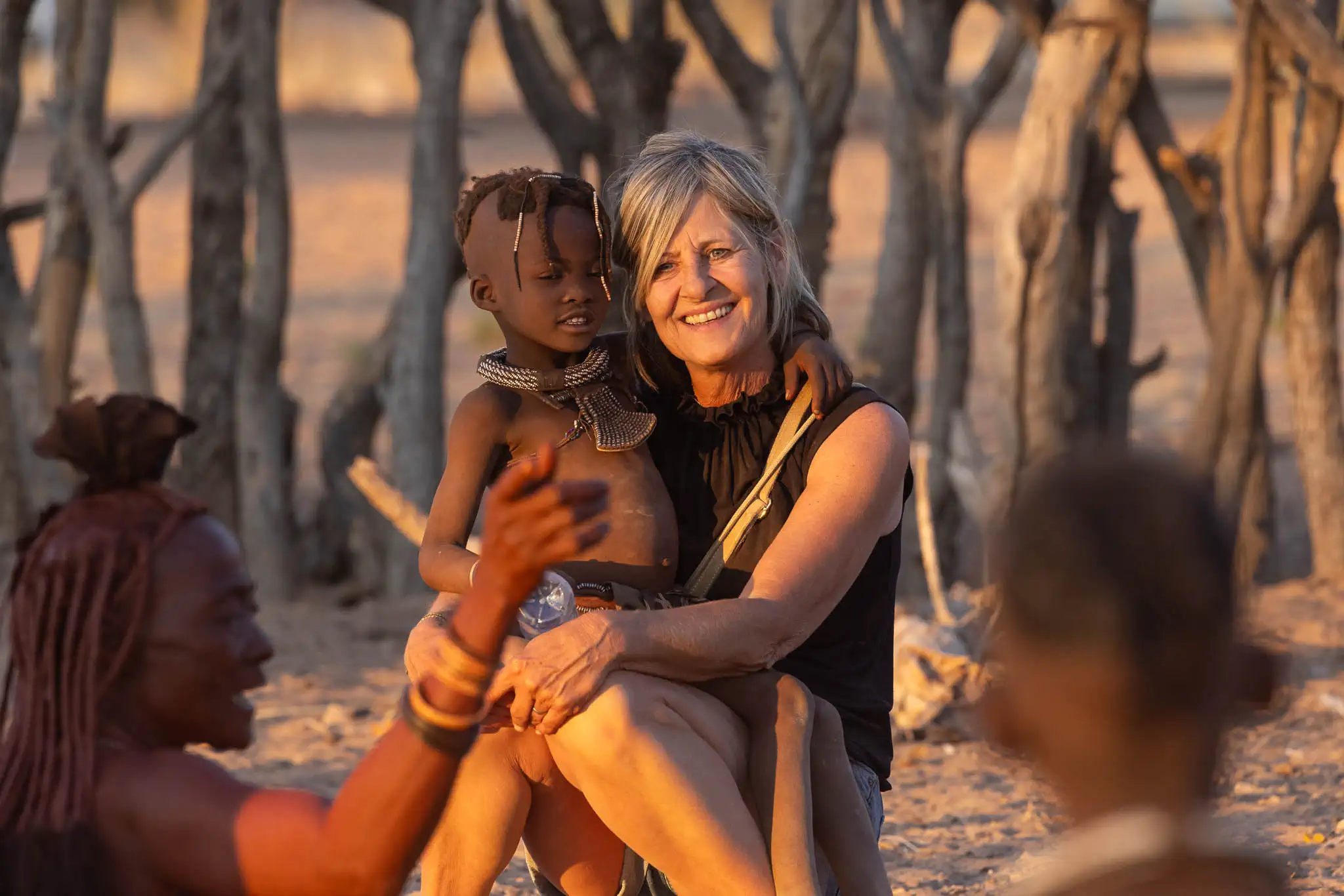
The people we meet are hosts, families and individuals — not part of a photographic checklist.
Tradition, Choice & Change
The Himba are often described through the language of survival: an ancient culture holding on against the modern world.
I think that description is too simple.
Himba culture has survived periods of severe drought, conflict and enormous social change. Today, pastoral life continues across much of Kunene, but it exists alongside towns, schools, tourism, wage employment, mobile communication and changing aspirations.
Different families respond differently. Different generations make different choices. Some young people leave rural areas; others return. Traditional dress may be worn in one context and modern clothing in another. A mobile phone does not erase a person’s culture any more than driving a vehicle makes someone less Namibian.
Visitors sometimes arrive hoping to see a culture untouched by change. I think there is more value in meeting people as they are.
The interesting question is not whether Himba life can remain exactly as it was. It is how traditions, knowledge and identity continue while people themselves decide what to keep, what to adapt and what opportunities they want for the future.
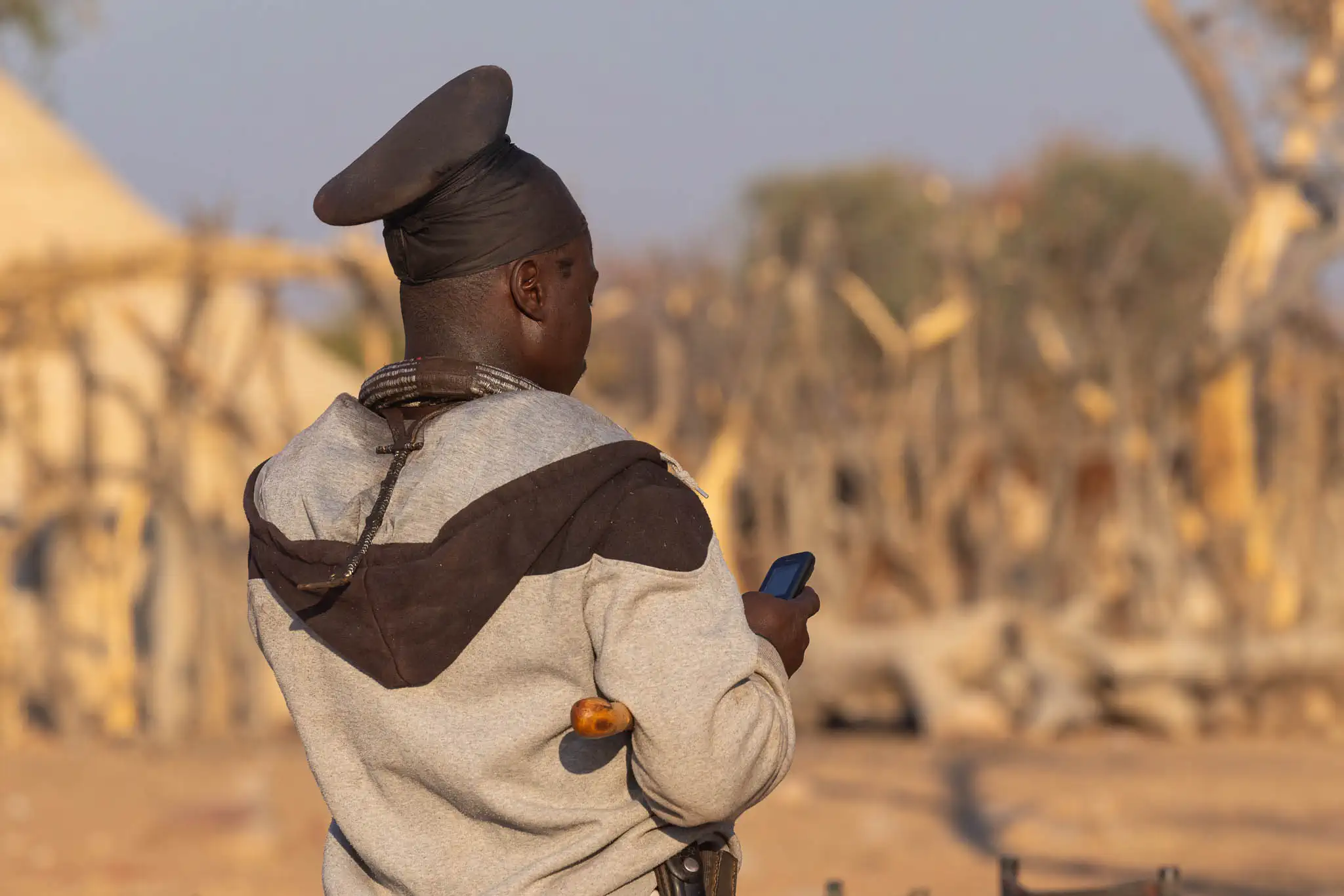
Travelling Through Himba Country
There is no single place to encounter Himba culture.
Opuwo is the main centre of the Kunene Region and a natural starting point for journeys farther north and west. From there, roads lead towards Epupa and the Kunene River, while more remote routes enter the mountains, valleys and dry river systems of Kaokoland.
Farther west, places such as Puros lie within landscapes where pastoral communities, desert-adapted wildlife and immense wilderness are all part of the same journey.
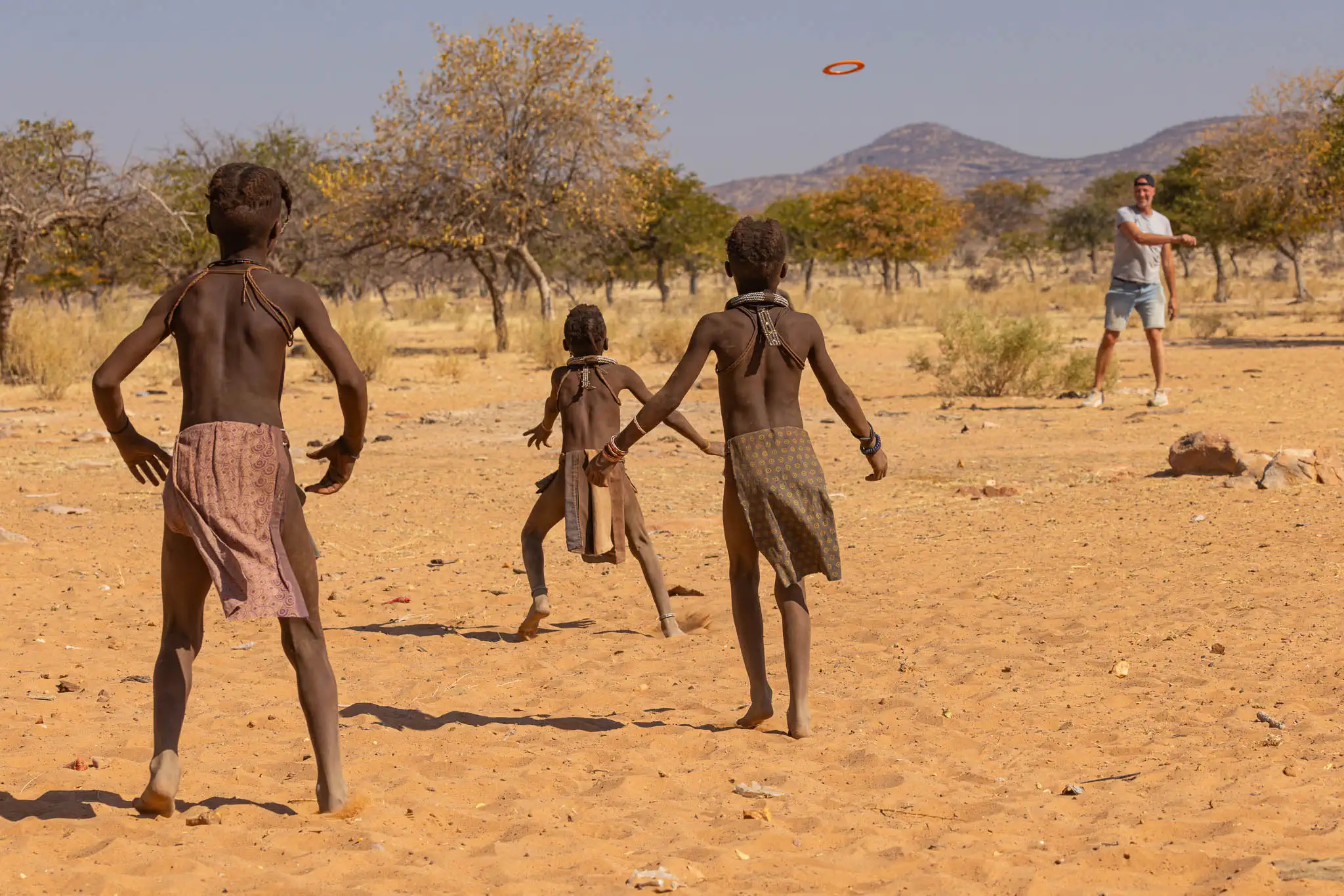
A visit with a Himba family can be included within a longer expedition through the northwest, or we can allow more time when cultural encounters and documentary photography are among your main interests.
As with the rest of the journey, I prefer not to treat this as an item to tick off between destinations.
The farther we travel into the northwest, the more important time becomes.
Continue Exploring
Over the years, I have photographed and written about the Himba in more depth on Duniart. Those stories go further into daily life, the homestead, pastoral traditions, spirituality, adornment and the use of otjize.
Personal observations and experiences with the Himba.
A curated collection of the people, portraits, culture and daily life.
A Journey Through Northern Namibia
The Himba can be part of a wider journey through Kaokoland, or one of the reasons for spending more time in the northwest.
Tell me what draws you to Namibia, how you like to travel and how much time you have. From there, we can shape a journey around the places, wildlife and encounters that matter to you.