EN | NL
Driving through Kaokoland in Namibia

A Deeper Journey Through Namibia

Discover

beyond the highlights.

From the Namib Desert to the Zambezi Region — 2026

An 18-day self-drive expedition through Namibia and eventually into Botswana, travelling with a family in two 4×4 cars. We camped for 16 nights at 13 different places.

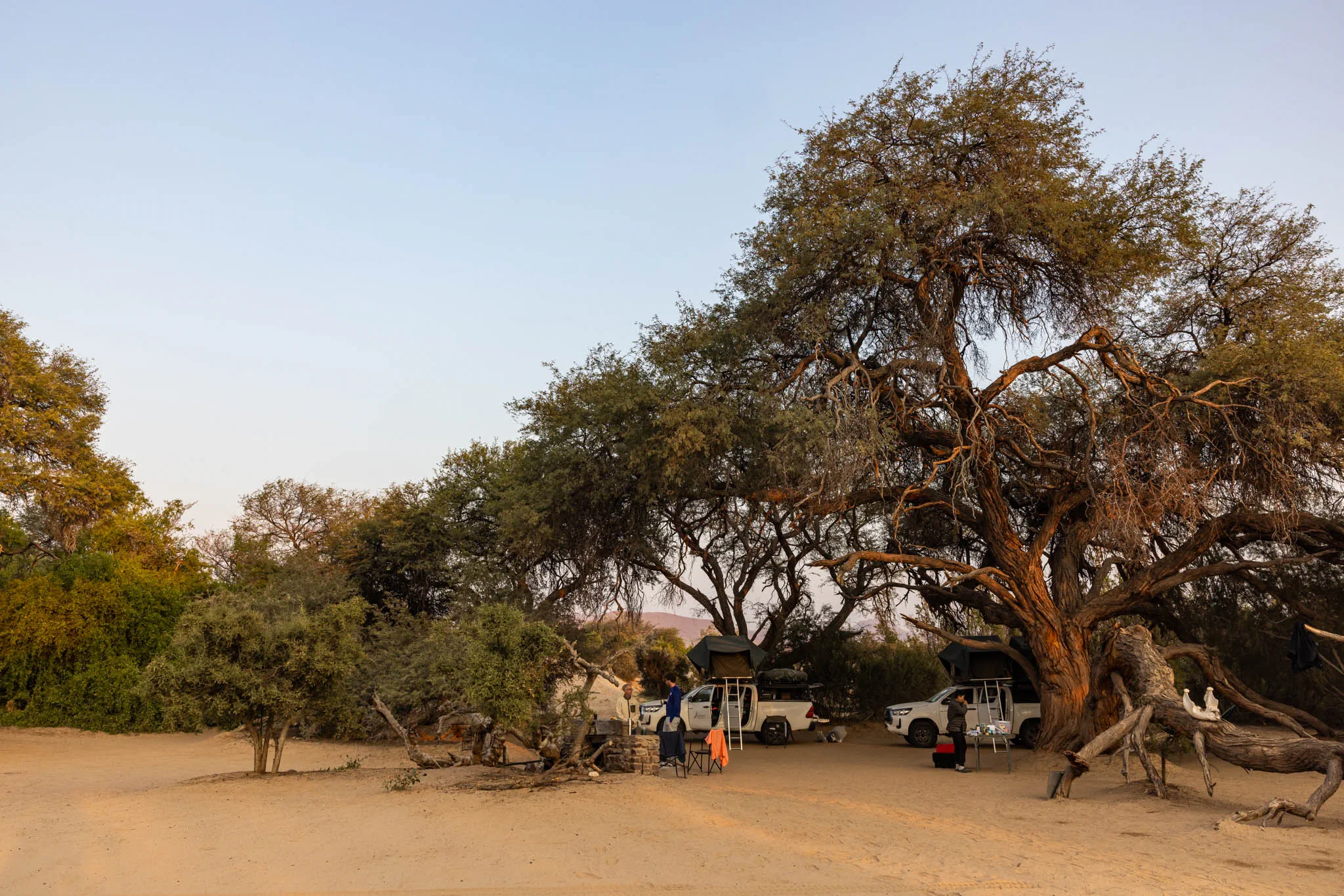
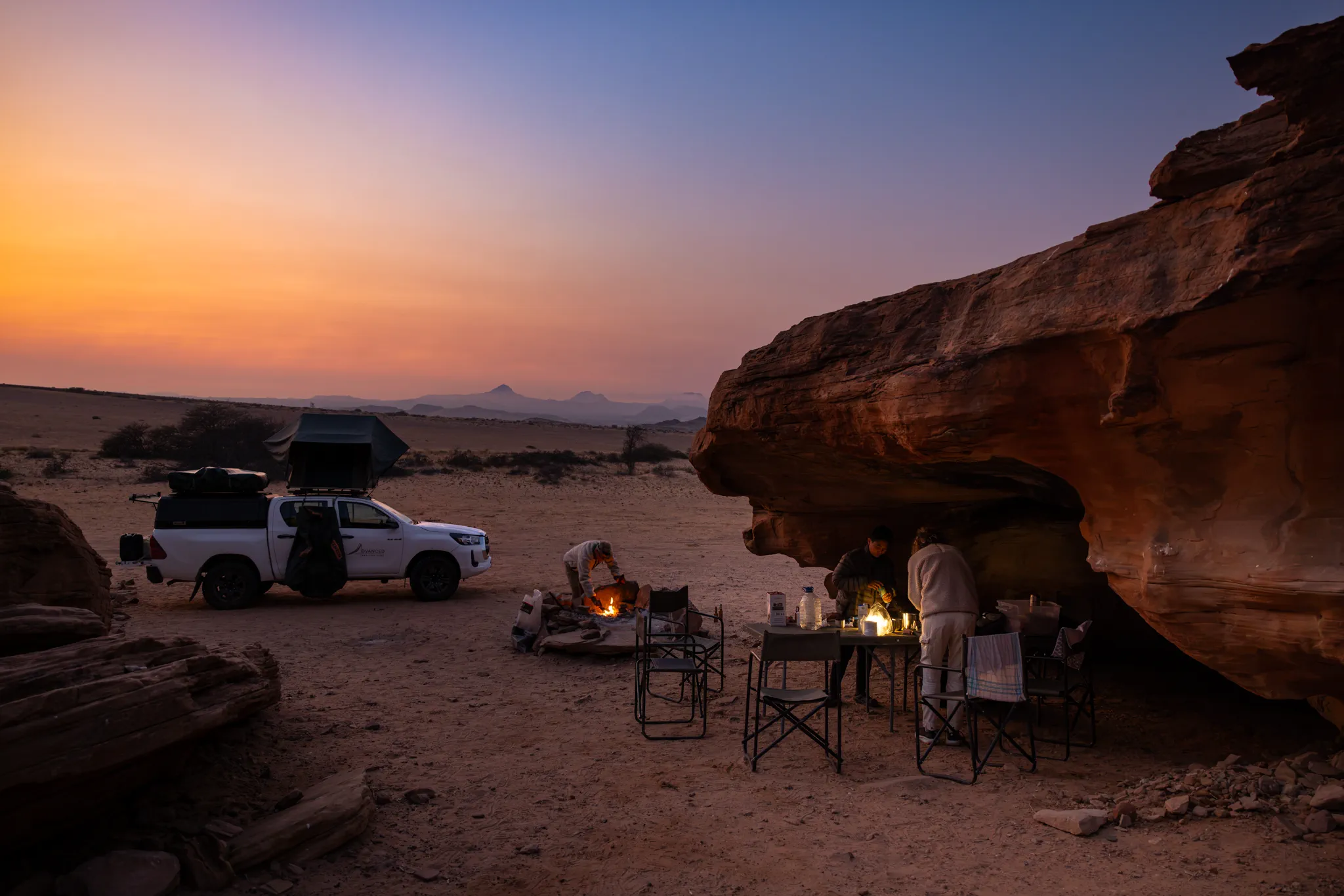
Campsite in Purros, Hoarusib riverbed Namibia
Campsite in the Hoarusib riverbed, Kaokoland.

Beyond the classic route

There is a Namibia beyond the places most visitors know.

This journey follows some of the country’s more remote roads — from the dry riverbeds of Damaraland into the wilderness of Kaokoland, then east through Etosha and on towards the rivers and wetlands of the Zambezi Region.

It is a journey of contrasts: desert and water, wildlife and people, familiar landscapes and places where the sense of remoteness is still very real.

And, as with the Classic journey, the road itself is part of the experience.

the Aba Huab river valley in Damaraland Namibia

Following the riverbeds north

Damaraland is a landscape shaped by stone, space and water — although much of the year that water exists only beneath the surface.

The Huab is one of Namibia’s ephemeral rivers, its dry riverbed cutting through an otherwise arid landscape. Along these seasonal waterways, vegetation creates lifelines for wildlife, including desert-adapted elephants.

For us, the Huab was more than another stop. It was the beginning of the journey north.

the Aba Huab river valley in Damaraland Namibia
View from our campsite in the Aba Huab river valley.

Aba Huab

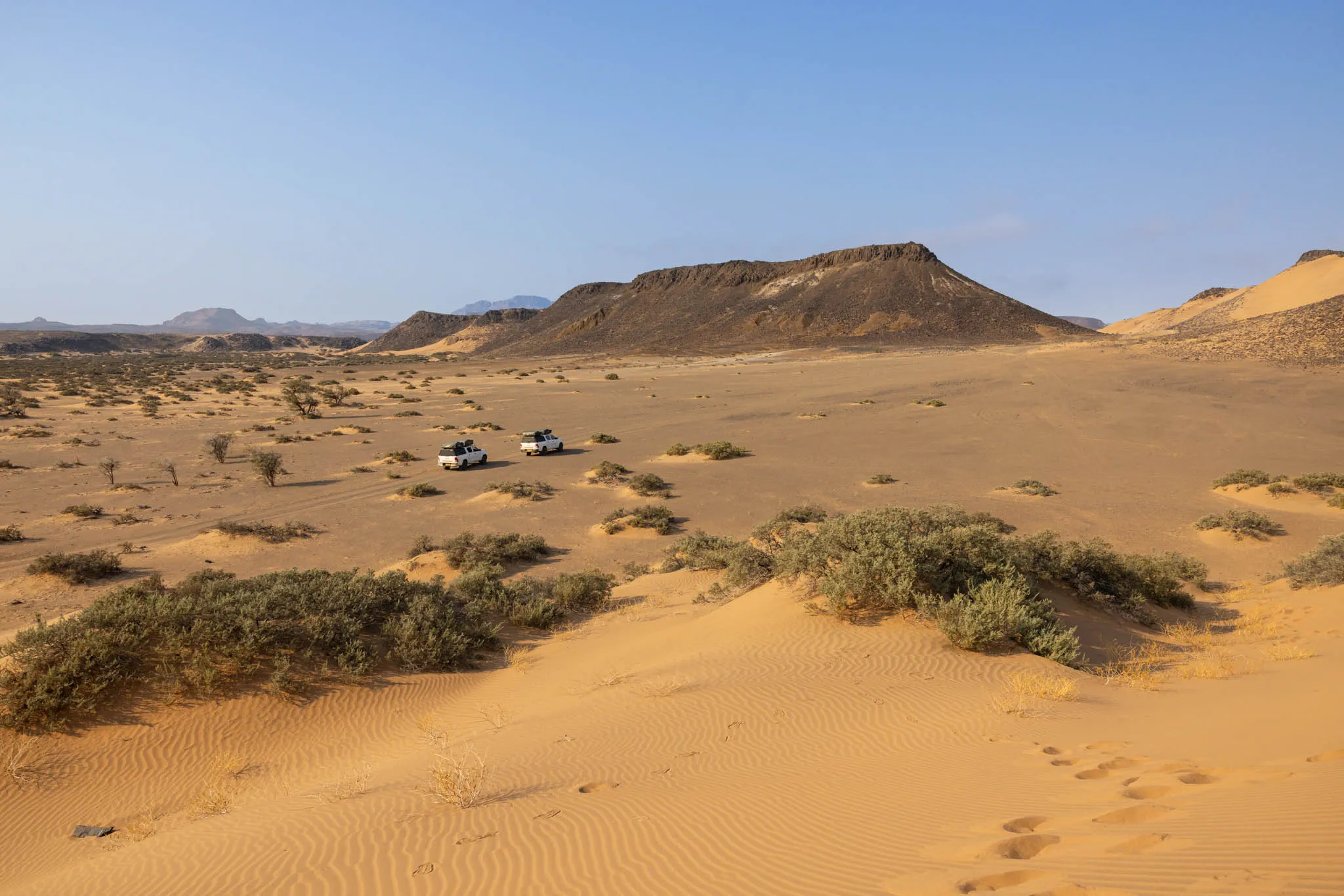
The Aba Huab riverbed is one of our favourite dry-riverbed destinations, with its constantly changing scenery shaping the valley. Large rocky granite outcrops give way to orange sand dunes, at times reminding us of Spitzkoppe and Sossusvlei at once.

But without the crowds.

In fact, we did not see anyone else while spending time around our campsite — an old San cave site, its ceiling black with soot from ancient fires, with San paintings still visible on the walls.

We arrived in the late afternoon, having driven all the way from Windhoek in a single day.

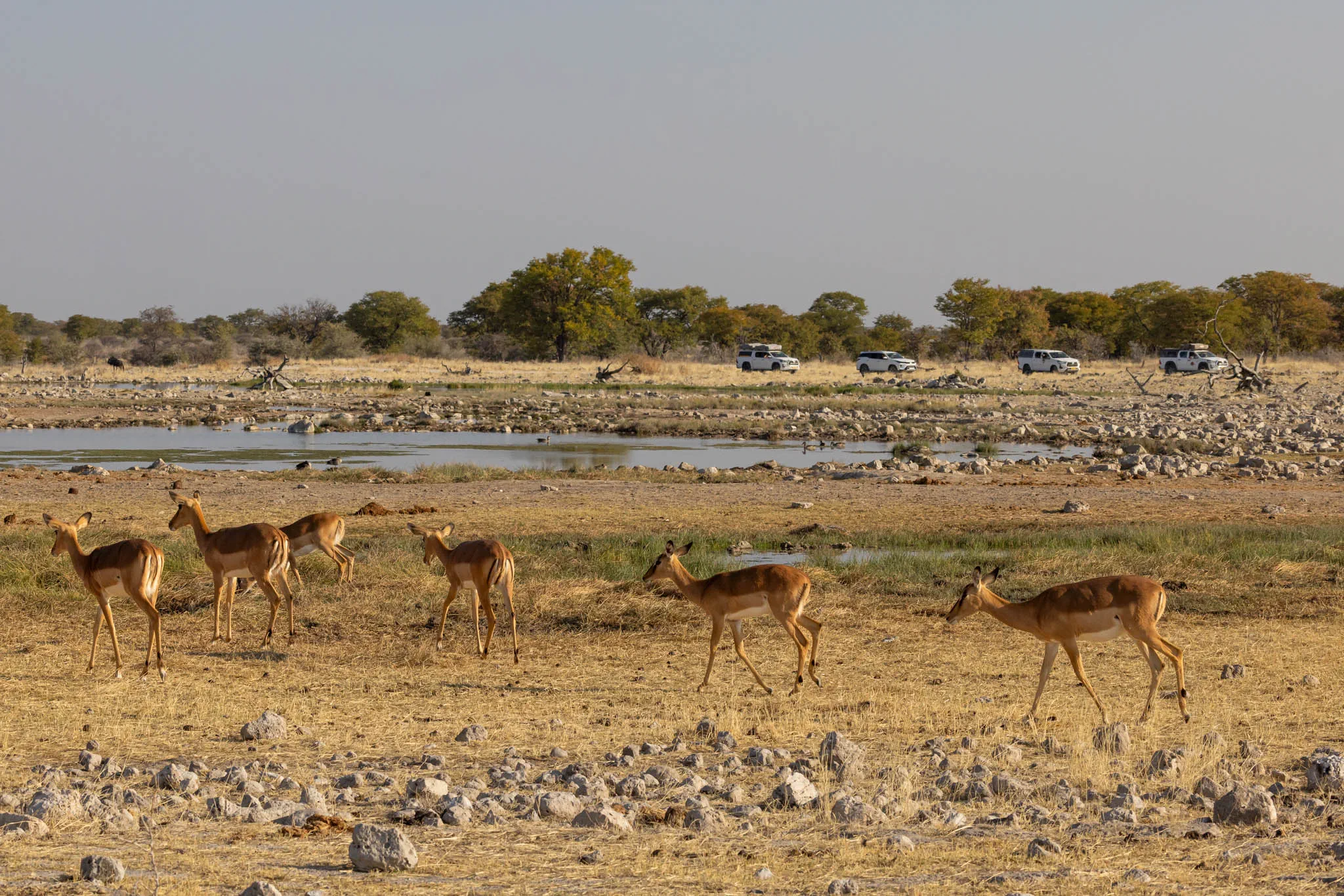
The following morning we successfully tracked down desert-adapted elephants, although apart from springbok we did not see much other large wildlife.

That was fine. Our focus here was as much on the spectacular scenery and sand dunes as it was on wildlife. We knew there would be plenty of opportunities for that further along our journey.

Campsite in the Aba Huab river valley in Damaraland, Namibia
Our campsite in the Aba Huab valley.

Into the remote northwest

North of Damaraland, the roads become rougher, the distances greater and the landscape increasingly empty.

The Hoanib and Hoarusib river systems cut through one of Namibia’s most remote regions. Here, life is concentrated around water and the vegetation it supports, while the surrounding mountains, dry riverbeds and open plains create an extraordinary sense of space.

Kaokoland is not a place you simply pass through.

It is a place where travelling slowly, following tracks and reading the landscape becomes part of the adventure.

This was the real beginning of our journey beyond the highlights.

Into the Hoanib

From the Aba Huab we drove via Palmwag and Sesfontein into the Hoanib riverbed.

The plan was to camp somewhere in the wild, deep in the valley. But as the sun slowly disappeared, we eventually decided to stop at Elephant Song Camp, at the entrance to the narrowing valley. From here we had fantastic views over the riverbed.

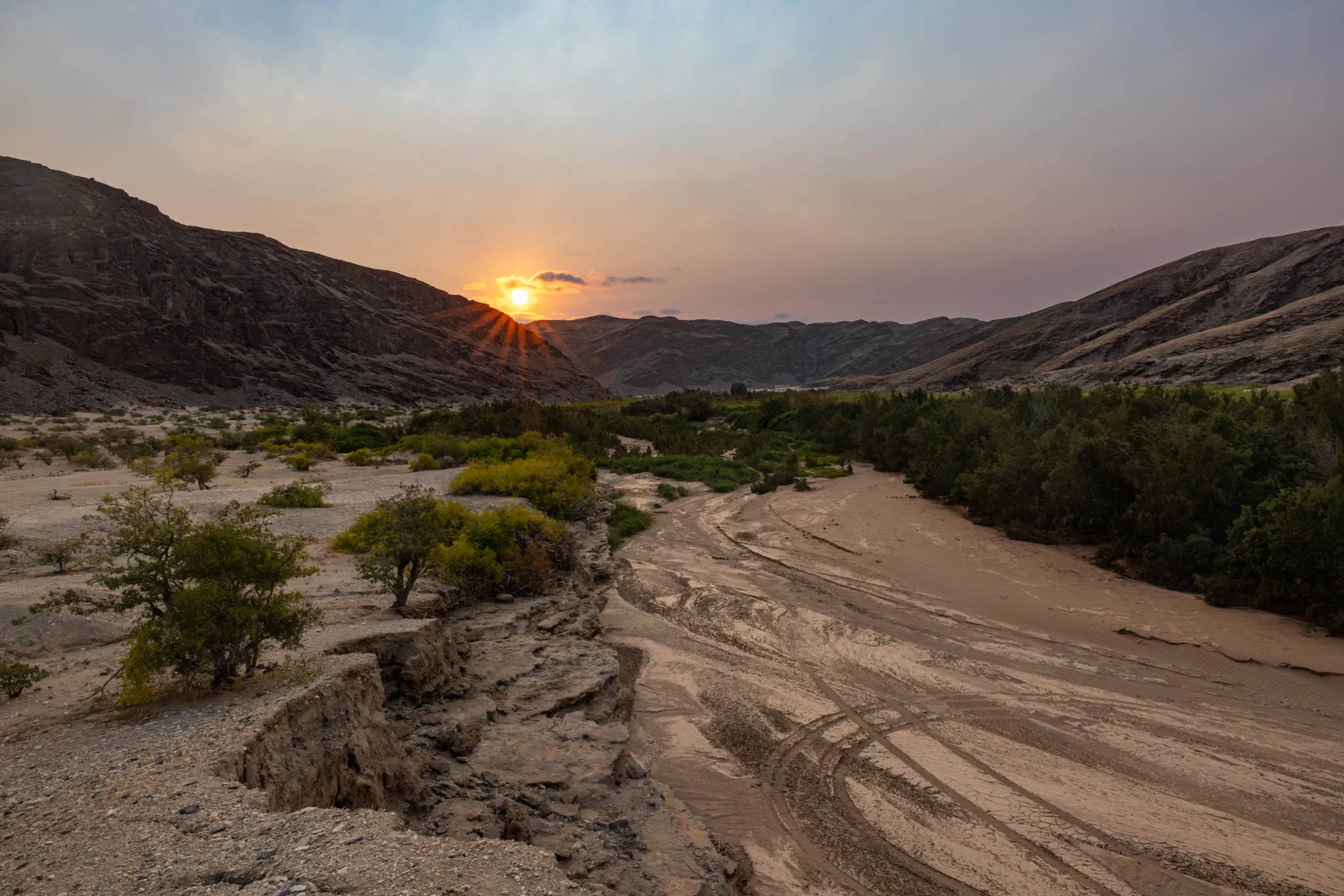
Sunset over the Hoanib riverbed in Kaokoland Namibia
Sunset over the Hoanib riverbed.

The next day we drove deep into the valley.

During previous visits the Hoanib had been extremely dry, but this year things were different. Excessive rains earlier in the year had left quite a lot of water in the riverbed, and it was much greener than usual for this time of year.

It was great for the wildlife, but it also meant that animals were less dependent on the remaining water sources and therefore more scattered — and more difficult to find.

But the Hoanib always delivers.

Desert-adapted elephant in the Hoanib riverbed in Kaokoland Namibia
Desert-adapted elephant in the Hoanib riverbed.

Eventually we found a large herd of elephants, remarkably tolerant of our presence. We slowly made our way through the riverbed, seeing giraffes, oryx, springbok and plenty of foraging baboons, before crossing the bare desert plains towards the Hoarusib riverbed and on to one of our other favourite campsites in Purros, right in the middle of the riverbed.

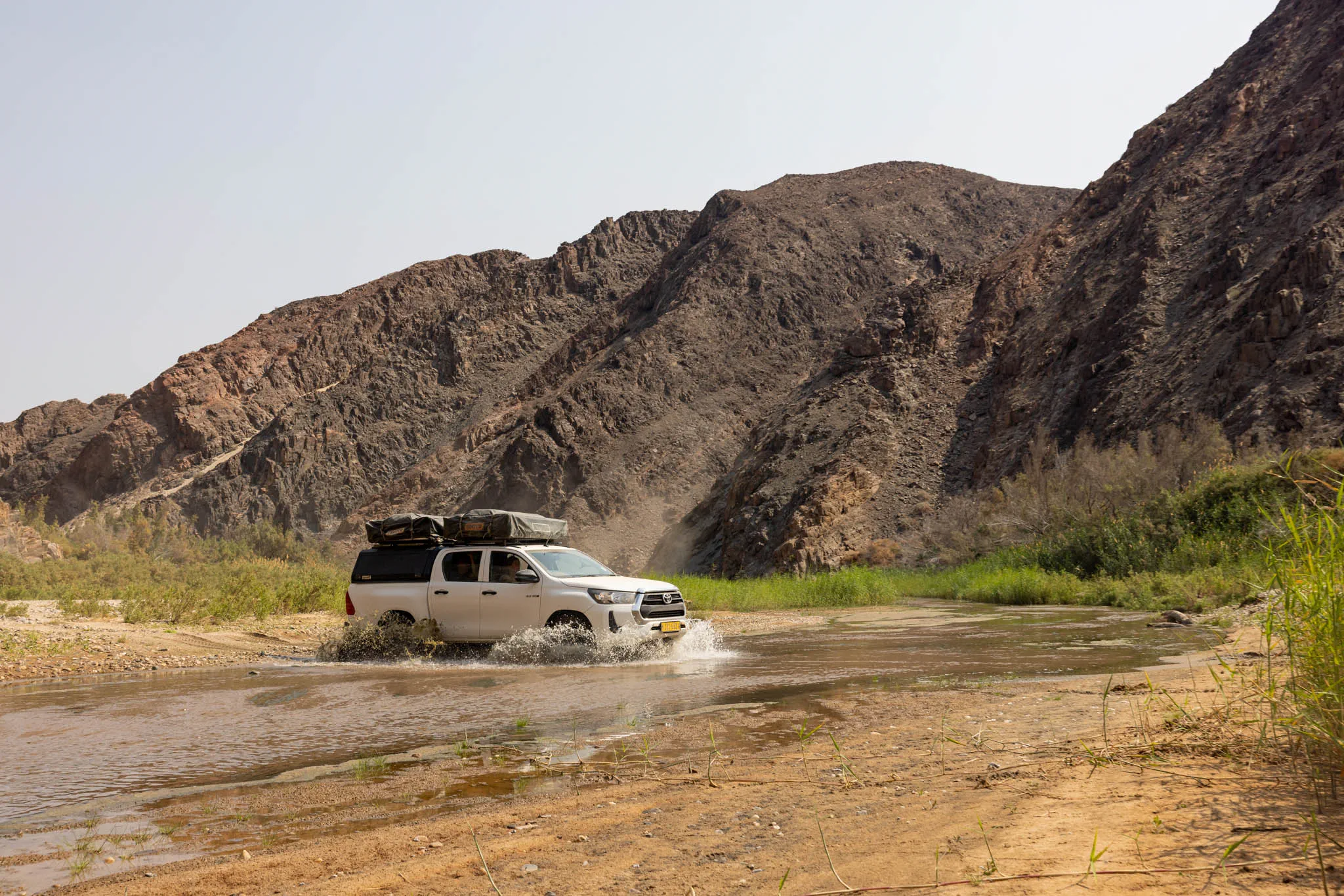
Driving through the Hoarusib riverbed in Kaokoland, Namibia
Driving through the Hoarusib riverbed to Purros.

Purros

For me, Purros is synonymous with giraffes.

Not because they are particularly abundant here, but because when you do meet a herd of giraffes, it is invariably in some of the most spectacular desert scenery you can imagine.

We were not disappointed.

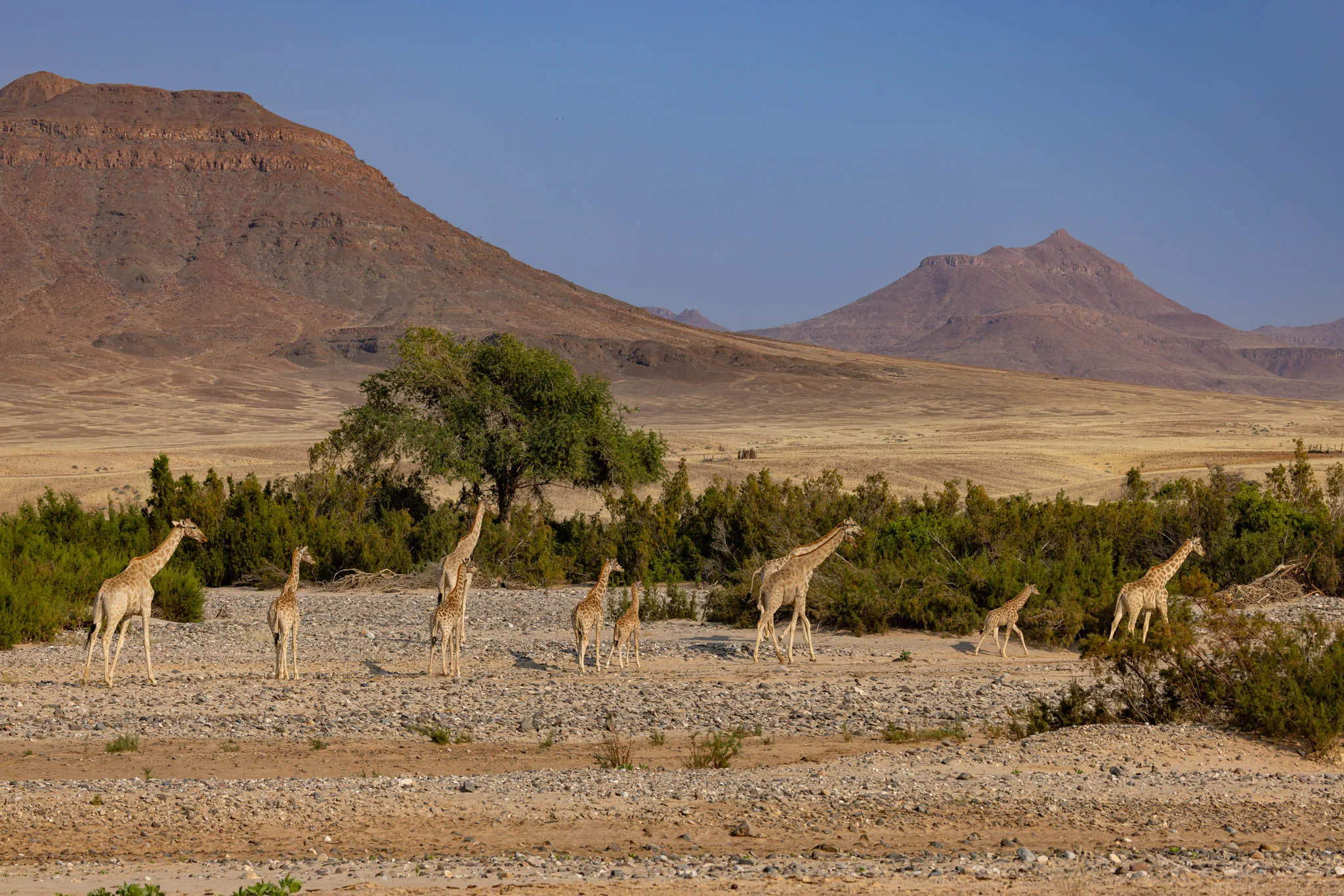
Giraffes in the Hoarusib valley in Kaokoland Namibia
Giraffes in the Hoarusib valley.

Further north

After Purros we drove further north, deeper into some of Namibia’s most remote areas.

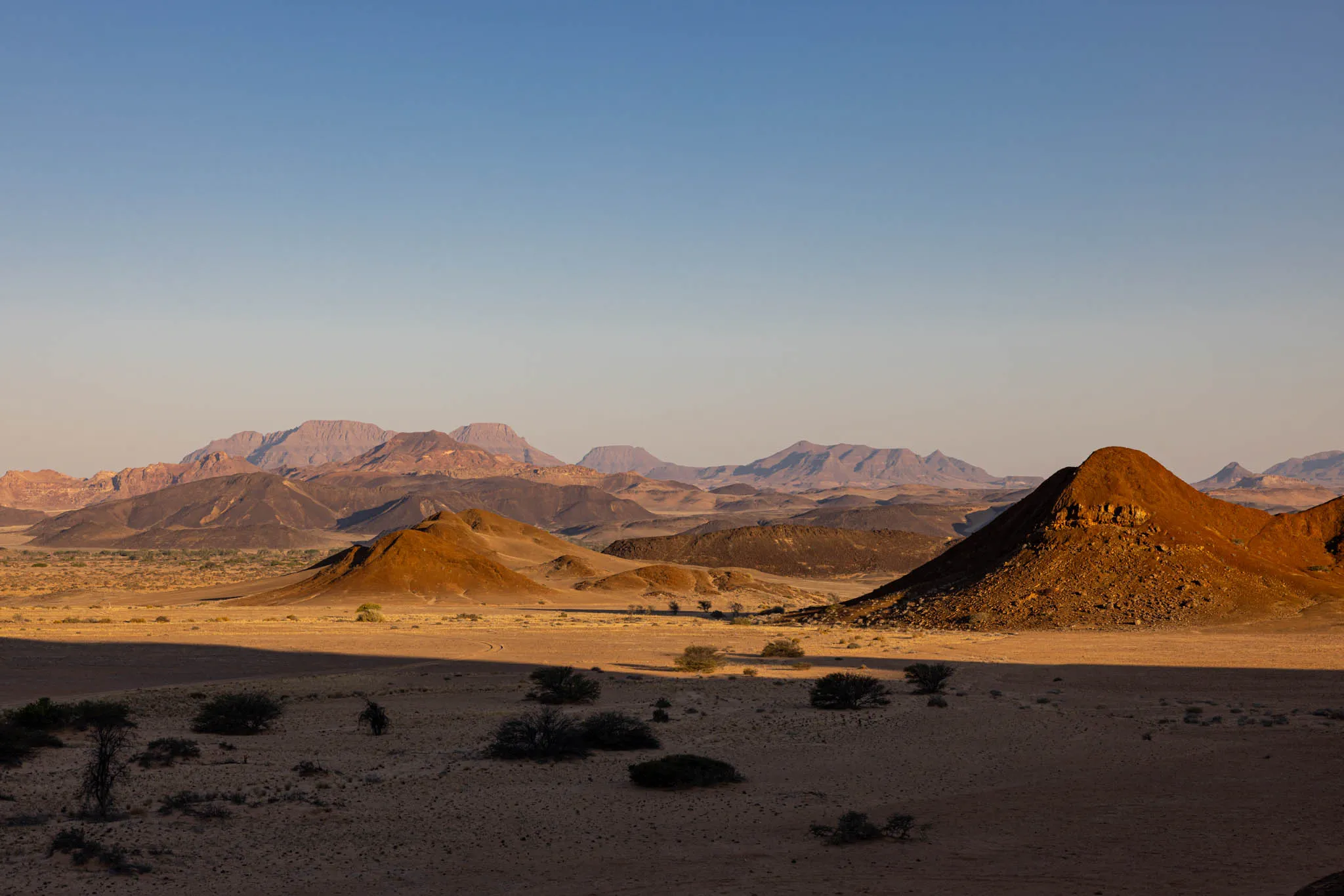
The scenery kept changing — from rocky desert to vast savanna plains, surrounded by mountains and rolling hills in every imaginable pastel colour.

Because of the rain earlier in the year, the grass was still fairly tall. Once again, it gave the desert a completely different feel from previous trips.

And that is exactly why I will never get bored in Kaokoland.

No scenery is ever quite the same, despite by now driving many of these familiar routes.

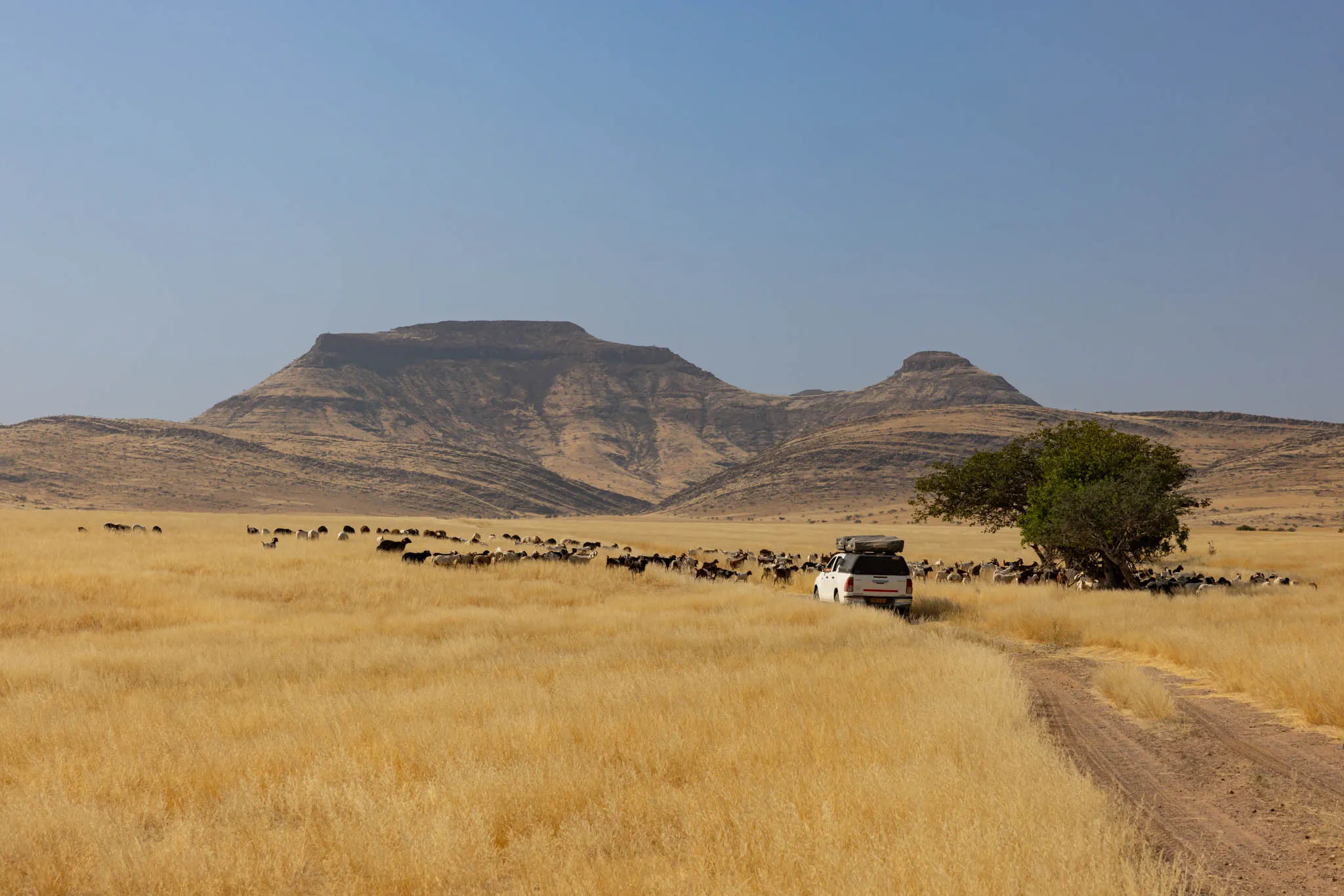
Eventually we turned east, following rocky trails towards Opuwo. This is where a few Himba families still manage to survive in such harsh and arid conditions, roaming the rocky mountains with their herds of goats and cattle.

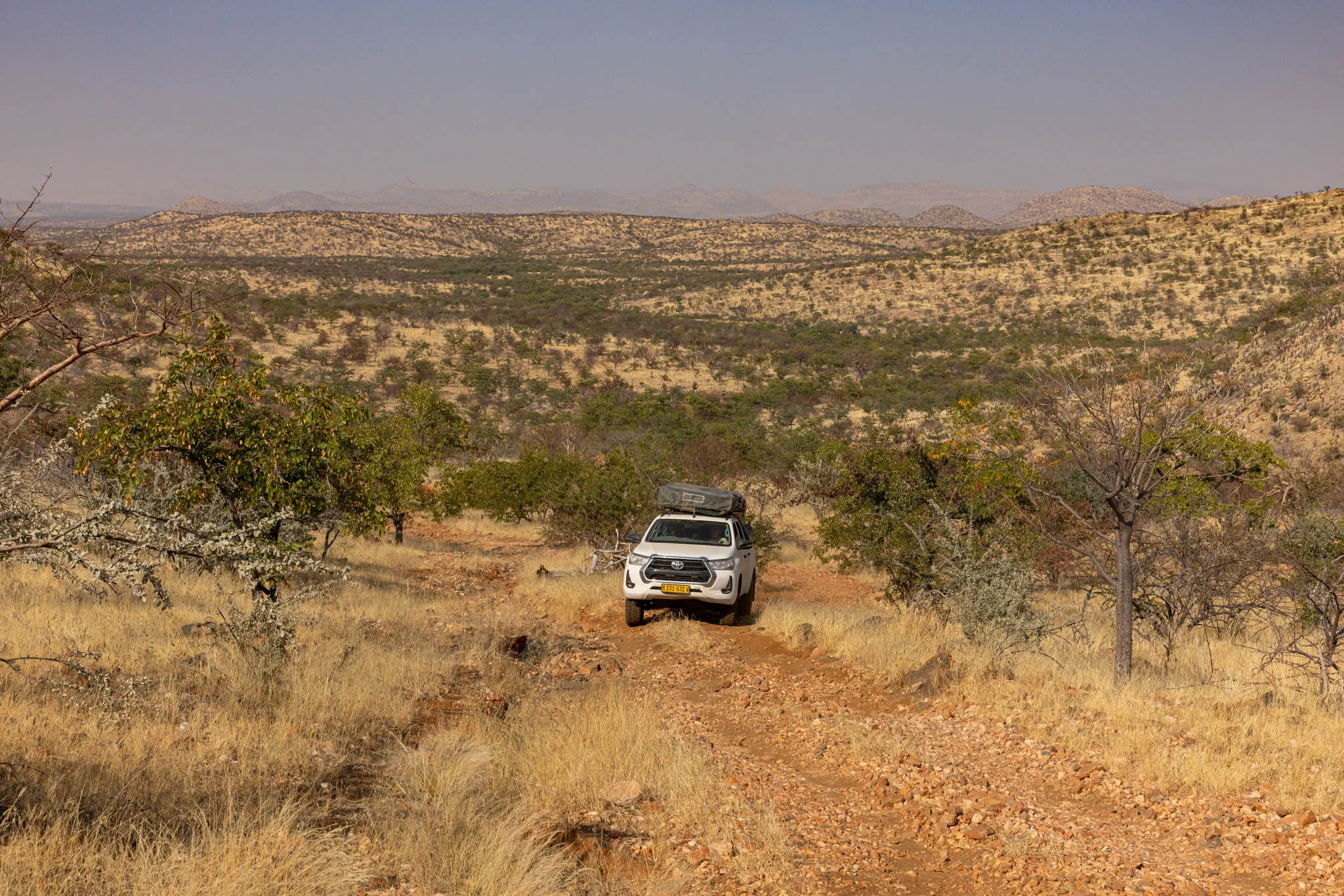
Driving off-road through Kaokoland, Namibia
Driving off-road through Kaokoland.

We picked our last wild campsite after passing the final Himba settlement, eventually finding a relatively open spot. Leopards still roam these hills, often stalking the Himba’s herds of goats.

A visit to the Himba was next on our programme.

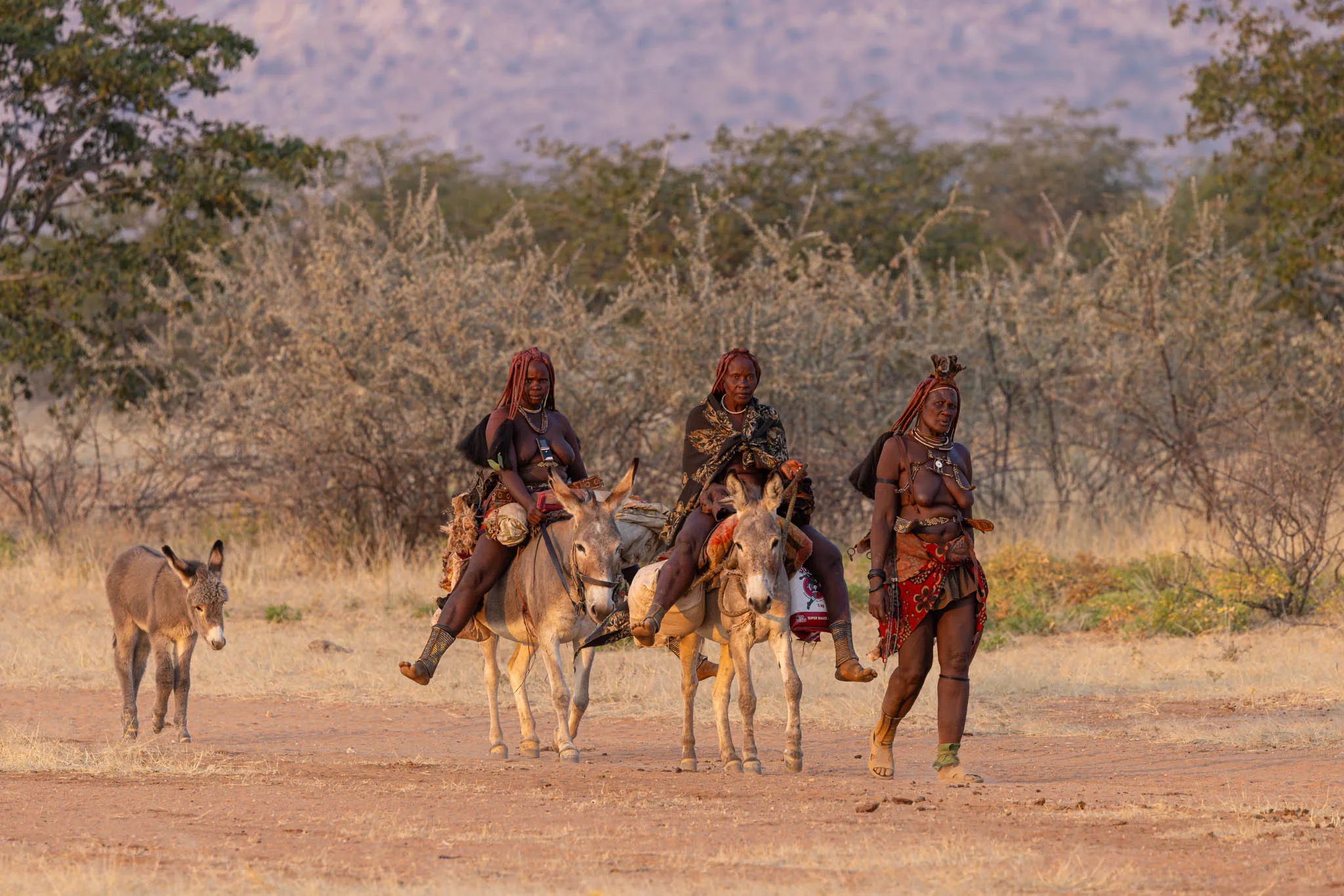
Himba women on donkeys in Kaokoland, Namibia
Himba women passing our campsite, just before sunset.

A different kind of wilderness

After days among dry riverbeds and almost empty landscapes, Opuwo feels like a sudden return to people.

It is also the gateway to Himba country.

The Himba have maintained a distinctive pastoral culture in one of Namibia’s harshest environments, and spending time with them offers something very different from a wildlife encounter. The aim is not simply to visit a village, but to spend time, observe and listen — and to experience something of everyday life in a community that is not set up as a tourist attraction.

This part of the journey would stay with us for very different reasons.

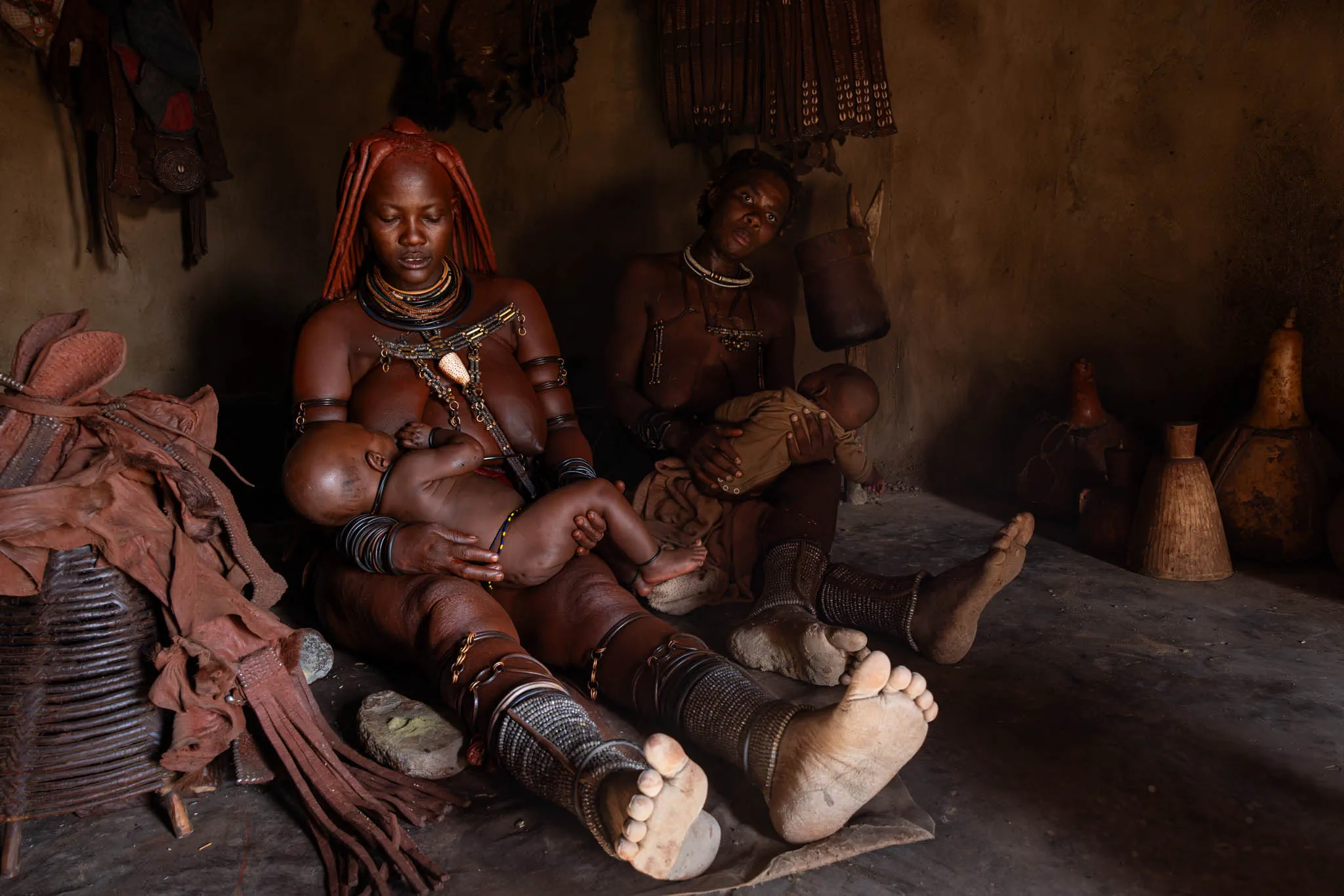
Himba women with baby in mud hut in homestead in Namibia
Inside a mud hut of the Himba.

A day with the family

The women and older girls were busy grinding corn kernels into flour, while other women were preparing plaster for the renovation of a mud hut.

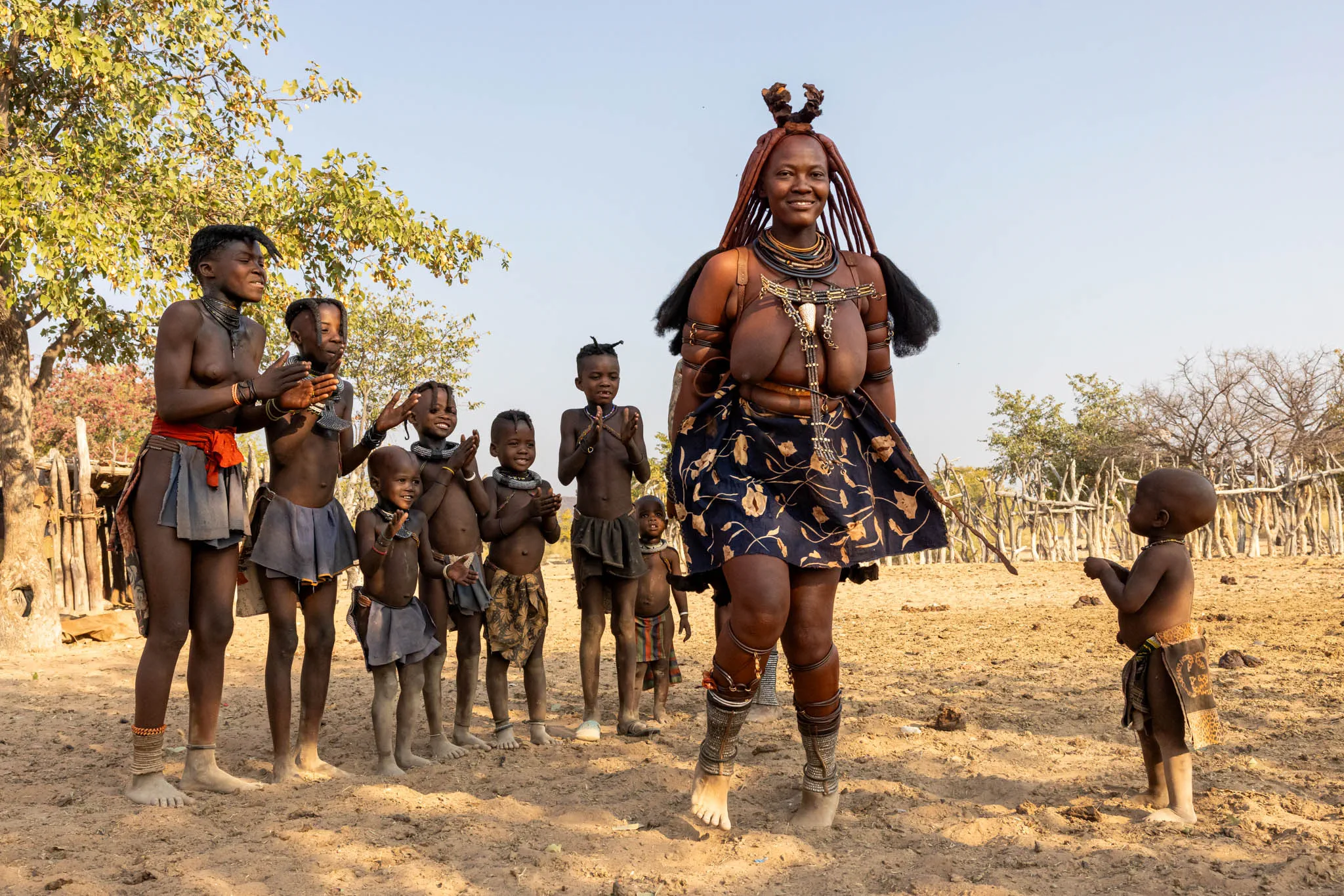
In the afternoon, the women and children spontaneously gathered and started to sing. One after another was invited to dance, accompanied by rhythmic clapping and singing.

It was a wonderful — and wonderfully entertaining — sight.

Himba woman and children dancing and singing in Opuwo Namibia
A Himba woman dancing to rhythmic clapping and song.

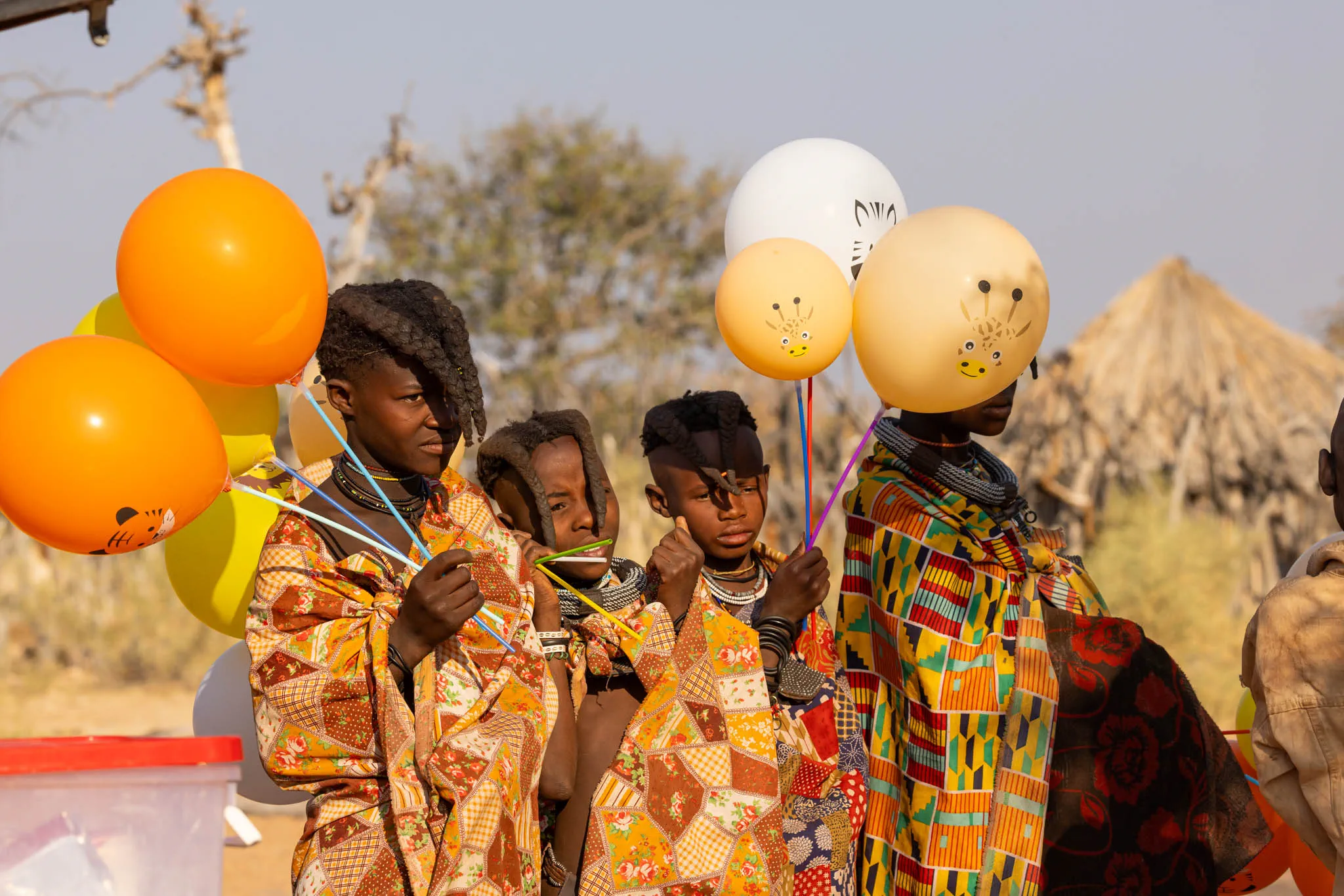
And then there were the balloons.

We had brought some to entertain the children, and I now know that I can never visit this family again without bringing balloons.

We could not have thought of a more entertaining or appreciated gift — and one that would eventually leave no trace of our visit.

balloons for himba children in Opuwo Namibia

Back to the classic Namibia

From the remote northwest, the journey turned south and east towards Etosha.

Etosha may be one of Namibia’s best-known destinations, but after the wilderness of Kaokoland it felt almost familiar.

We entered through the western side, spending our first night at Olifantsrus before continuing towards Okaukuejo, Halali and Namutoni.

Giraffes in Etosha Namibia

At Okaukuejo one evening, a rhino and her calf decided to have a nap right in front of the fence where we were watching.

I had never seen a rhino so relaxed, lying completely at ease on the ground with her calf beside her.

I had also never been that close to a rhino.

Close enough, in fact, to smell it.

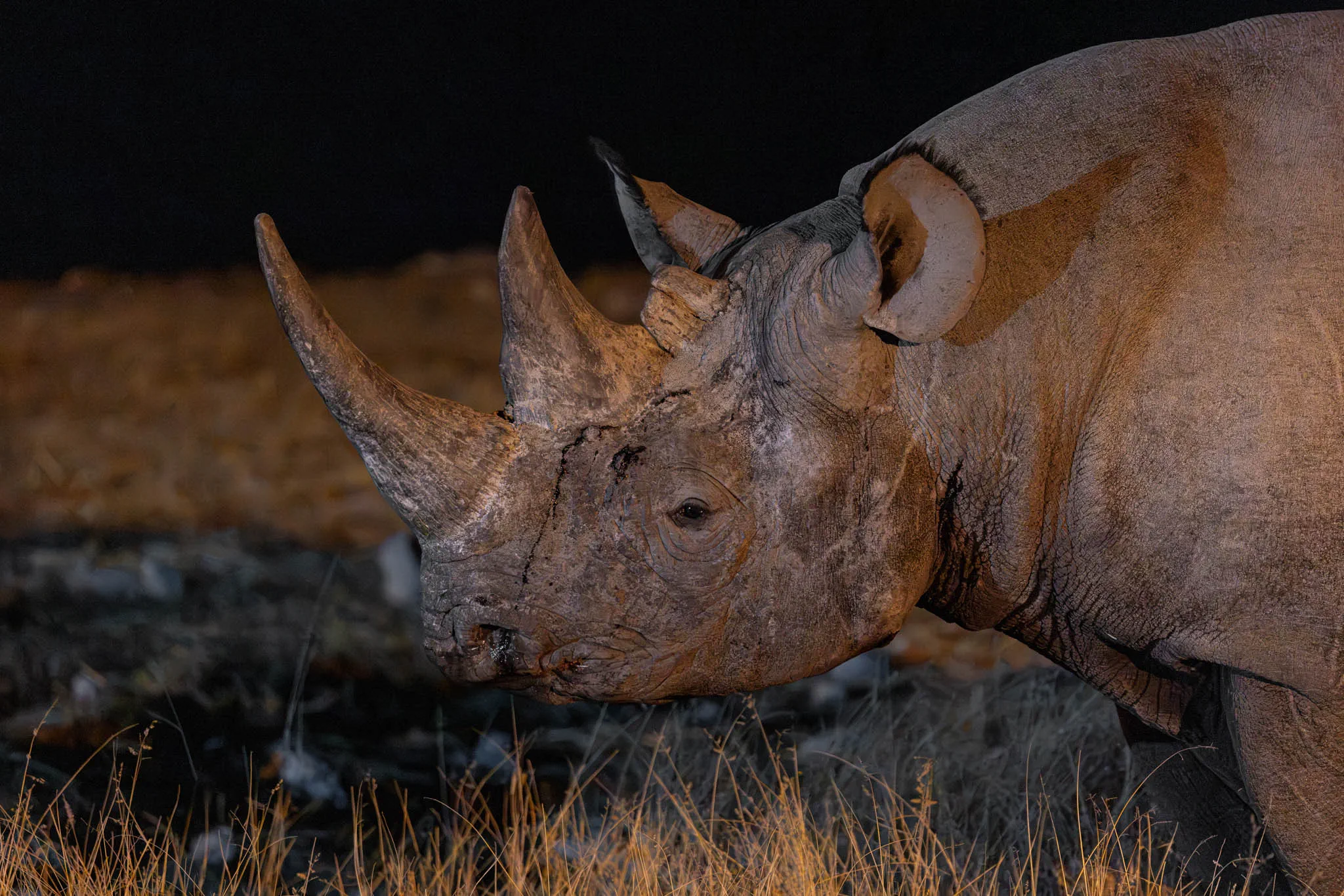
And as if that wasn’t enough for one evening, a three-horned black rhino appeared as well. They are particularly rare, so seeing one here was a real privilege.

three-horned Black Rhino in Etosha Namibia
Black rhino with a third horn.

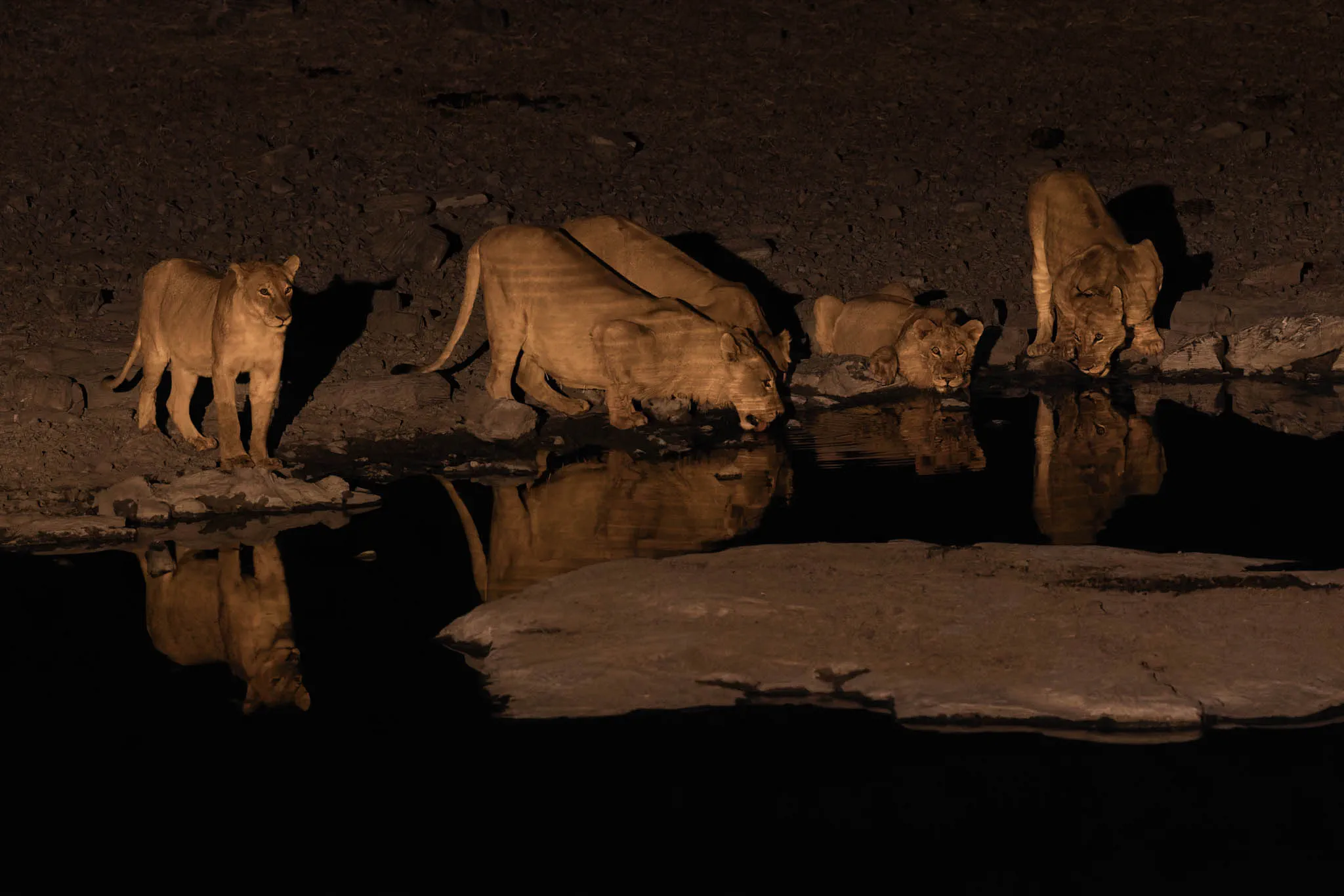
At Halali, the waterhole came alive again after dark. Plenty of black rhinos came to drink, but then a pride of seven or eight lions appeared as well.

One of the rhinos clearly wasn’t impressed. It tried to chase the lions away, but eventually gave up and went back to drinking.

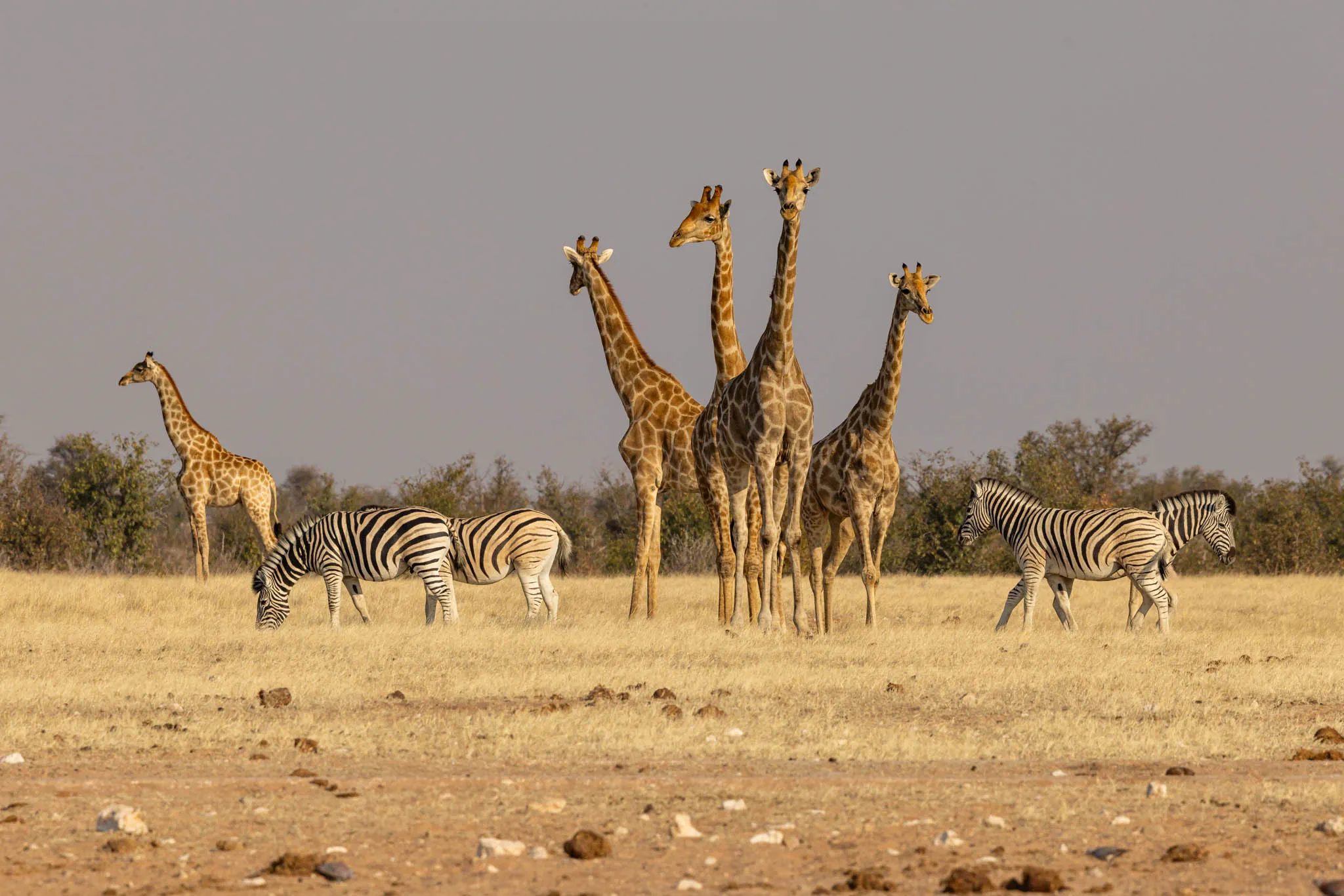
During the days we also spent time with a beautiful herd of giraffes and saw both black and white rhinos. We didn’t manage to find cheetah this time, but witnessed something I had never seen before: two ostriches courting.

A strange and surprisingly graceful dance between male and female.

lions at Halali waterhole in etosha namibia

Along the Way

Waiting for a leopard

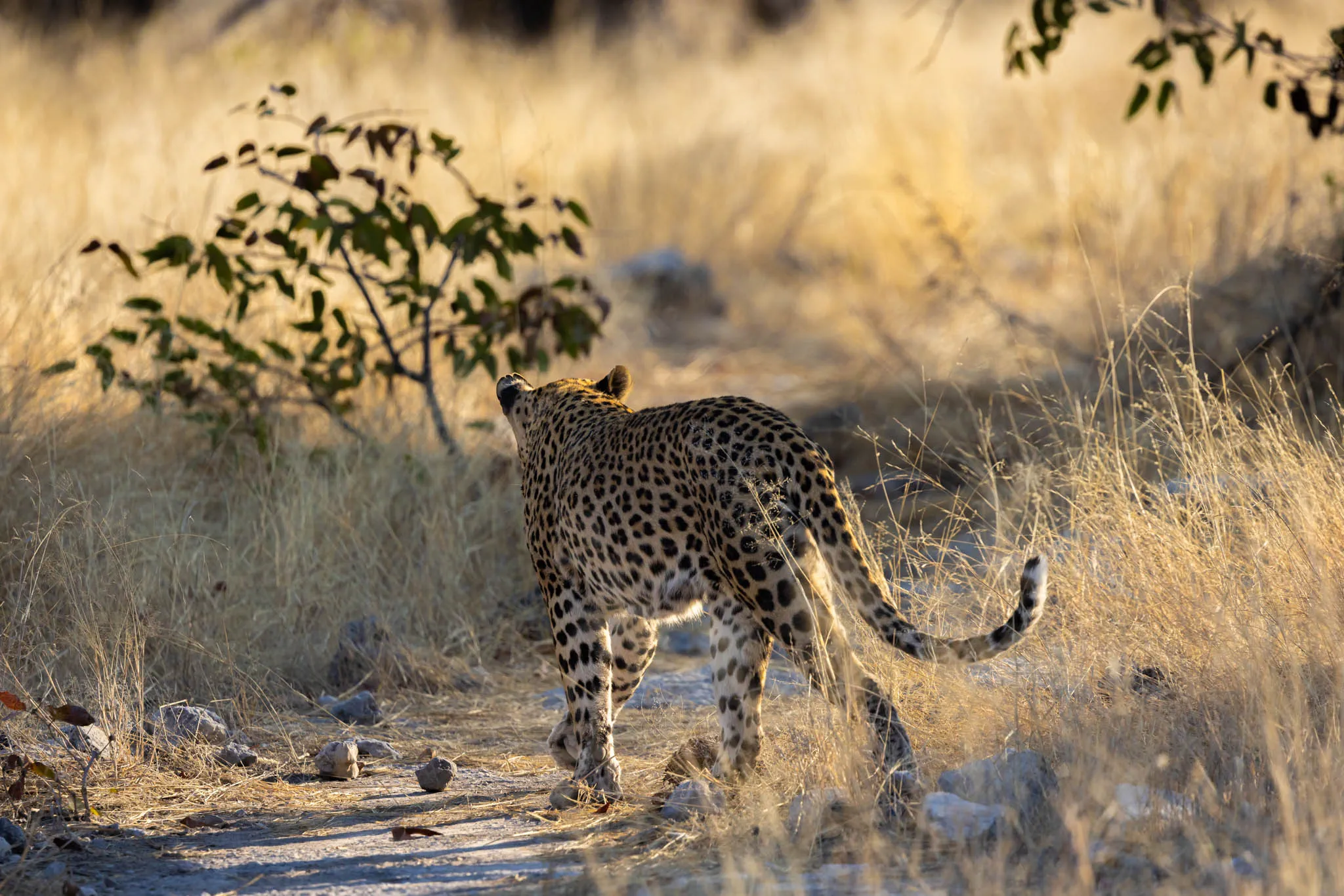
During my previous visits to Etosha I had probably seen almost all of the larger wildlife, except leopard.

On our first evening at Halali waterhole, we got talking to a regular visitor who had been coming to the park for more than twenty years. The conversation turned to leopards, and he told me there was a resident leopard often seen at one of the nearby waterholes.

So the next afternoon I decided to go there.

And nowhere else.

I would simply stay there and wait.

When I arrived, six or seven cars were already parked on the lower side of the waterhole. A cheetah had visited in the previous days, and everyone was hoping to see it again.

But I had come for leopard.

I parked on the other side, near the edge of the forest. If a leopard came to drink, I thought, this was the side it was more likely to approach from. From the other side, there was no way the cars would see it if it came to the higher part of the two-tiered waterhole.

Waiting on the opposite side of the waterhole.

So we waited.

Then, all of a sudden, I heard it.

The unmistakable call of a leopard.

In the distance, and from our side.

We moved a little further back, to where the road passed between fairly thick mopane forest, and stopped to listen.

Five minutes later the leopard called again.

Closer.

We moved another few metres, and then I noticed a clear animal trail coming out of the forest.

That must be the trail.

And sure enough, a few minutes later he appeared.

Right at us.

A spectacular leopard, clearly in his prime.

He walked to within a few metres, stopped, and then turned around and disappeared back into the forest along another trail.

I managed to get a few pictures, but the sighting itself was much more important than the photographs.

He was gone.

Why he never crossed the road to the waterhole, I don’t know. Perhaps there were too many impala and wildebeest around. Perhaps it was still too bright and hot.

I was convinced he would come back, but eventually we had to leave before the gates closed.

All that time, the other cars had no idea what was happening. They were still waiting on the other side of the waterhole. They couldn’t see our car, so there was no sign that anything was happening.

But surely they must have heard the leopard calling?

Or perhaps none of them recognised the sound.

After all, you don’t hear a leopard call that often…

A different knowledge of the land

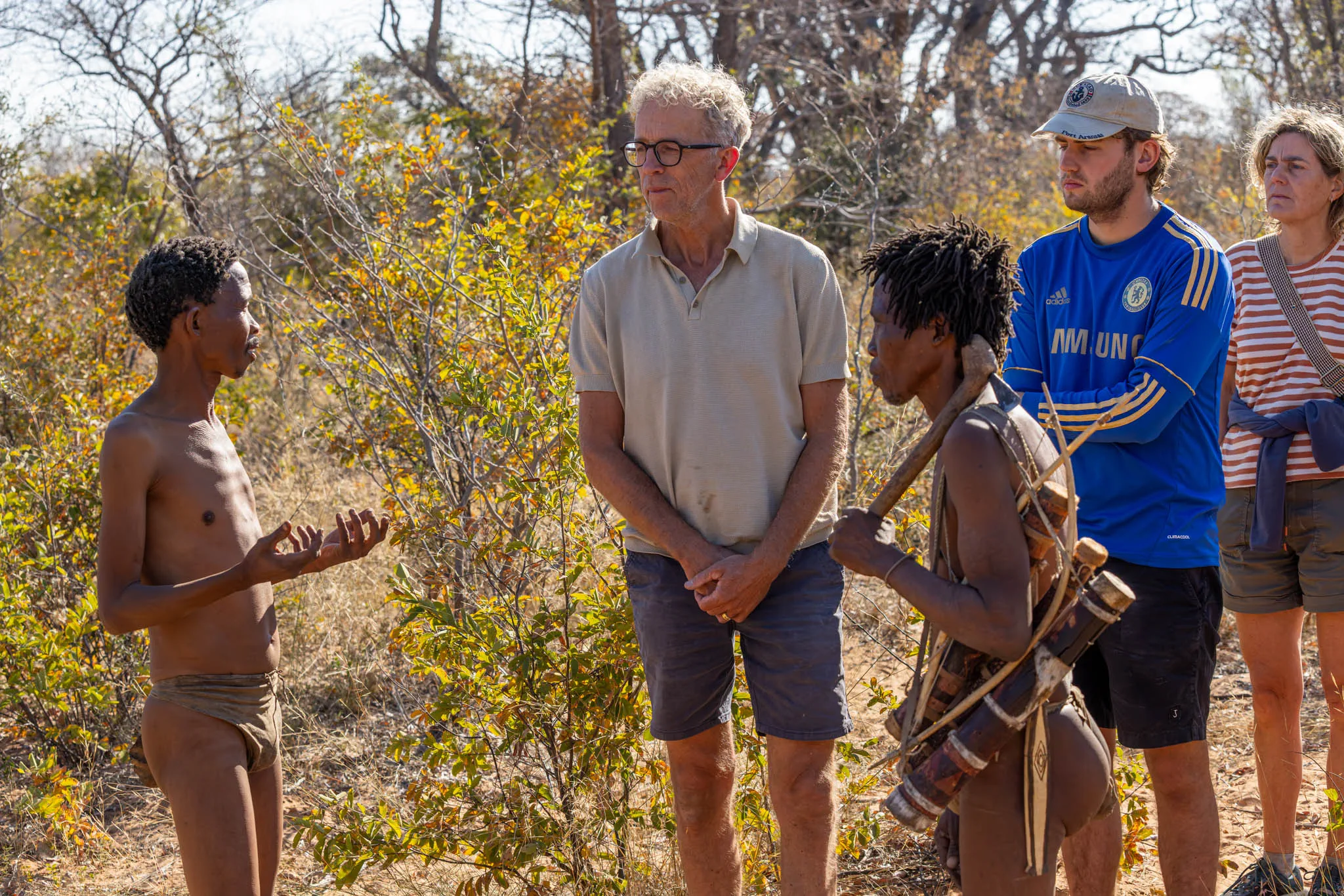
Leaving Etosha, we headed east into a very different part of Namibia. Our next stop was with the Ju/’Hoansi San, whose relationship with the land is rooted in an extraordinary knowledge of the natural world.

The forest and bush become a source of information: tracks, plants, animals and tiny signs that are almost invisible to an untrained eye.

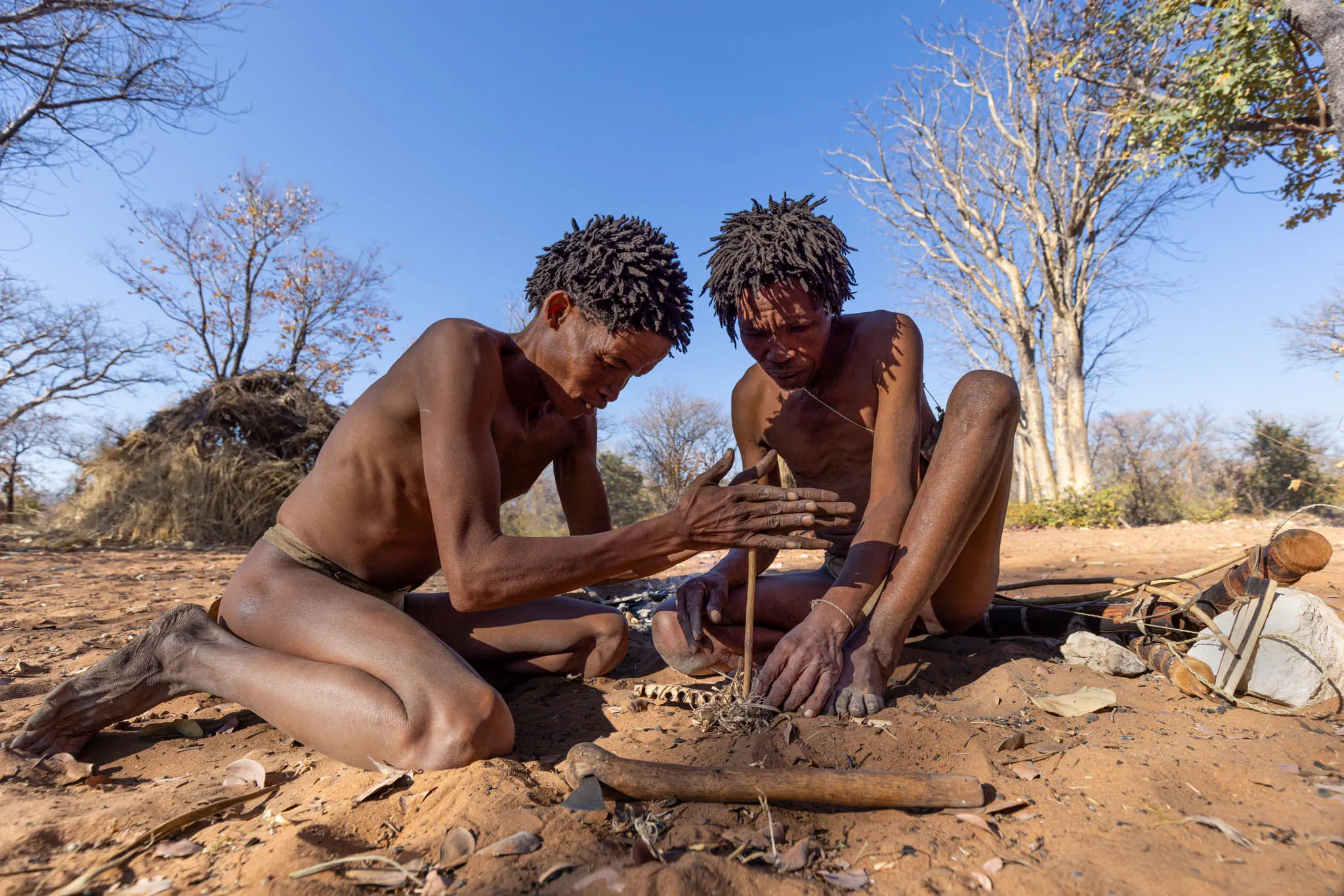
Making fire.

During the morning they showed us how they make fire, how they use bows and arrows, and how small traps are constructed to catch birds and other small ground-dwelling animals.

They also showed us how they forage for different foods and medicinal plants, explaining how the surrounding bush provides much of what they need.

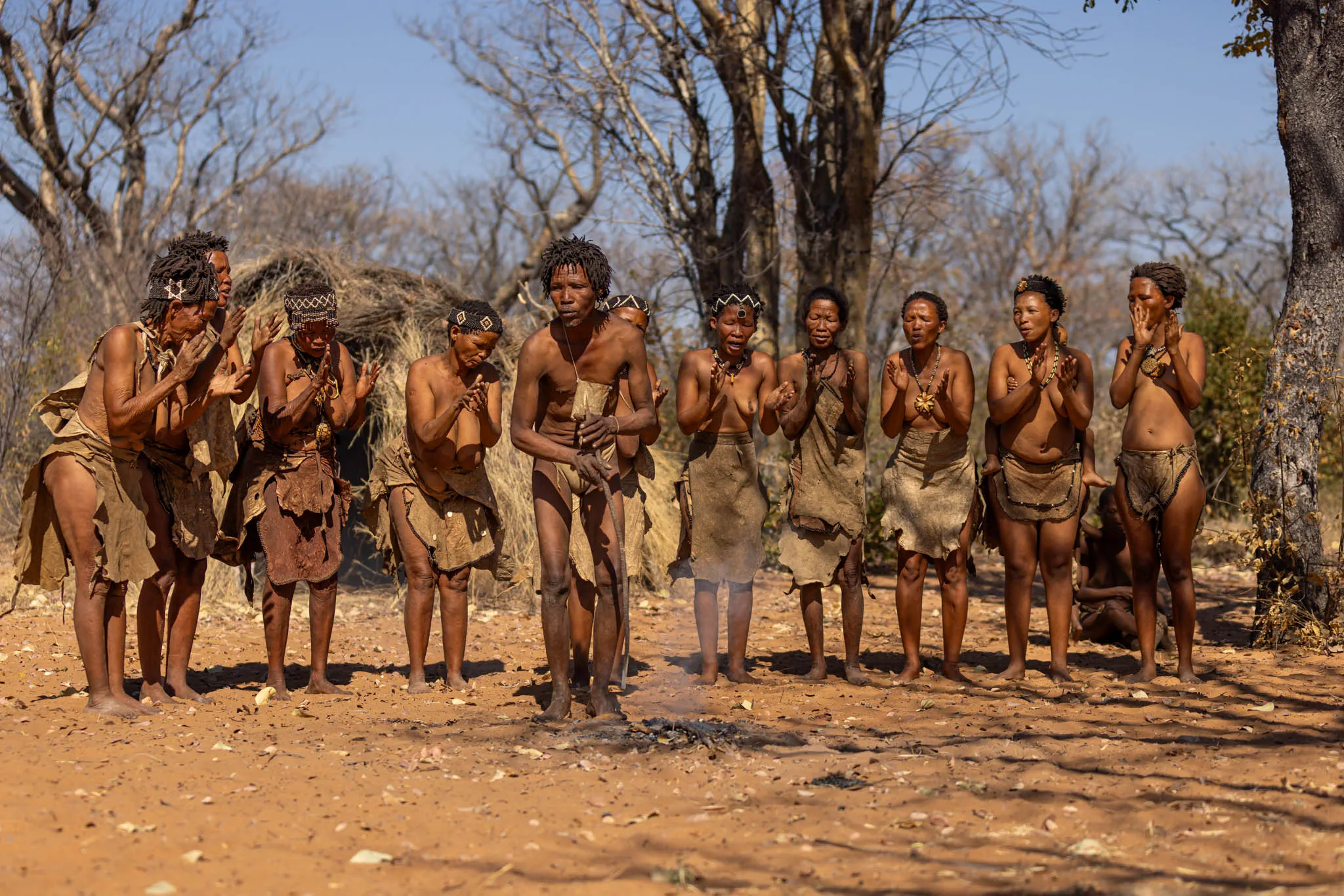
A healing performance.

The morning ended with a traditional healing ceremony, accompanied by rhythmic clapping and singing.

After the vast wilderness of the northwest, this was another reminder that Namibia’s stories are also found in the people who know these landscapes best.

San people explaining their culture during guided safari in Namibia
San people explaining their culture.

Where Namibia turns green

The change is remarkable.

After the dry landscapes of the west and northwest, the Zambezi Region is shaped by permanent rivers, floodplains, woodland and wetlands. The Kavango and Kwando bring water and wildlife into a part of Namibia that feels almost like another country.

For this journey we stayed in two very different places: first near Mahango Game Reserve along the Kavango River, and later in the Kwando Core Area of Bwabwata National Park.

Along the Kavango

The landscape around Mahango is wonderfully diverse, with river, floodplains, woodland and open areas creating a completely different environment from the dry west.

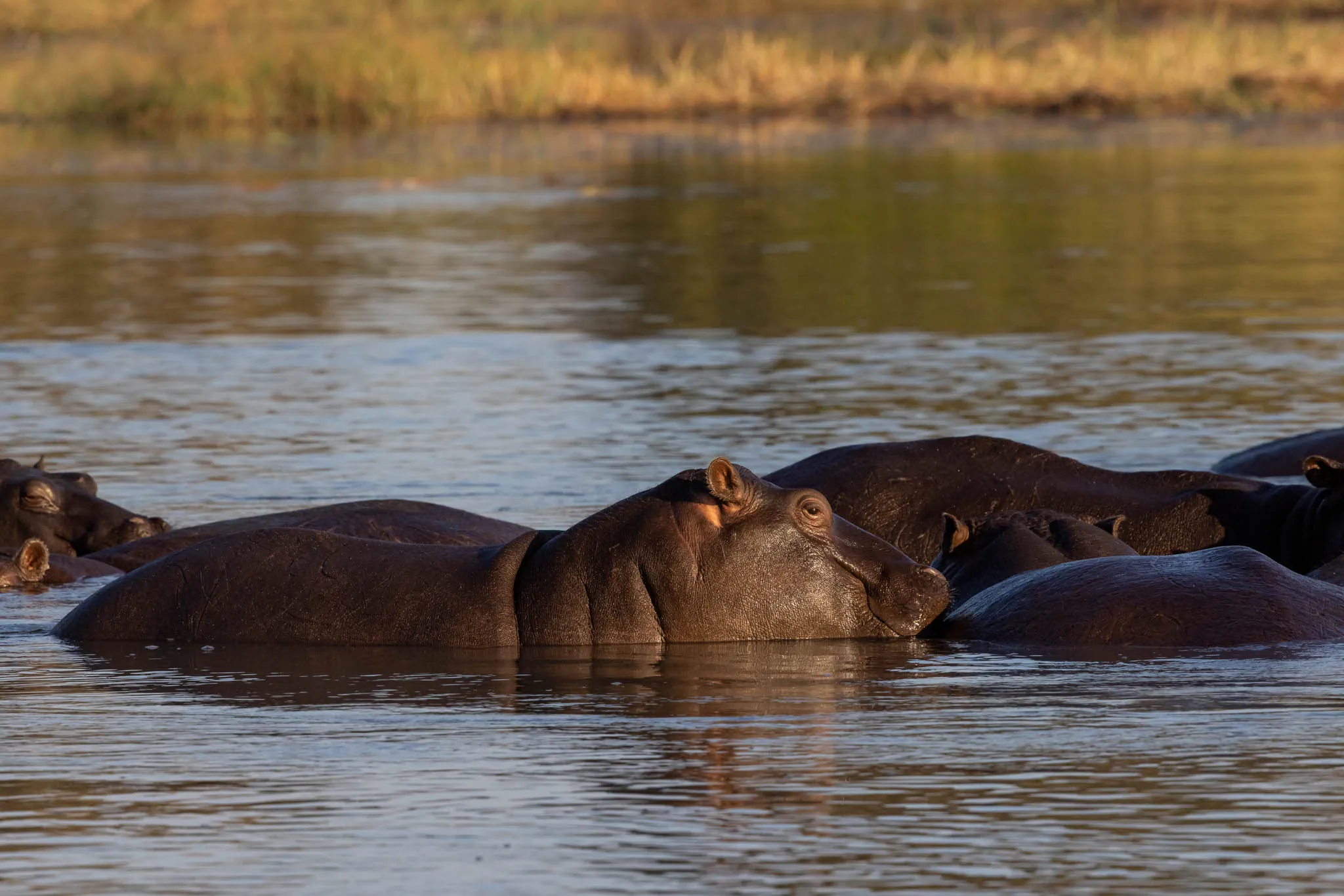
A river cruise gave us close encounters with hippos and waterbuck along the shores of the Kavango, with a remarkable variety of birdlife providing a constant backdrop.

In Mahango itself we were fortunate to find lions — not an everyday sighting here — as well as herds of elephants and kudu.

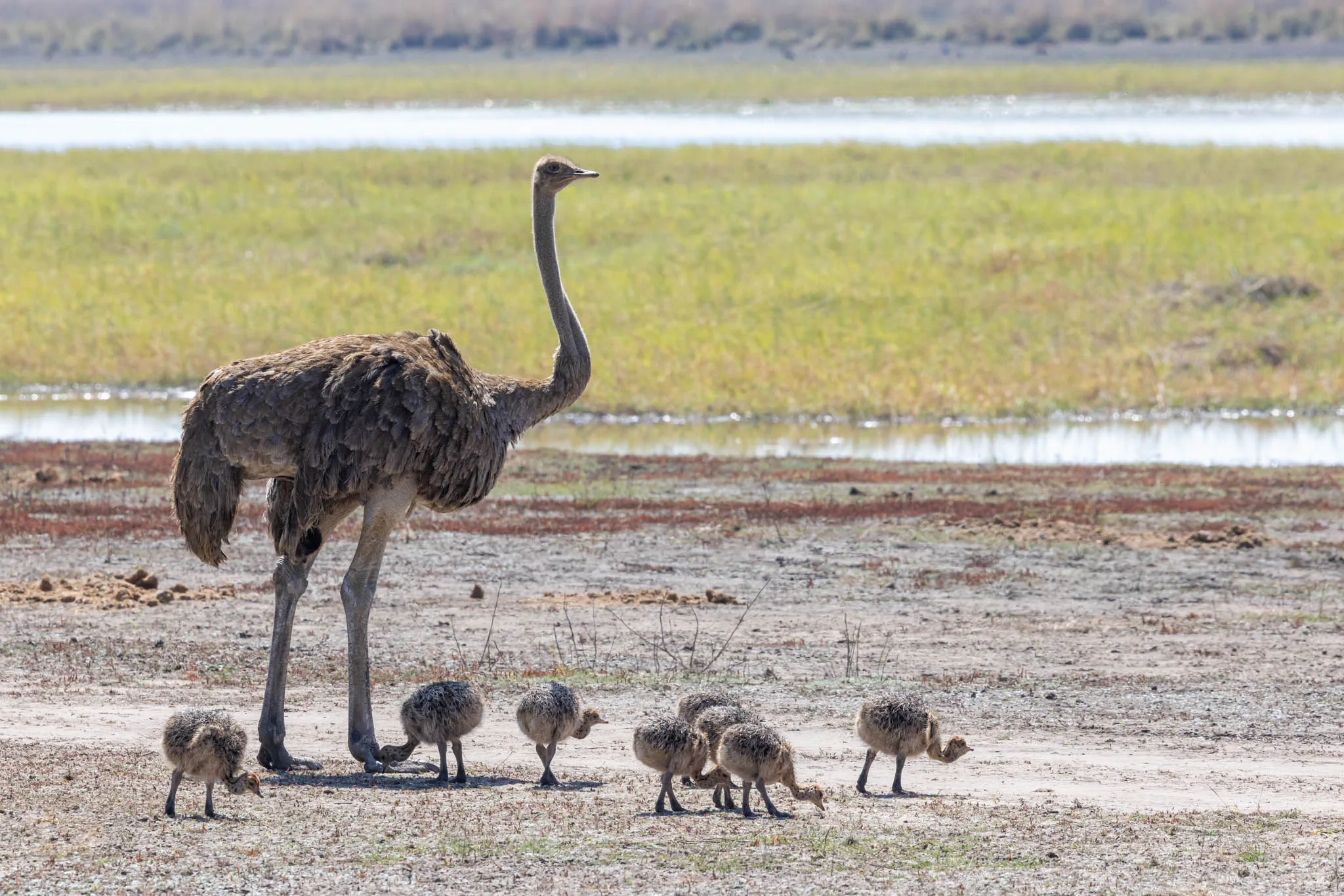
And plenty of ostriches with chicks.

Along the Kwando

From the Kavango we continued east into the Kwando Core Area of Bwabwata National Park.

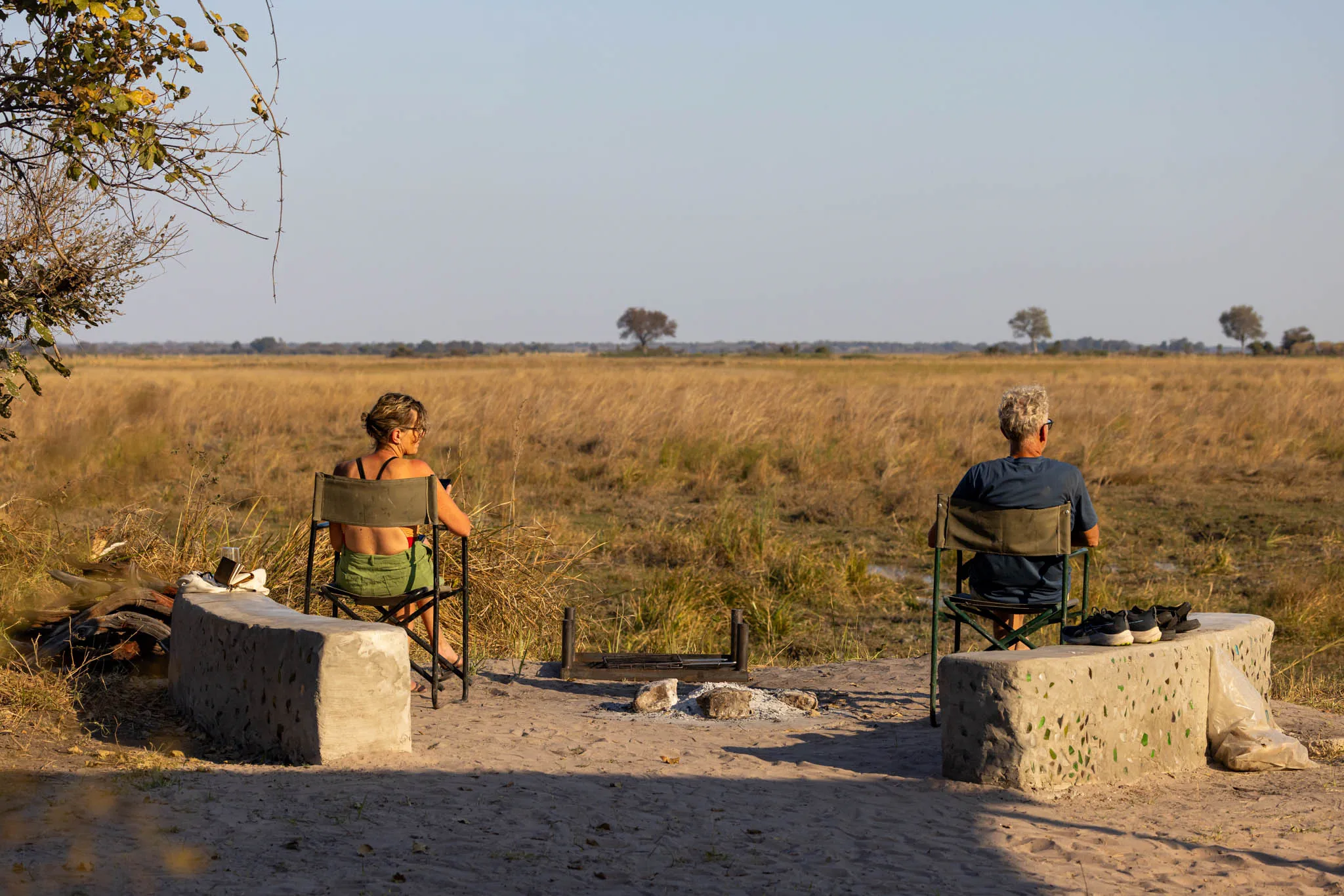
We spent two nights at one of our favourite campsites of the entire trip. By our standards it was almost ridiculously luxurious — despite being remote, small and wonderfully simple, right on the banks of the Kwando River.

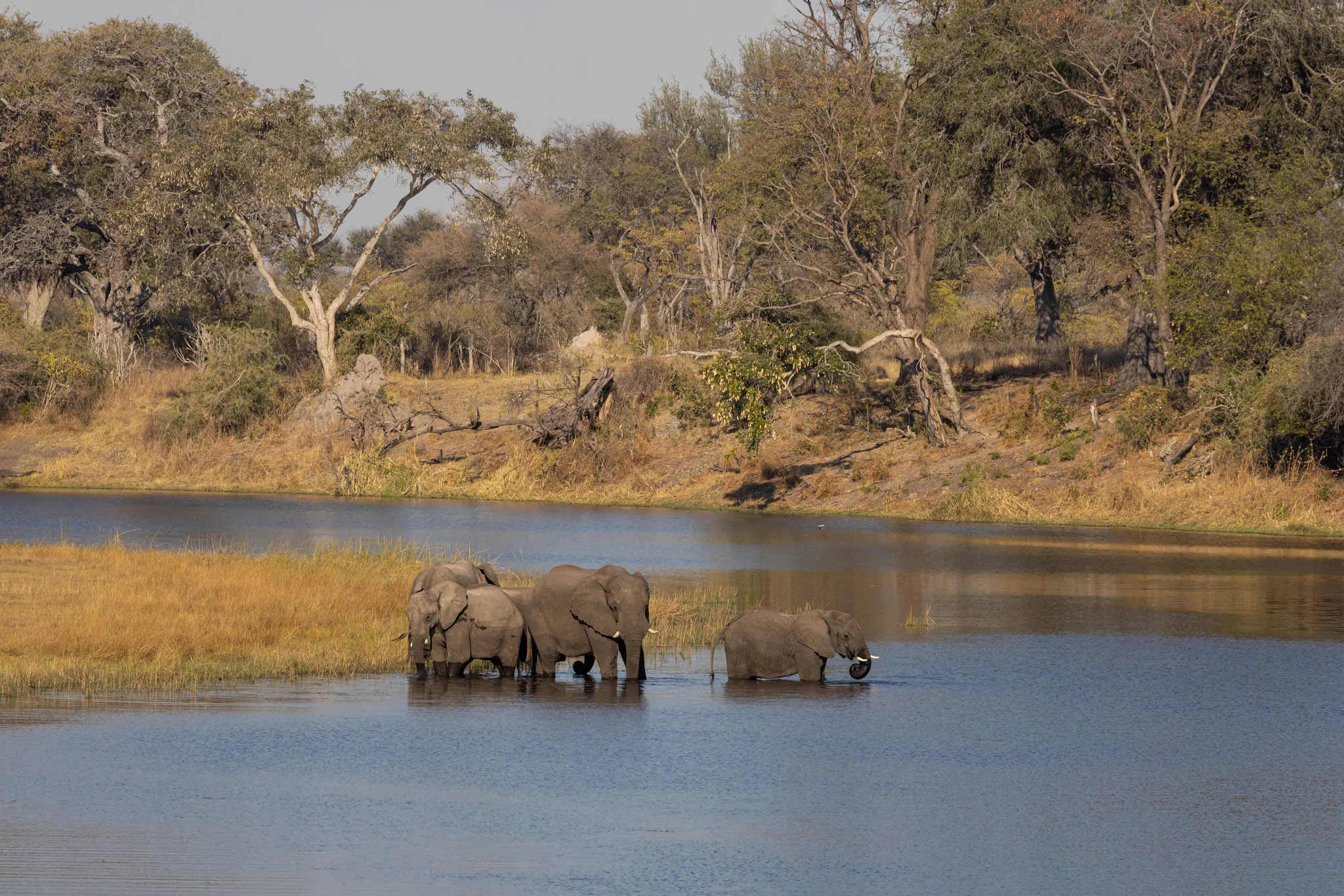
elephants drinking in the Kwando river in Bwabwata National Park, Namibia

Large herds of elephants regularly came down to drink, particularly in the afternoon.

There was little reason to do anything other than sit and watch.

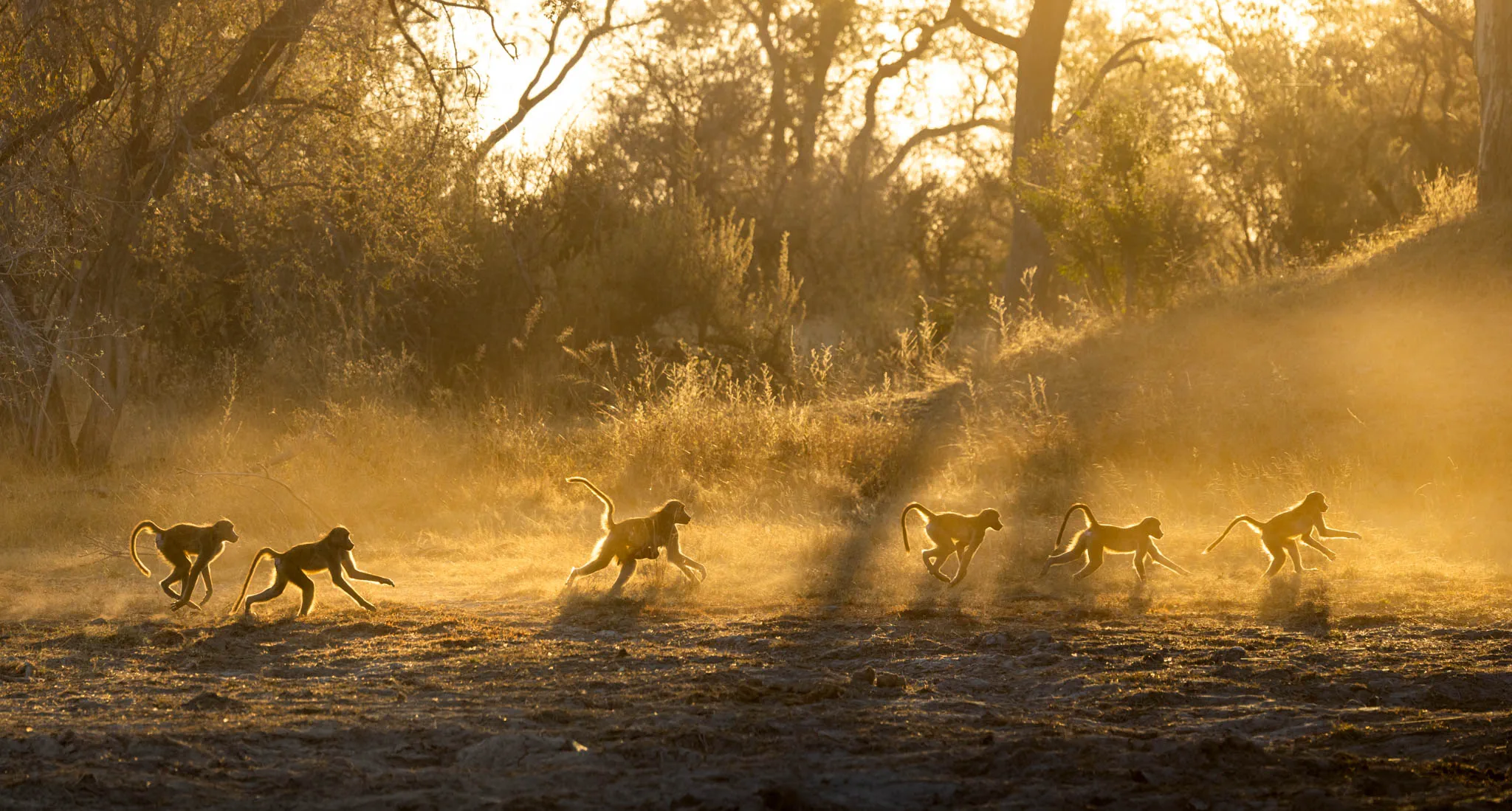
We also spent considerable time with a large troop of baboons — a completely different kind of wildlife encounter, with the constant movement and interaction of the family group making them surprisingly easy to watch for hours.

Camping in the Kwando core area Bwabwata national park Namibia
From our campsite on the banks of the Kwando River.

And then, Botswana

The journey continues

The Zambezi Region marked the end of the Namibian part of the journey.

But not the journey itself.

From here, we crossed into Botswana, continuing into another great wilderness.

That is another story.

error: Content is protected !!